
Are Ayurvedic Hair Oils Good for Scalp Health?
Quick Summary
Ayurvedic hair oil may support scalp health, but the evidence is promising and limited. One clinical investigation reported that eight weeks of consistent use was well tolerated and significantly decreased hair fall, though sample size and effect size were not reported.
- Eight weeks of consistent use was reported as well tolerated and significantly decreased hair fall.
- Ingredient lists matter more than marketing names, and the amount of each herb matters too.
- Warm the oil gently in warm tap water and test it on your wrist before use, never microwaving it.
- Use a thin film of oil, leave it on at least thirty minutes, then shampoo thoroughly.
- Patch test on the inner arm first, and stop if redness, swelling, or itching develops.
Table of Contents
- What Ayurvedic Hair Oil Is and What Scalp Benefits It Claims
- Herbal and Botanical Ingredients Used in Ayurvedic Hair Oils
- Ayurvedic Hair Oil for Itchy Scalp and Dandruff: What to Look For
- How to Apply Ayurvedic Hair Oil to Your Scalp, Step by Step
- How Often to Oil Your Scalp and Matching Frequency to Scalp Type
- Ayurvedic Hair Oil Recipe: Making Your Own at Home
- Safety, Allergies, and When Scalp Symptoms Need a Professional's Attention
- Trying Your First Ayurvedic Scalp Oil Routine This Week
- Frequently Asked Questions
Are Ayurvedic Hair Oils Good for Scalp Health?
Last Updated: November 21, 2026
What Ayurvedic Hair Oil Is and What Scalp Benefits It Claims
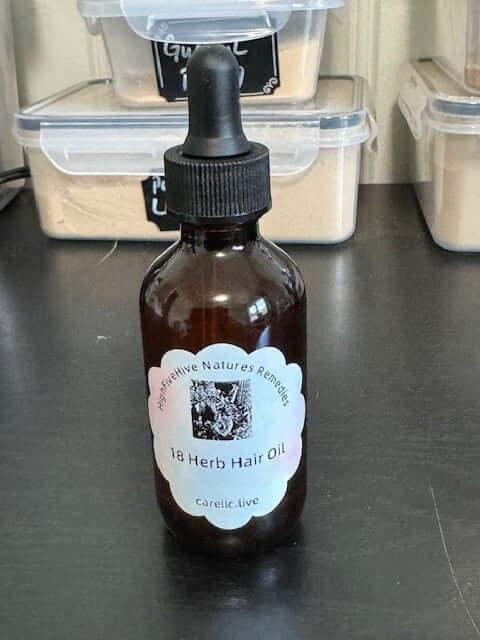
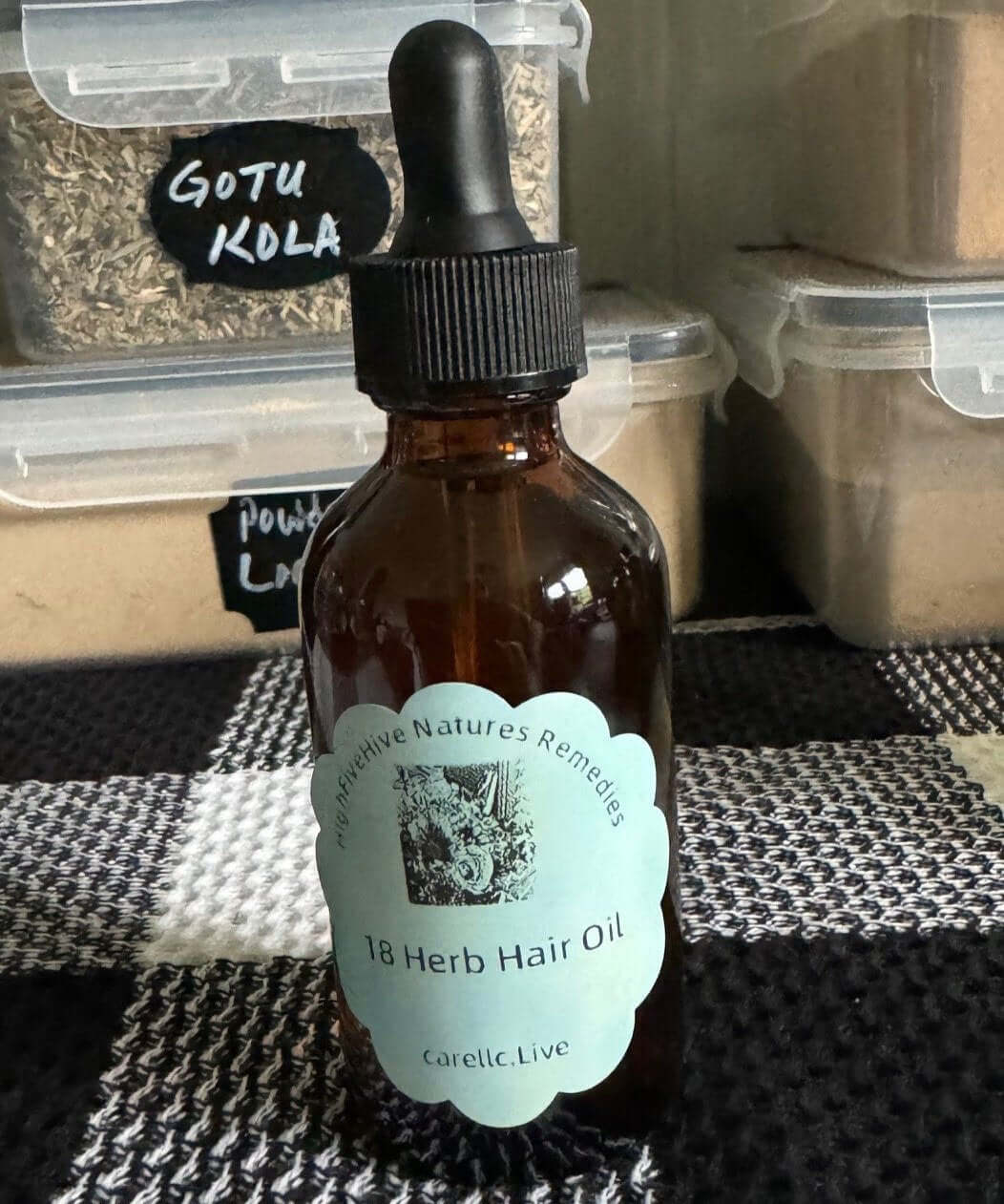
Ayurvedic hair oil is a botanical oil infused with herbs traditionally used in Ayurvedic hair care, and it is typically massaged into the scalp and hair. At HighFiveHive Nature's Remedies-Kitchen Herbalism, we look at ayurvedic hair oil as a practical kitchen-herbalism topic rather than a cure.
The honest answer is that the evidence is promising but limited. A clinical investigation of an Ayurvedic hair oil reported that consistent use over eight weeks was well tolerated and significantly decreased hair fall, according to the authors of the study in the International Journal of Dermatology clinical investigation of an Ayurvedic hair oil.
Most of the scalp benefits claimed for these oils fall into a few groups:
- Scalp nourishment and hydration
- Softer, shinier-looking hair
- Support for hair fall and breakage
- A comfortable scalp during massage
Each claim depends on the specific oil, the herbs in it, and how consistently it is used. Hair-growth claims in particular deserve caution, since many sources describe traditional use rather than measured outcomes.
Herbal and Botanical Ingredients Used in Ayurvedic Hair Oils
Most ayurvedic hair oils combine a carrier oil with a blend of herbs. A review of indigenous hair-oil knowledge covers oils including castor, coconut, and fenugreek and their traditional use on scalp hair, according to Hair Oils: Indigenous Knowledge Revisited, PubMed Central.
Ingredient lists matter more than marketing names. A blend with eighteen herbs is not automatically stronger than a simpler formula, and the amount of each herb matters as much as its presence.
For a richly infused castor base, consider the KeshPurna 18-Herb Ayurvedic Castor Oil Hair Elixir, which combines castor oil with a blend of Ayurvedic botanicals. For a lighter, argan-based option, the Radiant Roots 18-Herb Nourishing Argan Hair Oil combines argan oil with a herbal infusion.
Ayurvedic Hair Oil for Itchy Scalp and Dandruff: What to Look For
An itchy scalp has many possible causes, so an oil is rarely the whole answer. When choosing an oil for irritation, look for a short ingredient list you can read and a carrier oil you know you tolerate.
If you have a flaky, red, or painful scalp, applying more oil can make the problem look worse because buildup can trap flakes against the skin. Wash the scalp gently after oiling and do not scratch hard.
A reasonable first step is a small test on the inner arm before applying oil to the whole scalp. If redness, swelling, or itching develops, stop and rinse.
How to Apply Ayurvedic Hair Oil to Your Scalp, Step by Step
Warm the oil gently by setting the bottle in a bowl of warm tap water for a few minutes.
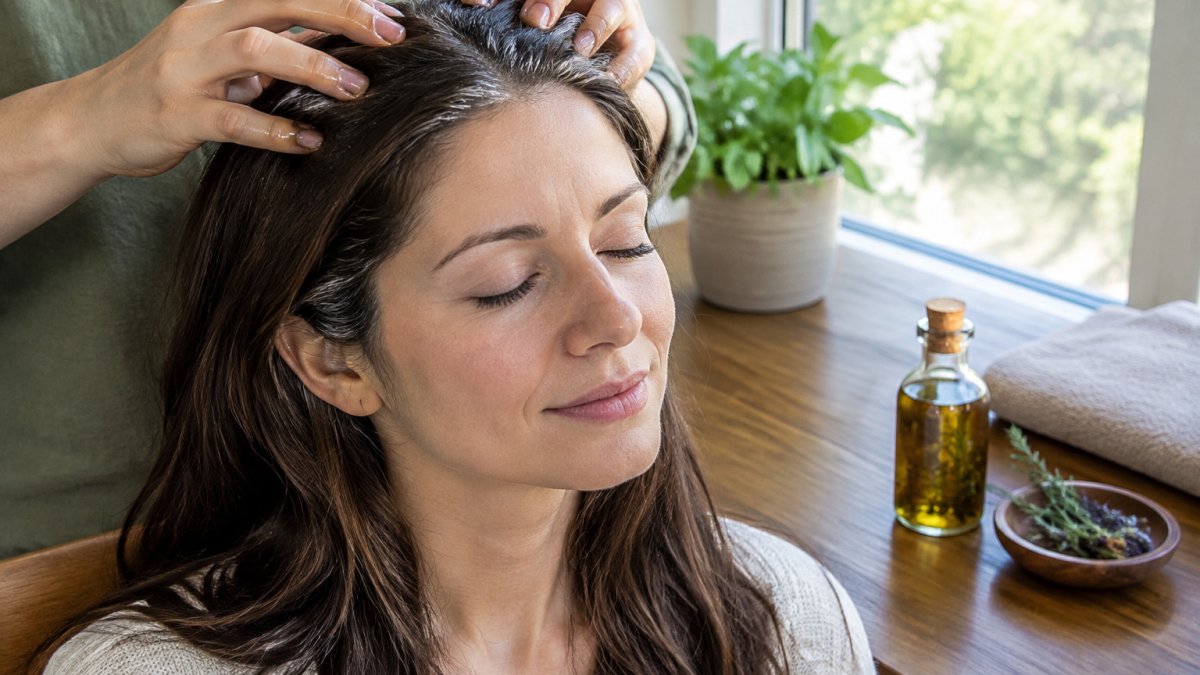
A careful approach is to work in two stages: a pre-oil scalp check, then the oiling itself. Before you open the bottle, part your hair in a few places and look at the scalp. Note any redness, flaking, scabs, or tender spots.
- Section your hair into four to five parts with a wide-tooth comb so the oil reaches the scalp rather than sitting on the hair shaft.
- Pour a small amount, roughly a teaspoon for shoulder-length hair, less for short hair, into your palm or a small bowl. Warm it between your palms.
- Dip your fingertips, not the bottle nozzle, into the oil and press it directly onto the scalp along each part line. Repeat until the scalp is lightly coated, not dripping.
- Massage in small circles for five to ten minutes, moving from the hairline and crown toward the nape. Use the pads of your fingers, not your nails, and keep the pressure firm but comfortable.
- Leave the oil on for at least thirty minutes. If you oil overnight, protect your pillow with a towel and keep the layer thin, a heavy overnight application is more likely to trigger itching or buildup.
- Shampoo thoroughly, rinsing twice if your hair is thick or the oil was heavy. A gentle shampoo is usually enough for routine washing.
Scalp massage is a long-standing part of traditional oiling routines, and the massage itself may feel relaxing even if the oil's effects are modest.
How much oil to use is a common stumbling block.
Timing matters too.
Finally, plan your washout. Oiling without a reliable washout is how buildup and flaking start. If you oil in the evening, shampoo the next morning rather than waiting a second day.
The steps below sum up the application routine, with the amount and timing the article suggests for each stage. (Source: FDA's cosmetic labeling guide)
| Step | What to do | Time or amount |
|---|---|---|
| Warm the oil | Set bottle in warm tap water; test on wrist | A few minutes |
| Section hair | Part into four to five sections | Wide-tooth comb |
| Apply oil | Press fingertips along each part line | About a teaspoon for shoulder-length hair |
| Massage | Small circles from hairline and crown to nape | Five to ten minutes |
| Leave on | Keep oil on the scalp | At least thirty minutes |
| Shampoo | Wash thoroughly, rinse twice if thick or heavy | Gentle shampoo |
How Often to Oil Your Scalp and Matching Frequency to Scalp Type
Most people start with one or two oiling sessions a week. Oily scalps usually do better with less frequent oiling and a lighter oil, while dry or flaky scalps may tolerate more. There is no universal schedule, so adjust based on how your scalp feels over several weeks.
The supplied research does not establish a single correct frequency, so treat these as starting points rather than rules. Because scalp type shapes both oil choice and frequency, Iuvo Skincare can help frame the question of which organic oils may suit your scalp.
Dry scalp. A dry, tight scalp may tolerate two sessions a week with a richer carrier such as sesame or castor oil. If the scalp still feels tight between sessions, add a third session before increasing the amount per session, frequency usually matters more than volume.
Oily scalp. An oily scalp can look greasy within a day of oiling.
Dandruff-prone or flaky scalp. Oil can loosen flakes, but a heavy layer can also trap them against the skin and make scaling look worse.
Thinning or shedding hair. Oiling may support scalp conditioning, but it cannot guarantee regrowth.
Frequency is only part of the decision; reading the label is the other part. A few label habits make the choice more concrete:
- Carrier oil first. The first ingredient is usually the carrier. Sesame, coconut, castor, and argan behave differently, castor is thick and sticky, argan is light, coconut can solidify in cool rooms. Pick a carrier that matches your scalp type and hair texture.
- Herb position in the list. Ingredients are listed in descending order by weight (the FDA). An herb near the end of a long list is present in a small amount, regardless of what the front label claims.
- Essential-oil concentration. Fragrant oils such as peppermint, tea tree, or eucalyptus are common in scalp blends and are a frequent cause of irritation. If a label lists several essential oils and you have sensitive skin, choose a simpler blend or dilute a small amount in a carrier before patch testing.
- Fragrance and preservatives. Added fragrance and preservatives can trigger contact reactions. A short, readable list is easier to troubleshoot if something goes wrong.
- "Ayurvedic" describes a tradition rather than a tested formula. Judge the product by its ingredient list and how your scalp responds, not by the word on the front.
Watch out: mixing multiple oil blends, or layering a scented oil over a prescription scalp treatment, makes it hard to tell what caused a reaction.
If you take prescription medication, especially for blood sugar, check with your prescriber before adding new herbal products.
Ayurvedic Hair Oil Recipe: Making Your Own at Home
Homemade versions usually start with a carrier oil such as sesame or coconut and steep dried herbs in it gently over low heat or in a sealed jar in a warm spot. Strain the oil through a fine cloth and store it in a dark glass bottle. Homemade oils lack consistent herb strength and can spoil, so refrigerate them and use them within a short window.
Making your own gives you control over ingredients, but it also means you cannot verify the potency of each herb. Commercial blends are easier to use consistently.
Safety, Allergies, and When Scalp Symptoms Need a Professional's Attention
Herbal oils can cause contact reactions, particularly in people with plant allergies. Our guide to botanical aromatherapy safety covers patch tests and safe dilution for sensitive skin. Patch test before full use, and avoid oils with herbs you know you react to.
Some herbs, such as comfrey, need caution, and you should check with a qualified professional before using them. Our comfrey safety questions, answered clearly explain when topical use may be appropriate and who should avoid it.
Contact a healthcare professional if you notice sudden hair loss, a rash spreading beyond the scalp, painful sores, or any symptoms that persist despite gentle care.
Trying Your First Ayurvedic Scalp Oil Routine This Week
Start small. Choose one oil, patch test it, and oil your scalp twice this week using the steps above. Track how your scalp feels, whether it itches, flakes, or sheds, and whether you notice any changes over four to six weeks.
Ayurvedic hair oils can be a reasonable part of a scalp-care routine when chosen carefully and used consistently. They are not a substitute for diagnosis, and results vary from person to person. If you are looking for a starting point, you can review the KeshPurna 18-Herb Ayurvedic Castor Oil Hair Elixir, priced at $16.50, or the Radiant Roots 18-Herb Nourishing Argan Hair Oil, priced at $18.75.
Frequently Asked Questions
Which oil is best for hair according to Ayurveda?
Ayurvedic tradition does not name a single best oil. Practitioners typically choose a base oil, such as sesame or coconut, and then infuse it with herbs such as amla, bhringraj, fenugreek or curry leaves, depending on the hair or scalp concern. Castor oil is also common in blends. Research on these oils is limited, and most studies are small or lack numerical results, so the choice is usually based on personal preference, scalp type and how the oil feels on your skin. Patch-test any new oil before using it on the whole scalp.
What Ayurvedic hair oil is good for an itchy scalp?
Oils with soothing, conditioning botanicals are often chosen for itchy scalps. Look for formulas that list calming herbs such as lavender or rose petals and that avoid strong fragrance or irritating essential oils at high concentration. An itchy scalp can have many causes, including dryness, dandruff, product buildup or a skin condition. If itching is persistent, painful, spreading or accompanied by hair loss, see a healthcare professional rather than relying on an oil alone.
How often should you oil your scalp?
Many people oil their scalp once or twice a week, which is a common traditional pattern. People with dry or flaky scalps may benefit from more frequent light applications, while those with oily scalps or fine hair may do better with a smaller amount less often. Leave the oil on for a period that feels comfortable, then wash it out with a gentle shampoo. If you notice greasiness, buildup or irritation, reduce how often you apply the oil.
Can Ayurvedic hair oils help with dry or flaky scalp?
Oils can help soften dry skin and reduce the look of flakes by moisturizing the scalp, but they do not treat the underlying cause of dandruff or seborrheic dermatitis. Some flakes are caused by fungal or inflammatory conditions that need medical treatment. Choosing a lightweight, well-conditioned oil and applying it in small amounts can reduce discomfort, but persistent flaking should be checked by a dermatologist or your primary care provider.


Leave a comment