
Book an RN Herbalism Consultation Online: A Complete Guide
Table of Contents
- What to Expect From an Online RN Herbalism Consultation
- How to Prepare for an Herbal Medicine Appointment
- Understanding Herbalism Intake Form Questions
- Clinical Herbalist Consultation Cost and Service Packages
- How to Book Your Online RN Herbalism Consultation
- Why RN-Led Clinical Herbalism Differs From DIY Herbal Approaches
- Conclusion
Last Updated: August 9, 2026
What to Expect From an Online RN Herbalism Consultation
An RN herbalism consultation is a one-on-one session with a registered nurse trained in clinical herbalism who assesses your health goals and creates a personalized herbal protocol. Unlike generic online herbal advice, an RN-led consultation integrates nursing assessment with botanical medicine expertise to ensure safety and effectiveness.
Initial appointment structure
Your first consultation generally lasts 60-90 minutes. The practitioner will begin with intake questions covering your current symptoms, medical history, medications, previous treatments, and wellness goals. Expect to discuss your primary health concerns, complete medication list (including over-the-counter drugs and supplements), any previous allergic reactions, and lifestyle factors like sleep, stress, diet, and exercise. The practitioner will ask detailed questions about symptom patterns, when they worsen, what triggers them, how they affect your daily life, because herbal protocols are built on pattern recognition.
By the end of your initial appointment, you'll receive a personalized herbal protocol: a thoughtfully designed plan that may include multiple botanicals, specific dosing instructions, preparation methods (tea, tincture, capsule), and timing guidance, along with education about why these herbs were selected for your presentation.
Follow-up visits and personalized herbal protocols
Follow-up consultations typically run 30-45 minutes and focus on assessing how you're responding to the initial protocol. Your practitioner will ask detailed questions about your experience: Are you noticing changes? Have you encountered any side effects? Do you need adjustments for convenience or tolerance?
Herbal medicine often works gradually. Some people notice shifts within two weeks; others need six to eight weeks of consistent use. A clinical herbalist understands these timelines and adjusts expectations accordingly. Follow-up appointments also serve as educational touchpoints where your practitioner may introduce new herbs as your condition evolves or discuss how to integrate herbal support with medical treatments your doctor has prescribed.
How to Prepare for an Herbal Medicine Appointment
Preparing thoughtfully for your consultation ensures you get maximum value from the session and helps your practitioner make accurate recommendations.
Pre-appointment checklist
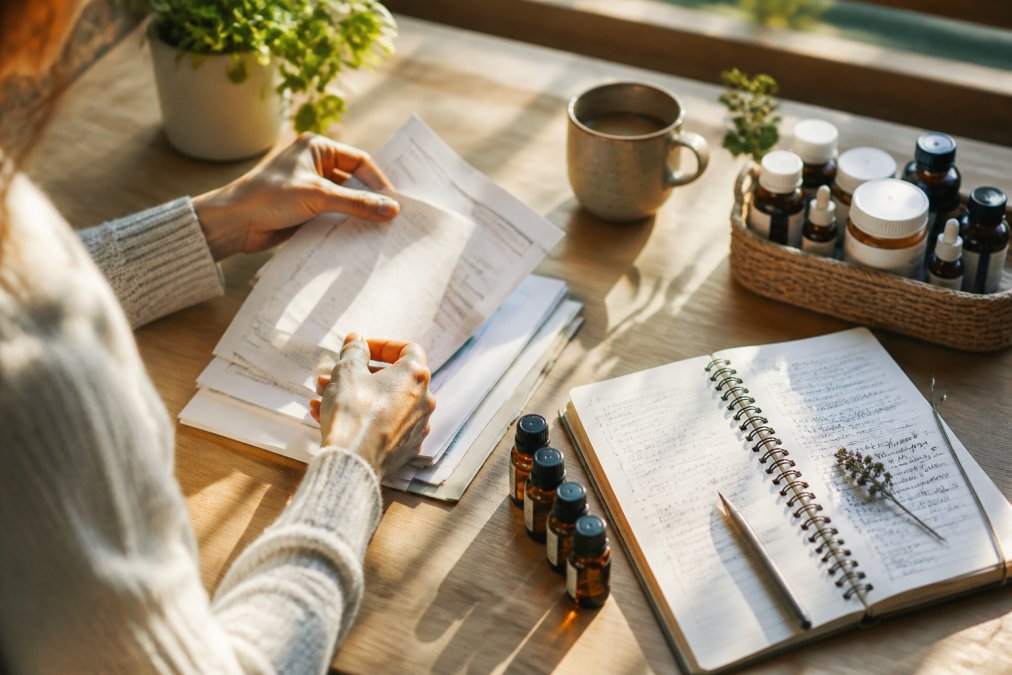
Start your preparation at least one week before your appointment. Gather your complete medication list, every prescription, over-the-counter drug, and supplement you take, including dosages and frequencies. Pull out the actual bottles or check your pharmacy records rather than relying on memory. This detail is critical because a clinical herbalist needs to assess potential drug-herb interactions before recommending any botanical support.
Document your health history, including any chronic conditions, past surgeries, allergies, and major health events. Prepare a symptom timeline describing when the problem started, how it's evolved, and what patterns you've noticed. Write down your wellness goals in concrete terms: "I want to wake without joint stiffness" or "I want my energy to last through the afternoon" rather than vague goals like "feel better."
List lifestyle factors that affect your health: stress levels, sleep quality, diet patterns, exercise habits, and recent major life changes.
Gathering your health history and medication list
Your medication list is non-negotiable. Bring the actual bottles or a detailed written list with drug names, dosages, and frequency. Include birth control, blood pressure medications, diabetes medications, antidepressants, pain relievers, and over-the-counter drugs. Many people forget to mention supplements they take regularly, but these matter for interaction assessment.
If you're seeing multiple doctors, gather records from each. Your primary care physician's notes, specialist reports, and recent lab results provide valuable context.
Create a symptom diary for three to five days before your appointment, tracking when symptoms occur, what makes them better or worse, intensity on a scale of one to ten, and how they affect your daily activities. Document any previous herbal or supplement use, noting what you took, for how long, and what happened.
Understanding Herbalism Intake Form Questions
The intake form you'll complete before or during your first consultation is a clinical assessment tool designed to gather specific information your practitioner needs to create a safe, effective protocol.
Why detailed intake matters for safety
A clinical herbalist's primary responsibility is safety. Certain herbs interact with medications. Some botanicals aren't appropriate during pregnancy or breastfeeding. Others can worsen specific health conditions. The detailed intake process identifies these risks before they become problems.
When your practitioner asks about your complete medication list, they're checking for interactions. Some herbs thin blood slightly, which matters if you're already taking a blood thinner. Others affect liver function, relevant if you're on medications metabolized by the liver. A clinical herbalist with nursing credentials understands these mechanisms and uses your intake information to screen for contraindications.
The intake form also captures patterns that inform protocol design. If you mention trouble sleeping, that affects which herbs are recommended and when you take them. If you note caffeine sensitivity, your practitioner won't recommend stimulating herbs. Honest answers about your health history help your practitioner understand what's already been tried and what approach might work better.
Common questions about symptoms and wellness goals
Expect questions about your primary health concern in granular detail. Rather than "Do you have joint pain?" a clinical herbalist asks where you feel it, whether it's constant or intermittent, what time of day is it worst, what activities affect it, and how it impacts your sleep or daily activities. These specifics matter because herbal protocols are tailored to patterns.
You'll also be asked about energy levels, digestion, mood, sleep quality, and stress. Your body is interconnected, someone seeking support for hormonal balance might have underlying digestive issues contributing to the problem. Questions about diet, exercise, and lifestyle aren't judgment; they're context for understanding your complete health picture.
Clinical Herbalist Consultation Cost and Service Packages
Understanding the investment involved in professional herbal consultation helps you make an informed decision about whether this approach fits your situation and budget.
What affects consultation pricing
Several factors influence the cost of an RN herbalism consultation: the practitioner's credentials and experience level, your geographic location, the format (virtual consultations sometimes cost less than in-person visits), and the complexity of your health situation.
Initial consultations generally cost more than follow-up visits because the intake process is comprehensive and time-intensive. Follow-up appointments focus on monitoring progress and refining the protocol, so they're typically shorter and less expensive. Some practitioners offer package deals where you pay for an initial consultation plus a set number of follow-up visits at a discounted rate. Ask directly about pricing structure and what's included in each service tier when considering booking.
Insurance and HSA/FSA eligibility for herbal consultations
Insurance coverage for herbal consultations varies significantly. Some health insurance plans cover visits with licensed herbalists or naturopathic doctors, particularly if the practitioner holds certain credentials or is licensed in your state. However, many standard health insurance plans don't cover herbalism consultations.
Contact your insurance company directly and ask whether they cover herbal medicine consultations. Health Savings Accounts (HSAs) and Flexible Spending Accounts (FSAs) may allow you to use funds for herbal consultations, depending on your plan's specific rules. Verify with your account administrator before booking, as rules vary by plan.
How to Book Your Online RN Herbalism Consultation
The booking process is straightforward, but understanding what happens at each step helps you prepare and sets realistic expectations.
Step-by-step booking process
Start by identifying a clinical herbalist whose credentials and approach resonate with you. At HighFiveHive Nature's Remedies-Kitchen Herbalism, the booking process begins on the website, where you'll find information about the practitioner's background, experience, and areas of focus. Once you've decided to book, you'll typically fill out an initial contact form or call to schedule.
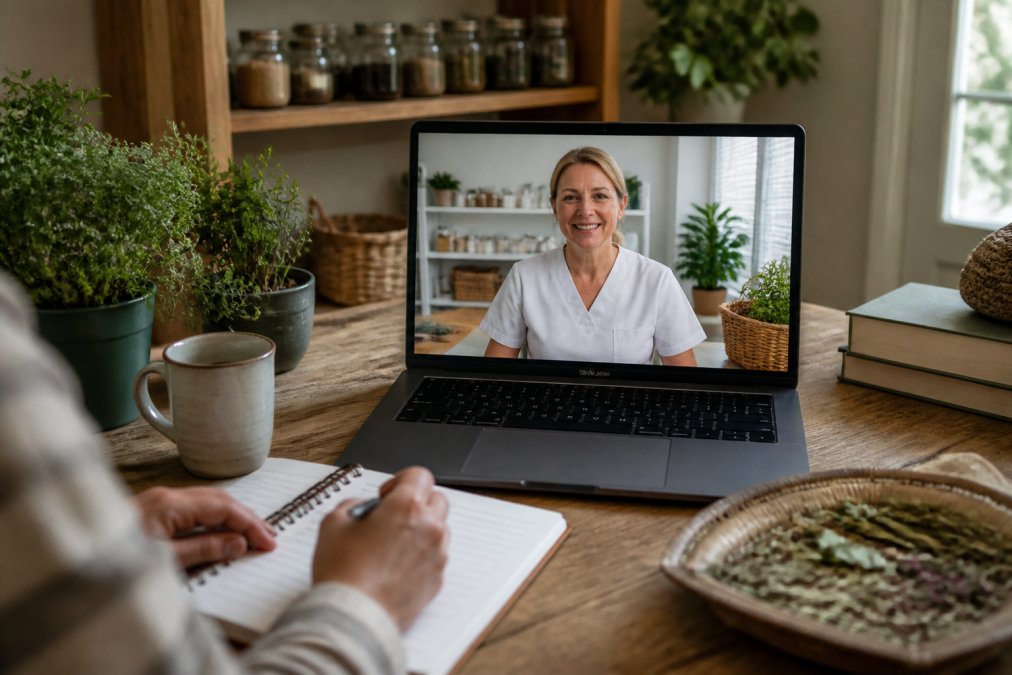
After scheduling, you'll receive a link to a detailed intake form. Complete it thoroughly before your appointment, the more detailed your responses, the more prepared your practitioner will be when you meet. You'll also receive information about the virtual consultation platform, typically a secure video conferencing system, along with login instructions and technical requirements. Test your technology beforehand to ensure your internet connection is stable, your camera and microphone work, and you have a quiet, private space for the appointment.
On the day of your appointment, log in a few minutes early with your medication list, health history notes, and any questions written down nearby.
Virtual consultation logistics and HIPAA compliance
Your online RN herbalism consultation happens through a secure, HIPAA-compliant video platform. HIPAA compliance means your health information is protected by federal privacy regulations, your practitioner is legally required to keep your data confidential and secure.
Choose a quiet, private space for your appointment where you feel comfortable speaking openly about sensitive health information. Have your notes, medication list, and any relevant health documents nearby for reference. Many practitioners send a written summary of the consultation and your personalized herbal protocol after the appointment, serving as a reference you can review later and share with your primary care doctor if relevant.
Why RN-Led Clinical Herbalism Differs From DIY Herbal Approaches
The difference between booking a professional RN herbalism consultation and following herbal recipes from online sources comes down to safety, personalization, and accountability.
The role of nursing credentials and drug-herb interaction assessment
A registered nurse brings clinical training that most DIY herbalists don't have. RNs understand pharmacology, pathophysiology, and how medications work in the body. This knowledge is essential for identifying potential interactions between herbs and drugs.
Drug-herb interactions are real and sometimes serious. Some herbs can reduce medication effectiveness. Others can amplify side effects. Some combinations can be dangerous. A clinical herbalist with nursing credentials knows these interactions and screens for them during intake. Someone following a recipe online has no way to assess these risks. An RN is also accountable to a licensing board, if something goes wrong, there are consequences. This accountability creates incentive for careful, evidence-based practice.
Safety, contraindications, and personalized protocols
Contraindications are situations where a particular herb is unsafe or inappropriate. Certain herbs shouldn't be used during pregnancy. Others can worsen specific health conditions. A clinical herbalist screens for these contraindications during intake. A DIY approach misses them entirely.
Personalization is another crucial difference. When you book an RN herbalism consultation, you're getting a protocol designed specifically for your body, health history, medications, and goals. A recipe you find online is generic and might work for some people while being completely wrong for others. Dosing differs based on your body weight, age, and health status. A clinical herbalist accounts for these variables. Follow-up monitoring is another safety feature of professional herbal consultation, your practitioner checks in on how you're responding, watches for unexpected reactions, and adjusts the protocol based on your actual experience.
Seeking professional herbal guidance is an investment in clarity and safety. When you book an RN herbalism consultation online with HighFiveHive Nature's Remedies-Kitchen Herbalism, you're accessing nursing expertise combined with deep botanical knowledge. The practitioner will assess your complete health picture, screen for interactions with your medications, design a personalized herbal protocol tailored to your specific goals, and monitor your progress through follow-up appointments. This professional approach transforms herbal support from guesswork into a strategic, evidence-informed wellness strategy.
Frequently Asked Questions
What is the difference between a clinical herbalist and a registered nurse herbalist?
A registered nurse (RN) herbalist combines formal nursing training with herbal medicine expertise, giving them clinical knowledge of how herbs interact with medications and existing health conditions. They understand anatomy, physiology, and pharmacology alongside botanical medicine. A clinical herbalist may have specialized herbalism training but not necessarily nursing credentials. When you book an RN herbalism consultation, you gain the safety assessment and medical perspective that comes with nursing licensure, plus the personalized herbal protocols that address your specific health goals.
How should I prepare for an online herbalism consultation?
Gather your complete health history, including current medications, supplements, and any chronic conditions. Write down your primary wellness goals and any symptoms you want to address. Note any previous reactions to herbs or supplements. Have your list of questions ready. Choose a quiet, private space for your virtual consultation with reliable internet. Keep a notebook nearby to record the herbal protocols and recommendations your practitioner suggests. This preparation helps your clinical herbalist conduct a thorough wellness assessment and create truly personalized recommendations.
Are herbal consultations covered by health insurance in the US?
Coverage varies by insurance plan and provider credentials. Some plans cover consultations with licensed healthcare practitioners, including RNs offering herbal medicine services, while others do not. Many people use Health Savings Accounts (HSAs) or Flexible Spending Accounts (FSAs) to pay for herbal consultations, as these accounts often cover integrative and preventive wellness services. Contact your insurance provider directly to confirm coverage for your specific plan, or ask HighFiveHive Nature's Remedies about billing options when you book your appointment.
What happens during the intake form and how does it affect my treatment plan?
The intake form collects detailed information about your health history, current symptoms, medications, lifestyle, and wellness goals. This information helps your RN herbalist identify potential drug-herb interactions, contraindications, and safety concerns before recommending any herbal protocols. A thorough intake ensures your personalized health plan addresses your unique needs rather than offering generic recommendations. The intake form is a confidential part of your one-on-one session and forms the foundation for safe, effective herbal medicine support tailored to your specific situation.
This article was written using GrandRanker


Leave a comment