
Evaluating Quality Standards for Herbal Remedy Sourcing
Table of Contents
- Why Quality Standards Matter in Herbal Remedy Sourcing
- Understanding the Core Quality Dimensions
- Herb Identity Testing Methods and Standards
- Building an Herb Supplier Quality Checklist
- Reading and Interpreting a Herbal Ingredient Certificate of Analysis
- Establishing Herb Sourcing Traceability
- Applying Quality Standards to Your Herbal Remedies
- Frequently Asked Questions
Last Updated: October 20, 2026
Why Quality Standards Matter in Herbal Remedy Sourcing
Evaluating quality standards for herbal remedy sourcing is the foundation of safe, effective herbal practice. Sourcing without rigorous standards gambles with potency, safety, and consistency.
At HighFiveHive Nature's Remedies-Kitchen Herbalism, we understand that quality begins in the field and continues through harvest, processing, storage, and handling.
The stakes are highest when herbs are used alongside prescription medications or for serious conditions. Anyone managing diabetes, hormonal concerns, or joint discomfort deserves transparency about what's actually in their remedy. This is where evaluating quality standards for herbal remedy sourcing becomes non-negotiable.
Quality standards protect you in three ways: identity (the material matches the label), safety (free from contaminants and adulterants), and efficacy (batch-to-batch consistency of therapeutic compounds). Without these safeguards, you're purchasing a mystery.
Understanding the Core Quality Dimensions
Identity and Authentication
The first question any herb buyer should ask: is this actually what it claims to be? Identity issues begin here, whether through accidental supply chain confusion or intentional substitution. A supplier claiming Usnea barbata might send a lower-cost lichen species; a "premium" mushroom blend might contain fillers or mycelium mixed with fruiting bodies.

Establishing true identity requires multiple verification points. Macroscopic examination catches obvious substitutions, a trained eye recognizes Turkey Tail mushrooms, Usnea lichen's branching structure, or dried root texture, but visual inspection fails for similar-looking materials and processed powders.
Microscopic analysis reveals species-specific cellular structures, while DNA barcoding and chromatographic fingerprinting provide definitive proof by matching genetic or chemical signatures against reference standards. These methods separate responsible suppliers from those operating on trust and assumption.
Purity, Safety, and Contaminants
Once identity is confirmed, the next question is: what else is in this material? Herbal materials harbor multiple contaminant categories, each requiring different testing and acceptance standards.
Heavy metals, lead, cadmium, arsenic, and mercury, accumulate in plants grown in contaminated soils. Some herbs concentrate certain metals more readily than others.
Pesticide residues are another major category. Even organic-certified materials may contain residues from environmental drift or previous land use. Testing should cover both legacy pesticides (banned but still in soil) and current-use pesticides relevant to the growing regions.
Microbial contamination, bacteria, molds, and other microorganisms, can develop during harvest, drying, storage, or processing. Some microbes produce toxins (like aflatoxins) that persist even after the organism is killed.
Consistency and Marker Compounds
A quality herbal remedy should perform the same way from batch to batch. This consistency depends on standardization, predictable amounts of the active compounds responsible for therapeutic effect. Marker compounds are specific chemical constituents that indicate quality and potency.
Turkey Tail mushrooms contain polysaccharides and beta-glucans; a quality supplier specifies minimum percentages. Reishi contains triterpenes and polysaccharides; a reliable extract should declare their percentages.
Standardization doesn't mean identical batches, natural variation is inevitable, but variation stays within defined limits. A supplier might specify "15-25% polysaccharides" rather than a fixed percentage, acknowledging natural variation while keeping potency in therapeutic range.
Establishing marker compounds requires chemical analysis through HPLC, mass spectrometry, or similar methods, which identify and quantify specific compounds to provide objective proof of potency and consistency.
Herb Identity Testing Methods and Standards
Multiple analytical approaches confirm botanical identity, each with different strengths. Understanding them helps you evaluate supplier claims and interpret certificates of analysis.
Thin-layer chromatography (TLC) creates a chemical fingerprint compared against reference standards.
High-performance liquid chromatography (HPLC) provides quantitative analysis, measuring exact amounts of specific compounds.
Gas chromatography-mass spectrometry (GC-MS) identifies compounds by mass and fragmentation patterns, excelling at detecting volatile compounds and adulterants other methods miss, particularly synthetic additives or contaminant residues.
DNA barcoding uses genetic sequencing to confirm identity at the species level by comparing plant DNA to known reference sequences.
The most rigorous suppliers use multiple complementary methods rather than a single test. A quality supplier's certificate of analysis references the specific methods used, reference standards applied, and acceptance criteria met.
Building an Herb Supplier Quality Checklist
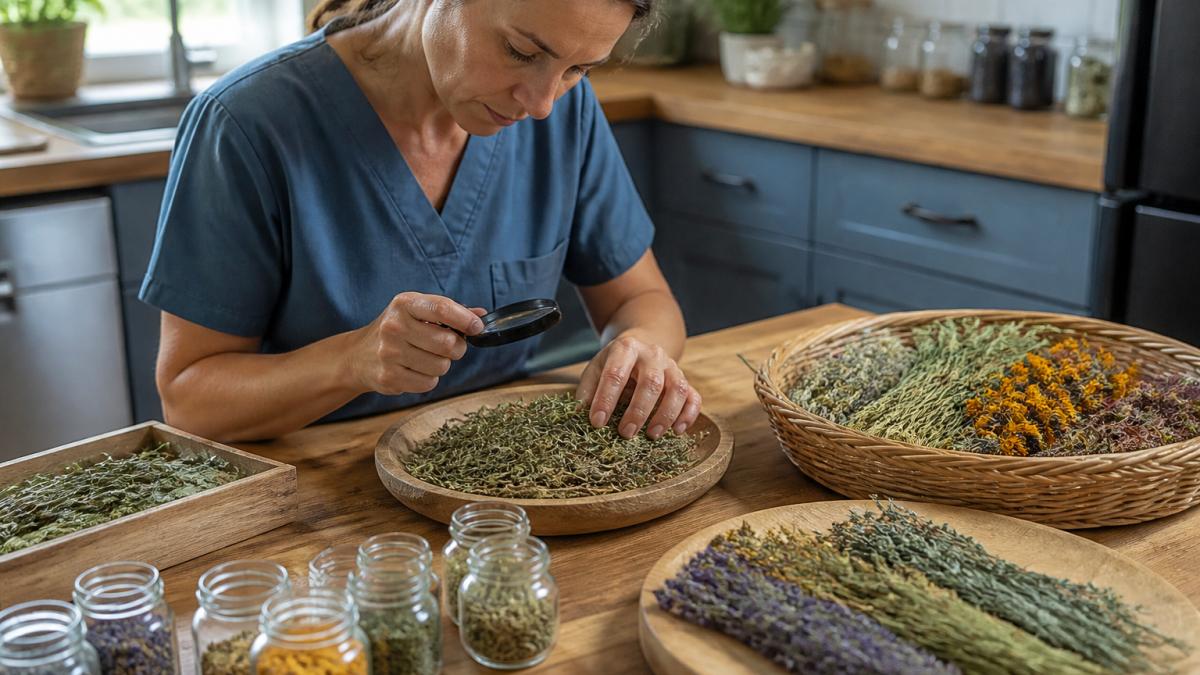
Evaluating quality standards for herbal remedy sourcing requires a systematic approach. Rather than accepting claims at face value, develop a structured checklist applied consistently to every potential vendor.
Supplier Documentation and Certifications
Start by requesting documentation demonstrating the supplier's commitment to quality, not to collect certificates, but to understand what systems they've actually implemented.
Ask for a Certificate of Analysis (CoA) for every batch you source.
Request information about Good Agricultural Practices (GAP) and Good Manufacturing Practices (GMP) compliance. GAP governs growing, harvest, and initial processing; GMP ensures processing, packaging, and storage follow documented procedures.
Ask about testing protocols and acceptance criteria: what they test for, how often, and against which standards, USP, European Pharmacopoeia, or internal specifications. Their testing philosophy reveals how seriously they take quality.
Inquire about third-party audits and certifications, independent lab verification, organic certification, non-GMO verification. Certifications aren't guarantees, but they represent external validation of quality systems.
Testing and Audit Records
Beyond individual CoAs, request audit records showing regular testing and consistent results over time. Stable, predictable results across multiple batches demonstrate control over sourcing and processing.
Wildwood Usnea Double Extraction Spray →
Ask about traceability documentation: can the supplier trace each batch to its source field, farm, or wildcrafted location, and document harvest date, drying methods, storage conditions, and processing steps? Complete traceability lets you investigate quality issues and understand variation.
Ask about the supplier's relationship with growers or collectors. Long-term relationships create incentives for consistent quality; suppliers who rotate sources purely on price typically have more variation.
Reading and Interpreting a Herbal Ingredient Certificate of Analysis
A Certificate of Analysis is the most important document you'll receive from a supplier. Learning to read one transforms it from an intimidating technical document into clear communication about quality.
The contaminant testing section reports heavy metals, pesticides, microbes, and other adulterants. Each result should include the contaminant tested, method, result (in ppm or CFU/g), and acceptance limit.
The marker compound section lists measured active constituents, their concentrations, and whether they fall within specification, directly addressing consistency and potency.
The analytical methods section describes how testing was done, technique, reference standards, and quality assurance procedures, letting you evaluate whether methods suit the material and the lab appears competent.
Finally, a signature block from the lab director or qualified analyst indicates personal accountability, someone with professional credentials stands behind the data.
Establishing Herb Sourcing Traceability
Traceability, tracking a batch from origin through processing to finished product, is essential for quality assurance and safety.
True traceability requires documentation at multiple points. Harvest documentation includes collection date, specific location (not just "imported from India"), and the responsible harvester.
Processing documentation follows drying, cleaning, extracting, and other transformations, recording dates, temperatures, durations, and equipment. This explains how the material changed and where quality issues might have originated.
Storage and handling documentation tracks location, conditions (temperature, humidity, light), and duration. Some herbs degrade rapidly in poor storage; understanding storage history explains variation in potency or contaminants.
The final step links your finished product back through this chain. Your supplier should be able to say: "This batch of our Wildwood Usnea Double Extraction Spray came from Usnea barbata harvested in [location] on [date], dried using [method], extracted using [process], and tested on [date] with results [specific data]."

This level of traceability requires detailed records and documentation systems, one of the clearest signals a supplier takes quality seriously.
Applying Quality Standards to Your Herbal Remedies
Define your own quality specifications before sourcing: acceptable purity for your intended use, marker compound ranges for your therapeutic claims, and required testing.
When evaluating suppliers, request standard CoAs for the materials you want. Don't accept vague assurances, ask for documentation and compare results against your specifications.
Establish an ongoing relationship with regular quality communication. Ask about seasonal variation, batch differences, and factors affecting consistency.
On receipt, verify batch numbers match the CoAs. Store materials cool, dry, and protected from light.
For those working with HighFiveHive Nature's Remedies-Kitchen Herbalism products, this quality foundation is already built in. Our double extraction tinctures, the Wildwood Usnea Double Extraction Spray at $22.50, the Three Mushroom Blend A Double Extraction Tincture at $30.00, and the Ancient Traditions 4 Mushroom Double Extraction Tincture at $34.50, are crafted with the rigorous standards outlined in this guide.

Evaluating quality standards for herbal remedy sourcing protects both your safety and the effectiveness of your natural wellness practice.
| Quality Dimension | Key Testing Method | What It Confirms | Why It Matters |
|---|---|---|---|
| Identity | DNA barcoding, HPLC fingerprinting, microscopy | Material is the correct botanical species | Prevents substitution and mislabeling |
| Heavy Metals | Atomic absorption spectroscopy, ICP-MS | Lead, cadmium, arsenic levels are below limits | Protects against toxic accumulation |
| Pesticide Residues | GC-MS, HPLC | Pesticide contamination is absent or below limits | Ensures safety for long-term use |
| Microbial Safety | Culture-based testing, PCR | Pathogenic bacteria and mold toxins are absent | Prevents foodborne illness and toxin exposure |
| Potency/Consistency | HPLC, TLC | Marker compounds meet specification range | Ensures therapeutic effect batch-to-batch |
United States Pharmacopeia monographs on herbal standards
FDA guidance on dietary supplement quality and safety
World Health Organization guidelines on quality control of herbal medicines
Frequently Asked Questions
How can you tell whether an herb is high quality?
High-quality herbs demonstrate consistent color, aroma, and texture specific to that plant species. They arrive with complete documentation: certificates of analysis showing identity confirmation, contaminant testing results, and marker compound levels. Reputable suppliers provide traceability from harvest site to finished product, follow good agricultural and manufacturing practices, and undergo third-party testing. Request these documents before purchasing. Quality also reflects proper storage conditions that preserve potency and prevent degradation over time.
What should a certificate of analysis for herbs include?
A herbal ingredient certificate of analysis must document plant identity (botanical name, part used, origin), marker compound levels specific to that herb, contaminant screening results (pesticide residues, heavy metals, microbial contamination), purity testing, batch number, testing date, and the laboratory's credentials. It should specify acceptance criteria met and the analytical methods used. Certificates from accredited third-party labs carry more weight than supplier self-testing. Always verify the certificate matches the product you received and review results against established standards for that herb.
How do you verify the identity of a medicinal herb?
Herb identity testing methods include macroscopic examination (visual inspection of color, shape, texture), microscopic analysis of plant tissue, thin-layer chromatography (TLC) to identify marker compounds, and high-performance liquid chromatography (HPLC) for precise chemical profiling. DNA barcoding confirms species identity and detects substitution or adulteration. Reputable suppliers use multiple methods rather than relying on appearance alone. Request test results showing which identity methods were employed and what standards the herb met. Standardized formulations should include identity verification for every botanical ingredient.
What contaminants should be tested for in herbal ingredients?
Herbal materials require screening for pesticide residues, heavy metals (lead, cadmium, arsenic, mercury), microbial contamination (E. coli, Salmonella, total aerobic count), aflatoxins and other mycotoxins, and residual solvents if extraction methods were used. Good agricultural practices and good collection practices reduce risk at the source, but testing confirms safety. Acceptance criteria vary by herb type and intended use. Suppliers should provide detailed testing reports specifying which contaminants were screened and at what detection limits. This protects end users from batch-to-batch variation in safety.
Why is traceability important in herb sourcing?
Herb sourcing traceability creates accountability from harvest site through finished product. It allows you to verify growing conditions, harvesting methods, storage, processing, and quality control at each step. Traceability enables rapid response if contamination or adulteration is discovered, supports compliance with regulatory requirements, and documents ethical and sustainable sourcing practices. Suppliers should provide harvest location, harvest date, storage conditions, and processing methods. This transparency is especially critical for at-risk species and ensures you're sourcing from suppliers committed to conservation and good practices throughout the supply chain.
How often should herbal ingredient quality be monitored?
Ongoing monitoring should occur with every new batch or shipment. Review certificates of analysis, inspect physical appearance, verify storage conditions, and confirm supplier documentation remains current. Establish a risk-based testing plan: high-risk herbs or suppliers warrant more frequent testing, while stable, well-documented suppliers may use less frequent spot checks. Monitor shelf life and stability; many herbal products degrade over time, affecting both efficacy and safety. Maintain supplier scorecards tracking compliance history. This ongoing oversight prevents batch-to-batch variation and catches emerging issues before they affect your customers or patients.


Leave a comment