
Holistic Hormonal Support for Women: A 2026 Guide
Table of Contents
- Understanding Your Endocrine System and Hormonal Homeostasis
- Signs of Hormonal Imbalance in Women
- Nutrition and Diet for Hormonal Balance
- Top Herbs and Botanicals for Hormonal Support
- Best Supplements for Hormone Balance
- Lifestyle Changes for Hormonal Health
- Hormonal Testing and Diagnostics
- Holistic Hormonal Support Across Life Stages
Last Updated: August 10, 2026
Understanding Your Endocrine System and Hormonal Homeostasis
Your endocrine system is a network of glands that produce hormones, chemical messengers controlling everything from metabolism to mood. Hormonal homeostasis is the state of equilibrium where your endocrine system maintains stable hormone levels, allowing optimal function.
At HighFiveHive Nature's Remedies-Kitchen Herbalism, we recognize that holistic hormonal support for women means addressing root causes rather than treating symptoms in isolation. When stress disrupts cortisol, inflammation damages hormone-receptor sites, or nutrient deficiencies limit hormone synthesis, the entire cascade becomes compromised. Your liver processes estrogen and progesterone for elimination through bile, your gut bacteria influence estrogen reabsorption, and your adrenal glands respond to stress by releasing cortisol, which can suppress reproductive hormones if chronically elevated.
Signs of Hormonal Imbalance in Women
Hormonal imbalance manifests as irregular menstrual cycles, unexplained weight gain, persistent fatigue, mood swings or depression, brain fog, hot flashes or night sweats, low libido, and skin changes like acne or dryness. The challenge: these same symptoms can point to multiple imbalances. Irregular periods might indicate estrogen dominance, low progesterone, thyroid dysfunction, or polycystic ovary syndrome. This is why targeted assessment matters before choosing your support strategy.
Additional signs include joint pain, hair loss, anxiety, insomnia, digestive issues, and recurrent infections. The relationship between hormones and inflammation is bidirectional, chronic inflammation disrupts hormone signaling, while hormonal imbalance triggers inflammatory cascades.
Nutrition and Diet for Hormonal Balance
What you eat directly influences hormone production, metabolism, and elimination. Start with protein at every meal, your body uses amino acids to synthesize hormones and the enzymes that regulate hormone metabolism. Include grass-fed beef, wild-caught fish, pasture-raised poultry, eggs, legumes, and nuts.
Healthy fats are non-negotiable. Cholesterol is the precursor for all steroid hormones: estrogen, progesterone, testosterone, and cortisol. Include omega-3 rich sources like salmon and sardines; monounsaturated fats from olives, avocados, and nuts; and saturated fats from coconut oil and grass-fed butter.
Fiber supports the gut-hormone axis. Dietary fiber feeds beneficial bacteria that regulate estrogen reabsorption through the enterohepatic circulation. Inadequate fiber leads to estrogen reabsorption in the colon, raising circulating estrogen and contributing to estrogen dominance. Aim for 25-35 grams daily from vegetables, fruits, legumes, and whole grains.
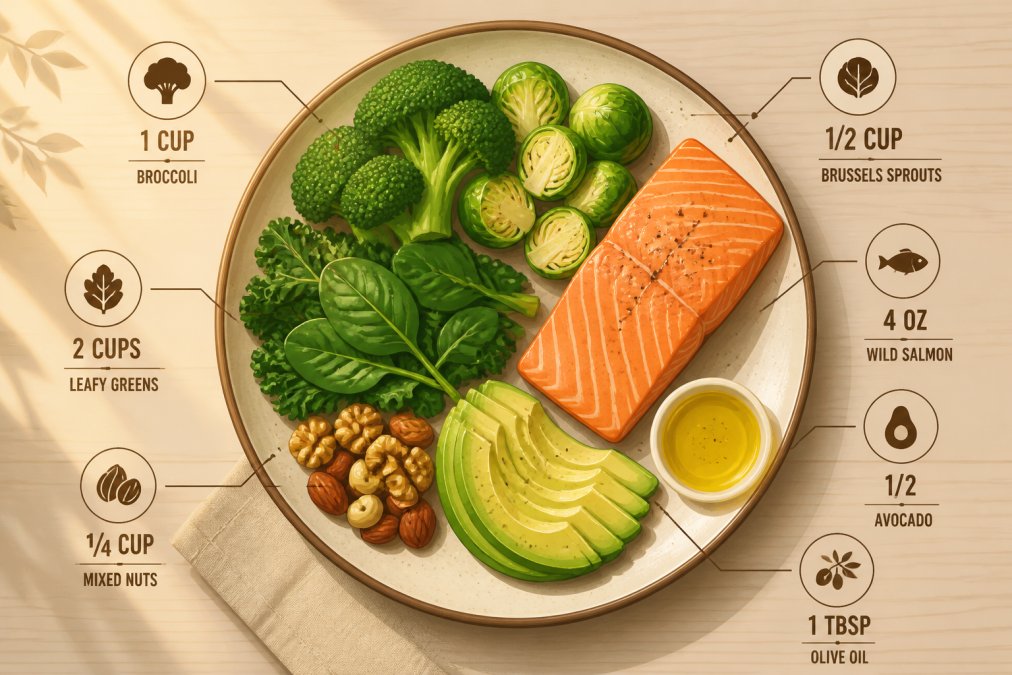
Cruciferous Vegetables and Estrogen Metabolism
Cruciferous vegetables, broccoli, Brussels sprouts, cabbage, cauliflower, and kale, contain glucosinolates that support estrogen metabolism. When digested, these compounds convert to indoles and sulforaphane, which enhance liver detoxification pathways and promote excess estrogen elimination. Include cruciferous vegetables 4-5 times weekly. Raw consumption preserves more glucosinolates, but lightly steamed versions are easier to digest in larger quantities.
Healthy Fats and Hormone Production
Dietary fat quality directly influences hormone production. A common mistake is overconsumption of seed oils high in omega-6 linoleic acid without balancing omega-3 intake. This skews the inflammatory state, impairing hormone receptor function. Include fatty fish 2-3 times weekly for EPA and DHA. Add ground flaxseeds, chia seeds, or walnuts for plant-based omega-3s. Use olive oil and avocado oil for salads and low-heat cooking.
Grass-fed and pasture-raised animal products contain higher levels of conjugated linoleic acid and fat-soluble vitamins like vitamin A and K2, which support hormone metabolism.
Top Herbs and Botanicals for Hormonal Support
Botanical medicine offers concentrated compounds that support specific aspects of hormonal regulation.
Vitex (Chasteberry) has been studied for its effects on progesterone support and cycle regularity. It appears to work through the hypothalamic-pituitary axis, the master control center for reproductive hormones. Many women report improved cycle length and reduced premenstrual symptoms within 2-3 months of consistent use.
Red Clover contains isoflavones, a type of phytoestrogen that may help during menopausal transitions. Unlike synthetic hormone replacement, phytoestrogens bind weakly to estrogen receptors, providing gentle support without pharmaceutical potency.
Dong Quai (Chinese angelica) has been used traditionally for menstrual cycle support and is sometimes called "female ginseng."
Licorice Root supports adrenal function and cortisol regulation. Because stress and elevated cortisol suppress reproductive hormones, supporting adrenal resilience indirectly supports hormonal balance. Use under guidance if you have hypertension, as licorice can raise blood pressure in sensitive individuals.
Peony Root (white peony) pairs traditionally with licorice for hormonal support, particularly for cycle irregularities and mood symptoms.
Maca is a Peruvian adaptogenic herb used for reproductive vitality and sexual function.
These botanicals work best when combined with dietary changes and lifestyle support.
Best Supplements for Hormone Balance
Beyond whole foods and botanicals, specific nutrients support hormonal function when dietary intake is inadequate.
Vitamin D functions as a hormone itself, regulating calcium absorption, immune function, and gene expression. Low vitamin D is associated with irregular periods, reduced fertility, and worse menopausal symptoms. Most women benefit from 1,000-4,000 IU daily. Optimal ranges for hormonal health are typically 40-60 ng/mL.
Magnesium supports over 300 enzymatic reactions, including those involved in hormone synthesis and cortisol regulation. Glycinate and threonate forms are better absorbed than oxide or citrate. Typical doses range from 200-400 mg daily.
B Vitamins support liver detoxification pathways critical for hormone metabolism. B6, B12, and folate are particularly important. Methylated forms are more bioavailable than synthetic versions.
Zinc is essential for reproductive hormone synthesis and immune function. Typical doses are 15-30 mg daily; higher doses should be balanced with copper.
Omega-3 Fatty Acids (EPA/DHA) reduce inflammation and support hormone receptor function. Typical doses are 1,000-2,000 mg combined EPA/DHA daily.
Inositol (particularly myo-inositol) supports insulin sensitivity and ovarian function. It's particularly helpful for women with polycystic ovary syndrome or insulin resistance. Doses typically range from 2,000-4,000 mg daily.
Quality matters immensely. Third-party testing through NSF, USP, or ConsumerLab ensures you're getting what the label claims without contaminants.
Lifestyle Changes for Hormonal Health
Hormones respond to every aspect of how you live: what you eat, how you sleep, whether you move your body, and how you manage stress.
Sleep, Circadian Rhythm, and Hormone Production
Sleep is where hormone production happens. During deep sleep, your body synthesizes growth hormone and repairs tissues. Your circadian rhythm directly influences cortisol, melatonin, and reproductive hormone timing. Most women need 7-9 hours nightly for optimal hormonal function. Chronic sleep deprivation elevates cortisol, which suppresses progesterone and disrupts the menstrual cycle.
Protect your sleep environment. Keep your bedroom cool (around 65-68°F), dark, and quiet. Establish a consistent sleep schedule, going to bed and waking at the same time daily. Avoid bright light in the evening, especially blue light from screens. Limit caffeine after 2 p.m. and alcohol in the evening, as it disrupts deep sleep stages where most hormone synthesis occurs.

Stress Management and Cortisol Regulation
Cortisol has a natural rhythm, highest in the morning, gradually declining through the day, lowest at night. Chronic stress flattens this rhythm, keeping cortisol elevated throughout the day and night. Elevated cortisol suppresses progesterone, disrupts thyroid function, and promotes inflammation.
Walking in nature for 20-30 minutes daily reduces cortisol effectively. Box breathing, inhale for 4 counts, hold for 4, exhale for 4, hold for 4, activates the vagus nerve, signaling safety to your nervous system. Practice for 5-10 minutes daily.
Meditation and mindfulness practices reduce cortisol and improve emotional regulation. Even 10 minutes daily produces measurable changes in stress hormone levels and inflammatory markers. Strength training and moderate-intensity exercise support hormonal balance by improving insulin sensitivity and reducing inflammation. Balance challenging workouts with recovery days, adequate nutrition, and sleep.
Limit information overload and social media. Constant notifications trigger cortisol release. Connection matters, time with friends, family, or community reduces cortisol and activates bonding hormones like oxytocin.
Hormonal Testing and Diagnostics
Understanding your specific hormonal picture guides more targeted support. Testing provides objective data rather than guessing.
Cycle Mapping with Basal Body Temperature is accessible and free. Your basal body temperature rises slightly after ovulation due to progesterone. A sustained temperature rise of at least 0.4-0.8°F post-ovulation suggests adequate progesterone.
Salivary Hormone Testing measures cortisol at multiple time points to assess your cortisol rhythm. It also measures estrogen, progesterone, DHEA, and testosterone. Saliva testing captures free (bioavailable) hormone levels rather than total hormone.
Serum Blood Testing through your primary care physician measures FSH, LH, estradiol, progesterone, testosterone, and thyroid markers (TSH, free T4, free T3, thyroid antibodies). Timing matters; progesterone should be drawn in the luteal phase when levels are highest.
Thyroid Panel should include TSH, free T4, free T3, TPO antibodies, and thyroglobulin antibodies. Many women with hormonal symptoms actually have thyroid dysfunction. Optimal TSH for fertility and hormonal balance is typically 0.5-2.5 mIU/L.
Metabolic Markers like fasting glucose, insulin, and HbA1c reveal insulin sensitivity. Insulin resistance drives estrogen dominance, irregular cycles, and weight gain.
Inflammation Markers like high-sensitivity C-reactive protein (hs-CRP) and homocysteine indicate systemic inflammation affecting hormone signaling.
Holistic Hormonal Support Across Life Stages
Hormonal needs shift dramatically across your lifespan. What supports a 25-year-old differs from what a 45-year-old or 65-year-old requires.
Menstrual Cycle Health and Menopause Support
A healthy menstrual cycle typically lasts 21-35 days with 3-7 days of bleeding. Regularity matters more than a specific length. During the follicular phase (days 1-14), estrogen rises, supporting energy, mood, and social engagement. During the luteal phase (days 15-28), progesterone rises, creating a more introspective state. Your body naturally calls for more rest and nourishing foods.
Premenstrual symptoms like breast tenderness, bloating, and mood changes signal that progesterone is dropping. Severe symptoms (PMDD) warrant professional assessment.
Menopause marks the transition from reproductive years to post-reproductive life. The rapid decline in estrogen and progesterone creates significant symptoms in many women: hot flashes, night sweats, vaginal dryness, mood changes, sleep disruption, and joint pain. Red clover and sage have research supporting their use for hot flashes. Adequate protein, calcium, and vitamin D become increasingly important for bone health.
Age-Specific Protocols for Hormonal Wellness
Ages 20-35 (Reproductive Prime): Focus on establishing healthy foundations. Optimize nutrition, manage stress, prioritize sleep, and address any cycle irregularities early.
Ages 35-45 (Perimenopause Begins): Progesterone naturally declines in the late 30s and 40s. Prioritize liver support through cruciferous vegetables and bitter herbs. Increase magnesium and B vitamins. Manage stress aggressively.
Ages 45-55 (Perimenopause and Early Menopause): Sleep becomes precious. Bone density preservation becomes urgent. Include resistance training 2-3 times weekly. Botanical support like red clover, sage, and licorice becomes particularly relevant.
Ages 55+ (Post-Menopause): The goal shifts to maintaining metabolic health, bone density, and cardiovascular function. Strength training, adequate protein, and micronutrient density become non-negotiable.
HighFiveHive Nature's Remedies-Kitchen Herbalism recognizes that hormonal support isn't one-size-fits-all. Your age, life stage, specific symptoms, and individual constitution all shape what approach will work best for you.
Hormonal imbalance doesn't resolve through willpower or wishful thinking. It requires a coordinated approach: nutrition that supplies the building blocks for hormone synthesis, botanicals that support specific regulatory pathways, lifestyle practices that protect sleep and manage stress, and testing that reveals your individual hormonal picture. HighFiveHive Nature's Remedies-Kitchen Herbalism brings 40 years of nursing expertise to this process, helping you identify which interventions matter most for your unique situation. Start with foundational shifts, sleep, stress management, nutrient-dense food, and build from there. Shop Now to explore RN-led herbal remedies designed specifically for women's hormonal wellness.
Frequently Asked Questions
How can I balance my hormones holistically?
Hormonal balance requires a multi-faceted approach: prioritize nutrient-dense foods rich in healthy fats and fiber, incorporate adaptogenic herbs and targeted supplements, manage stress through daily practices, ensure consistent sleep patterns, and reduce exposure to hormone-disrupting chemicals. Work with a qualified healthcare provider to identify your specific imbalances through testing, then tailor your protocol to address your unique needs rather than following generic advice.
What are the best supplements for hormone balance?
The best supplements depend on your specific hormonal concerns and testing results. Common supportive options include magnesium for stress and menstrual health, omega-3 fatty acids for inflammation reduction, vitamin D for reproductive health, and adaptogenic herbs like ashwagandha for cortisol regulation. Bioavailability matters: quality and form affect how your body absorbs these nutrients. Always consult a healthcare professional before starting supplements, especially if you take medications, to prevent interactions.
What are the signs of hormonal imbalance in women?
Common signs include irregular or heavy menstrual periods, persistent fatigue despite adequate sleep, unexplained weight gain or difficulty losing weight, mood swings or anxiety, hot flashes or night sweats, low libido, brain fog, and skin changes like acne or dryness. Hormonal fluctuations vary by age and cycle phase, so tracking symptoms over time helps identify patterns. If symptoms persist or worsen, hormonal testing through your healthcare provider can clarify whether imbalance is present.
How long does it take to see results from holistic hormonal support?
Most women notice subtle improvements in energy, mood, or sleep within 2-4 weeks of consistent dietary and lifestyle changes. More significant shifts in menstrual regularity, weight management, or symptom reduction typically appear within 6-12 weeks as your body adjusts. Individual timelines vary based on the severity of imbalance, underlying health conditions, and how closely you follow your protocol. Patience and consistency matter more than expecting overnight results.
Can I use holistic hormonal support alongside my medications?
Yes, but coordination with your healthcare provider is essential. Some herbs and supplements can interact with medications, particularly birth control, thyroid medications, and blood thinners. An RN-led approach ensures professional oversight of potential interactions and helps you integrate natural support safely with your existing treatment plan. Never stop or adjust medications without medical guidance, even when adding complementary approaches.
What role does the gut-hormone axis play in hormonal health?
Your gut bacteria influence estrogen metabolism, nutrient absorption, and immune function, all critical for hormonal balance. A healthy microbiome supports the estrobolome, which helps regulate circulating estrogen levels. Fiber-rich foods, fermented foods, and reducing inflammatory triggers strengthen gut health and indirectly support hormonal homeostasis. Inflammation in the gut can disrupt hormone signaling, so addressing digestive health is part of comprehensive hormonal support.
This article was written using GrandRanker


Leave a comment