
Is Cinnamon Supplement Worth It for Diabetes?
Table of Contents
- What the Research Actually Shows for Type 2 Diabetes
- Ceylon vs Cassia Cinnamon for Diabetes: Which Is Safer?
- Safe Dosage of Cinnamon for Blood Sugar Support
- Cinnamon Supplement Drug Interactions You Need to Know
- How to Choose a Cinnamon Supplement That's Actually Worth It
- Is a Cinnamon Supplement Worth It for Diabetes? The Honest Verdict
- Frequently Asked Questions
Last Updated: September 21, 2026
What the Research Actually Shows for Type 2 Diabetes
The short answer: cinnamon shows real promise for blood sugar support, but it is not a treatment for diabetes. This guide from HighFiveHive Nature's Remedies-Kitchen Herbalism examines what the evidence actually supports, where it falls short, and how to decide whether a cinnamon supplement belongs in your routine. (Source: National Center for Complementary and Integrative Health)

Cinnamon contains bioactive compounds, including cinnamaldehyde, that appear to influence glucose metabolism. Small human clinical studies and several systematic reviews suggest cinnamon may modestly lower fasting blood glucose in people with type 2 diabetes mellitus. The keyword here is modestly. No credible research positions cinnamon as a replacement for metformin, insulin, or any prescribed therapy.
What most guides get wrong is the framing. They ask "does cinnamon work?" when the better questions are "which cinnamon, at what dose, and alongside what care?" Research from the National Center for Complementary and Integrative Health makes the same point: herbal approaches are studied as complements to standard care, not substitutes.
Here is the honest throughline for this article. A cinnamon supplement can be worth it, but only when you pick the right species, dose it sensibly, and keep your doctor in the loop.
Ceylon vs Cassia Cinnamon for Diabetes: Which Is Safer?
Ceylon cinnamon is the safer daily choice because it contains far less coumarin than Cassia. That single difference matters more than most buyers realize, and it is where most guides stop short of giving you anything usable.
How to Tell Ceylon From Cassia Before You Buy
Label reading is your first line of defense, but it is not enough on its own. Here is what actually works:
- Look for the botanical name. Ceylon should be labeled Cinnamomum verum or Cinnamomum zeylanicum. Cassia shows up as Cinnamomum cassia, Cinnamomum aromaticum, or sometimes just "cinnamon" with no species at all. Unspecified cinnamon is almost always Cassia.
- Check the country of origin. Ceylon is most often sourced from Sri Lanka, Madagascar, or the Seychelles. Cassia typically comes from Indonesia, China, or Vietnam.
- Inspect the sticks if you buy whole. Ceylon quills are thin, tightly rolled, and have many layers that crumble easily. Cassia sticks are thick, hard, and roll inward from one side like a scroll.
- Taste it. Ceylon is subtle, floral, and slightly sweet. Cassia hits hard and spicy with a more aggressive bite.
- Watch the price. Ceylon costs meaningfully more per ounce than Cassia. A suspiciously cheap "Ceylon" product is worth a second look at the fine print.
What This Means for a Daily Supplement
If you take cinnamon every day for blood sugar support, the species question is not academic. It is the difference between a low-risk habit and a slow accumulation of a compound your liver has to clear. For occasional culinary use, Cassia is not a problem. For a supplement you plan to take for months or years, Ceylon is the species that fits the use case.
Safe Dosage of Cinnamon for Blood Sugar Support
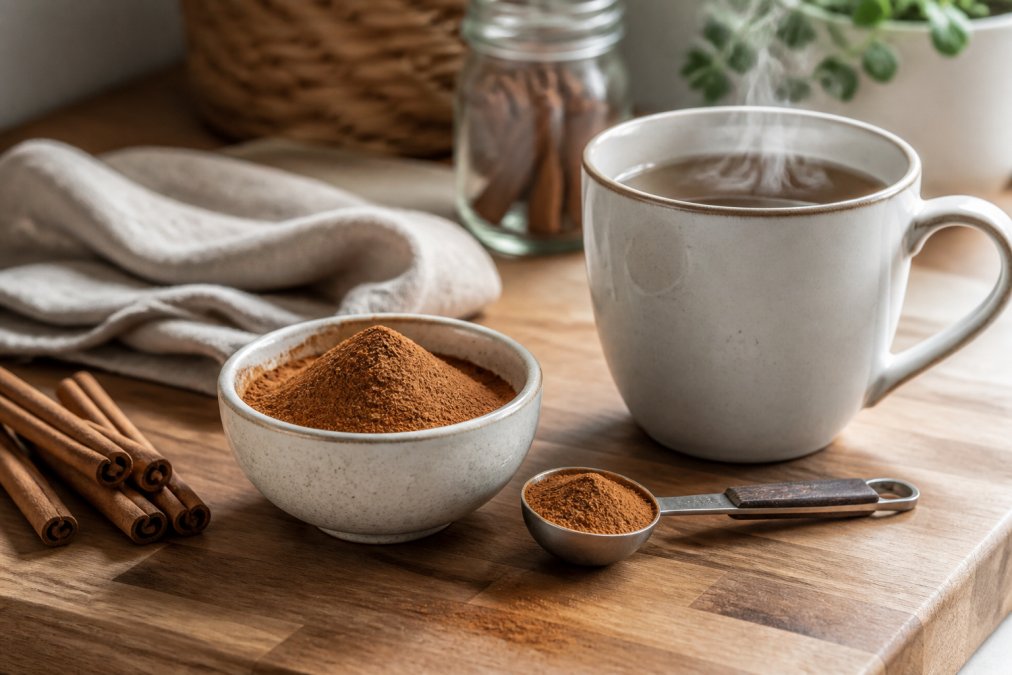
A common starting range in studies is roughly 1 to 6 grams of cinnamon per day, but there is no official standardized dose. Anyone on diabetes medication should confirm a dose with their provider first.
- Start low, around 1 gram daily, and observe how your body responds.
- Choose Ceylon for anything taken daily over months.
- Split doses across meals rather than taking one large amount.
- Track fasting blood glucose and HbA1c levels with your provider.
Cinnamon Supplement Drug Interactions You Need to Know
Cinnamon can interact with diabetes medications, especially when taken in concentrated supplement form rather than as a spice. This is the section most articles skip, and it is the one that matters most for safety.
Other interactions to watch:
- Blood thinners. Cassia's coumarin can add to anticoagulant effects. If you take warfarin, talk to your provider before starting cinnamon.
- Liver medications. High-dose Cassia over time stresses the liver, which matters if you already take hepatically processed drugs.
- Blood pressure drugs. Some cinnamon blends may have mild blood-pressure effects, so monitor if you take antihypertensives.
- Metformin. No direct interaction is well established, but because both affect glucose, the combined effect on readings is what your provider needs to track.
How to Bring This Up With Your Endocrinologist
Most people never have this conversation, and that is the real risk. A cinnamon supplement does not need permission to be safe, but it does need disclosure to be managed well. Here is a practical way to raise it.
Before the appointment:
- Write down the exact product name, species, dose per serving, and how often you take it.
- Note any changes in your fasting blood glucose readings since you started.
- Bring the bottle or a photo of the supplement facts panel.
Questions worth asking:
- Does this interact with any of my current medications, especially insulin, sulfonylureas, or blood thinners?
- Should I adjust my monitoring schedule while I trial this?
- What glucose range should prompt me to stop taking it and call you?
- Is there a reason you would prefer I avoid cinnamon entirely given my specific regimen?
- How long should I trial it before we evaluate whether it is helping?
What to track and share:
- Fasting blood glucose readings, ideally at a consistent time each morning.
- Any episodes of dizziness, shakiness, sweating, or confusion that could signal hypoglycemia.
- HbA1c at your next scheduled lab draw, compared with your prior result.
The Monitoring Piece Most People Skip
A cinnamon supplement is not something you add and forget. The whole point of taking it is to influence blood sugar, which means the only way to know whether it is helping, doing nothing, or pushing you too low is to measure. If you are not already checking your glucose regularly, starting a cinnamon supplement without that habit is guesswork.
How to Choose a Cinnamon Supplement That's Actually Worth It
The best cinnamon supplement is one that names its species, states its dose clearly, and comes from a maker who is transparent about sourcing. Skip anything that hides behind a "proprietary blend."
- Species named on the label (Ceylon / Cinnamomum verum preferred for daily use).
- Clear milligram or gram amount per serving, not a vague blend.
- Third-party testing for purity and heavy metals.
- No filler-heavy formulas padded with cheap Cassia.
| Option | Cinnamon Type | Format | Best For |
|---|---|---|---|
| SlimRoots Weight Tea Blend | Cinnamomum verum (Ceylon) | Loose-leaf tea | Daily blood sugar and weight support |
| Synergy Spice Herbal Tea | Cinnamon (culinary) | Loose-leaf tea | Gentle, food-based daily use |
| Ruby Glow Nettle Hibiscus Tea | Cinnamon (culinary) | Loose-leaf tea | Cardiovascular and stress support |
| Generic capsule | Often unspecified | Capsule | Only if species is confirmed on label |
Is a Cinnamon Supplement Worth It for Diabetes? The Honest Verdict
Cinnamon works best as one thread in a larger fabric of care. Species, dose, and medical oversight decide whether it helps or harms.
HighFiveHive Nature's Remedies-Kitchen Herbalism offers Ceylon-based blends designed to complement, not replace, your existing care.
Frequently Asked Questions
How much cinnamon is safe to take daily for blood sugar support?
Most clinical trials used 1 to 6 grams of cinnamon per day, roughly half a teaspoon to two teaspoons. For Cassia cinnamon, keep intake below 2 grams daily because of coumarin, which can stress the liver. Ceylon cinnamon contains far less coumarin and is safer for daily, long-term use. Always check with your healthcare provider before starting a supplement, especially if you take diabetes medication.
Does cinnamon interact with common diabetes medications like metformin?
Cinnamon can lower blood sugar on its own, so combining it with metformin, insulin, or sulfonylureas may increase the risk of hypoglycemia. There is no confirmed direct pharmacological interaction with metformin, but the additive glucose-lowering effect matters. Monitor your blood glucose closely and tell your prescriber if you add cinnamon. Do not change your medication dose without medical guidance.
Can cinnamon supplements replace prescribed diabetes medication?
No. Cinnamon is a complementary dietary intervention, not a substitute for prescribed treatment. The research shows modest improvements in fasting blood glucose and HbA1c levels, but these are not enough to replace metformin or insulin. Stopping or reducing medication without medical supervision can be dangerous. Use cinnamon as part of a broader plan that includes your prescribed care, diet, and blood glucose monitoring.
What is the difference between Cassia and Ceylon cinnamon for health?
Cassia (Cinnamomum cassia) is the common grocery-store cinnamon and contains significant coumarin, which can cause hepatotoxicity at high doses. Ceylon (Cinnamomum verum) has much lower coumarin and is considered safer for daily use. Both contain cinnamaldehyde and bioactive compounds that may support glycemic control, but if you plan to take cinnamon daily for blood sugar, Ceylon is the safer choice.
Are there side effects to taking high-dose cinnamon supplements?
High doses of Cassia cinnamon can cause liver stress due to coumarin, and some people experience mouth sores, digestive upset, or allergic reactions. Cinnamon may also lower blood sugar too much when combined with diabetes drugs, leading to hypoglycemia. If you take blood thinners or have liver conditions, talk to your provider first. Stick to tested doses and choose Ceylon cinnamon for regular use.
Managing blood sugar takes consistency, and no single herb carries that weight alone. HighFiveHive Nature's Remedies-Kitchen Herbalism brings 40 years of nursing experience and an RN-led kitchen herbalism approach to natural diabetes support, with Ceylon-based teas like SlimRoots and Synergy Spice built for daily routines. Get started with HighFiveHive Nature's Remedies-Kitchen Herbalism and support your blood sugar goals with formulas made by someone who understands the stakes.


Leave a comment