
Kitchen Herbs for Digestion: 9 Options and How to Use Them
Last Updated: November 10, 2026
Quick Summary
Ginger, peppermint, and fennel are among the most commonly used kitchen herbs for digestion, typically taken as tea or added to meals. Ginger is the herb most often chosen for queasy stomachs, while peppermint is widely associated with easing digestive distress. Kitchen herbs digestion routines work best when started with one or two herbs at a time.
- Ginger is the herb most often chosen for nausea and stomach discomfort.
- Peppermint can worsen heartburn in people prone to reflux.
- Dried herbs need about one-third of the fresh amount.
- A teaspoon of dried mint or basil roughly replaces a tablespoon of fresh.
- Start with one or two herbs and keep notes on how your body responds.
Table of Contents
- Why Kitchen Herbs Are Worth Knowing for Digestion
- 1. Ginger: The Most Studied Herb for Nausea and Stomach Discomfort
- 2. Peppermint: Relaxing the Digestive Tract Muscles
- 3. Fennel and Other Herbs for Gas and Bloating
- 4. Turmeric, Basil, Sage, and Other Everyday Herbs
- How to Use Herbs for Digestive Health in Everyday Cooking
- Safety, Medication Interactions, and When to See a Clinician
- Choosing Your First Herbs and Trying a Tea or Tincture
- Frequently Asked Questions
Why Kitchen Herbs Are Worth Knowing for Digestion
Most people reach for antacids before they reach for the spice rack, yet many everyday kitchen herbs have a long record of use for stomach discomfort. A 2025 review of medicinal plants for a healthy gut microbiome has been cited 14 times in academic literature, and Medicinal Plants for a Healthy Gut Microbiome evaluates plants such as globe artichoke, aloe vera, and German chamomile for their potential gut microbiome support.
Kitchen herbalism means using herbs you already cook with, in forms you already understand, such as fresh leaves, dried spices, teas, and simple infusions, which is why kitchen herbs digestion routines feel so approachable. It is a gentler starting point than concentrated products, but it still deserves respect. The sections below walk through nine common options, how people typically use them, and where the evidence is strong, limited, or still developing. Integrating these culinary staples into your evening ritual provides a natural bridge to the balanced formulations offered by Feel Good Tea Co.
1. Ginger: The Most Studied Herb for Nausea and Stomach Discomfort
Ginger is the herb most often chosen for queasy stomachs. It is a warming root that people commonly sip as tea, grate into meals, or add to broths. Recent 2026 guidance from Notre Dame of Maryland University on herbs and gut health highlights traditional blends and kitchen staples for digestive support, and ginger is among the herbs most frequently named in that category.
Pros:
- Easy to find and simple to use fresh, dried, or steeped
- Pairs well with many dishes and drinks
Cons:
- Can cause heartburn in some people when taken in large amounts
- Evidence varies by use and dose, so expectations should stay modest
2. Peppermint: Relaxing the Digestive Tract Muscles
Peppermint is widely associated with easing digestive distress. Peppermint is widely associated with easing digestive distress, and its active compound, menthol, is thought to relax the muscles of the digestive tract. In a kitchen setting, a cup of fresh-leaf tea after a heavy meal is the most common approach.
Watch out: peppermint can worsen heartburn in people prone to reflux, so it is not a universal fit.
3. Fennel and Other Herbs for Gas and Bloating
Fennel seeds are a traditional choice for gas and bloating. Chewing a small pinch after meals or steeping them into a light tea is a familiar kitchen habit. Basil and sage are also commonly described as digestive herbs.
Pros:
- Mild flavor that fits into many meals
- Low cost and easy to store
Cons:
- Individual responses differ, and bloating can have causes that herbs do not address
4. Turmeric, Basil, Sage, and Other Everyday Herbs
Turmeric is often grouped with ginger in culinary use. Basil adds a fresh, peppery note to many dishes. Sage, cilantro, rosemary, and garlic round out the list of familiar kitchen plants that people use in cooking for digestive comfort.
Remember that the research on most culinary herbs is limited, and clinical evidence is still evolving. Treat these herbs as part of a balanced diet rather than as treatments.
How to Use Herbs for Digestive Health in Everyday Cooking
Most culinary herbs are used in amounts that are far smaller than what appears in concentrated products, and that difference is the main reason a kitchen approach is considered gentle. Measuring simply keeps expectations and results clear, especially when you are building kitchen herbs digestion habits at home.
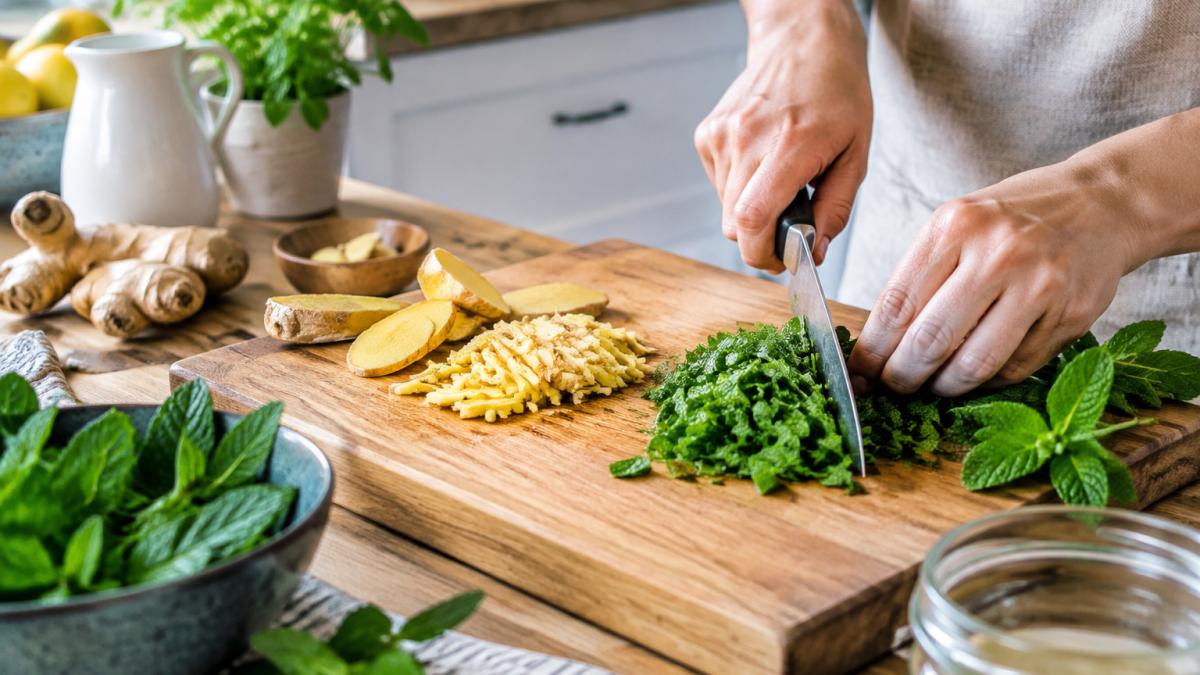
For fresh herbs, a useful starting point is one to two tablespoons of chopped leaves per serving, such as mint in water or basil in a salad. For dried herbs, use about one-third of the fresh amount, because drying concentrates flavor: a teaspoon of dried mint or basil roughly replaces a tablespoon of fresh. Ground spices such as fennel or cumin are stronger still, so a quarter to half a teaspoon is often enough for a dish serving four.
Fennel is a useful example of form mattering. Whole seeds can be lightly crushed and steeped for about ten minutes; ground seeds release aroma faster and are better suited to rubs and spice blends. Chewing a small pinch after a meal is a traditional habit, but many people find a warm tea easier.
Fresh herbs go into a dish late in cooking to preserve their aroma, while dried herbs and whole spices benefit from several minutes in hot oil or liquid early on. Tea infusions work best covered, because a lid holds the volatile oils that would otherwise escape with the steam.
Substitutions are straightforward. Ginger and turmeric can sometimes be used in similar dishes if flavor is adjusted. Mint and basil can be used in some cold drinks and salads, though they taste noticeably different.
Keep a simple note of which herb, which amount, and how your stomach responded over the next day or two. Changing one variable at a time makes it much easier to tell what agrees with you, and that note is also useful to bring to a clinician.
The article's measuring guidance for common kitchen herbs is easier to scan in one place.
| Herb form | Starting amount | Note |
|---|---|---|
| Fresh herbs | 1-2 tablespoons chopped per serving | Add late in cooking to keep aroma |
| Dried herbs | About one-third of the fresh amount | A teaspoon dried roughly replaces a tablespoon fresh |
| Ground spices (e.g. fennel, cumin) | 1/4 to 1/2 teaspoon per dish for four | Stronger than whole or fresh forms |
| Whole fennel seeds (tea) | Lightly crushed, steeped about 10 minutes | Cover the cup to keep volatile oils |
Safety, Medication Interactions, and When to See a Clinician
Herbs are not necessarily harmless simply because they come from the kitchen. Ginger, peppermint, and other common plants may interact with some medications, so discuss herbal use with your prescriber or pharmacist. Anyone with a chronic condition or a complicated medication list should review herbal use with a prescriber or pharmacist first.
Seek medical care promptly for severe or persistent abdominal pain, blood in stool, unexplained weight loss, vomiting that does not stop, or symptoms that keep returning. Herbal teas are not a replacement for medical care. For guidance on safe use, read 7 Safe Steps for Using Herbal Tinctures Without Risk, and review Safety Considerations for Starting Herbal Supplements before adding anything new. If you want help locating a qualified practitioner, see Finding a Qualified Holistic Health Practitioner.
According to Gut microbial modulation by culinary herbs and spices, dietary supplements of mint have been studied for irritable bowel syndrome symptoms, which is one reason clinicians sometimes discuss herbs in that context. Even so, those findings do not make herbs a substitute for diagnosis or treatment.
Choosing Your First Herbs and Trying a Tea or Tincture
Start with one or two herbs you already enjoy, such as ginger in cooking or peppermint in tea. Adding too many at once makes it impossible to tell what helps. A simple tea is usually the lowest-commitment way to begin.
If you prefer a tincture, our Grand's Heritage Blend A Five Herb Tincture is a concentrated five-herb option. Follow the label directions, start with the lowest suggested amount, and stop if you notice any reaction. Our Wild Harvest Stinging Nettle Tincture and Sunshine Drops Hand-Harvested Dandelion Tincture are other single-herb choices, each priced at $15.95 and $17.50 respectively.
Keep notes on what you use, when, and how your body responds. Bring that log to your next appointment. Used thoughtfully, kitchen herbs can be a pleasant part of everyday digestive care, and our team is glad to help you decide where to begin.
Frequently Asked Questions
What kitchen herbs may help support digestion?
Ginger, peppermint, fennel, and basil are among the kitchen herbs most often associated with digestive comfort. Research on gut-supporting culinary herbs is still developing, and the evidence is stronger for some herbs than others. Ginger is commonly discussed for nausea and stomach discomfort. Herbs work best as part of a balanced diet, not as a replacement for medical care.
Can peppermint tea help with digestive discomfort?
Peppermint contains menthol, which is thought to relax the smooth muscles of the digestive tract. Peppermint tea is a milder form of the herb. Peppermint can worsen heartburn in some people, so it is not suitable for everyone. If symptoms persist, speak with a healthcare professional.
Are culinary herbs safe to use every day?
Culinary amounts of common herbs such as ginger, basil, and rosemary are used in everyday cooking. Concentrated tinctures and extracts are more potent and carry greater risk of interactions. People who are pregnant, nursing, managing diabetes or blood pressure, or taking blood thinners should check with a clinician before adding herbs regularly. Start with small amounts and stop if you notice an adverse reaction.
When should digestive symptoms be evaluated by a healthcare professional?
See a healthcare professional if digestive symptoms are severe, persistent, or accompanied by unexplained weight loss, blood in stool, vomiting, fever, or difficulty swallowing. Herbs can help with occasional bloating or mild discomfort, but they should not delay evaluation of ongoing symptoms. A clinician can rule out conditions that herbs cannot treat and advise on any interactions with prescribed medications.


Leave a comment