
Natural Diabetes Management for Seniors Guide
Table of Contents
- How Aging Changes Blood Sugar and Why Natural Support Matters
- A1C Goals for Seniors: What to Aim For and Why It's Different
- The Diabetes Diet Guide for Seniors: Eating Well Without Deprivation
- How to Manage Diabetes Naturally: Movement, Stress, and Sleep
- Herbal Support and Kitchen Herbalism for Blood Sugar Balance
- Medication, Polypharmacy, and Working With Your Doctor
- Social Support, Emotional Health, and Building Your Plan
- Conclusion: Small Steps, Lasting Change
- Frequently Asked Questions
Last Updated: September 28, 2026
How Aging Changes Blood Sugar and Why Natural Support Matters
Natural diabetes management for seniors starts with one uncomfortable fact: the same body that handled carbohydrates easily at 40 often struggles at 70. Aging slows insulin sensitivity, shifts muscle mass downward, and changes how the liver releases glucose overnight. This guide from HighFiveHive Nature's Remedies-Kitchen Herbalism covers what actually changes with age and what you can do about it, without pretending a cup of tea replaces your metformin.

A few changes drive most of it:
- Loss of muscle mass, which is a primary site for glucose uptake
- Slower digestion and altered medication clearance
- Reduced physical activity, often because of joint pain or balance concerns
- Sleep disruption, which raises cortisol and pushes blood glucose levels up
A1C Goals for Seniors: What to Aim For and Why It's Different
A1C targets for older adults are typically looser than for younger people, and that's deliberate. The A1C test reflects average blood glucose over roughly three months. A healthy 45-year-old often targets below 7%, while a frail 80-year-old on multiple medications may be given a higher range because the risk of hypoglycemia (dangerously low blood sugar) outweighs tighter control.
- Hypoglycemia risk. Older adults are more likely to experience low blood sugar from insulin and sulfonylureas, and less likely to feel the early warning signs. A low that causes a fall, a fracture, or a hospital stay can undo years of careful control in an afternoon.
- Time to benefit. Tight control protects against long-term complications over years and decades. When life expectancy is shorter or health is fragile, the payoff window shrinks and the daily cost of chasing a low number grows.
- Functional and cognitive status. Memory problems, vision loss, and hand arthritis make glucose monitoring, insulin dosing, and recognizing lows harder. A target that assumes perfect self-management is the wrong target.
| Health Status | Typical A1C Range | Priority |
|---|---|---|
| Healthy, few medications, intact cognition | Under 7.0% | Long-term protection |
| Multiple chronic conditions or mild cognitive impairment | 7.0% to 8.0% | Balance risk and benefit |
| Frail, limited life expectancy, high hypoglycemia risk | 8.0% to 8.5% | Avoid hypoglycemia |
| Advanced complications or severe illness | Individualized | Comfort and safety |
A few practical notes:
- A single A1C can mislead. Anemia, recent blood loss, kidney disease, and some medications can skew the result. If your A1C doesn't match your home readings, say so.
- Fasting and post-meal numbers still matter. A1C is an average; it hides swings, and avoiding extremes often matters more than lowering the average.
- Targets can move. A target set at 65 may not fit at 80. Revisit it yearly, or after any hospitalization, fall, or new diagnosis.
- Tighter isn't automatically better. For many older adults, the safest plan keeps them out of the emergency room, not at the lowest chart number.
The Diabetes Diet Guide for Seniors: Eating Well Without Deprivation
- Fiber-rich grains such as oats, barley, and quinoa, which slow glucose absorption
- Lean proteins at every meal, which preserve muscle and blunt glucose spikes
- Healthy fats from olive oil, nuts, and avocado, which improve satiety
- Plant-based nutrition as the base, with vegetables filling half the plate
- Carbohydrate counting if you use insulin, kept simple rather than obsessive
If chewing is difficult, soft proteins like eggs, Greek yogurt, and well-cooked beans do the same job as a steak.
How to Manage Diabetes Naturally: Movement, Stress, and Sleep
Learning how to manage diabetes naturally comes down to three levers most people underuse: movement, stress reduction, and sleep. None requires a gym membership or a perfect routine.
Mobility-friendly movement that meets you where you are
Most exercise advice for older adults assumes you can already walk a mile. Here's what to do instead, organized by what you can manage today:
If you're seated most of the day:
- Chair-based marching or seated leg extensions, two to three minutes at a time, several times a day
- Seated arm circles and shoulder rolls to keep upper-body circulation moving
- Ankle pumps and foot circles, which also help with swelling and circulation
If you can stand but not walk far:
- Standing heel raises while holding a counter or sturdy chair
- Side steps along the kitchen counter, using the counter for balance
- Walking in a pool, which removes joint load entirely and is one of the safest options for arthritic knees and hips
If you can walk but not briskly:
- Short walks after meals, ten minutes each, which specifically target post-meal glucose spikes
- Resistance bands for upper body, done seated or standing with support
- Tai chi for balance and stress reduction in one session
Movement safety for seniors on multiple medications
This is the part that keeps people out of the emergency room.
Synergy Spice: Bay, Cinnamon & Oregano →
- Insulin and sulfonylureas can cause lows during and after exercise. If you take either, check your blood sugar before activity, carry a fast-acting carbohydrate, and know that exercise can lower glucose for up to 24 hours afterward.
- Beta blockers can mask hypoglycemia symptoms. If you take one for blood pressure or heart rhythm, you may not feel the usual shaky, sweaty warning signs. Rely on your meter, not your feelings.
- Blood pressure medications can cause dizziness on standing. Rise slowly, hold something stable, and time your movement for when you feel steadiest, often mid-morning rather than first thing.
- Neuropathy changes what's safe. If you have numbness in your feet, water exercise and seated routines reduce the risk of unnoticed blisters or injuries. Check your feet after every session.
- Balance concerns are a reason to modify, not stop. A physical therapist can design a routine around your specific limits, and Medicare often covers it.
Herbal Support and Kitchen Herbalism for Blood Sugar Balance
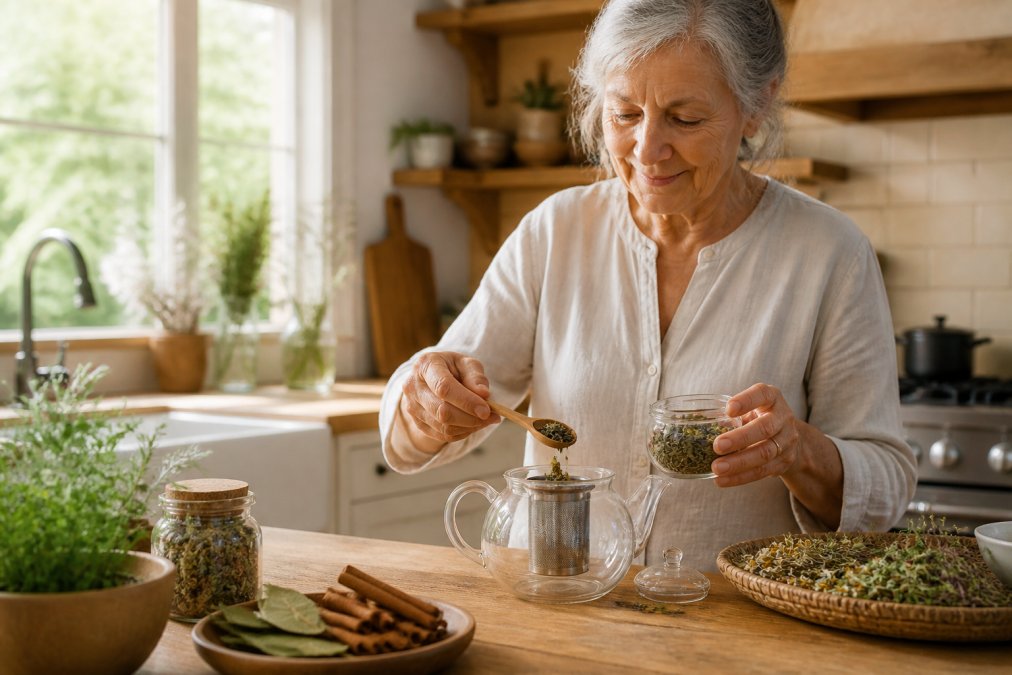
For weight support alongside glucose goals, the SlimRoots Kitchen Herbalism Weight Tea Blend combines hibiscus and cinnamon, both traditionally used to support blood sugar balance and healthy metabolism. It's formulated by a Registered Nurse with over 40 years of clinical experience, which is a meaningful difference from a random recipe online.
Medication, Polypharmacy, and Working With Your Doctor
Polypharmacy, the use of five or more medications at once, affects a large share of older adults with diabetes and is the single biggest safety issue in this age group. Every new prescription, supplement, or herbal tea enters a system already processing several drugs.

- Which of these actually lowers my blood sugar?
- Which ones can cause hypoglycemia if I eat less?
- Are any of these duplicates?
Social Support, Emotional Health, and Building Your Plan
Isolation raises blood glucose as reliably as a bad meal. Older adults who eat alone, skip appointments, and lose their social circle tend to see worse glycemic control, and the fix isn't another pill.
Social and emotional support for seniors looks like this:
- A weekly standing meal with family or friends
- A walking partner who notices when you skip
- A diabetes support group, in person or by phone
- A neighbor who checks in, and whom you check on
Conclusion: Small Steps, Lasting Change
Managing blood sugar in your 60s, 70s, and beyond is a long game, and the winning moves are unglamorous: protein at breakfast, a walk after dinner, a real conversation with your pharmacist, and herbs used thoughtfully rather than desperately. The Golden Spice Herbal Brew Tea Blend and the Ruby Glow Nettle Hibiscus & Spice Herbal Tea both fit that quieter approach, giving you a warm daily ritual instead of another supplement to swallow.

Frequently Asked Questions
What is a normal A1C for a 70 year old?
For many healthy older adults, an A1C between 7.0% and 7.5% is often reasonable, though the American Diabetes Association notes that goals should be individualized. Factors like other health conditions, life expectancy, and risk of hypoglycemia all play a role. A senior with few other health issues might aim for below 7.0%, while someone with multiple chronic conditions or cognitive impairment might have a target closer to 8.0%. Always discuss your personal A1C goal with your healthcare provider.
Can lifestyle changes help seniors manage type 2 diabetes?
Yes. Lifestyle intervention remains a cornerstone of type 2 diabetes management at any age. Regular physical activity, a balanced eating plan, weight management, and stress reduction can improve insulin sensitivity and glycemic control. For seniors, even modest changes matter. A 2022 review in Diabetes Care found that structured lifestyle programs helped older adults lower A1C and reduce diabetes complications. Start with small, sustainable shifts like a 10-minute walk after meals or adding fiber-rich grains to breakfast.
Do apple cider vinegar and cinnamon lower A1C?
Some small studies suggest cinnamon may support blood sugar balance, but results are mixed and not definitive. Apple cider vinegar has shown modest effects on post-meal glucose spikes in limited research. Neither is a substitute for prescribed medication or a comprehensive plan. If you want to try cinnamon, using it in cooking or as a tea is generally safe for most people. Talk to your doctor before adding any supplement, especially if you take blood thinners or diabetes medication.
How does aging affect blood glucose regulation?
Aging affects blood glucose regulation in several ways. Insulin sensitivity tends to decrease, the pancreas may produce less insulin, and the liver's glucose output can become less responsive to insulin. Muscle mass declines with age, and since muscle is a major site of glucose uptake, this can contribute to higher blood sugar. Additionally, slower digestion and altered kidney function can affect how the body handles glucose. These changes mean seniors often need tailored strategies rather than one-size-fits-all advice.
Are there evidence-based herbal supports for blood sugar maintenance?
Certain herbs have preliminary research supporting blood sugar maintenance. Cinnamon, fenugreek, and hibiscus are among the most studied. A 2020 meta-analysis found hibiscus tea may help lower fasting blood glucose, though more research is needed. Fenugreek seeds have shown promise for improving glycemic control in some trials. Always remember that herbal supports are complementary, not replacements for medical care. An RN-led approach can help you choose safe, high-quality options that fit your health profile.
What are the CDC guidelines for diabetes management in older adults?
The CDC recommends that older adults with diabetes focus on individualized A1C targets, regular physical activity, healthy eating, and medication adherence. They also emphasize the importance of screening for diabetes complications, managing blood pressure and cholesterol, and getting annual flu and pneumonia vaccines. The CDC's National Diabetes Prevention Program offers lifestyle change programs that can help. For seniors, preventing hypoglycemia is especially important, so medication choices and monitoring should be tailored to reduce that risk.


Leave a comment