
Natural Ways to Reduce Sugar Cravings
Table of Contents
- Why Sugar Cravings Happen: Blood Sugar, Stress, and Brain Chemistry
- Foods That Stop Sugar Cravings: Protein, Fiber, and Healthy Fats
- Herbal Tea for Sugar Cravings: Kitchen Herbalism That Supports Blood Sugar
- How to Stop Sugar Addiction Naturally: Sleep, Hydration, and Mindful Eating
- The Gut Microbiome and Emotional Eating: What Most Advice Misses
- A 7-Day Plan to Reduce Sugar Cravings Naturally
- Conclusion
- Frequently Asked Questions
Last Updated: September 24, 2026
Why Sugar Cravings Happen: Blood Sugar, Stress, and Brain Chemistry
Sugar cravings are your body's signal that something in your system is out of balance, not a simple lack of willpower. At HighFiveHive Nature's Remedies-Kitchen Herbalism, we've spent four decades in nursing watching patients blame themselves for cravings that were actually driven by biology. Understanding the root cause is the first real step toward lasting change.

The Blood Sugar Rollercoaster
When you eat refined sugar, your blood sugar levels spike fast. Your body releases insulin to bring them down, often overshooting into a low. That low triggers hunger and irritability, and your brain asks for the fastest fix available: more sugar.
Cortisol, Dopamine, and Stress-Induced Eating
Stress raises cortisol, which tells your body to refuel with quick energy. At the same time, eating sugar releases dopamine, the brain's reward chemical. Your brain links sugar with relief, and stress-induced eating becomes a habit.
Foods That Stop Sugar Cravings: Protein, Fiber, and Healthy Fats
The most effective foods to stop sugar cravings are those that slow digestion and keep you full: protein, fiber, and healthy fats. A common mistake is cutting calories without adding these, which makes cravings worse. The fix is not eating less, it is eating differently, with specific targets you can hit at each meal.
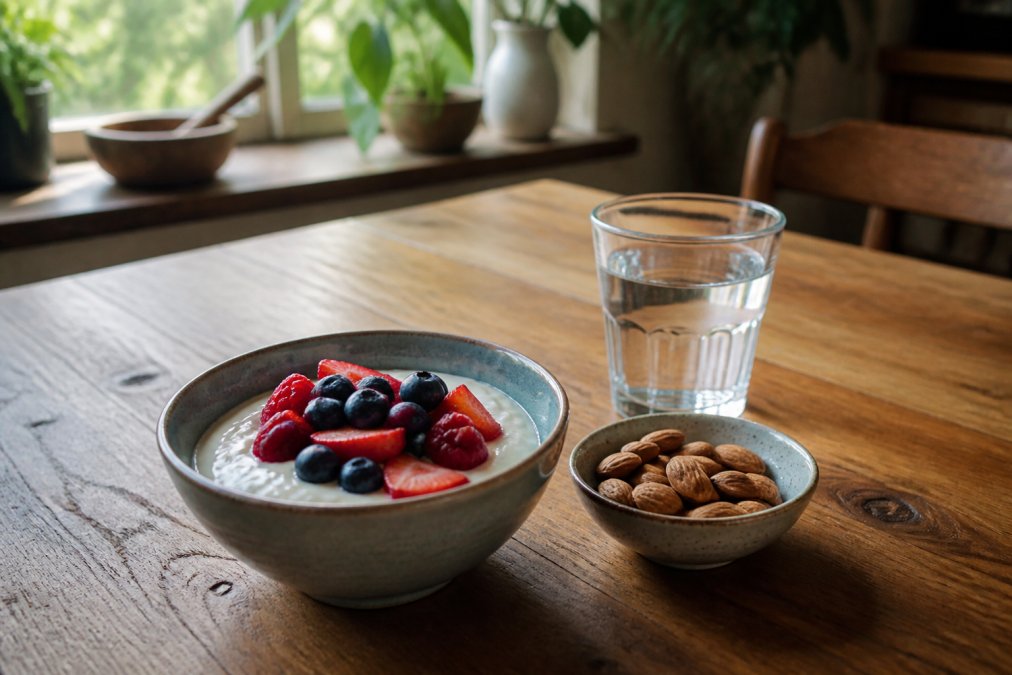
Protein: The Satiety Anchor
Protein matters most because it has the strongest effect on satiety of the three macronutrients, and it blunts the blood sugar spike that follows a meal. A practical target most dietitians use is 20 to 30 grams of protein per meal, or roughly a palm-sized portion. For a 150-pound adult, that lands in the range of 75 to 110 grams per day depending on activity level.
Concrete examples that hit the target:
- 1 cup of plain Greek yogurt: about 20 grams
- 3 ounces of cooked chicken or turkey: about 25 grams
- 3 ounces of canned salmon or tuna: about 20 to 22 grams
- 2 large eggs: about 12 grams (pair with yogurt or cheese to reach 20+)
- 1 cup of cooked lentils: about 18 grams
- 1 scoop of whey or plant protein powder: about 20 to 25 grams
Fiber: Feed the Gut, Slow the Glucose
Fiber-rich foods slow glucose release and feed the gut bacteria that influence appetite signaling. Most adults fall short of the recommended 25 to 38 grams per day, often landing closer to 15. Closing that gap is one of the highest-leverage changes for craving control.
Two types matter here:
- Soluble fiber (oats, barley, beans, apples, psyllium) forms a gel in the gut that slows sugar absorption
- Insoluble fiber (whole grains, nuts, vegetables) adds bulk and speeds transit
Easy fiber adds:
- 1/2 cup of black beans: about 7 grams
- 1 medium avocado: about 10 grams
- 1 cup of raspberries: about 8 grams
- 1 cup of cooked oatmeal: about 4 grams
- 2 tablespoons of chia seeds: about 10 grams
Healthy Fats: Staying Power Without the Spike
Fat slows gastric emptying, which extends the feeling of fullness from a meal. It does not spike blood sugar on its own, so it does not trigger the crash-and-crave cycle. The goal is not a high-fat diet, it is including a thumb-sized portion of fat at each meal.
Low-Glycemic Foods and Complex Carbohydrates
Low-glycemic foods break down slowly, so blood glucose spikes stay gentle. The glycemic index (GI) ranks carbohydrates on how quickly they raise blood sugar, using glucose as the reference at 100. Foods under 55 are considered low-GI; 56 to 69 is medium; 70 and above is high.
- White bread (GI around 75) → whole-grain or sourdough bread (GI around 53)
- White rice (GI around 73) → brown rice or quinoa (GI around 50 to 55)
- Instant oatmeal (GI around 79) → steel-cut oats (GI around 55)
- Corn flakes (GI around 81) → bran flakes or unsweetened muesli
- Fruit juice → whole fruit, which adds fiber and slows absorption
A simple plate rule helps:
- One palm of protein
- Two fists of vegetables
- One thumb of healthy fat
- One cupped hand of complex carbs
Herbal Tea for Sugar Cravings: Kitchen Herbalism That Supports Blood Sugar
Herbal tea for sugar cravings works best as a daily habit, not a rescue remedy. Certain kitchen herbs have long been used to support blood sugar balance and calm the stress response that drives cravings.

How to Stop Sugar Addiction Naturally: Sleep, Hydration, and Mindful Eating
Learning how to stop sugar addiction naturally starts with the basics most people skip: sleep, water, and attention. These three habits quietly control how strong your cravings feel, and unlike willpower, they respond to specific, measurable changes you can make this week.
Sleep Hygiene: The Appetite Hormone Lever
Short sleep does more than make you tired. It shifts the two hormones that govern appetite. Ghrelin, which signals hunger, rises. Leptin, which signals fullness, falls. The result is a double hit: you feel hungrier and less satisfied by the same meal. Research from the National Sleep Foundation and the Centers for Disease Control and Prevention consistently links short sleep to higher intake of added sugars and refined carbohydrates.
Sleep hygiene is not glamorous, but the specifics matter:
- Keep a consistent bedtime and wake time, even on weekends, a fixed wake time anchors your circadian rhythm more than a fixed bedtime
- Dim screens and overhead lights 60 to 90 minutes before bed; blue light suppresses melatonin
- Keep the room cool (around 65 to 68°F) and dark
- Cut caffeine after early afternoon, its half-life is roughly five to six hours, so a 3 p.m. coffee is still active at 9 p.m.
- Skip alcohol as a sleep aid; it fragments the second half of the night even when it helps you fall asleep
Hydration: Why Thirst Masquerades as Hunger
The brain processes thirst and hunger signals in overlapping regions, which is why mild dehydration is easily misread as a sugar craving. A common pattern is reaching for something sweet when a glass of water would resolve the signal in ten minutes.
Try this sequence when a craving hits:
- Drink a full glass of water
- Wait ten minutes
- Reassess whether you are actually hungry
Mindful Eating and Cravings Management: The Behavioral Layer Competitors Skip
Most articles tell you to "eat mindfully" without explaining what that means or why it works. The mechanism is simple: cravings are urges, not commands, and urges peak and fall on a predictable curve. The average craving peaks within a few minutes and subsides within 10 to 20 minutes if you do not feed it. Mindful eating is the practice of riding that curve instead of reacting to it.
- Stop and take five slow breaths, exhaling longer than you inhale, this engages the parasympathetic nervous system and lowers the stress response feeding the craving
- Name the trigger out loud or in writing: bored, lonely, anxious, tired, angry, or actually hungry
- Drink a glass of water
- Wait ten minutes
- Check in again, if you are still hungry, eat a balanced snack; if the urge has passed, note what worked
The Gut Microbiome and Emotional Eating: What Most Advice Misses
Two drivers rarely get mentioned in standard craving advice: the gut microbiome and emotional eating. Both matter more than most people realize.
A 7-Day Plan to Reduce Sugar Cravings Naturally
This 7-day plan builds habits in order, so each day supports the next. It is not a detox or a fast. It is a reset.
| Day | Focus | Daily Action |
|---|---|---|
| 1 | Hydration | Drink water at every meal and when cravings hit |
| 2 | Protein | Add a protein source to breakfast |
| 3 | Fiber | Add vegetables to two meals |
| 4 | Sleep | Set a fixed bedtime and stick to it |
| 5 | Herbal tea | Replace one snack with a cup of herbal tea |
| 6 | Mindful eating | Pause ten minutes before any craving |
| 7 | Review | Note what worked and repeat it |
Conclusion
Cravings are driven by real biology, and they respond to steady habits, not willpower alone. If you have tried cutting sugar and felt defeated, the missing piece may be support for your blood sugar, sleep, and stress together.
Frequently Asked Questions
What vitamin deficiency causes sugar cravings?
Low levels of magnesium, chromium, and zinc are sometimes linked to increased sugar cravings, though research is mixed. Magnesium supports insulin sensitivity, and chromium may help regulate blood glucose. A deficiency in these minerals can trigger your body to seek quick energy from sugar. Before supplementing, ask your doctor to check your levels, since taking unneeded vitamins can cause side effects. Food sources like leafy greens, nuts, and whole grains are safer first steps.
What drink kills sugar cravings?
Herbal teas made with cinnamon, hibiscus, or gymnema have traditionally been used to support balanced blood sugar and reduce cravings. Cinnamon in particular is one of the most researched kitchen herbs for blood sugar support. A warm cup of herbal tea for sugar cravings can also satisfy the ritual of a sweet treat without the sugar spike. Staying hydrated with water throughout the day helps too, since thirst is often mistaken for hunger.
How does protein intake affect sugar cravings?
Protein slows digestion and helps stabilize blood sugar levels, which reduces the spikes and crashes that trigger cravings. Aim for 20 to 30 grams of protein at each meal, from sources like eggs, fish, poultry, beans, or Greek yogurt. Protein also supports satiety and appetite regulation, so you feel full longer. Pairing protein with fiber-rich foods and healthy fats at every meal is one of the most reliable natural ways to reduce sugar cravings.
What happens to your body after 7 days of no sugar?
Many people notice fewer cravings, steadier energy, and improved mood within a week of cutting added sugar. Blood sugar levels tend to stabilize, which can reduce the cycle of spikes and crashes. Some people experience sugar withdrawal in the first few days, including headaches, irritability, or fatigue. These symptoms usually fade by day three to five. Sleep and hydration often improve too, supporting metabolic health over time.


Leave a comment