
10 Natural Ways to Prevent Type 2 Diabetes
Table of Contents
- 1. Know Your Risk: Screening and Early Warning Signs
- 2. Foods to Lower Blood Sugar: Build Your Plate Around Fiber and Plants
- 3. Lifestyle Changes for Diabetes Prevention: Movement, Weight, and Sleep
- 4. Cut Sugar-Sweetened Beverages and Ultra-Processed Foods
- 5. Herbal Support for Blood Sugar: What Kitchen Herbalism Offers
- 6. Intermittent Fasting and Time-Restricted Eating
- 7. Stress, Sleep, and Smoking: The Overlooked Levers
- 8. Your Gut Microbiome and Metabolic Health
- 9. Social Support and the Psychology of Lasting Change
- 10. Build a Sustainable Plan and Track What Matters
- Frequently Asked Questions
Last Updated: September 26, 2026
1. Know Your Risk: Screening and Early Warning Signs
Type 2 diabetes rarely arrives without warning, and knowing how to prevent type 2 diabetes starts with understanding that it develops slowly, often over years, with the earliest signs easy to dismiss as ordinary tiredness or aging. Knowing where you stand is the first of the 10 natural ways to prevent type 2 diabetes, because you cannot change a number you have never measured.
Watch for these early warning signs:
- Increased thirst and frequent urination, especially at night
- Unexplained fatigue that rest does not fix
- Blurred vision that comes and goes
- Slow-healing cuts or frequent infections
- Dark, velvety patches of skin around the neck or armpits
2. Foods to Lower Blood Sugar: Build Your Plate Around Fiber and Plants
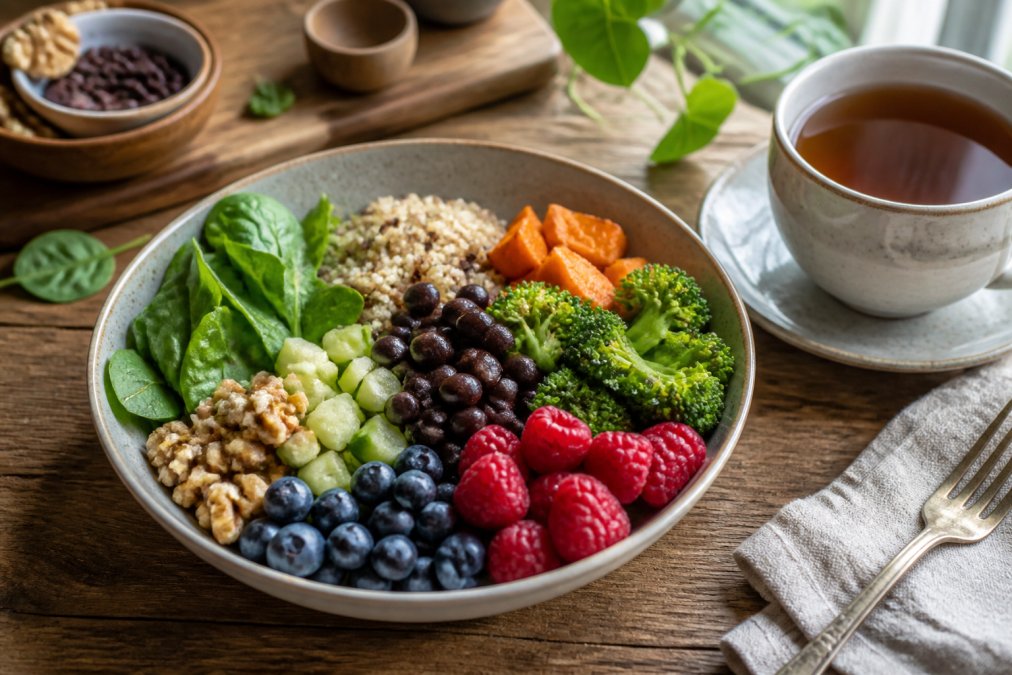
No single food prevents diabetes, but the overall pattern of what you eat matters more than any one ingredient. A plate built around fiber intake, vegetables, legumes, and whole grains keeps blood glucose levels steadier than a plate built around white bread, sweet drinks, and snack foods.
Complex Carbohydrates vs. Refined Carbohydrates
The difference between complex carbohydrates and refined carbohydrates comes down to how much of the original grain or plant remains intact. Complex carbohydrates, such as whole oats, barley, quinoa, and beans, retain their fiber and digest slowly. Refined carbohydrates, such as white bread, white rice, and most packaged snacks, have had the fiber stripped away and digest quickly.
Healthy Fats and Heart Health
Healthy fats do more than add flavor. Olive oil, nuts, seeds, avocado, and fatty fish support cardiovascular health and help you feel full, which makes portion control easier. Since people with diabetes risk also face higher heart risk, swapping saturated fat for these sources is a two-for-one move. The Dietary Guidelines for Americans emphasizes shifting toward these unsaturated fats as part of an overall healthy eating pattern.
3. Lifestyle Changes for Diabetes Prevention: Movement, Weight, and Sleep
Lifestyle changes for diabetes prevention work best when they combine movement, weight management, and sleep rather than relying on any one of them. Each lever reinforces the others, and together they improve how your body handles glucose. Prioritizing consistent rest cycles acts as a foundational pillar for metabolic health, making it essential to improve sleep quality as a primary strategy for long-term glucose regulation.
Physical Activity and Insulin Sensitivity
Physical activity improves insulin sensitivity, meaning your muscles pull glucose out of the blood with less insulin. Both aerobic exercise and resistance training help, and the effect can last beyond the workout itself. A sedentary lifestyle works against you even if you exercise once a day, so breaking up long sitting periods matters. A common approach is roughly 150 minutes of moderate activity per week plus two strength sessions.
Weight Management and Waist Circumference
Weight management is one of the strongest levers for preventing type 2 diabetes, particularly when the weight sits around the middle. Waist circumference is a useful, low-cost measure: it reflects the visceral fat most closely tied to insulin resistance and metabolic syndrome. Tracking your waist monthly gives you a signal that a scale alone can miss.
| Lever | What to Track | Rough Target | Why It Helps |
|---|---|---|---|
| Physical activity | Minutes per week | ~150 moderate | Improves insulin sensitivity |
| Weight | Waist circumference | Monthly measurement | Reflects visceral fat |
| Sleep | Hours per night | 7-9 hours | Supports glucose regulation |
| Stress | Daily check-in | Consistent routine | Lowers cortisol load |
4. Cut Sugar-Sweetened Beverages and Ultra-Processed Foods
Sugar-sweetened beverages are the single easiest target in most diets. Soda, sweetened coffee drinks, and juice deliver a large glucose load with almost no fiber to slow it down. Swapping them for water, sparkling water, or unsweetened herbal tea removes a daily spike without requiring you to change anything else.

5. Herbal Support for Blood Sugar: What Kitchen Herbalism Offers
Herbal support for blood sugar works best as a complement to diet, movement, and medical care, never as a replacement. Kitchen herbalism focuses on familiar spices and plants you can brew at home, which makes it affordable and easy to sustain.
Cinnamon, Hibiscus, and Gymnema: The Research Behind the Roots
Cinnamon has been studied for its effect on blood glucose levels and insulin action. Hibiscus is traditionally used for cardiovascular health and lipid balance. Gymnema is known for its effect on sweet taste perception, which can help reduce sugar cravings at the source.
6. Intermittent Fasting and Time-Restricted Eating
Intermittent fasting and time-restricted eating are approaches that change when you eat rather than only what you eat. Time-restricted eating typically compresses all meals into a window of 8 to 10 hours, leaving the rest of the day for fasting. Many people find this easier to follow than counting calories, because it sets one clear rule.
Synergy Spice: Bay, Cinnamon & Oregano →
7. Stress, Sleep, and Smoking: The Overlooked Levers
Stress reduction, sleep hygiene, and smoking cessation are the levers most people skip, and they matter more than most guides admit. Chronic stress raises cortisol, which pushes blood sugar up and encourages belly fat storage. Poor sleep does the same, and it also increases cravings for refined carbohydrates the next day.
Practical sleep hygiene looks like this:
- Keep a consistent bedtime and wake time, even on weekends
- Dim screens and lights in the hour before bed
- Keep the bedroom cool and dark
- Limit caffeine after early afternoon
8. Your Gut Microbiome and Metabolic Health
The gut microbiome is one of the angles most prevention guides leave out entirely. The trillions of bacteria in your digestive tract influence how you metabolize food, how sensitive your cells are to insulin, and how much inflammation your body carries. An imbalanced microbiome is increasingly linked to insulin resistance and metabolic syndrome.
9. Social Support and the Psychology of Lasting Change
Knowledge alone rarely changes behavior. The gap between knowing what to do and doing it consistently is where most prevention efforts fail, and that gap is psychological and social, not nutritional.
| Barrier | Practical Workaround | Why It Works |
|---|---|---|
| No time to cook | Batch-cook two days a week | Removes daily decisions |
| Limited fresh food access | Frozen vegetables and beans | Same fiber, lower cost |
| No safe walking area | Indoor walking or stairs | Keeps movement consistent |
| Stress eating | Breathing practice before meals | Interrupts the cortisol cycle |
10. Build a Sustainable Plan and Track What Matters
A plan you can keep for years beats a perfect plan you abandon in three weeks. The final step ties everything together: pick two or three changes, track a small number of measures, and review them monthly rather than daily.
Track these:
- Fasting blood sugar or HbA1c at your provider's recommended interval
- Waist circumference once a month
- Weekly minutes of physical activity
- Average sleep hours
Frequently Asked Questions
What are the most effective lifestyle changes to prevent type 2 diabetes?
The strongest evidence supports three changes: losing 5-7% of body weight if you carry extra pounds, getting at least 150 minutes of moderate physical activity weekly, and eating more fiber-rich, plant-based foods while cutting sugar-sweetened beverages. These lifestyle changes for diabetes prevention work best together. Even modest shifts in waist circumference and daily movement can improve insulin sensitivity within weeks. Always discuss your personal risk with your healthcare provider before making major changes.
What foods to lower blood sugar should I eat every day?
Focus on foods with a low glycemic index: non-starchy vegetables, beans and lentils, whole grains like oats and barley, nuts, berries, and fatty fish. Fiber intake is the key driver; aim for 25-35 grams daily. Replace refined carbohydrates with complex carbohydrates at meals. Cinnamon and hibiscus, found in herbal teas, are also traditionally used to support healthy blood glucose levels. Portion control and nutrient-dense foods matter as much as the specific choices.
Are there specific herbal supports that assist in blood sugar regulation?
Several herbs have research behind them for blood sugar support. Cinnamon is one of the most studied kitchen herbs for glucose metabolism. Hibiscus shows promise for lipid balance and metabolic health. Gymnema leaf is traditionally used to reduce sugar cravings. Herbal support for blood sugar works best alongside diet and movement, not instead of them. If you take diabetes medications, talk to your provider before adding any herb, because some can potentiate blood sugar-lowering effects.
Can dietary adjustments alone prevent the onset of type 2 diabetes?
Diet is powerful but rarely sufficient on its own. Large prevention trials show that combining diet with regular physical activity and weight management reduces risk far more than any single change. Dietary adjustments do improve blood glucose levels and insulin sensitivity, but sedentary lifestyle, sleep quality, stress, and smoking also influence metabolic health. Think of nutrition as the foundation and layer movement, sleep hygiene, and stress reduction on top.
How does physical activity influence insulin sensitivity?
Muscle contractions during exercise pull glucose out of the bloodstream without needing extra insulin. A single session can improve insulin sensitivity for up to 24-48 hours. Over time, regular physical activity builds more insulin-sensitive muscle tissue, lowers fasting blood sugar, and reduces HbA1c. Both aerobic exercise and resistance training help; a mix of both is ideal. Breaking up long sitting periods, even with short walks, also supports metabolic health.


Leave a comment