
Diet Plan vs Exercise for Natural Diabetes Management
Table of Contents
- Diet Plan vs Exercise: What the Evidence Actually Shows
- How to Manage Diabetes Naturally: A Practical Framework
- Your Diabetes Meal Planning Guide: Carbohydrate Counting and the Plate Method
- Benefits of Aerobic Exercise for Diabetics: Intensity vs Duration
- Diet Plan vs Exercise: Side-by-Side Comparison
- Using a Continuous Glucose Monitor to Test What Works for You
- Budget-Friendly Meal Planning and the Psychological Barriers to Change
- Kitchen Herbalism as a Complement, Not a Replacement
- Frequently Asked Questions
Last Updated: September 18, 2026
Diet Plan vs Exercise: What the Evidence Actually Shows
Neither wins outright. Diet moves blood glucose faster; activity improves insulin sensitivity in ways food alone cannot. For natural diabetes management, pair both.
How to Manage Diabetes Naturally: A Practical Framework
Managing diabetes naturally means building daily habits around four levers: what you eat, how you move, when you eat, and how consistently you do both.
A practical starting framework looks like this:
- Nutrition first. Stabilize carbohydrate intake before adding anything else.
- Movement second. Add aerobic exercise and resistance training in small, repeatable doses.
- Timing third. Keep meals and movement at roughly the same times each day.
- Consistency last, but longest. A modest routine you keep beats an aggressive one you abandon.
Your Diabetes Meal Planning Guide: Carbohydrate Counting and the Plate Method
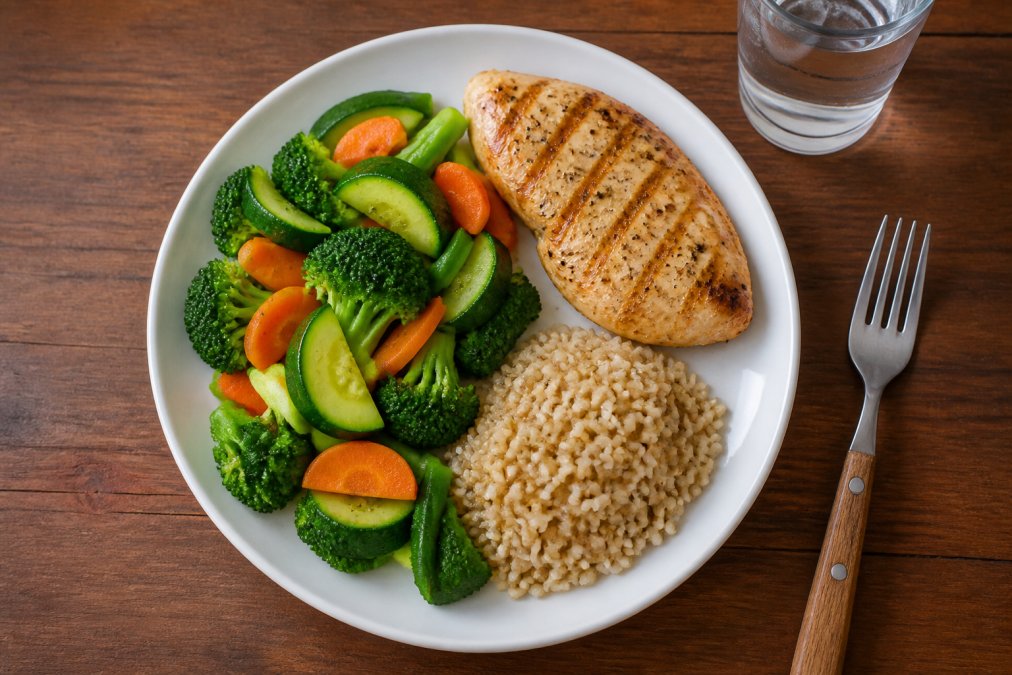
A diabetes meal planning guide works best with two tools: carbohydrate counting for precision and the plate method for speed, and the plate method is the one you'll use most.
Carbohydrate Counting and the Glycemic Index
Carbohydrate counting tracks grams of carbs per meal to keep glucose absorption predictable; a common starting range is roughly 45 to 60 grams per meal for adults, adjusted by your provider. The glycemic index ranks how quickly those carbs raise blood glucose.
A practical way to use both tools together:
- Count grams first. Learn the carb content of the ten foods you eat most often. Most people underestimate portions by 20 to 30 percent until they measure for a week or two.
- Then layer in the index. Swap refined grains for whole grains where the swap is easy, brown rice for white, whole-wheat pasta for regular, steel-cut oats for instant.
- Check the label, not the marketing. "Wheat bread" and "multigrain" are not the same as "100% whole grain." Look for whole grain as the first ingredient.
Fiber Intake, Portion Control, and the Plate Method
Fiber intake slows glucose absorption and supports sustained energy between meals. Most adults fall short of the commonly cited 25 to 30 grams per day; people managing blood sugar often benefit from aiming toward the higher end with their provider's guidance. Soluble fiber, oats, beans, lentils, apples, barley, is the type most studied for glucose.
The plate method simplifies portion control without weighing anything:
| Plate Section | What Goes There | Why It Works |
|---|---|---|
| Half the plate | Non-starchy vegetables | Fiber slows glucose absorption |
| One quarter | Lean protein | Slows digestion, supports satiety |
| One quarter | Whole grains or starch | Controlled carbohydrate load |
| Beverage | Water or unsweetened tea | Avoids liquid sugar spikes |
Budget-Friendly Meal Planning That Actually Sticks
Most meal-planning advice assumes a well-stocked kitchen and unlimited time. Eating to manage blood sugar does not require specialty foods, and the cheapest options are often the highest in fiber.
- Dried beans and lentils. Cheaper per serving than canned, and among the highest-fiber foods available. Cook a batch on the weekend and portion it out.
- Frozen vegetables. Cost less than fresh, hold their nutrient value, and eliminate the "it went bad before I used it" problem.
- Canned tomatoes and tomato paste. A base for soups, stews, and sauces that stretch across multiple meals.
- Eggs. An inexpensive protein that fits the quarter-plate slot.
- Rolled oats. One of the lowest-cost whole grains per serving.
- Cabbage, carrots, and onions. Among the most affordable non-starchy vegetables and they keep for weeks.
- Plain yogurt in large tubs. Cheaper per ounce than single-serve cups, and you control the added sugar.
Benefits of Aerobic Exercise for Diabetics: Intensity vs Duration
The benefits of aerobic exercise for diabetics depend less on how long you move and more on how hard you push during short intervals. A brisk 15-minute walk after a meal often lowers post-meal glucose more than a slow 45-minute stroll.
Why Intensity Moves Glucose Faster Than Duration
Muscle contraction pulls glucose out of the bloodstream through a pathway that does not require insulin, and that pathway strengthens as intensity rises. The effect can persist for hours after you stop, which is why a short, brisk session can flatten a post-meal spike more than a long, easy one.
There are two distinct windows to think about:
- Immediate effect (minutes to hours). A brisk walk right after a meal blunts the post-meal peak. This is the window most useful for managing day-to-day glucose spikes.
- Long-term effect (weeks to months). Repeated aerobic exercise improves insulin sensitivity and cardiovascular fitness. This window is where reduced cardiovascular risk and better fasting glucose show up.
How to Gauge Intensity Without a Lab
You don't need a heart rate monitor. Two simple methods work:
- The talk test. Moderate intensity means you can talk but not sing. Vigorous intensity means you can only say a few words before needing a breath.
- Perceived exertion. On a 0-to-10 scale, moderate activity sits around 5 or 6, you're breathing harder but not gasping. Vigorous sits around 7 or 8.
A reasonable structure that combines both windows:
- After meals: 10-15 minutes of brisk walking. This is the highest-yield habit for post-meal spikes.
- Most days: 20-30 minutes of moderate aerobic exercise, brisk walking, cycling, swimming, or anything that keeps you in the talk-test zone.
- Twice weekly: shorter sessions with brief higher-intensity intervals, if cleared by your provider. A common pattern is one minute hard, two minutes easy, repeated several times.
Resistance Training and Insulin Sensitivity
Resistance training improves insulin sensitivity by building muscle tissue that takes up glucose. Two sessions per week is a common starting point, using bodyweight movements, bands, or light weights. Expect weeks, not days, before you notice a difference.
Synergy Spice: Bay, Cinnamon & Oregano →
A practical way to combine both types of training:
- Aerobic work handles the immediate post-meal window and cardiovascular risk.
- Resistance work builds the muscle that improves baseline insulin sensitivity over time.
- Doing both in the same week produces effects neither one delivers alone.
Diet Plan vs Exercise: Side-by-Side Comparison
Diet plan vs exercise produces different strengths, timelines, and failure modes. Neither substitutes for the other; the comparison below shows where each carries the load.
| Factor | Diet Plan | Exercise |
|---|---|---|
| Speed of effect on glucose | Faster, within days | Slower, builds over weeks |
| Primary mechanism | Controls glucose coming in | Improves how glucose is used |
| Best for | Post-meal spikes, weight management | Insulin sensitivity, cardiovascular risk |
| Consistency challenge | Meal planning fatigue | Time and motivation |
| Supports metabolic health | Yes, through dietary patterns | Yes, through physical exertion |
| Alone sufficient? | Rarely long-term | Rarely long-term |
Using a Continuous Glucose Monitor to Test What Works for You
A continuous glucose monitor turns the diet plan vs exercise debate into a personal experiment. Instead of guessing which intervention helps, you watch your own glucose regulation respond in real time.
Practical ways to use one:
- Eat the same meal twice, once with a 15-minute walk after and once without. Compare the curves.
- Test whether a whole-grain swap changes your post-meal peak.
- Track overnight readings after an evening resistance session.
NIH guidance on diabetes and digestive health
Budget-Friendly Meal Planning and the Psychological Barriers to Change
Budget-friendly meal planning fails more often from psychology than cost. The barriers are predictable, and naming them makes them easier to plan around.
The four that show up most:
- All-or-nothing thinking. One off-plan meal becomes a lost week.
- Decision fatigue. Planning every meal from scratch exhausts willpower by Wednesday.
- Cost anxiety. Assumptions that eating well requires expensive specialty foods.
- Slow feedback. Glucose changes are invisible without monitoring, so effort feels unrewarded.
Kitchen Herbalism as a Complement, Not a Replacement
Kitchen herbalism supports a diet-and-exercise routine; it does not replace medical care. Clear any herbal product with your provider first, particularly if you take blood sugar or blood pressure medication.
CDC information on managing blood sugar
Frequently Asked Questions
Can I control diabetes with diet and exercise alone?
For some people with type 2 diabetes, consistent changes to diet and physical activity can lower blood glucose levels enough to reduce or delay the need for medication. Diet affects glucose every time you eat, while exercise improves insulin sensitivity for hours afterward. However, type 1 diabetes and advanced type 2 diabetes usually still require medication or insulin. Never stop or change a prescribed medication without talking to your healthcare provider first.
How does physical activity impact insulin sensitivity?
A single session of aerobic exercise can improve insulin sensitivity for 24 to 48 hours, meaning your muscles pull glucose from the blood more efficiently. Resistance training builds muscle mass, which gives your body more tissue to store glucose. This is why the benefits of aerobic exercise for diabetics fade quickly if you stop moving for several days. Spacing workouts across the week works better than one long session.
How do I create a sustainable diabetes meal planning guide for myself?
Start with carbohydrate counting at your current intake, then reduce portions gradually rather than cutting all at once. Build meals around the plate method: half non-starchy vegetables, a quarter lean protein, and a quarter whole grains or starchy vegetables. Add fiber intake from beans, lentils, and vegetables to slow glucose absorption. A registered dietitian or diabetes care team can tailor the plan to your medications and daily schedule.
What should I know before starting a natural diabetes management routine?
Check with your healthcare provider before making major changes, especially if you take insulin or sulfonylureas, because combining medication with new exercise and diet habits can cause hypoglycemia. Test your blood glucose before and after workouts during the first few weeks. Herbal teas and kitchen remedies can support a healthy routine but are not a substitute for medical care. Stop and seek help if you feel shaky, dizzy, or confused.
Is exercise or diet more important for lowering blood sugar?
Both matter, but they work on different timelines. Diet controls the glucose entering your bloodstream at every meal, so it often shows results within days. Exercise improves how efficiently your muscles use glucose, with effects that build over weeks of consistent activity. Most people get the best results by fixing diet first, then adding regular aerobic and resistance training rather than choosing one over the other.


Leave a comment