
Evidence-Based Herbal Remedies for Digestive Health
Last Updated: November 7, 2026
Quick Summary
Peppermint oil has the strongest evidence among herbal remedies for digestive health, mainly for bowel symptoms such as bloating. Ginger, turmeric and black pepper have preliminary evidence, and chamomile and fennel rest mostly on traditional use. Ayurvedic herbs are often backed by limited trial data.
- Peppermint oil has comparatively more clinical study behind it than most herbs reviewed.
- Peppermint can worsen heartburn because it relaxes the valve between stomach and esophagus.
- Ginger, turmeric and black pepper evidence is mostly laboratory and animal data.
- Chamomile and fennel evidence is largely traditional, with no quantified human trial found.
- Check with your clinician before starting any herb if you take medication or are pregnant.
Table of Contents
- How We Grade the Evidence for Herbal Digestive Remedies
- 1. Peppermint Oil: The Strongest Evidence for Bowel Symptoms
- 2. Ginger, Turmeric and Black Pepper: Herbs for Gut Inflammation
- 3. Chamomile, Fennel and Other Herbs for Digestion and Bloating
- 4. Ayurvedic Herbs for Gut Health: Traditional Use Versus Trial Data
- Matching a Herbal Remedy to a Symptom, and Where Products Fit
- Herb Interactions, Safety and When Symptoms Need Medical Care
- Choosing a Starting Point for Your Own Digestive Routine
- Frequently Asked Questions
How We Grade the Evidence for Herbal Digestive Remedies
Evidence-based herbal remedies for digestive health are not all equal, and the gap between a well-studied herb and a traditional favorite is often wide. We sort the herbs below by the quality of human research behind them, not by how often they appear in folk tradition. A herb with a few small human trials sits in a different category than one with only animal or laboratory data, and both differ from one with no clinical study at all.
Our grading starts with the study type. Randomized controlled trials in people carry the most weight, followed by smaller human studies, then animal and laboratory work. Traditional use, however long, is treated as a starting point for research rather than as proof of effect. Johns Hopkins Medicine's overview of herbal medicine, which notes there is no research proving that a certain herb cures or treats a health problem
We also grade by condition. A herb may have reasonable data for one symptom, such as bowel spasm, and little for another, such as heartburn. The sections below flag this where it matters. Read the grade as a statement about the evidence, not a promise of results.
The table below sums up how the article grades each herb group by the strength of its evidence.
| Herb group | Evidence grade | Main limitation |
|---|---|---|
| Peppermint oil | Strongest, for bowel symptoms | Can worsen heartburn |
| Ginger, turmeric, black pepper | Preliminary | Mostly lab and animal data |
| Chamomile, fennel | Traditional use | No quantified human trial |
| Ayurvedic herbs | Traditional use versus trial data | Limited, small human studies |
1. Peppermint Oil: The Strongest Evidence for Bowel Symptoms
Peppermint oil has comparatively more clinical study behind it than most of the herbs we review for digestive symptoms. To see whether peppermint eases bloating specifically, read whether peppermint eases bloating. A 2020 review of herbal therapies for functional gastrointestinal disorders identified peppermint oil among the treatments comparatively considered to have an evidence base. 2020 review of herbal therapies in functional gastrointestinal disorders
Peppermint is also a poor match for heartburn, since its relaxing effect on the valve between the stomach and esophagus can make reflux worse. Treat peppermint as a candidate for bowel spasm and bloating, not a general digestive tonic.
2. Ginger, Turmeric and Black Pepper: Herbs for Gut Inflammation
These three culinary herbs are often grouped together for gut inflammation, but the evidence for them is preliminary. A recent study reported that turmeric, ginger, long pepper and black pepper alter the gut microbiome. The research summary we reviewed gives no sample size or effect size, so we treat the finding as a lead rather than a result. Salk Institute study on digestion-aiding herbs and the gut microbiome
Anti-inflammatory claims for turmeric and ginger are common in the wellness market. Much of that rests on laboratory and animal work. Human data on gut inflammation is thinner, which is why we grade this group below peppermint. Culinary amounts are unlikely to match the doses used in studies.
3. Chamomile, Fennel and Other Herbs for Digestion and Bloating
Chamomile is widely used for digestive complaints, and the evidence is mostly traditional. The Conversation notes that evidence for herbs and spices used to improve digestion is largely traditional, and that animal research on chamomile extract and stomach ulcers does not establish a treatment effect in people. The Conversation's review of herbs and spices for digestion
Fennel and other carminative herbs are traditionally used for gas and bloating. We found no human trial in the research supplied to us that quantifies their effect, so we place them in the traditional-use category. If you try them, treat the result as personal observation. Because carminative herbs remain a matter for personal observation, Bee Central can be a starting point for considering other natural approaches to digestive health.
4. Ayurvedic Herbs for Gut Health: Traditional Use Versus Trial Data
Ayurvedic herbal formulas are rich in tradition and thin in trial data. Many of the herbs appearing in digestive blends have been studied mainly in laboratory settings or small animal studies. Where a traditional herb has been examined in people, the sample and design are often too limited to support firm conclusions.
This is the clearest case where traditional use and trial evidence diverge. A long history of use is real and worth understanding, but it does not tell you whether a formula works for your symptoms. Ask whether a specific herb has been tested in people for the specific symptom you have.
Matching a Herbal Remedy to a Symptom, and Where Products Fit
Match the remedy to the symptom first, then choose the product. For a focused comparison of options for constipation, see herbal constipation remedies. Heartburn, reflux and persistent diarrhea or constipation need a different conversation with a clinician.
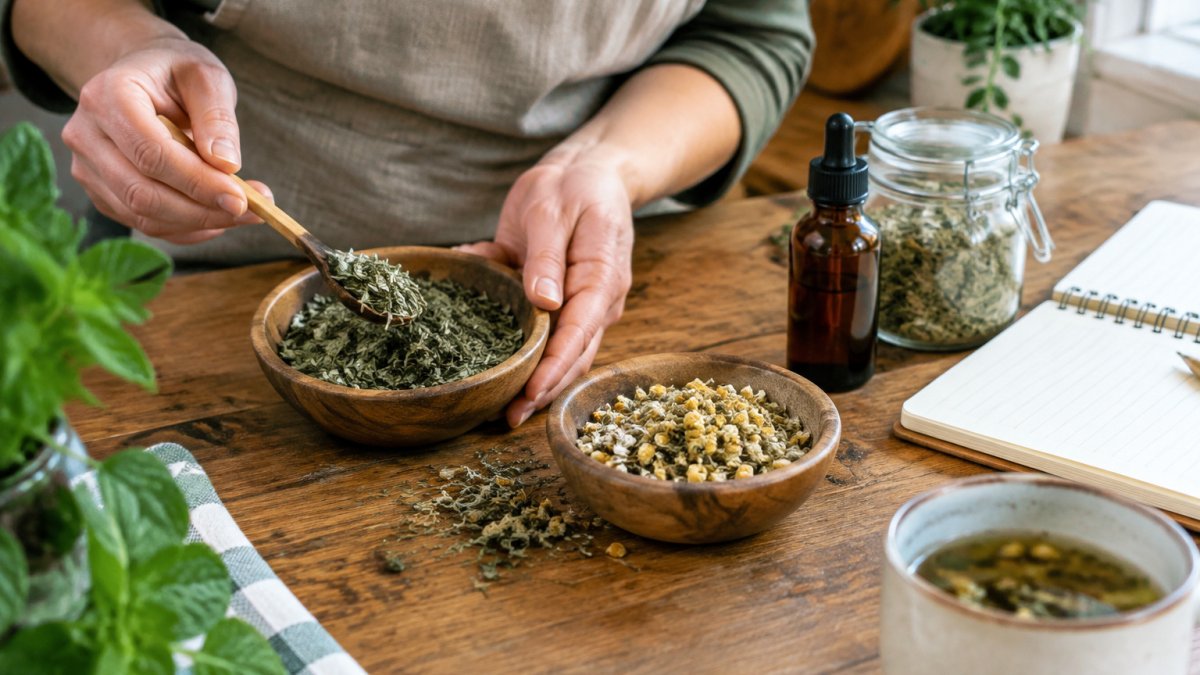
If you are exploring traditional herbal preparations, our Grand's Heritage Blend A Five Herb Tincture ($18.50) combines oregano, sage, hibiscus, barberry and olive leaf. Our Natures Serene Moments Chamomile Lemon Balm and Lavender Tea ($17.99) offers chamomile in a tea. Products reflect traditional formulations and are not presented as treatments for any digestive condition.
Herb Interactions, Safety and When Symptoms Need Medical Care
Herbs are not harmless because they are natural. To check whether herbal remedies are safe alongside medicines, see herbal remedies alongside prescription medication. Barberry and olive leaf can interact with medications. Herbs with blood-thinning or blood-sugar effects can also interfere with prescribed drugs. If you take any medication, or have diabetes, kidney disease, or are pregnant or nursing, check with your clinician before starting any herb.
Seek medical care for persistent or severe symptoms, unexplained weight loss, blood in your stool, or pain that wakes you at night. Herbs are not a substitute for diagnosis. Johns Hopkins Medicine on possible herbal precautions such as rash, headache and upset stomach
Choosing a Starting Point for Your Own Digestive Routine
Start with one herb, one symptom and one clear goal. Keep a short log of symptoms for two to three weeks so you can judge whether anything changed.
Review your routine with a clinician if symptoms persist. Evidence will keep moving, and what we grade as preliminary today may be firmer in a few years.
Frequently Asked Questions
What is the best herb for digestive issues?
No single herb is best for every digestive problem. Peppermint oil has been studied more than many herbs for bowel symptoms, though the evidence is not conclusive. Ginger is commonly discussed for nausea, though evidence remains limited. The right choice depends on your specific symptoms, and a clinician who knows your full medication list is the right person to help you decide.
Are herbal remedies for digestive health supported by research?
Some are, and some are not. Some reviews of herbal therapies for functional gastrointestinal disorders describe peppermint oil as having an evidence base. Much of the support for other herbs, such as chamomile, comes from traditional use or animal studies, which do not establish a human treatment effect. Johns Hopkins Medicine notes there is no research proving that any herb cures a health problem.
Can herbs for gut inflammation interact with medications?
Yes. Some herbs can interact with prescribed medications, so check with your prescriber or pharmacist before starting any herbal product, especially if you take daily prescriptions. Check with your prescriber or pharmacist before starting any herbal product, especially if you take daily prescriptions.
When should digestive symptoms be evaluated by a health care professional?
Persistent or worsening symptoms, unexplained weight loss, blood in stool, severe abdominal pain, trouble swallowing, or symptoms that wake you at night warrant medical evaluation rather than self-treatment. Herbal remedies are general wellness options and are not a substitute for diagnosis. A qualified clinician can rule out conditions that herbs will not address.


Leave a comment