
Herbal Remedies for Skin Health: 7 Proven Herbs
Table of Contents
- Why Herbal Remedies Work for Skin Health
- How to Prepare Herbal Infusions and Decoctions for Skin
- Herbs for Acne and Breakouts
- Building Your Herbal Skin Care Routine
- Herbs for Skin Hydration and Moisture Retention
- Safety of Herbal Supplements for Skin
- DIY Herbal Remedies vs. Commercial Products
- Conclusion
Last Updated: August 14, 2026
Why Herbal Remedies Work for Skin Health
Herbal remedies for skin health contain bioactive compounds, phytonutrients, antimicrobial agents, and anti-inflammatory compounds, that address skin concerns at a cellular level. According to National Institutes of Health research on botanical extracts, plant-derived compounds demonstrate measurable effects on skin barrier function and inflammatory response.
At HighFiveHive Nature's Remedies-Kitchen Herbalism, we've spent 40 years analyzing how specific herbs work with your skin's natural processes. The real advantage lies in their multifaceted approach: a single herb like calendula reduces redness while simultaneously supporting collagen synthesis, fighting bacteria, and strengthening the skin barrier. This is why dermatologic practitioners increasingly recognize botanical extracts as legitimate therapeutic tools.
How to Prepare Herbal Infusions and Decoctions for Skin
The method you use to prepare herbs dramatically changes their potency and which compounds you extract.
Infusions are best for delicate plant parts, leaves, flowers, and soft stems. You steep them in hot water (not boiling) for 5-15 minutes. This preserves heat-sensitive compounds like volatile oils and antioxidants. Infusions work well for calendula, chamomile, and rose petals.
Decoctions are for tougher plant material, roots, bark, seeds, and woody stems. You simmer these in water for 15-30 minutes to break down cell walls and extract minerals and tannins. Rosemary root and dried ginger respond better to decoction than infusion.
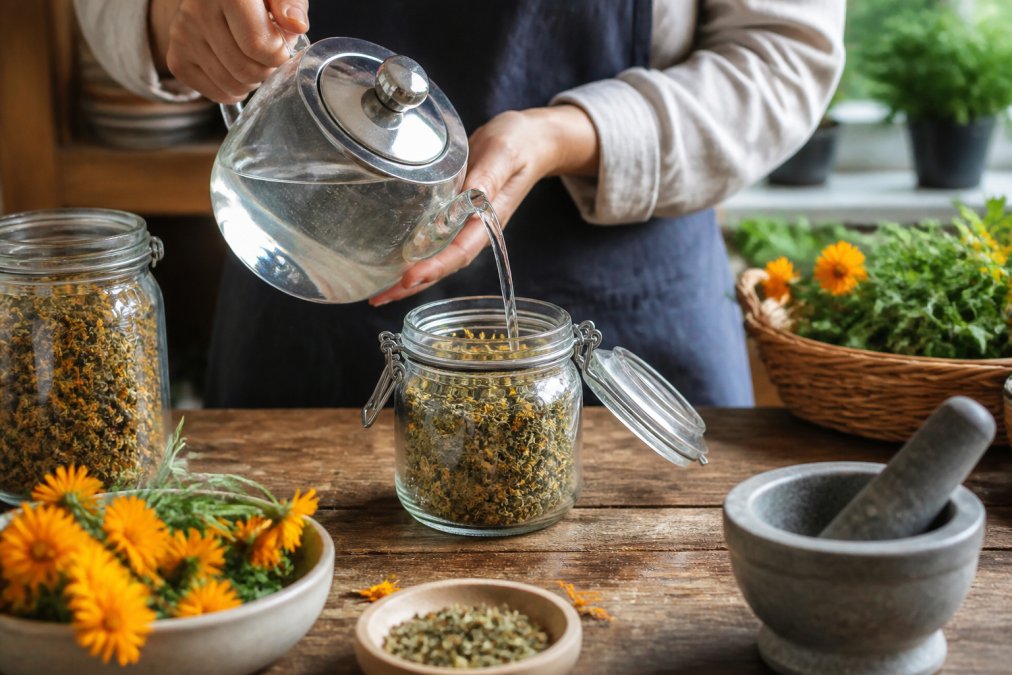
Basic Infusion Steps:
- Measure 1 tablespoon of dried herb (or 2-3 tablespoons fresh) per 8 ounces of water
- Heat water to 160-180°F (not boiling)
- Pour over herbs in a glass cup or jar
- Cover and steep for 5-15 minutes depending on the herb
- Strain through cheesecloth or a fine mesh strainer
- Cool to room temperature before applying to skin
- Use immediately or store in the refrigerator for up to 24 hours
Basic Decoction Steps:
- Measure 1 tablespoon of dried plant material per 8 ounces of water
- Add herbs to cold water in a pot
- Bring to a simmer and maintain gentle heat for 15-30 minutes
- Strain while still warm
- Cool completely before use
- Store in a glass container in the refrigerator for up to 3 days
Herbs for Acne and Breakouts
Acne requires understanding whether you're dealing with bacterial overgrowth, sebum regulation issues, or inflammatory response. Different herbs address different mechanisms.
Calendula for Soothing Inflamed Skin
Calendula (Calendula officinalis) is one of the most researched herbs for acne-prone skin. It reduces inflammation without over-drying by calming the immune response that creates redness and swelling. The herb is antimicrobial, addressing the bacterial component of breakouts, yet gentle enough for sensitive skin.
How to use calendula for acne:
- Prepare a calendula infusion
- Apply with a cotton pad to affected areas twice daily
- Can be mixed into a carrier oil (jojoba or rosehip) for overnight spot treatment
Kiehl's Calendula Herbal-Extract Alcohol-Free Toner incorporates calendula petals into a commercial formulation, offering convenience for those who prefer ready-made products.
Tea Tree and Rosemary for Antimicrobial Support
Tea tree oil and rosemary address the bacterial component of acne more aggressively than calendula. However, both are too strong to apply directly to skin in their essential oil form and must be diluted significantly or used as an infusion.
How to use rosemary for acne:
- Prepare a rosemary decoction using woody stems and leaves
- Dilute with equal parts water to reduce potency
- Apply with a cotton pad to active breakouts 1-2 times daily
Building Your Herbal Skin Care Routine
A herbal skincare routine only works if you use it consistently and in the correct order. Apply from lightest to heaviest texture on clean skin.
Morning and Evening Application Steps
Morning routine (5-7 minutes):
- Cleanse with lukewarm water and a gentle cleanser
- Pat skin dry
- Apply herbal infusion (calendula or chamomile) with a cotton pad
- Wait 1-2 minutes for absorption
- Apply a lightweight carrier oil or herbal oil blend (rosehip or jojoba infused with rosemary)
- Allow 2-3 minutes for absorption before applying sunscreen
Evening routine (7-10 minutes):
- Cleanse with lukewarm water and gentle cleanser
- Pat dry
- Apply herbal infusion or decoction specific to your skin concern
- Wait 2-3 minutes for absorption
- Apply a richer herbal oil or herbal-infused moisturizer
- Can leave overnight or rinse after 15-20 minutes depending on your skin type
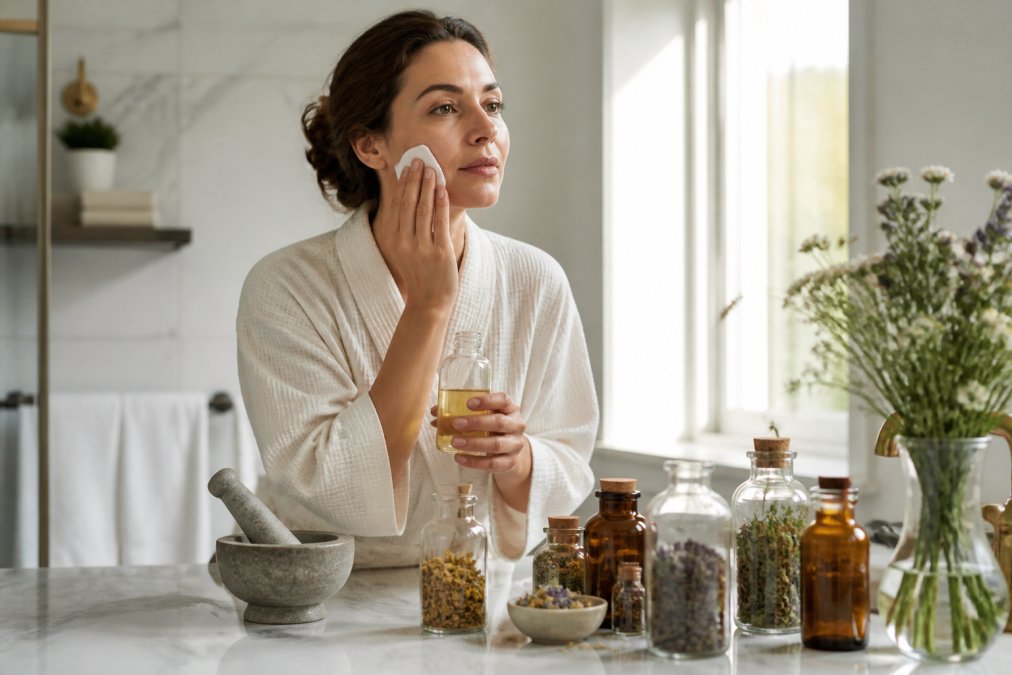
Timing matters because herbal compounds need contact time with your skin to be effective. Many people see improvement simply by slowing down and allowing proper absorption time.
Adapting Herbs to Your Skin Type
For oily and acne-prone skin: Use antimicrobial herbs (rosemary, tea tree, thyme) and astringent herbs (witch hazel, sage). Avoid heavy oils; stick to lightweight carrier oils like jojoba.
For dry and sensitive skin: Use soothing, hydrating herbs (calendula, chamomile, rose). Use richer oils like rosehip or argan oil. Avoid strong antimicrobial herbs that can over-dry.
For combination skin: Apply antimicrobial herbs to oily zones (T-zone) and hydrating herbs to dry areas (cheeks).
For mature skin: Use herbs that support collagen synthesis (calendula, gotu kola) and provide antioxidant protection (green tea, rosemary).
| Skin Type | Primary Herbs | Carrier Oil | Frequency |
|---|---|---|---|
| Oily/Acne | Rosemary, Tea Tree, Sage | Jojoba | 2x daily |
| Dry/Sensitive | Calendula, Chamomile, Rose | Rosehip, Argan | 2x daily |
| Combination | Rosemary (T-zone), Calendula (cheeks) | Jojoba + Rosehip blend | 2x daily |
| Mature | Calendula, Gotu Kola, Green Tea | Rosehip, Argan | 2x daily |
Herbs for Skin Hydration and Moisture Retention
Hydration isn't just about applying water to skin; it's about supporting your skin's ability to retain moisture. Glycerin-rich herbs like marshmallow root and slippery elm create a protective layer that prevents transepidermal water loss. Rose water and rose petals provide both hydration and antioxidant benefits.
For deeper hydration, herbal oils infused with hydrating plants work better than water-based infusions alone. Rosehip oil contains essential fatty acids that repair the skin barrier, while calendula-infused oils combine barrier support with anti-inflammatory benefits.
Hydration-focused herbal routine:
- Morning: Rose water infusion followed by rosehip oil
- Evening: Marshmallow root decoction followed by calendula-infused jojoba oil
- Weekly: A heavier treatment using shea butter infused with chamomile
Safety of Herbal Supplements for Skin
Herbal remedies are powerful tools, but power requires caution. Many people assume "natural" means "risk-free," which is where problems start.
Patch Testing and Allergy Screening
Before applying any herbal preparation to your face, patch test on a small area of skin first.
Patch testing protocol:
- Apply a small amount of the herbal preparation to the inside of your forearm or behind your ear
- Leave it on for 24 hours without washing
- Monitor for redness, itching, swelling, or burning
- If no reaction occurs after 24 hours, it's generally safe for facial use
- Still start with diluted applications on your face; reactions can be delayed or dose-dependent
Some people react to specific herbs even without known allergies. Rosemary can cause contact dermatitis in sensitive individuals. Tea tree oil causes reactions in about 1-3% of users. Chamomile can trigger reactions in people with ragweed allergies.
Drug-Herb Interactions You Should Know
Certain herbs interfere with medications, reduce their effectiveness, or amplify their effects to toxic levels.
Common problematic interactions:
- St. John's Wort reduces effectiveness of birth control, blood thinners, and antidepressants
- Ginkgo biloba increases bleeding risk when combined with blood thinners
- Ginger can increase bleeding risk and interfere with diabetes medications
- Turmeric increases bleeding risk and can interfere with diabetes management
- Green tea can interfere with certain cancer medications and blood thinners
For topical herbal applications on skin, systemic absorption is usually minimal, but it's not zero. High-potency preparations or use on damaged skin increases absorption risk.
If you take any prescription medications, especially blood thinners, diabetes medications, immunosuppressants, or psychiatric medications, consult with a healthcare provider before starting herbal remedies.
HighFiveHive Nature's Remedies-Kitchen Herbalism's RN-led approach specifically addresses this concern. With 40 years of nursing experience, the team understands medication interactions that typical herbalism guides overlook.
DIY Herbal Remedies vs. Commercial Products
The choice between making your own herbal preparations and buying commercial products involves trade-offs in consistency, potency, time, and reliability.
DIY preparations offer:
- Complete control over ingredient quality and sourcing
- Customization to your specific skin needs
- Lower cost per application
- The ability to adjust potency based on your response
- Freshness; you know exactly when it was made
Commercial herbal products offer:
- Standardized potency; you know exactly how much active compound you're getting
- Stability; properly formulated products maintain efficacy throughout their shelf life
- Convenience; no preparation time required
- Quality control; reputable brands test for contaminants and verify ingredient identity
- Professional formulation combining complementary herbs and supporting ingredients
The critical issue with DIY is consistency. Variables like herb freshness, water temperature, and steeping time all affect the final product, making it harder to assess whether the herb is actually working.
For someone starting with herbal skincare, a hybrid approach works best: use commercial products initially to understand how specific herbs affect your skin, then experiment with DIY preparations once you know what works.
Herbal remedies for skin health work best when you combine proper preparation, consistent application, and realistic expectations. HighFiveHive Nature's Remedies-Kitchen Herbalism brings RN-led expertise to herbal skincare, ensuring you're using herbs safely and effectively. With 40 years of nursing experience, the approach combines kitchen herbalism's accessibility with professional safety standards. Shop Now and start building a herbal skincare routine backed by both tradition and professional knowledge.
Frequently Asked Questions
What is the best herb for skin health?
Calendula stands out for its anti-inflammatory and antimicrobial properties, making it effective for acne and sensitive skin. However, the best herb depends on your specific skin concern. Chamomile excels at soothing irritation, green tea provides antioxidant protection, and rose hip offers hydration and collagen support. An RN-led approach helps match the right herb to your skin type and condition, ensuring safety and efficacy rather than guessing from generic online recipes.
How do I perform a patch test for herbal skin treatments?
Apply a small amount of your herbal preparation to clean skin on the inner arm or behind the ear. Leave it for 24-48 hours without washing. Watch for redness, itching, swelling, or burning. If no reaction occurs, the herb is likely safe for your face. Always patch test even if you've used the herb before, since skin sensitivity can change. This simple step prevents allergic reactions and identifies potential sensitivities before applying to visible areas.
Can herbal remedies interact with my medications?
Yes, some herbs can interact with medications, especially blood thinners, diabetes medications, and blood pressure drugs. St. John's Wort, for example, can reduce the effectiveness of certain prescriptions. This is why professional guidance matters: an RN can review your current medications and recommend herbs that won't interfere. Never start herbal remedies without consulting your doctor or pharmacist, particularly if you take multiple medications or have complex health conditions.
How long does it take to see results from herbal skin remedies?
Most herbal remedies show visible improvement in 2-4 weeks of consistent use, though some effects appear sooner. Calendula may soothe redness within days, while hydrating herbs like rose hip take longer to visibly plump skin. Consistency matters more than speed: daily application yields better results than sporadic use. Realistic expectations help you stay committed; herbal remedies work gradually but sustainably, unlike some synthetic treatments that may irritate or sensitize skin over time.
This article was written using GrandRanker


Leave a comment