
Is Elderberry Safe for Daily Use? A 2026 Guide
Table of Contents
- Is Elderberry Safe for Daily Use? What the Evidence Shows
- Elderberry Dosage: How Much Is Safe Each Day
- Elderberry Side Effects You Should Know About
- Elderberry Drug Interactions and Who Should Use Caution
- How Long Can You Take Elderberry? A Practical Timeline
- Raw Berries, Unripe Berries, and Plant Parts: The Real Toxicity Risk
- Frequently Asked Questions
Last Updated: October 6, 2026
Is Elderberry Safe for Daily Use? What the Evidence Shows
Is elderberry safe for daily use? For most healthy adults, yes, short term and at label doses. But "daily" has a limit: elderberry is a short-term remedy, not a forever supplement.
That matters, because elderberry is one of the country's most popular natural remedies, and many people take it all winter without a second thought.
At HighFiveHive Nature's Remedies-Kitchen Herbalism, our approach is backed by 40 years of nursing experience. Here's what daily use really looks like.
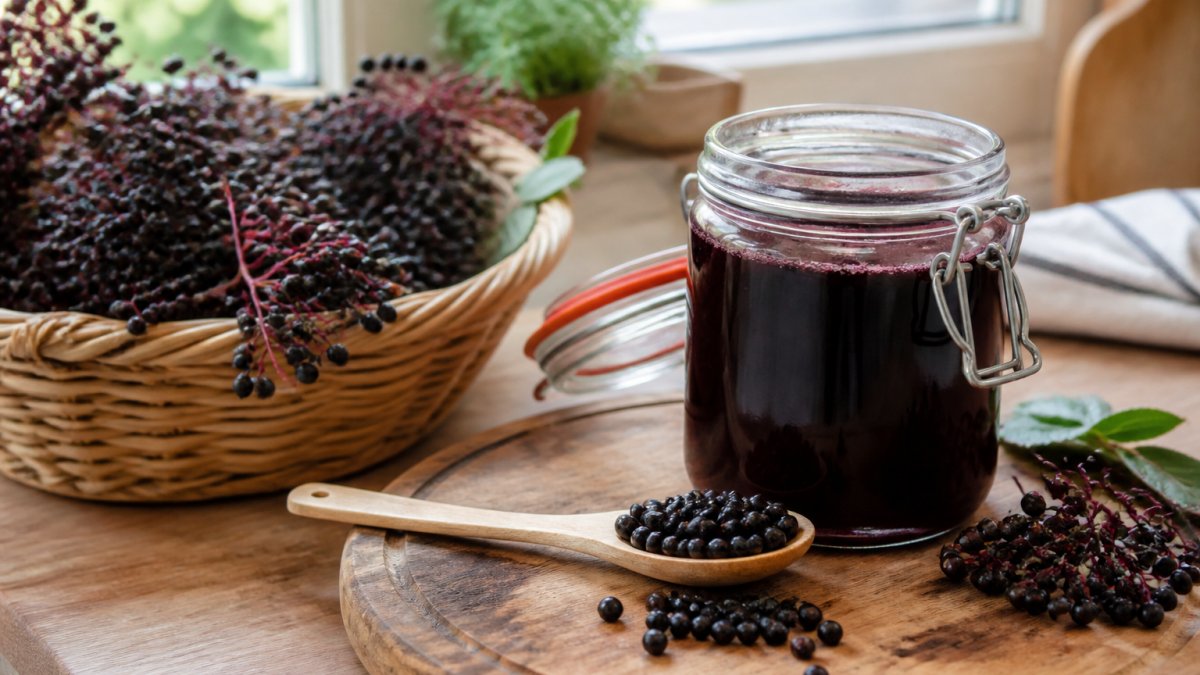
Elderberry is the dark fruit of the Sambucus nigra tree, long used in syrups, teas, and tinctures for immune support. It's generally considered safe when prepared properly and taken short term.
Short-Term vs. Long-Term Elderberry Use
Short-term use is where elderberry shines, most studies look at a few days to a few weeks. Long-term daily use is a different story; we simply don't have good data on months of continuous dosing. Many herbalists recommend cycling it: a few weeks on, then a break, mirroring traditional use.
Here's the practical split:
- Short-term: Up to 5 days for cold or flu symptoms, or a few weeks as a daily immune tonic
- Long-term: Not well studied; use with caution and check with your doctor
Elderberry Dosage: How Much Is Safe Each Day
There's no single official elderberry dosage, and products vary widely. A typical adult label dose is 1 to 2 dropperfuls, or 30 to 60 drops, taken 1 to 3 times daily.
Syrup labels often suggest 1 tablespoon up to four times daily during a cold; children's doses are smaller. Always follow the label or your doctor's guidance.
A few dosing rules that keep you safe:
- Start at the low end of the range
- Take it with food if your stomach feels off
- Don't stack multiple elderberry products at once
- Keep daily dosing short-term
Frequency matters as much as amount: four doses a day for five days during illness is very different from one dose daily for six months.
Syrups, Gummies, Tinctures, and Teas: Why Form Matters
The form you choose changes how much elderberry you actually get, plus the sugar and alcohol you take in. Syrups are easy to dose but often high in sugar; gummies may contain little actual elderberry; tinctures are concentrated, so a few drops go far; teas are gentle and hydrating but lower in strength.
| Form | Typical Daily Use | Watch For |
|---|---|---|
| Syrup | 1 tablespoon, up to 4x | High sugar content |
| Gummies | Per label, often 2-3 | Low elderberry content |
| Tincture | 30-60 drops, 1-3x | Alcohol content |
| Tea | 1-2 cups | Lower potency |
Our Black Elderberry Tincture is a simple, concentrated option. It's made from ripe black elderberries, alcohol, and water, nothing else. You control the dose drop by drop.

Elderberry Side Effects You Should Know About
Elderberry side effects are usually mild: stomach upset, nausea, and diarrhea, often from taking too much or from syrup sugar.
Some people report an allergic reaction, especially if sensitive to other berries, rash, itching, or swelling. Stop and get help if breathing becomes hard.
A bigger risk is raw or undercooked berries (covered below); properly cooked elderberry is far safer.
Watch for these warning signs:
- Stomach cramps or loose stools
- Nausea after dosing
- Rash or itching
- Any trouble breathing
If symptoms don't ease when you stop, call your doctor.
Elderberry Drug Interactions and Who Should Use Caution
Elderberry drug interactions aren't well studied in controlled trials, but the concerns are specific enough to act on: elderberry may nudge the immune system toward greater activity and may affect how some drugs are processed. For most healthy adults on no medication that's not a problem; for people on certain prescriptions, talk to a pharmacist before the first dose.
Immune-Suppressing Medications
The most-discussed concern is elderberry plus immunosuppressants. If a medication is deliberately dampening immune activity, a botanical that may stimulate it could work at cross-purposes. Common categories include:
- Corticosteroids such as prednisone, taken for autoimmune flares, asthma, or inflammatory conditions
- Calcineurin inhibitors such as tacrolimus and cyclosporine, used after organ transplant
- Biologic immunosuppressants such as adalimumab and other TNF inhibitors
- Disease-modifying antirheumatic drugs (DMARDs) such as methotrexate, used in rheumatoid arthritis and similar conditions
This is theoretical, not documented, but the stakes are high enough that standard advice is to skip elderberry unless the prescribing physician says otherwise.
Autoimmune Conditions
People with autoimmune conditions, rheumatoid arthritis, lupus, multiple sclerosis, Hashimoto's thyroiditis, inflammatory bowel disease, and others, are often told to be cautious with immune-stimulating herbs: if the immune system is already misfiring, adding a stimulant isn't obviously helpful. That doesn't forbid elderberry for everyone in this group; the decision belongs with the treating clinician, who knows the condition, its activity level, and the medication list.
Diabetes Medications and Blood Sugar
Elderberry syrups and gummies are often sweetened with sugar, honey, or glucose syrup; a tablespoon of traditional syrup carries a meaningful carbohydrate load, and four doses a day adds up. For someone on insulin or a sulfonylurea such as glipizide or glyburide, that sugar can complicate glucose control. Choose a sugar-free form, such as a tincture or unsweetened tea, and monitor blood sugar as usual.
Black Elderberry Pure Black Elderberry Tincture →
Diuretics, Laxatives, and Dehydration Risk
Elderberry has a traditional reputation as a diaphoretic (sweat-promoting) and is mildly laxative for some. Combined with a diuretic such as furosemide or hydrochlorothiazide, or a stimulant laxative, that effect can add up, risking dehydration and electrolyte loss, especially during a fever. If you take a diuretic, drink extra water on elderberry days and stop if you notice dizziness on standing.
What to Do Before You Start
A short, practical checklist:
- Write down every prescription, over-the-counter drug, and supplement you take
- Ask your pharmacist specifically: 'Does anything here interact with elderberry?'
- If you take an immunosuppressant, do not start elderberry without the prescriber's OK
- Pick one elderberry product and one form, not several at once
- Start at the low end of the label dose and note any change in how you feel
For unbiased background on how the federal government evaluates supplements, the National Center for Complementary and Integrative Health is a solid starting point. The FDA's guidance on dietary supplements explains why these products are regulated more like food than like drugs, which is why the interaction question usually falls to you and your pharmacist, not to a pre-market safety review.
How Long Can You Take Elderberry? A Practical Timeline
How long can you take elderberry? Most guidance points to short-term use: about 5 days during a cold, or up to a few weeks as a daily tonic, then a break.
A simple, safe pattern many people follow:
- Days 1-5: Daily dosing during cold or flu symptoms
- Weeks 1-3: Once-daily immune support, if desired
- Then: Take 1-2 weeks off before repeating
This on-and-off approach lowers the chance of overuse and matches traditional use.
For daily immune support all season, a gentle tea beats a concentrated extract. Our Ruby Ginger Revive Black Elderberry & Ginger Tea blends ripe elderberries with warming ginger, a comforting daily cup, not a heavy dose.

Raw Berries, Unripe Berries, and Plant Parts: The Real Toxicity Risk
Raw and unripe elderberries are not safe to eat, the single most important safety fact about the plant. The same risk applies to the leaves, stems, bark, and roots.
Why Raw Elderberry Is Toxic
Elderberry plants contain cyanogenic glycosides, chiefly sambunigrin. When plant tissue is crushed or chewed, an enzyme called beta-glucosidase converts sambunigrin into hydrogen cyanide, which blocks the body's ability to use oxygen at the cellular level, so symptoms can escalate quickly.
Cooking destroys the enzyme that triggers this conversion, which is why ripe berries must be cooked before they are eaten or drunk. Thorough simmering is the traditional and reliable method. Drying alone does not reliably remove the risk. Freezing does not remove the risk.
How Much Is Too Much
There is no established safe dose of raw elderberry: cyanogenic compounds vary by plant, ripeness, variety, and part eaten, with unripe berries and leaves highest. No responsible source gives a 'safe' raw-berry number. The rule is simple: don't eat raw elderberries, and don't use raw leaves, stems, bark, or roots in teas, tinctures, or salads.
Signs of Cyanide Toxicity
Symptoms typically appear within minutes to a few hours of ingestion:
- Nausea and vomiting
- Abdominal cramping
- Dizziness, headache, and confusion
- Weakness or a feeling of heaviness in the limbs
- Rapid breathing or shortness of breath
- In severe cases, loss of consciousness, seizures, or cardiac arrest
Children are at higher risk because of their smaller body weight. A handful of raw berries that would cause mild symptoms in an adult can be more serious in a toddler.
What to Do After Accidental Ingestion
Do not wait for symptoms. Call Poison Control at 1-800-222-1222 immediately, or use the Poison Control online tool. The service is free, confidential, and available 24 hours a day.
When you call, have the following ready:
- What was eaten, berries, leaves, stems, bark, or a product
- How much, as best you can estimate
- When it was eaten
- The person's age and weight
- Any symptoms already present
- The plant or product container, if you still have it
Follow the responder's instructions exactly. Don't induce vomiting or give food or drink unless told to. If the person is unconscious, having trouble breathing, or seizing, call 911 instead.
Safe Preparation at Home
If you make your own syrup or tea, these steps matter:
- Use only fully ripe berries, deep purple-black, no green or red ones
- Remove every stem, leaf, and unripe berry before cooking
- Simmer the berries thoroughly, then strain
- Never taste the raw mash to check sweetness
- Keep raw berries, dried berries, and finished products out of reach of children and pets
- Label homemade syrups with the date and keep them refrigerated
Frequently Asked Questions
Is it good to take elderberry every day?
Daily elderberry use is generally considered safe for short periods, typically up to five days for cold or flu symptom relief. For ongoing immune support, many people take it daily during cold and flu season, but research on long-term daily use is limited. A reasonable approach is to use it daily for several weeks, then take a break. If you have a health condition or take prescription medications, talk to your healthcare provider before making it a daily habit.
What shouldn't you mix with elderberry?
Elderberry may interact with immunosuppressant drugs, chemotherapy medications, and some diabetes drugs because it can stimulate the immune system. It may also interact with diuretics and corticosteroids. If you take any prescription medication, especially for autoimmune conditions, cancer treatment, or diabetes, ask your pharmacist or doctor before adding elderberry to your routine. This is especially important for daily use rather than occasional use.
How long can you safely take elderberry?
For acute cold or flu symptoms, elderberry is commonly used for up to five days. For general immune support during cold and flu season, some people take it for several weeks to a few months. There is no established long-term safety data beyond that. A practical approach is to use elderberry in cycles, such as daily for six to eight weeks, then pause. Always follow the dosage on your product label and check with your healthcare provider for extended use.
Who should avoid elderberry supplements?
People who are pregnant or breastfeeding should use caution and consult their healthcare provider first. Those with autoimmune conditions, those taking immunosuppressant medications, and children under one year should avoid elderberry. Anyone with a known allergy to elderberry or other plants in the honeysuckle family should also skip it. If you have diabetes or take blood sugar medications, monitor your levels closely and talk to your doctor before daily use.


Leave a comment