
Anti-Inflammatory Diet for Diabetes Management
Table of Contents
- How an Anti-Inflammatory Diet Fits Diabetes Management
- Anti-Inflammatory Foods for Diabetes: What to Put on Your Plate
- Foods to Limit with Diabetes on an Anti-Inflammatory Plan
- 7-Day Anti-Inflammatory Meal Plan for Diabetes
- Diabetes-Friendly Anti-Inflammatory Recipes to Try
- Monitoring Blood Glucose, Medication Safety, and Personalizing Your Plan
- Conclusion: Making the Anti-Inflammatory Diet Work for You
- Frequently Asked Questions
Last Updated: October 6, 2026
How an Anti-Inflammatory Diet Fits Diabetes Management
An anti-inflammatory diet for diabetes management is a way of eating that emphasizes fiber-rich vegetables, legumes, whole grains, and unsaturated fats while limiting refined carbohydrates, added sugar, and processed foods, with the goal of supporting both blood glucose control and lower chronic inflammation. At HighFiveHive Nature's Remedies-Kitchen Herbalism, we've spent four decades in nursing and clinical herbalism watching how food choices shape daily glucose readings.
Type 2 diabetes is, in part, a condition of chronic low-grade inflammation. The American Diabetes Association nutrition guidance consistently points to eating patterns built on non-starchy vegetables, whole grains, and legumes as the foundation for managing blood sugar.
Below, we'll walk through which foods to emphasize, which to limit, and how to build a 7-day plan you can actually follow.
Anti-Inflammatory Foods for Diabetes: What to Put on Your Plate
The core of an anti-inflammatory eating pattern for diabetes is simple: fill most of your plate with plants, add a modest portion of protein, and choose fats that come from olive oil, nuts, seeds, and fish.
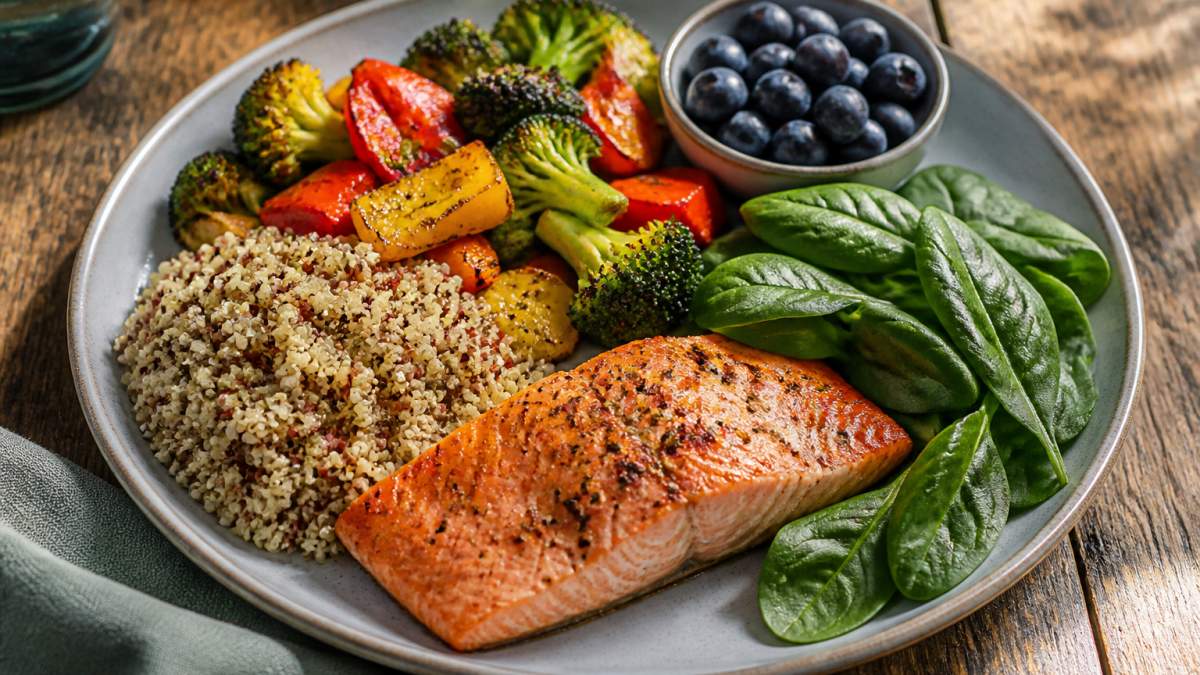
Vegetables, Fruits, and Whole Grains
Non-starchy vegetables should take up the largest share of your plate. Spinach, kale, broccoli, cauliflower, peppers, and tomatoes are rich in vitamin C, vitamin E, and polyphenols, plant compounds studied for their antioxidant effects. Fruits belong too, especially berries, apples, and citrus, because their fiber slows sugar absorption. For grains, choose whole grains like oats, barley, quinoa, and brown rice over refined carbohydrates such as white bread and white rice.
Legumes, Beans, and Fiber-Rich Foods
Beans, lentils, and chickpeas deliver both protein and dietary fiber, which is one of the most reliable tools for blood sugar control. Fiber slows digestion, blunts post-meal glucose rises, and feeds beneficial gut bacteria. A common mistake is skipping legumes because of their carbohydrate content; in practice, their fiber and protein balance out the glycemic response far better than most refined starches.
Healthy Fats, Fish, and Omega-3s
Unsaturated fats from olive oil, avocado, nuts, and seeds support cardiovascular health and help you feel full. Fish, particularly salmon, sardines, and mackerel, provides omega-3 fatty acids, which many researchers associate with lower inflammatory markers. Aim for two servings of fish per week and use olive oil as your default cooking fat instead of butter.
Foods to Limit with Diabetes on an Anti-Inflammatory Plan
The foods to limit with diabetes are the same ones that drive inflammation: added sugar, refined carbohydrates, processed foods, fried foods, and heavy red meat intake.
You don't have to eliminate them overnight. A practical approach is to replace rather than remove: swap soda for sparkling water, white pasta for whole-grain pasta, and fried snacks for roasted nuts.
7-Day Anti-Inflammatory Meal Plan for Diabetes
A 7-day anti-inflammatory meal plan for diabetes works best as a repeating framework rather than a rigid menu. Build each meal around the same proportions, then rotate proteins, vegetables, and grains so you don't get bored. The plan below uses common, affordable foods and keeps carbohydrate portions moderate and consistent, which makes it easier to match to medication and activity patterns.
Daily Plate Framework and Portion Guide
| Plate Component | Portion Guide | Examples | Approx. Carbs per Portion |
|---|---|---|---|
| Non-starchy vegetables | Half the plate (1-2 cups) | Broccoli, spinach, peppers, zucchini, cauliflower | 5-10 g |
| Lean protein | Palm-sized portion (3-4 oz) | Fish, chicken, tofu, tempeh, beans | 0-15 g (beans higher) |
| Whole grains or starch | Cupped-hand portion (½-1 cup cooked) | Quinoa, barley, farro, sweet potato, oats | 20-30 g |
| Healthy fat | Thumb-sized portion (1-2 tbsp) | Olive oil, avocado, nuts, seeds | 0-5 g |
These carbohydrate ranges are approximate and vary by brand, preparation, and serving size. Use them as a starting point, then confirm actual counts on labels or with a registered dietitian. A common target for many adults managing diabetes is roughly 30-45 g of carbohydrate per meal, but individual targets vary widely based on medication, activity, and clinician guidance.
Sample 7-Day Framework
This is a repeating template, not a prescription. Swap proteins and vegetables freely.
| Day | Breakfast | Lunch | Dinner | Snack |
|---|---|---|---|---|
| 1 | Steel-cut oats with berries and walnuts | Lentil-vegetable soup with olive oil | Baked salmon, roasted broccoli, ½ cup quinoa | Handful of almonds |
| 2 | Greek yogurt with cinnamon and chia | Chickpea-spinach salad with lemon-olive oil | Herb-baked cod, sautéed kale, ½ cup barley | Apple slices with peanut butter |
| 3 | Veggie omelet with avocado | Leftover salmon over greens | Tofu-vegetable stir-fry over brown rice | Carrot sticks with hummus |
| 4 | Overnight oats with flax and blueberries | Black bean and pepper bowl with salsa | Roasted chicken thigh, cauliflower, ½ cup farro | Small pear with walnuts |
| 5 | Cottage cheese with sliced peach | Sardine and white bean salad | Lentil curry with spinach and ½ cup brown rice | Plain yogurt with cinnamon |
| 6 | Whole-grain toast with avocado and egg | Leftover lentil curry | Baked mackerel, roasted zucchini, ½ cup quinoa | Handful of pistachios |
| 7 | Oatmeal with almond butter and berries | Chickpea and cucumber salad | Grilled salmon, roasted peppers, ½ cup sweet potato | Celery with hummus |
Shopping List and Budget Notes
A weekly shopping list built on this pattern centers on leafy greens, cruciferous vegetables, berries, citrus, canned beans, lentils, oats, barley, quinoa, olive oil, nuts, salmon, sardines, and mackerel. Frozen vegetables and canned beans are affordable, accessible, and nutritionally comparable to fresh. Canned fish in water is often the lowest-cost omega-3 source. Store brands of oats, beans, and frozen produce typically cost less than name brands without meaningful nutritional difference.
Adapting for Cultural Preferences and Dietary Restrictions
The framework adapts easily. For vegetarian or vegan patterns, replace fish and chicken with tofu, tempeh, or additional legumes, and consider an algae-based omega-3 supplement after checking with a clinician. For gluten-free needs, use quinoa, brown rice, and certified gluten-free oats. For Latin American, South Asian, East Asian, Mediterranean, or African American cooking traditions, keep the plate proportions and swap in familiar flavors, beans and rice, dal with vegetables, stir-fries, or roasted vegetable and legume dishes, rather than abandoning the pattern.
Diabetes-Friendly Anti-Inflammatory Recipes to Try
Diabetes-friendly anti-inflammatory recipes tend to share three traits: high fiber, moderate carbohydrate portions, and unsaturated fat. A turmeric-roasted vegetable bowl over barley, a chickpea and spinach skillet with olive oil and lemon, and a simple herb-baked fish with a side of greens all fit the pattern.
Synergy Spice: Bay, Cinnamon & Oregano Herbal Tea →
Herbal Tea and Kitchen Herbalism Additions
Herbal tea can be a pleasant, low-calorie part of the routine, and kitchen herbalism is where our nursing background meets the spice cabinet. Our Synergy Spice: Bay, Cinnamon & Oregano Herbal Tea blends bay leaves, cinnamon, and oregano into a warm, savory cup that fits alongside a balanced diet. For those who prefer a golden, spiced brew, our Golden Spice Herbal Brew Tea Blend combines rosemary, cinnamon, turmeric, and black pepper.


Monitoring Blood Glucose, Medication Safety, and Personalizing Your Plan
Blood glucose monitoring is what turns a general meal plan into your meal plan. Because individual responses to the same food vary widely, checking your glucose before and about two hours after a meal shows you which choices work for your body. Many people find that the same bowl of oatmeal produces very different readings from one person to the next, and even from one day to the next depending on sleep, stress, and activity.
How to Use Glucose Readings to Evaluate Meals
A practical approach is to test at a consistent time, for example, immediately before the first bite and again about two hours after, and log the meal alongside the numbers. Over one to two weeks, patterns emerge. If a meal consistently pushes glucose higher than your target range, try reducing the starch portion, adding more non-starchy vegetables or protein, or swapping the grain.
What to Track Beyond Blood Sugar
Progress is not only about daily glucose. A1C reflects average glucose over roughly the previous two to three months and is typically checked by a clinician at least twice a year for many adults with diabetes, more often if treatment is changing (the CDC). Blood pressure and lipid panels matter too, because cardiovascular risk and inflammation are closely linked in diabetes.
Medication Safety and Hypoglycemia
Changing carbohydrate intake, meal timing, or physical activity can shift how your medications behave. Insulin and sulfonylureas (such as glipizide and glyburide) are the classes most likely to cause hypoglycemia, dangerously low blood sugar, when carbohydrate intake drops. Symptoms can include shakiness, sweating, confusion, rapid heartbeat, and hunger (Low Blood Glucose (Hypoglycemia)). If you experience these, follow your clinician's instructions for treating low blood sugar, which often involves a fast-acting carbohydrate source such as glucose tablets or juice.
Evidence Quality and Limits of Anti-Inflammatory Claims
Much of the research linking diet to inflammation is observational, meaning it shows associations rather than proof of cause. Some studies measure inflammatory markers such as C-reactive protein, but the relationship between those markers and how you feel day to day is not always direct. Established diabetes nutrition guidance from major clinical organizations focuses on overall eating patterns, carbohydrate awareness, and cardiovascular risk reduction, not on any single "anti-inflammatory" food.
Personalizing for Budget, Access, and Preferences
Personalization should account for budget, accessibility, cultural food preferences, and dietary restrictions. Beans, lentils, frozen vegetables, canned fish, oats, and eggs are among the most cost-effective staples available. If fresh produce is expensive or hard to reach, frozen and canned options without added sugar or salt work well. If you follow a vegetarian, vegan, gluten-free, low-FODMAP, or other pattern, the same plate proportions apply, only the specific foods change.
Conclusion: Making the Anti-Inflammatory Diet Work for You
The anti-inflammatory diet for diabetes management isn't a short-term fix; it's a meal pattern you adapt to your life, your budget, and your body's responses. Start with one plate at a time, track how your glucose reacts, and let your healthcare team guide medication decisions.
Frequently Asked Questions
Can an anti-inflammatory diet help with diabetes management?
An anti-inflammatory eating pattern emphasizes vegetables, fruits, whole grains, legumes, and healthy fats while limiting refined carbohydrates and processed foods. This way of eating supports blood sugar control and heart health, which are key for diabetes management. It is not a cure, but it can be a helpful part of your overall plan. Always talk with your healthcare team before making big changes.
Which foods are considered anti-inflammatory for people with diabetes?
Focus on non-starchy vegetables, leafy greens, berries, citrus, fatty fish like salmon, nuts, seeds, olive oil, beans, and whole grains such as oats and quinoa. These foods provide fiber, unsaturated fats, and polyphenols that may help reduce chronic inflammation. They also have a lower glycemic impact than refined carbohydrates, making them good choices for blood sugar control.
What foods should people with diabetes limit on an anti-inflammatory diet?
Limit added sugar, refined carbohydrates like white bread and sugary drinks, processed foods, fried foods, and red meat. These can raise blood sugar and promote inflammation. Instead, choose whole foods and healthy swaps. For example, replace soda with water or herbal tea, and swap white rice for brown rice or quinoa. Small changes add up over time.
How can I start a 7-day anti-inflammatory meal plan for diabetes?
Begin by planning balanced meals that combine lean protein, healthy fats, and fiber-rich carbohydrates. Use a plate method: half non-starchy vegetables, one-quarter lean protein, and one-quarter whole grains or legumes. Prepare meals at home, try new recipes, and monitor your blood glucose to see how different foods affect you. A registered dietitian or your healthcare team can help personalize the plan.
Can an anti-inflammatory diet lower blood sugar?
An anti-inflammatory diet can support blood sugar control because it emphasizes fiber-rich foods and healthy fats that slow digestion and reduce spikes. However, it is not a replacement for medication or insulin. Monitor your blood glucose as you make changes, and work with your healthcare team to adjust your treatment plan safely. Some people may need medication adjustments.
What is the 3-3-3 rule diet for diabetes?
The 3-3-3 rule is not a standard medical guideline. Some popular sources describe it as eating every 3 hours, including 3 servings of vegetables, and 3 servings of protein, but this is not an official recommendation. For personalized meal timing and portions, consult a registered dietitian or your diabetes care team. They can help you create a plan that fits your needs.
Managing blood sugar and inflammation together can feel overwhelming, and that's exactly where informed, RN-led guidance helps. At HighFiveHive Nature's Remedies-Kitchen Herbalism, we bring 40 years of nursing experience and a kitchen herbalism approach to natural diabetes support, with thoughtfully crafted herbal teas designed to fit a balanced lifestyle. Explore our herbal blends and take the next step toward steady, supported wellness.


Leave a comment