
Herbal Support for Better Sleep Quality: A How-To Guide
Table of Contents
- How Herbal Sleep Support Works and What to Expect
- Herbal Sleep Aids: Valerian, Chamomile, Lavender, and More
- Valerian for Sleep: Dosage, Timing, and Evidence
- Chamomile Tea for Sleep: Brewing a Better Evening Cup
- Choosing Herbal Sleep Supplements: Quality and Safety
- A Step-by-Step Plan to Test One Herbal Approach
- When to Talk With a Health Care Professional
- Frequently Asked Questions
Last Updated: October 13, 2026
How Herbal Sleep Support Works and What to Expect
Herbal support for better sleep quality is the use of plant-based preparations, such as teas, tinctures, and extracts, to help the body settle into rest. These herbs do not work like a switch.
At HighFiveHive Nature's Remedies-Kitchen Herbalism, we built our whole approach around that idea. Our founder brings 40 years of nursing experience to kitchen herbalism, so we treat these plants as tools that need the right dose, the right timing, and honest expectations.
Here is the part most guides skip: herbs are not a replacement for sleep habits. They work best as one layer in a full evening routine. Keep reading, and we will show you how to test one herb properly.
The Nervous System and Herbal Nervines
Nervines are herbs traditionally used to calm and support the nervous system. Some are gently relaxing. Others, called sedatives in traditional herbal terms, are stronger and more sleep-focused.
Your body has two main modes. The sympathetic nervous system handles stress and alertness. When it stays switched on at night, sleep onset gets harder and nighttime awakenings increase.
Many people find that nervine herbs help take the edge off that alert state. They do not force sleep. They make the transition easier.
Herbal Sleep Aids: Valerian, Chamomile, Lavender, and More
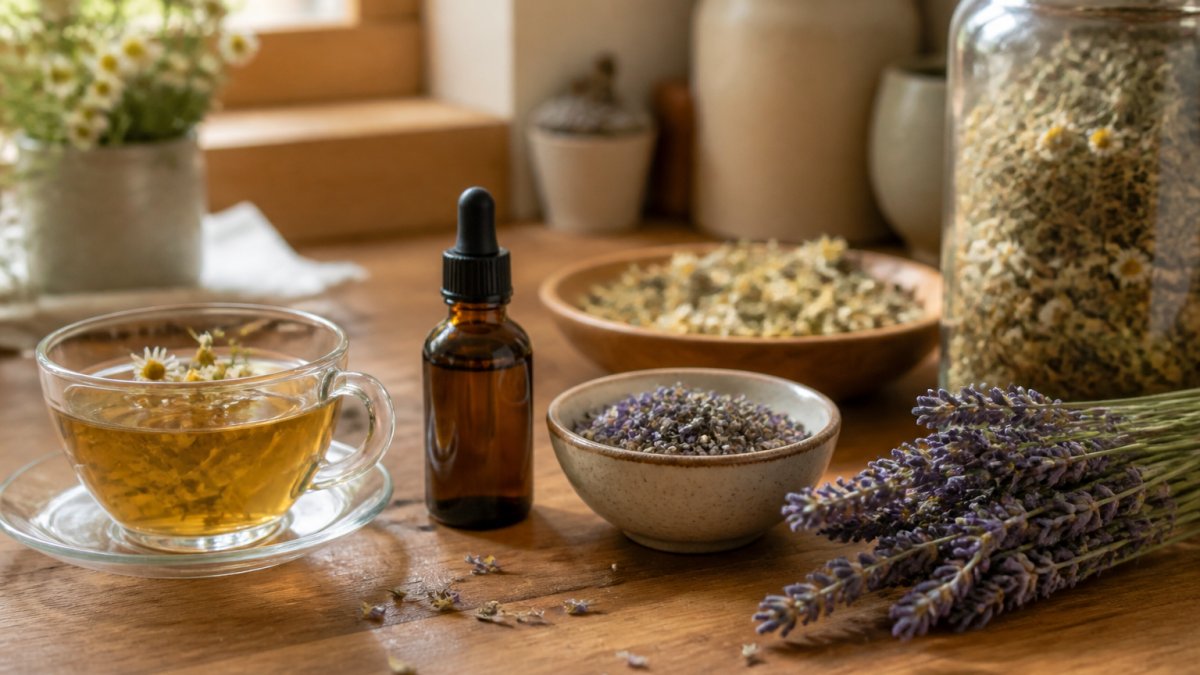
The most common herbal sleep aids are valerian root, chamomile, lavender, passionflower, hops, and skullcap. Each has a different strength, a different best use, and a different preparation that actually delivers it. The table below is a starting map; the notes that follow explain what each herb does, how it is usually prepared, and where it tends to fall short.
| Herb | Traditional Use | Best For | Typical Form | Water-Soluble? |
|---|---|---|---|---|
| Valerian root | Sedative, sleep onset | Trouble falling asleep | Tincture, capsule, tea | Partly |
| Chamomile | Gentle calm | Mild restlessness | Tea, capsule | Yes |
| Lavender | Aromatherapy, calm | Winding down | Essential oil, tea | Yes |
| Passionflower | Anxiety-reducing | Racing thoughts | Tincture, tea, capsule | Yes |
| Hops | Sedative | Evening relaxation | Tea, capsule | Partly |
| Skullcap | Nervine | Tension, stress | Tincture, tea | Yes |
Valerian Root
Valerian root is the most studied herb for sleep. It has a long traditional use as a sedative, and it carries a strong, earthy smell that tells you it is working.
Many people use it for sleep onset, meaning the time it takes to fall asleep. Valerian is usually taken as a tincture, a capsule, or a tea, and the form changes how fast it hits and how strong it feels. A tincture absorbs quickly; a capsule releases more slowly; a tea is the mildest of the three.
Chamomile
Chamomile is the gentlest option on this list. A cup of chamomile tea is a calming ritual more than a strong sleep aid.
It suits people with mild restlessness. If you need something stronger, chamomile alone will likely disappoint you. Chamomile is also one of the few herbs here that works well as a daily habit rather than an occasional tool, which is why it shows up in so many evening blends.
Lavender
Lavender works mostly through smell. In aromatherapy, the scent alone can support relaxation before bed.
You can use it as an essential oil in a diffuser or as a tea. The calming effect is real but subtle. A common pattern is a few drops on a tissue or pillow, or a diffuser running for 30 minutes before lights out. Lavender is also one of the safest options for people who want to avoid swallowing anything.
Passionflower, Hops, and Skullcap
Passionflower is often chosen for a busy mind. It is usually taken as a tincture or tea, and it pairs well with valerian in evening blends.
Hops, the same plant used in beer, shows up in many evening blends. It is bitter, so it is usually combined with something sweeter rather than drunk alone. Skullcap is a traditional nervine, most often as a tincture or tea.
How the Forms Differ
The same herb can behave differently depending on how you take it. This is one of the most overlooked points in herb writing, and it changes what you should expect.

- Tea is the mildest and slowest. It is best for gentle herbs like chamomile and for building a ritual.
- Tincture is concentrated and fast-acting. It is the usual choice for valerian and passionflower when you want a noticeable effect.
- Capsule is convenient and standardized, but absorption depends on the product.
- Aromatherapy bypasses digestion entirely and is best for lavender and other aromatic herbs.
If you are new to herbs, start with tea. If you have already tried tea and found it too weak, a tincture is the next step. Moving straight to a capsule without understanding the dose is where most people get into trouble.
Valerian for Sleep: Dosage, Timing, and Evidence
Valerian for sleep works best when you take it 30 to 60 minutes before bed. Timing matters as much as the herb itself, because valerian is not a switch. It builds a calm baseline over the evening rather than knocking you out.
Dosage by Form
The right amount depends on the form. These are common starting points, not prescriptions:
- Tincture: 1 to 2 dropperfuls, or 30 to 60 drops, in water.
- Capsule: follow the label, since extracts vary widely in strength.
- Tea: 1 to 2 teaspoons of dried root steeped 10 to 15 minutes, covered.
Start at the low end. If you feel nothing after two weeks, a small increase is reasonable. If you feel groggy the next morning, you took too much or took it too late. (Source: National Center for Complementary and Integrative Health (NCCIH) on botanicals for sleep)
Timing and the Next-Morning Test
The most common mistake is taking valerian right at lights out. It needs a head start. Take it 30 to 60 minutes before bed, and judge it by how you feel the next morning, not by how fast you fell asleep on night one.
A useful pattern is to take it at the same time every night for two to three weeks. Valerian's effects tend to build gradually, so a single night tells you almost nothing.
What the Evidence Actually Shows
The evidence is mixed, and it is worth being precise about why. Some clinical studies show modest improvements in sleep quality, particularly in sleep onset. Others show little difference from a placebo. That gap is not a flaw in the herb; it is a sign that the studies used different preparations, different doses, and different groups of people.
Natures Twilight Herbal Tincture →
This is the part most herb lists skip: not all evidence is equal. Traditional use tells us an herb has been tried for a long time. A small human trial tells us it might work. A larger, well-controlled trial tells us more. Valerian sits somewhere in the middle, with enough human research to take it seriously and not enough to call it proven.
Realistic Expectations
Valerian is not a drug, and results vary from person to person. Some people notice a clear calming effect. Others notice nothing. A fair trial is two to three weeks at a consistent dose, not one night.
The honest takeaway: give it a fair trial, but do not expect a dramatic shift on night one. Herbal remedies build gradually. If you have tried valerian for a month at a reasonable dose and noticed nothing, it is reasonable to stop and try a different herb rather than keep increasing the dose.
Chamomile Tea for Sleep: Brewing a Better Evening Cup
Chamomile tea for sleep is the easiest place to start. It is mild, widely available, and hard to get wrong.
But brewing matters. A weak cup does very little.
- Use 1 to 2 teaspoons of dried chamomile flowers per cup
- Heat water to just below boiling
- Cover and steep for 5 to 7 minutes
- Strain and sip slowly, 30 to 45 minutes before bed
Covering the cup traps the essential oils that carry the calming aroma.
If you want a fuller flavor, our Nature's Serene Moments tea blends chamomile with lemon balm and lavender. That trio offers citrus brightness and floral aroma in one cup.

Choosing Herbal Sleep Supplements: Quality and Safety
Herbal sleep supplements vary widely in quality. The label rarely tells you everything you need to know.
Look for these markers:
- The exact plant species name, like Valeriana officinalis
- The plant part used, such as root or leaf
- A clear amount per serving
- A stated extraction method
A product that lists "proprietary blend" with no amounts is a red flag. You cannot judge a dose you cannot see.
Safety deserves equal attention. Herbs can interact with medications. Valerian and St. John's wort are two worth watching closely.
Talk with your doctor or pharmacist before starting any herbal sleep supplement, especially if you take prescription medicine.
A Step-by-Step Plan to Test One Herbal Approach
Testing one herb at a time is the only way to know what works for you. Change too many things at once and you learn nothing.
Follow this plan:
- Pick one herb, such as valerian or chamomile
- Set a fixed dose and time, 30 to 60 minutes before bed
- Keep your sleep and wake times steady
- Track time to fall asleep and nighttime awakenings each morning
- Run the test for 2 to 3 weeks before judging
- Stop for one week, then compare your notes
- Add a second herb only after you have a clear result
Write down one number each morning: how long it took to fall asleep. That single data point tells you more than a vague memory.
When to Talk With a Health Care Professional
Some sleep problems need more than herbs. See a doctor if any of these apply:
- Insomnia lasting more than a few weeks
- Loud snoring or gasping during sleep
- Daytime fatigue that affects your safety
- Sleep problems alongside anxiety or depression
- You take prescription medication daily
These signs point to causes that may require professional medical attention. A professional can rule out sleep apnea, thyroid issues, and other conditions.
Herbs can still play a role, but only alongside proper care. Never stop a prescribed treatment to try an herbal remedy on your own.
Better sleep rarely comes from a single bottle. It comes from steady habits, the right herb, and a dose you can actually measure. HighFiveHive Nature's Remedies-Kitchen Herbalism can help you build that routine with RN-led guidance and 40 years of nursing experience behind every blend. Start with our Evening Unwind bundle to layer a tea, a valerian tincture, and a four-herb blend into one simple ritual.

Frequently Asked Questions
What is a good herbal sleep aid to try first?
Chamomile tea is a widely available option. For a more concentrated option, valerian root is often included in evening preparations. Many people begin with a single herb, such as chamomile or valerian, before trying a blend. Track your experience for two weeks before deciding whether to continue.
Can herbal sleep supplements interact with medications?
Yes. Valerian, St. John's wort, and other herbs can interact with prescription drugs. If you take any prescription medicine, talk with your pharmacist or doctor before adding an herbal sleep supplement. Bring the actual product label so they can review the ingredients with you.
How should you choose an herbal sleep supplement?
Look for products that list each herb and its amount clearly on the label, name the plant part used, and come from a manufacturer willing to share a certificate of analysis. Avoid proprietary blends that hide individual doses. Single-herb products make it easier to judge what is helping. If you use a tincture, follow the suggested serving on the label, such as 1-2 dropperfuls in water during your evening routine.
When should you talk with a health care professional about ongoing sleep problems?
If you have trouble falling asleep or staying asleep for more than three nights a week over several weeks, or if daytime sleepiness affects your work or driving, see a doctor. Persistent insomnia can stem from sleep apnea, thyroid issues, or medication side effects that may require professional medical attention. A clinician can also check whether an herbal sleep aid is safe alongside anything you already take.


Leave a comment