
Herbal Support for Hormonal Health: A 2026 Guide
Table of Contents
- What Herbal Support for Hormonal Health Actually Means
- Best Herbs for Hormone Balance by Life Stage
- Adaptogenic Herbs for Stress and Hormones
- Dosage, Bioavailability, and Standardized Extracts
- FDA Regulation of Herbal Supplements: What You Need to Know
- How Long Does It Take for Herbal Hormone Support to Work?
- Choosing High-Quality Hormonal Health Herbs: An RN-Led Perspective
- Conclusion
Last Updated: August 6, 2026
What Herbal Support for Hormonal Health Actually Means
Herbal support for hormonal health is the practice of using plant-based compounds to influence, regulate, or complement the body's endocrine function, the complex network of glands and hormones that governs metabolism, mood, reproductive cycles, and stress response.
This guide from HighFiveHive Nature's Remedies-Kitchen Herbalism draws on 40 years of nursing experience to cut through noise around botanical remedies. Most guides either oversimplify the science or ignore real safety concerns. We do neither. The endocrine system is an interconnected feedback loop, not a single dial, which is why choosing herbs thoughtfully matters.
How Herbs Interact with the Endocrine System
Herbs interact with the endocrine system through several mechanisms. Some plants contain phytoestrogens that bind to estrogen receptors and produce mild estrogen-like effects. Others work on the hypothalamic-pituitary axis, influencing the signaling cascade that tells glands how much hormone to produce. Still others support hormone clearance through liver pathways, helping the body metabolize and eliminate excess hormones efficiently. Importantly, herbs rarely act like synthetic hormones, their effects tend to be modulatory rather than additive, supporting hormonal homeostasis rather than flooding the system with a single hormone.
Phytoestrogens, Adaptogens, and Hormone Clearance: What's the Difference?
Three categories dominate herbal support for hormonal health, and conflating them leads to poor choices.
Phytoestrogens are plant compounds with structural similarity to estrogen, including isoflavones (red clover, soy), lignans (flaxseed), and coumestans. Their effect depends on the individual's existing estrogen levels, they can act as weak estrogens when levels are low or as competitive blockers when levels are high.
Adaptogens like ashwagandha, rhodiola, and eleuthero work primarily on the hypothalamic-pituitary-adrenal (HPA) axis to modulate stress response and cortisol regulation. They don't directly raise or lower sex hormones; they support upstream systems that influence them.
Hormone clearance herbs like milk thistle and dandelion root support liver detoxification pathways. Since the liver processes and eliminates used hormones, sluggish clearance can contribute to estrogen dominance and other imbalances.
Best Herbs for Hormone Balance by Life Stage
The best herbs depend significantly on where you are in your hormonal life. A 28-year-old managing PMS has different needs than a 52-year-old navigating perimenopause or a 45-year-old man dealing with metabolic syndrome and declining testosterone.
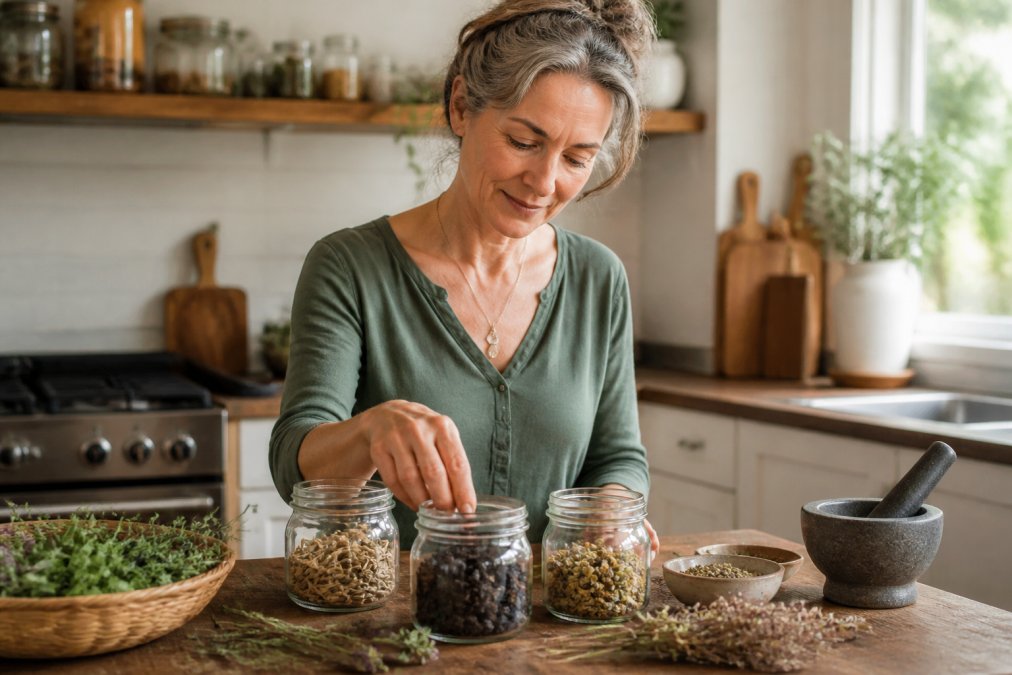
Menopause and Perimenopause: Top Botanical Allies
Menopause symptoms, hot flashes, sleep disruption, mood shifts, vaginal dryness, stem from declining estrogen and progesterone.
Black cohosh is the most studied herb for menopause symptoms. According to National Institutes of Health Office of Dietary Supplements, clinical trials have shown mixed but generally positive results for reducing hot flash frequency and intensity. It does not appear to act as a phytoestrogen, making it relevant even for women with hormone-sensitive conditions, though this should always be discussed with a physician.
Red clover contains isoflavones with direct phytoestrogenic activity. Consistent use over 8-12 weeks is typically necessary before meaningful changes appear.
Chasteberry (Vitex agnus-castus) influences progesterone states by acting on dopamine receptors in the pituitary, indirectly supporting luteinizing hormone regulation. It's more commonly used in perimenopause for cycle irregularity than for post-menopausal symptoms.
| Herb | Primary Mechanism | Best For | Typical Onset |
|---|---|---|---|
| Black Cohosh | Serotonergic/dopaminergic pathways | Hot flashes, sleep | 4-8 weeks |
| Red Clover | Phytoestrogenic (isoflavones) | Estrogen-like support | 8-12 weeks |
| Chasteberry | Pituitary dopamine modulation | Cycle regularity, perimenopause | 3-6 months |
| Ashwagandha | HPA axis, cortisol regulation | Stress-related hormonal disruption | 4-8 weeks |
| Flaxseed | Lignans, hormone clearance | Estrogen metabolism | 6-12 weeks |
PMS and Menstrual Cycle Support
Premenstrual symptoms often reflect an imbalance between estrogen and progesterone in the luteal phase, combined with elevated prostaglandins driving inflammation.
Chasteberry is the standout here. Multiple European clinical trials have examined it for PMS, and it's the herb most consistently recommended in integrative medicine for cycle regularity and luteal phase support. Expect a minimum of three full cycles before assessing results.
Evening primrose oil provides gamma-linolenic acid, which the body converts to anti-inflammatory prostaglandins, helping with breast tenderness and mood symptoms.
Magnesium-rich herbs like nettle leaf and raspberry leaf provide mineral support that underpins progesterone synthesis and reduces cramping.
Hormonal Health for Men and Blood Sugar Regulation
Herbal support for hormonal health isn't exclusively a women's topic. Men experience gradual testosterone decline from their mid-30s onward, intersecting directly with metabolic syndrome and adrenal function.
Ashwagandha has shown promise in supporting testosterone levels in men under chronic stress, likely through its cortisol-lowering mechanism. Elevated cortisol suppresses testosterone production, so reducing the stress response creates space for testosterone recovery.
Berberine, derived from plants like barberry and goldenseal, is one of the most studied botanical compounds for blood sugar regulation. As documented in NIH National Library of Medicine research on berberine, berberine activates AMPK pathways similarly to metformin, supporting glucose metabolism and insulin sensitivity. This is directly relevant to hormonal health because insulin resistance disrupts sex hormone balance in both men and women.
Adaptogenic Herbs for Stress and Hormones
Stress is a hard biochemical reality in hormonal health.
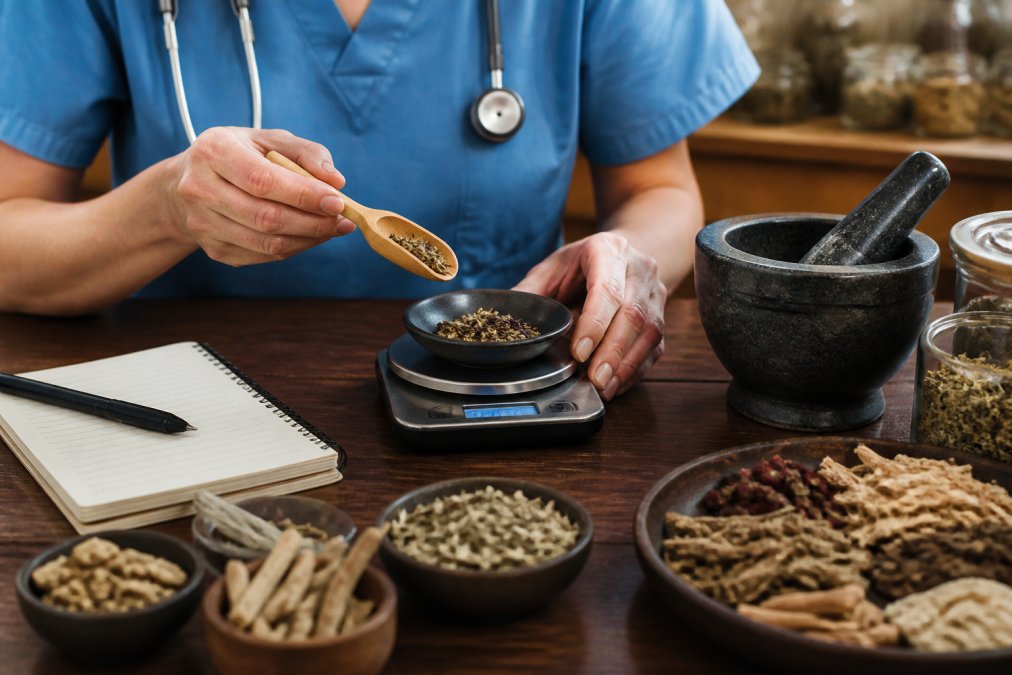
Cortisol Regulation and Adrenal Support
When the body perceives chronic stress, the HPA axis floods the system with cortisol. Sustained high cortisol suppresses thyroid function, disrupts menstrual cycle regularity, depletes progesterone (which gets converted to cortisol as a backup), and impairs blood sugar regulation. Adaptogenic herbs interrupt this cascade without sedating the system.
Ashwagandha (Withania somnifera) is the most evidence-supported adaptogen for cortisol regulation. It reduces cortisol levels in chronically stressed individuals and supports thyroid hormone conversion from T4 to the active T3 form.
Rhodiola rosea improves the stress response at the cellular level by enhancing mitochondrial energy production and reducing fatigue, particularly useful for burnout-driven hormonal disruption.
Holy basil (tulsi) supports adrenal function and is gentler than ashwagandha, well-tolerated for daily use in tea form.
Dosage, Bioavailability, and Standardized Extracts
Bioavailability, the proportion of an herb's active compounds that actually reach systemic circulation, varies enormously based on preparation method, standardization, and individual factors like gut health and liver enzyme activity.
Standardized extracts are preparations guaranteed to contain a specific percentage of the active constituent. Black cohosh standardized to 2.5% triterpene glycosides, ashwagandha standardized to 5% withanolides, and rhodiola standardized to 3% rosavins and 1% salidroside exist because raw herb products can vary by a factor of ten or more in potency.
Key principles for dosage and bioavailability:
- Fat-soluble compounds absorb significantly better when taken with food containing fat
- Cycling protocols are recommended for most adaptogens: 5 days on, 2 days off, or 6 weeks on, 2 weeks off
- Therapeutic dosage ranges published in clinical trials are often higher than what appears on commercial supplement labels
- Tinctures vs. capsules vs. teas have meaningfully different bioavailability profiles; tinctures often deliver faster onset, while encapsulated standardized extracts offer more consistent dosing
FDA Regulation of Herbal Supplements: What You Need to Know
The FDA regulation of herbal supplements in the United States operates under the Dietary Supplement Health and Education Act (DSHEA) of 1994. Under DSHEA, herbal supplements are classified as dietary supplements, not drugs. Manufacturers do not need to prove safety or efficacy before bringing a product to market. According to FDA dietary supplements overview, manufacturers are responsible for ensuring their products are safe, but the FDA does not evaluate supplement claims before they reach consumers.
What this means practically:
- A product can legally claim to "support hormonal balance" without clinical proof
- Supplement labels cannot claim to diagnose, treat, cure, or prevent any disease
- Third-party testing certifications (USP, NSF International, ConsumerLab) provide the strongest available quality assurance
- Current Good Manufacturing Practice (cGMP) regulations require quality controls in production, but compliance varies
The takeaway: the regulatory burden is on the consumer and their advisors to vet supplement quality. This is exactly why RN-led guidance matters.
Drug-Herb Interactions and Contraindications
Herbal compounds are pharmacologically active and interact with medications through the same pathways as drugs.
The most clinically significant interactions:
St. John's Wort powerfully induces CYP3A4 liver enzymes, accelerating the metabolism of oral contraceptives, antidepressants, blood thinners, and HIV medications, potentially reducing drug levels to sub-therapeutic concentrations.
Berberine taken alongside metformin or other blood sugar medications requires monitoring, as the combined effect can cause hypoglycemia.
Ashwagandha may enhance the effects of thyroid medications and sedatives; people on levothyroxine should monitor thyroid levels when adding or removing it.
Black cohosh should be used with caution by anyone with a history of hormone-sensitive cancers, liver conditions, or who is taking tamoxifen or other hormonal therapies.
Anyone managing a complex medication regimen should review herb-drug interactions with a healthcare provider before starting any herbal protocol.
How Long Does It Take for Herbal Hormone Support to Work?
How long herbal hormone support takes to work depends on the herb, the condition, and the individual's baseline health. Most botanical compounds require time to accumulate and shift the underlying hormonal environment.
General expectations:
- Acute symptom relief (sleep, anxiety, mild hot flashes): 2-4 weeks
- Cycle-related changes (PMS reduction, cycle regularity): minimum 3 full menstrual cycles, often 3-6 months
- Metabolic and blood sugar effects: 4-12 weeks with consistent daily use
- Structural hormonal shifts (testosterone support, thyroid support): 3-6 months of consistent, appropriately dosed use
The single most common reason herbal protocols fail is premature discontinuation. People stop at week three not knowing that week six is typically when the shift becomes measurable.
Choosing High-Quality Hormonal Health Herbs: An RN-Led Perspective
The supplement aisle is genuinely difficult to navigate without clinical context.
Third-party testing is the non-negotiable baseline. Look for certifications from NSF International, USP, or ConsumerLab. These organizations test for identity, potency, and contaminants independently of the manufacturer.
Standardized extracts over raw herb powders for therapeutic use. When addressing a genuine hormonal concern, you need to know what you're getting. Raw herb powders can vary dramatically in active compound concentration.
Transparent labeling that specifies the plant part used (root, leaf, seed), the extraction ratio or standardization percentage, and the exact daily dose. Proprietary blends that obscure individual doses are a red flag.
Formulation rationale matters. A product combining five adaptogens at sub-therapeutic doses of each is less useful than a single well-dosed herb matched to your specific concern.
| Quality Marker | What to Look For | Red Flag |
|---|---|---|
| Third-party testing | NSF, USP, or ConsumerLab seal | No independent verification |
| Standardization | % active constituent listed | "Proprietary blend" with no doses |
| Plant part specified | Root, leaf, seed identified | Generic "herb extract" only |
| Dosage transparency | mg per serving clearly stated | Doses hidden in blends |
| Practitioner guidance | RN or clinical oversight | Recipe-only approach |
Hormonal health is one of the most complex areas of wellness to address without clinical context. The herbs discussed here have genuine therapeutic potential, but they work best when matched to your specific life stage, health history, and medication profile. HighFiveHive Nature's Remedies-Kitchen Herbalism brings 40 years of nursing experience to this work, offering RN-led guidance on women's wellness, blood sugar regulation, and natural remedies that account for the full clinical picture. If you're ready to move beyond guesswork and toward a thoughtful, professionally guided approach, explore what HighFiveHive Nature's Remedies-Kitchen Herbalism offers and get started with support that's built on real clinical knowledge.
Frequently Asked Questions
What herbs are best for hormonal balance?
Several herbs show consistent use for hormonal balance across different life stages. Black cohosh and red clover are commonly used for menopause symptoms due to their phytoestrogen content. Vitex (chaste tree berry) supports cycle regularity and progesterone states. Ashwagandha and rhodiola address cortisol regulation, which directly affects reproductive hormones. Maca root is often used for energy and hormonal homeostasis. The right choice depends on your specific symptoms, life stage, and any medications you take, always consult a qualified healthcare professional before starting.
How do herbal supplements affect hormone levels?
Herbs affect hormone levels through several mechanisms. Phytoestrogens in plants like red clover can bind to estrogen receptors, producing mild estrogen-like effects. Adaptogens such as ashwagandha work on the hypothalamic-pituitary-adrenal axis to moderate the stress response and indirectly support cortisol regulation and reproductive hormones. Some herbs support liver function, which is critical for hormone clearance. The pharmacological interactions are real, which is why herbal support for hormonal health should be approached with the same care as any therapeutic intervention.
Are herbal remedies for hormone balance safe?
Most evidence-based herbs used for hormonal health have a reasonable safety profile when taken at therapeutic dosage for appropriate durations. However, safety is not universal. Drug-herb interactions are a genuine concern, St. John's Wort, for example, can reduce the effectiveness of hormonal contraceptives and certain diabetes medications. Some herbs are contraindicated during pregnancy or with hormone-sensitive conditions. The FDA regulates herbal supplements as dietary supplements, not drugs, so third-party testing and standardized extracts matter significantly for supplement quality and safety.
How long does it take for herbal hormone support to work?
Realistic timelines vary by herb and individual. Adaptogens like ashwagandha may show measurable effects on stress response within four to eight weeks of consistent use. Vitex typically requires three to six menstrual cycles before cycle regularity improves noticeably. Phytoestrogen-rich herbs for menopause symptoms often show gradual improvement over six to twelve weeks. Factors like bioavailability, standardized extract quality, dosage consistency, diet, and the severity of hormonal imbalance symptoms all influence how quickly you notice results. Patience and consistency matter more than any single dose.
What should I look for in a high-quality hormonal support supplement?
Prioritize supplements that use standardized extracts, meaning the active compound is measured and consistent across batches. Look for third-party testing verification from organizations like USP, NSF International, or ConsumerLab. Check that the therapeutic dosage on the label aligns with the amounts studied in clinical trials for that herb. Avoid proprietary blends that hide individual ingredient amounts. For anyone managing chronic conditions or taking prescription medications, an RN-led or clinician-guided approach to supplement selection adds an important safety layer that generic online recipes cannot provide.
Can herbs help with symptoms of hormonal imbalance?
Herbs can support symptom management for several hormonal imbalance symptoms, including hot flashes, mood fluctuations, irregular cycles, fatigue, and hormone-related skin health concerns. The evidence base varies by herb: black cohosh has more clinical trials supporting its use for menopause symptoms than many other botanicals. Adaptogens have growing evidence for adrenal support and cortisol regulation. Herbs work best as part of a holistic wellness approach that includes diet, sleep, and stress management, not as standalone cures. A healthcare professional can help determine which herbs fit your specific picture.
This article was written using GrandRanker


Leave a comment