
How to Improve Insulin Resistance Naturally: 7 Steps
Table of Contents
- Step 1: Know What You're Working With: Insulin Resistance Basics
- Step 2: Build an Insulin Resistance Diet That Works for You
- Step 3: Exercise for Insulin Resistance: Beyond Walking
- Step 4: Natural Supplements for Insulin Resistance: What the Evidence Shows
- Step 5: How Long Does It Take to Improve Insulin Resistance?
- Step 6: Track Progress and Know When to Seek Clinical Care
- Step 7: Sleep, Stress, and the Habits That Hold It All Together
- Conclusion: Small Steps, Real Results
- Frequently Asked Questions
Last Updated: October 8, 2026
Step 1: Know What You're Working With: Insulin Resistance Basics
Insulin resistance is when your cells stop responding well to insulin, the hormone that moves sugar from your blood into your cells for energy.
This matters because insulin resistance sits upstream of prediabetes and type 2 diabetes. The CDC National Diabetes Statistics Report notes that more than 1 in 3 American adults have prediabetes, and most don't know it.
At HighFiveHive Nature's Remedies, we leverage 40 years of nursing experience to support well-being with kitchen herbs and simple habits.
Common Signs and Risk Factors to Watch For
Insulin resistance is often silent. Many people have no symptoms until blood sugar starts creeping up.
Watch for these signs:
- Extra weight around the belly
- Fatigue after meals
- Constant sugar or carb cravings
Risk factors include family history, age over 45, PCOS, and a sedentary lifestyle. If any of these sound familiar, a simple fasting glucose or A1C test can tell you where you stand.
Step 2: Build an Insulin Resistance Diet That Works for You
An insulin resistance diet focuses on whole foods, fiber, and balanced meals that keep blood sugar steady instead of spiking and crashing. There's no single "right" diet.
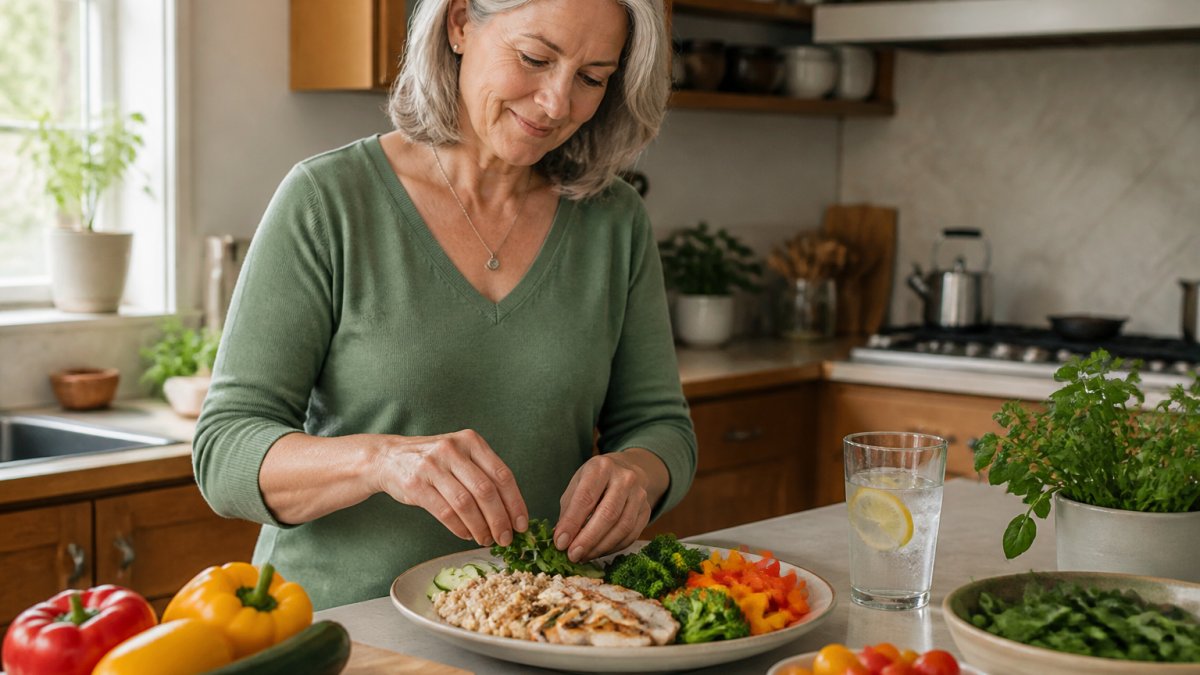
A balanced plate is your starting point:
- Half non-starchy vegetables
- A quarter lean protein
- A quarter complex carbohydrates
This pattern supports glucose control without counting every calorie. Research from Harvard T.H. Chan School of Public Health on healthy eating plate consistently links this kind of balanced eating to better metabolic health.
Foods That Support Blood Sugar Balance
Fill your kitchen with foods that work with your body, not against it.
- Non-starchy vegetables: leafy greens, broccoli, peppers, zucchini
- Lean protein: chicken, fish, eggs, tofu, beans
- Healthy fats: olive oil, avocado, nuts, seeds
Fiber slows sugar absorption, so meals that pair carbs with protein and fat cause a gentler glycemic response.
Foods to Limit (Not Eliminate)
You don't have to give up every treat. Just cut back on the foods that spike blood sugar fast.
- Sugary drinks and juice
- White bread, white rice, and refined carbohydrates
- Packaged snacks and sweets
A common mistake is going cold turkey on everything at once. In practice, small swaps work better. Trade soda for sparkling water. Swap white rice for brown. Those small wins add up.
Step 3: Exercise for Insulin Resistance: Beyond Walking
Exercise for insulin resistance works because contracting muscles pull in glucose through a pathway that doesn't depend on insulin. That effect can last for hours after you finish, which is why timing and consistency matter as much as total minutes.
You don't need a gym. You need a plan you can repeat.
The Weekly Framework
A practical starting point most adults can build toward:
- Aerobic activity: 150 minutes per week of moderate-intensity movement (brisk walking, cycling, swimming, dancing). Spread it across at least 3 days, daily is better.
- Resistance training: 2 to 3 sessions per week, hitting all major muscle groups (legs, hips, back, chest, shoulders, arms, core).
- Walking after meals: 10 to 15 minutes after your largest meals, especially dinner.
Resistance Training, Made Concrete
Muscle is your largest glucose sink, so this is the part most people skip and most need.
- Beginners: 1 to 2 sets of 8 to 12 reps per exercise, using body weight, resistance bands, or light dumbbells. Two sessions per week is enough to start.
- Intermediate: 2 to 3 sets of 8 to 12 reps, adding weight or reps when the last two reps feel easy.
- Progression rule: add a small amount of resistance or one rep per week, not per session. Slow, steady overload is what builds insulin-sensitive muscle.
Simple exercises that cover the whole body: squats or sit-to-stands, hip hinges or glute bridges, push-ups (wall, incline, or floor), rows with a band, overhead presses, and a plank or dead bug.
Aerobic Intensity, Made Concrete
- Moderate intensity means you can talk but not sing. That's the target for most of your 150 minutes.
- Vigorous intensity means you can only say a few words at a time. A common pattern is 75 minutes of vigorous activity per week instead of 150 moderate, or a mix of both.
- Interval option: alternate 1 minute hard with 2 minutes easy for 15 to 20 minutes, 2 to 3 times per week. This can improve insulin sensitivity efficiently, but it is not required.
Adapting to Your Starting Point
- If you're sedentary: start with 10-minute walks after two meals a day and one resistance session per week. Add 5 minutes per week until you reach the framework above.
- If you have joint pain: swimming, cycling, and chair-based strength work reduce impact while still working large muscles.
- If you're already active: add a third resistance session and one interval day before adding more total cardio.
Why Timing Matters
Walking after meals is one of the most underrated habits for blood sugar. A short walk after dinner can blunt the post-meal glucose rise more than a longer walk at a random time. The American Diabetes Association on physical activity recommends breaking up sedentary behavior throughout the day, and the same principle applies whether or not you have a diagnosis.
Step 4: Natural Supplements for Insulin Resistance: What the Evidence Shows
Natural supplements for insulin resistance can help, but they are not a replacement for diet and movement. Think of them as support, not a cure.
Some herbs and nutrients have real research behind them:
- Cinnamon: studied for blood sugar support
- Berberine: one of the more researched options
- Magnesium: low levels are common in people with insulin resistance
Our SlimRoots Kitchen Herbalism Weight Tea Blend combines hibiscus and cinnamon, formulated with herbs traditionally used to help stabilize blood glucose and reduce the blood sugar spikes that trigger cravings. It's a gentle way to work herbal support into your daily routine.
SlimRoots Kitchen Herbalism Weight Tea Blend →

Step 5: How Long Does It Take to Improve Insulin Resistance?
How long does it take to improve insulin resistance? Most people notice changes in energy and post-meal blood sugar within 4 to 12 weeks of consistent diet, movement, and sleep changes. Meaningful shifts in fasting glucose and A1C typically take 3 to 6 months, because A1C reflects roughly the last 2 to 3 months of average blood sugar.
The timeline depends on a few things:
- How long you've had insulin resistance
- How consistent you are with changes
- Your starting weight and activity level
A Realistic Phased Plan
Instead of changing everything at once, work in phases. Each phase builds on the last.
Weeks 1-2: Foundation
- Add a 10-minute walk after your largest meal.
- Swap one sugary drink per day for water or sparkling water.
- Set a consistent bedtime and aim for 7 to 9 hours.
Weeks 3-4: Plate and Movement
- Apply the balanced plate (half vegetables, a quarter protein, a quarter complex carbs) to at least one meal per day.
- Add one resistance-training session per week.
- Stand and move for 2 to 3 minutes every hour of sitting.
Weeks 5-8: Build Volume
- Reach 150 minutes of moderate aerobic activity per week.
- Increase resistance training to 2 sessions per week.
- Add a second post-meal walk.
Weeks 9-12: Refine and Measure
- Add a third resistance session or one interval day.
- Review your food and movement log for patterns.
- Recheck fasting glucose if you have a home meter, or schedule an A1C if it's been 3 months.
What Progress Actually Looks Like
Progress is not always the scale. Watch for:
- Steadier energy through the afternoon
- Fewer sugar or carb cravings
- Better sleep quality
Modest weight loss, even 5 to 7 percent of body weight, often improves insulin sensitivity. The National Institute of Diabetes and Digestive and Kidney Diseases notes that lifestyle changes are the first line of defense for preventing type 2 diabetes.
If Progress Stalls
A plateau is common around weeks 6 to 10. Before assuming something is wrong:
- Check consistency, not intensity. Most plateaus come from habits slipping, not from the plan failing.
- Revisit sleep and stress. Poor sleep can blunt the benefits of an otherwise good diet.
- Add resistance training if you haven't. Muscle is the biggest lever most people leave untouched.
Step 6: Track Progress and Know When to Seek Clinical Care
Tracking progress keeps you honest and motivated. What gets measured gets managed.
Simple ways to track:
- Fasting blood glucose at home
- A1C every 3 to 6 months
- Waist measurement
Talk to your doctor if you notice:
- Blood sugar creeping up despite changes
- Unexplained weight loss or gain
- Persistent fatigue or thirst
Herbal remedies can interact with prescriptions. Always tell your doctor what you're taking, and never stop a prescribed medication without medical guidance.
Step 7: Sleep, Stress, and the Habits That Hold It All Together
Sleep and stress are the hidden levers of blood sugar. Poor sleep raises cortisol, and cortisol pushes blood sugar up. Chronic stress does the same.
Habits that help:
- Aim for 7 to 9 hours of sleep
- Keep a consistent bedtime
- Lean on herbal teas like our Ruby Glow Nettle Hibiscus & Spice Herbal Tea as a delightful part of your daily routine
| Habit | Why It Helps | How Often |
|---|---|---|
| Walk after meals | Lowers post-meal glucose | 3x daily |
| Strength training | Builds insulin-sensitive muscle | 2-3x weekly |
| Sleep 7-9 hours | Lowers cortisol | Nightly |
| Stress practice | Reduces blood sugar spikes | Daily |
| Herbal tea ritual | Supports calm and balance | Daily |
Conclusion: Small Steps, Real Results
Improving insulin resistance doesn't require a total life overhaul. It requires small, consistent steps, and a little support along the way.

At HighFiveHive Nature's Remedies, we blend 40 years of nursing experience with kitchen herbalism to support your well-being. Our RN-led teas, like SlimRoots and Synergy Spice, are crafted to fit into your daily routine.
Get started with HighFiveHive Nature's Remedies and take the first step toward steadier blood sugar and lasting energy.
Frequently Asked Questions
Can insulin resistance be reversed naturally?
Insulin resistance can often be improved significantly through lifestyle changes. Research shows that modest weight loss, regular physical activity, and a balanced diet can improve insulin sensitivity and may even reverse prediabetes. However, individual results vary based on genetics, how long insulin resistance has been present, and other health conditions. A healthcare provider can help you set realistic goals and monitor your progress. Natural approaches work best as part of a comprehensive plan that includes regular medical checkups.
How long does it take to improve insulin resistance?
Some improvements in insulin sensitivity can appear within days to weeks of starting regular exercise and dietary changes. Studies show that a single session of moderate exercise can improve glucose uptake for up to 48 hours. More lasting changes, such as improved fasting blood sugar and A1C levels, typically take 8 to 12 weeks of consistent effort. Weight loss of 5 to 7 percent of body weight has been shown to reduce diabetes risk meaningfully over several months.
What foods improve insulin resistance?
An insulin resistance diet emphasizes whole foods: non-starchy vegetables, fruits, whole grains, lean protein, and healthy fats like those found in fish, nuts, and olive oil. Fiber-rich foods slow glucose absorption and support steadier blood sugar levels. Reducing added sugar, limiting refined carbohydrates, and choosing complex carbohydrates over processed options all help improve glucose control. Meal planning around portion size and food variety makes these changes easier to sustain long-term.
Can exercise improve insulin resistance even without weight loss?
Yes. Physical activity improves insulin sensitivity independently of weight loss. Muscle contractions during exercise stimulate glucose uptake without requiring extra insulin. Both aerobic exercise and resistance training help, and walking after meals is a simple way to reduce post-meal blood sugar spikes. Breaking up sedentary behavior throughout the day also matters. Aim for at least 150 minutes of moderate activity per week, plus two sessions of strength training, as a general guideline.


Leave a comment