
How to Make Herbal Compresses for Knee Pain Relief
Table of Contents
- What You'll Need to Make a Herbal Compress
- Best Herbs for Joint Inflammation in a Knee Compress
- Step-by-Step: How to Make Herbal Compresses for Knee Pain
- How to Use a Ginger Compress for Pain
- Herbal Compress Safety Guidelines and Contraindications
- Reusable vs. Single-Use Compress Construction and Storage
- Conclusion
- Frequently Asked Questions
Last Updated: September 14, 2026
What You'll Need to Make a Herbal Compress
A herbal compress is a warm, moist cloth soaked in a concentrated herbal infusion and applied over an aching joint. Unlike a dry heating pad, the moist heat carries water-soluble plant compounds into the skin while the warmth relaxes tight muscles around the knee. At HighFiveHive Nature's Remedies-Kitchen Herbalism, we build every guide around one principle: kitchen herbalism works best when it is simple, safe, and repeatable.
Before you learn how to make herbal compresses for knee pain, gather the right equipment, no specialty tools required.
Here is your full supply list:
- Dried herbs: ginger root, turmeric, chamomile, or lavender
- Muslin cloth or clean cotton cloth: roughly 30 by 30 centimeters, folded into a pad
- A saucepan or heatproof bowl for steeping
- A large ceramic or glass bowl for soaking the cloth
- Clean towels to protect clothing and furniture
- A waterproof barrier such as a sheet of plastic wrap
- An elastic bandage or dry towel to hold the compress in place
A thin dish towel cools within a minute or two; muslin holds heat longer and releases the infusion gradually, so more of the herb reaches the skin.
Best Herbs for Joint Inflammation in a Knee Compress
The best herbs for joint inflammation have a long tradition of topical use and a reasonable safety profile on intact skin. Ginger, turmeric, chamomile, and lavender top that list.
Ginger: A Warming Herb for Stiff, Aching Knees
Ginger is the workhorse of warming compresses. Its active compounds create a gentle, spreading heat that eases stiffness and supports circulation, often the most satisfying option for a knee that feels tight in the morning.
Use roughly two tablespoons of dried ginger powder or a thumb-sized piece of grated fresh root per compress. Fresh root gives sharper heat; dried powder is milder, so start there if your skin is sensitive.
Turmeric and Other Anti-Inflammatory Botanicals
Turmeric contains curcumin, the compound most often studied for its anti-inflammatory properties. It stains fabric badly, so use a dedicated cloth, and pair it with a carrier oil such as coconut or olive oil.
Chamomile and lavender are soothing rather than heating, good for a knee that is swollen and irritated rather than stiff. Many people blend one warming herb with one soothing herb: ginger plus chamomile, or turmeric plus lavender.
National Center for Complementary and Integrative Health overview of turmeric
Step-by-Step: How to Make Herbal Compresses for Knee Pain
Total Time: 25 minutes (10 minutes preparation, 15 minutes application) Difficulty: Beginner
Making a compress takes three stages: steep, soak, apply. The biggest variable is water temperature, too hot extracts bitter, irritating compounds and risks a burn; too cool leaves the water-soluble actives locked in the plant matter.
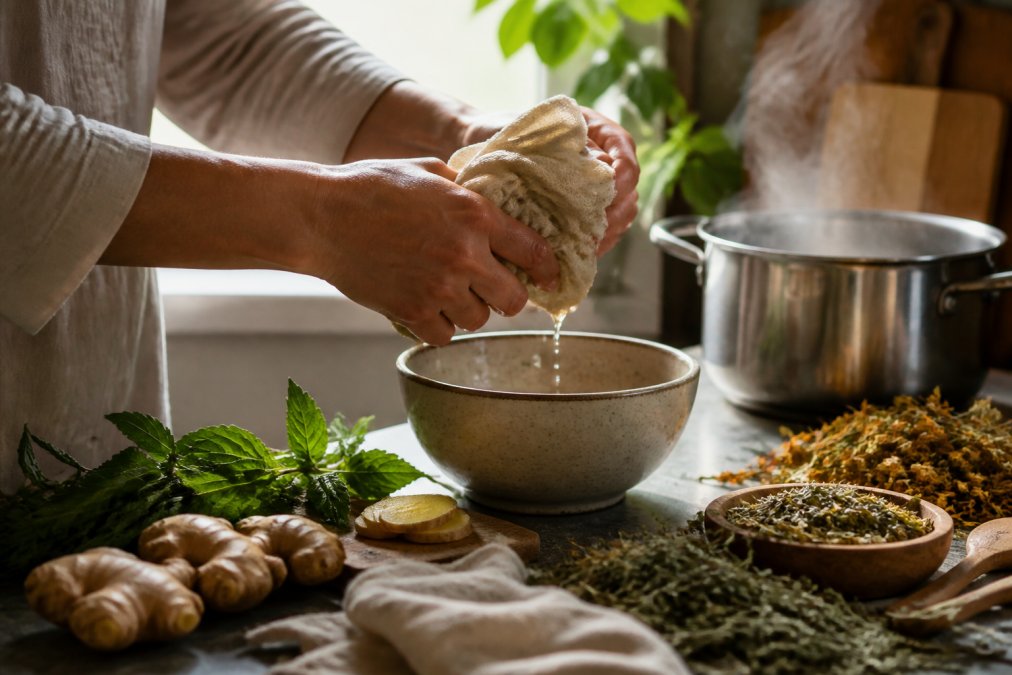
Step 1: Prepare Your Herbal Infusion [Time: 10 minutes]
Use a 1:16 ratio by weight as your baseline, roughly 1 ounce (about 4 tablespoons) of dried herb to 2 cups (16 fluid ounces) of water. If using fresh root, double the amount, since fresh plant matter is roughly 80 percent water.
Heat the water to between 160°F and 180°F, below a rolling boil but well above a lukewarm steep. Without a thermometer, heat until small bubbles form on the bottom of the pot but the surface is not yet rolling. Add your herbs, cover, and steep for 10 minutes off the heat; covering keeps the volatile oils in the water.
Strain through a fine-mesh strainer into a large bowl, pressing the spent herb against the mesh to recover the last of the liquid. If using turmeric, add a teaspoon of carrier oil now.
Expected Result: A fragrant, deeply colored infusion at roughly 140°F to 160°F, warm enough to feel clearly on the wrist, not hot enough to sting.
Step 2: Soak and Wring Your Muslin Cloth [Time: 2 minutes]
Submerge your folded muslin cloth in the infusion for a full minute, then lift it out and wring firmly. The compress should be damp and steaming lightly, not dripping, a dripping cloth cools fast and makes a mess.
Test the temperature against the inside of your wrist for a full five seconds. If you want to pull away before the count is up, the cloth is too hot, rest it on a plate for 60 to 90 seconds and re-test.
Troubleshooting: If your compress cools within two or three minutes, the cloth is too thin or you wrung it too dry, a double layer of muslin holds heat noticeably longer. If it feels uncomfortably hot even after cooling, your infusion was too concentrated, dilute the next batch with an equal part warm water.
Step 3: Apply and Cover [Time: 15 minutes]
Place the cloth over the knee, cover it with plastic wrap, then wrap a dry towel or elastic bandage around it. The plastic wrap is the key layer, it blocks evaporative cooling, which makes a bare compress go cold in under five minutes. Rest with the knee supported and slightly elevated, ideally on a pillow with the joint bent about 20 degrees.
Check the skin at the five-minute mark. If it is bright red or you feel any stinging, remove the compress and rinse with cool water. Mild pinkness that fades within 20 minutes is normal.
Expected Result: Steady, penetrating warmth for ten to fifteen minutes. When the compress no longer feels warm, the session is over, do not reheat the same cloth and reapply without a fresh skin check.
MedlinePlus guidance on safe heat therapy and burn prevention
How to Use a Ginger Compress for Pain
A ginger compress is the strongest warming option in this guide and needs a lighter touch. Follow the same steep-and-soak method, but apply for ten minutes rather than fifteen, especially on your first attempt.
Ginger can produce a tingling or mild burning sensation, which is normal. Sharp pain, itching, or visible redness is not, remove the compress immediately and rinse with cool water.
For day-to-day knee care, many people alternate a warm ginger compress with a cooling rub. HighFiveHive's DualSoothe Warm & Cool Herbal Rub delivers that same warm-then-cool contrast in a single application, which suits a knee that feels stiff at rest but irritated after activity.

Herbal Compress Safety Guidelines and Contraindications
Herbal compress safety guidelines exist for good reason: heat and concentrated plant compounds are both active interventions that can cause harm when applied carelessly.
Temperature, Duration, and Frequency
The therapeutic temperature for a compress is warm to the touch, not hot. If you cannot hold the cloth against your inner wrist for five seconds without discomfort, it is too hot.
- Temperature: 104°F to 113°F at the skin surface, warm, never hot enough to redden skin on contact
- Duration: 15 to 20 minutes per session
- Frequency: up to two or three times daily, with at least a one-hour break between sessions
- Skin check: inspect the knee before and after every application
More heat is not better. Prolonged or overly hot application can irritate skin and, in people with reduced sensation, cause burns without warning. A first session may feel mild while a second, an hour later on sensitized skin, feels much stronger, so space sessions out and let skin return to normal color and temperature between them.
When Heat Is the Wrong Choice: A Condition-by-Condition Breakdown
Heat is not universally helpful for knee pain, in several common situations it actively makes things worse.
Do not use a warm compress in the first 48 hours after an acute injury. A twist, fall, or sudden pop with immediate swelling is an inflammatory event, and heat increases blood flow and swelling. Use cold for 48 hours, then switch to warmth once acute swelling settles.
Do not use heat on a knee that is hot, red, and swollen without a known cause. These signs suggest possible infection (septic arthritis) or an inflammatory flare, both needing medical assessment, heat on an infected joint can accelerate the infection.
Do not use heat over broken or irritated skin. Open wounds, ulcers, healing incisions, rashes, eczema flares, and dermatitis should never receive a warm compress, heat increases blood flow to compromised tissue and the herbal compounds can sting or delay healing. Ensuring the integrity of your ingredients remains paramount because choosing quality herbal preparations prevents the introduction of contaminants that might otherwise exacerbate sensitive or damaged skin.
Do not use heat if you have reduced sensation in the leg or foot. Common with diabetes and peripheral neuropathy, this is the single most dangerous scenario for home heat therapy, a compress that feels mild to your hand may cause tissue damage you cannot detect.
Do not use heat if you have a bleeding disorder or take anticoagulants without checking with your prescriber first. Heat increases local circulation, and turmeric and ginger in concentrated topical form have mild blood-thinning properties of their own.
Do not use heat on a knee with an active gout flare. Gout is an inflammatory crystal arthritis, and heat can intensify the pain during a flare. Cold is generally better tolerated.
Herb-Specific Cautions
Beyond the heat itself, individual herbs carry their own cautions:
- Ginger can cause a burning or tingling sensation on sensitive skin. Patch-test on the inner forearm for 15 minutes before your first knee application.
- Turmeric stains skin and fabric and can cause contact dermatitis in a small number of people. The staining is temporary on skin but permanent on cloth.
- Chamomile is in the ragweed family. If you are allergic to ragweed, marigolds, or daisies, skip chamomile compresses.
- Lavender is generally well tolerated but can cause contact sensitization with repeated use in some people.
If you have diabetes, circulatory problems, or any chronic condition, speak with your healthcare provider before starting heat therapy. This is general information, not individual medical advice.
American Diabetes Association guidance on foot and skin care
Reusable vs. Single-Use Compress Construction and Storage
The cloth you choose and how you store your infusion decides whether your compress is hygienic by the third use.
Reusable compresses are muslin or cotton pads you wash and re-soak. They hold heat well, cost less over time, and suit regular use. Wash in hot water with mild detergent after every session and dry fully.
Single-use compresses are disposable gauze pads or paper towels soaked in infusion. They suit occasional use or when laundry is impractical, but cool quickly and hold less liquid.
Refrigerate leftover infusion in a sealed glass jar and use within two to three days; discard if it smells sour or looks cloudy. Dried herbs keep their potency for roughly a year stored away from light and moisture.
| Compress Type | Heat Retention | Cost Over Time | Best For |
|---|---|---|---|
| Muslin (reusable) | High | Low | Regular daily use |
| Cotton (reusable) | Medium | Low | Sensitive skin |
| Gauze (single-use) | Low | Higher | Occasional use, travel |
| Paper towel (single-use) | Very low | Lowest upfront | One-off applications |
Conclusion
Knee stiffness rarely resolves on its own, and the routine that helps most is the one you will actually keep. A warm herbal compress takes twenty-five minutes, uses ingredients already in your kitchen, and fits easily into a morning or evening routine. Pair it with a topical rub for days when you need warmth without the setup.
HighFiveHive Nature's Remedies-Kitchen Herbalism brings forty years of nursing experience to kitchen herbalism, so every remedy we recommend comes with the safety guidance a healthcare professional would give. Our DualSoothe Warm & Cool Herbal Rub and Dual Sensation Herbal Body Rub both support joint comfort and mobility between compress sessions.

Get started with HighFiveHive Nature's Remedies-Kitchen Herbalism and build a knee-care routine you can sustain.
Frequently Asked Questions
How long should you leave an herbal compress on your knee?
Most herbal compresses stay on for 15 to 20 minutes per session. Check your skin every few minutes, especially with warm compresses, because heat can build up and cause irritation. If the cloth cools down, you can re-soak it in warm infusion and reapply. After removing the compress, pat the skin dry and apply a light moisturizer or botanical salve to protect the skin barrier. Repeat up to three times daily, depending on your comfort level.
What is the difference between a hot and cold herbal compress for knees?
A warm compress relaxes muscles, improves circulation, and eases stiffness, making it a good choice before movement or in the morning. A cold compress reduces swelling and numbs sharp pain, which helps after activity or during a flare-up. For chronic knee discomfort, many people alternate between the two. You can use the same herbal infusion for both, simply chill it in the refrigerator for cold application or warm it gently on the stove for heat.
Are there safety precautions when using herbal compresses at home?
Yes. Always test the compress temperature on your inner wrist before applying it to your knee. Avoid compresses on broken skin, rashes, or open wounds. If you have diabetes, nerve damage, or poor circulation, your skin may not sense heat accurately, so consult your doctor before using warm compresses. Check with a healthcare provider before using herbs if you take blood thinners, have a bleeding disorder, or are pregnant. Stop use if redness, itching, or pain worsens.
How can I make a DIY herbal compress for joint pain?
Steep dried herbs such as ginger, turmeric, or chamomile in hot water for 10 to 15 minutes to create a strong infusion. Soak a clean muslin cloth in the liquid, wring it out so it is damp but not dripping, and drape it over the affected knee. Cover with a dry towel to hold in the heat. Leave it on for 15 to 20 minutes. For a convenient alternative between compresses, a warm botanical rub like DualSoothe Warm & Cool Herbal Rub ($8.95) can complement your routine.
Arthritis Foundation guidance on heat and cold therapy for joints


Leave a comment