
Managing Hormonal Imbalance With Herbs: A 2026 Guide
Table of Contents
- How Herbs Support Hormonal Balance
- Adaptogenic Herbs for Women Under Stress
- Safety of Herbal Supplements for Hormones
- Herbs for Hormonal Acne and Skin Resilience
- Dosage, Delivery Methods, and Cycle-Syncing
- Common Mistakes When Managing Hormonal Imbalance With Herbs
- Frequently Asked Questions
Last Updated: September 14, 2026
How Herbs Support Hormonal Balance
Managing hormonal imbalance with herbs works because certain plants contain compounds that interact with the endocrine system, the network of glands that regulates everything from cortisol to insulin. This guide from HighFiveHive Nature's Remedies-Kitchen Herbalism breaks down which herbs have the strongest traditional and clinical backing, how to dose them safely, and where the real risks hide.
Hormonal imbalance is a disruption in the production, regulation, or ratio of hormones such as estrogen, progesterone, cortisol, and thyroid hormones. Symptoms range from irregular cycles and acne to fatigue, mood swings, and stubborn weight changes.
Herbs support balance through several mechanisms. Some, like ashwagandha, help regulate cortisol. Others, like chaste tree berry, act on the pituitary to indirectly support progesterone. Phytoestrogens in red clover bind weakly to estrogen receptors, which may soften the effect of estrogen dominance.
What most guides miss is that herbs are not a substitute for medical evaluation. According to the National Center for Complementary and Integrative Health, herbal products can interact with prescription medications, including thyroid drugs and blood thinners.
Below, we'll show you exactly how to approach herbal support methodically, with safety checks built in.
Adaptogenic Herbs for Women Under Stress
Adaptogenic herbs for women help the body resist stress by modulating cortisol regulation rather than suppressing it. That distinction matters: cortisol is not the enemy. The problem is a flattened or mistimed rhythm, high at night, low in the morning, and adaptogens work on the shape of that curve, not on the hormone itself.
What most guides skip is grading the evidence. Below, each herb is sorted by whether it has human clinical trials behind it or rests mainly on traditional use. That difference should change how much weight you give it.
Ashwagandha (Withania somnifera), Strongest Human Evidence
Ashwagandha has the strongest evidence base for stress-related hormone support among the adaptogens commonly sold. Human trials have looked at perceived stress scores and morning cortisol, and it is the herb most practitioners reach for first when stress is the driver.
A common approach is 300-600 mg of a standardized root extract daily, taken with food (Withania somnifera (Ashwagandha) supplementation). Look for a withanolide content on the label, that is the marker compound, and it varies widely between products.
What most guides miss is that ashwagandha can stimulate thyroid hormone production, so anyone with hyperthyroidism should avoid it, and anyone on thyroid replacement should have levels rechecked after starting.
Rhodiola rosea, Moderate Human Evidence
Rhodiola rosea works on a different pathway, supporting the adrenal response to fatigue. It is best taken in the morning because it can be mildly stimulating, and it is a poor fit for anyone who already struggles with insomnia. Standardized extracts usually list rosavins and salidroside as marker compounds.
Holy Basil (Ocimum tenuiflorum), Traditional Use, Growing Research
Holy basil, or tulsi, is a mainstay of traditional practice for stress and blood sugar support. Human data is thinner than for ashwagandha, but it is gentle, widely consumed as a tea, and a reasonable entry point for someone who wants a daily ritual rather than a capsule.
Maca, Traditional Use, Limited Human Data
Maca is popular for energy and libido, particularly in perimenopause. The human studies are small and mixed, and maca is not a classic adaptogen in the cortisol-modulating sense. It is worth knowing as a traditional option, not as a proven cortisol intervention.
A warning worth repeating: "adrenal fatigue" is not a recognized medical diagnosis. If you have persistent exhaustion, get thyroid and cortisol levels checked before assuming stress is the cause. A clinician can also rule out anemia, sleep apnea, and thyroid disease, all of which look like burnout and none of which respond to herbs.
Safety of Herbal Supplements for Hormones
The safety of herbal supplements for hormones depends on three factors: quality, dose, and drug interactions. This is where most DIY herbalism falls apart, and where nearly every listicle-style guide goes quiet.
The FDA's dietary supplement guidance notes that supplements are regulated as food, not drugs, meaning they are not reviewed for effectiveness before sale. That puts the burden of verification on you. A product can legally reach the shelf with no human trial behind it, no standardized marker compound, and no warning about the medication you take every morning.
Drug-Herb Interactions Most Guides Skip
If you take a prescription, assume an herb can change how it behaves until you confirm otherwise. The interactions below are the ones that come up most often in practice.
- Oral contraceptives. St. John's wort induces CYP3A4 and can reduce contraceptive effectiveness, which is why it carries a well-known interaction warning. Some practitioners also flag high-dose chaste tree berry for anyone on hormonal birth control, since both act on pituitary signaling, the evidence is thinner, but the caution is common.
- Hormone replacement therapy. Red clover and black cohosh contain phytoestrogenic or estrogen-modulating compounds. Stacking them on top of prescribed estrogen or estrogen-progestin therapy is not a neutral add-on; it can shift the total estrogenic load in ways your prescriber did not plan for.
- Thyroid medication. Ashwagandha may increase thyroid hormone production, and it can push levothyroxine requirements in either direction. Anyone on thyroid replacement should have levels rechecked after starting it, not before.
- Anticoagulants and antiplatelets. Dong quai, turmeric at high doses, and ginkgo can all increase bleeding risk. Combined with warfarin, apixaban, or even daily aspirin, that risk compounds.
- Antidepressants. St. John's wort interacts with SSRIs and other antidepressants and can contribute to serotonin syndrome. It also reduces the effectiveness of many other prescriptions through the same liver enzyme pathway.
- Diabetes medication. Berberine and cinnamon extracts can lower blood glucose, which means they can stack with metformin or insulin and cause hypoglycemia.
A practical rule: any herb that changes how your liver processes medication, St. John's wort is the clearest example, can affect drugs you would never connect to it. That is why the pharmacist check matters more than the label check.
Quality and Dose Checks
- Check for third-party testing. Look for USP, NSF, or ConsumerLab seals. These verify identity and potency, not effectiveness.
- Respect contraindications. Vitex is not for use during pregnancy. Dong quai can increase bleeding risk. Black cohosh has rare reports of liver effects, and the risk rises with long-term, high-dose use.
- Read the marker compound, not the milligrams. A 500 mg capsule of ashwagandha root powder and a 500 mg capsule standardized to 5% withanolides are not the same product.
If you take prescription medication for diabetes, thyroid function, blood pressure, or mood, run any herbal plan past your pharmacist first. This is not optional caution; it is the difference between support and harm.
Herbs for Hormonal Acne and Skin Resilience
Herbs for hormonal acne and skin resilience target two things at once: androgen-driven oil production and the inflammation that turns a clogged pore into a cyst.
Spearmint tea is the standout here. Several small studies suggest drinking two cups daily may reduce free testosterone, which can translate to fewer breakouts. It is gentle, inexpensive, and easy to add to a routine.
Chaste tree berry (vitex) addresses the progesterone side of the equation. By supporting the luteal phase, it may reduce the premenstrual flare-ups many women notice.
For skin resilience, the goal is reducing oxidative stress. Anti-inflammatory herbs like turmeric and green tea provide polyphenols that support the skin's barrier.
Dosage, Delivery Methods, and Cycle-Syncing
| Delivery Method | Best For | Typical Use |
|---|---|---|
| Tinctures | Fast absorption, precise dosing | 1-2 droppers, 2-3x daily |
| Teas and decoctions | Gentle, daily ritual | 1-3 cups daily |
| Standardized extracts | Consistent potency | Follow label, 1-2x daily |
| Capsules | Convenience, taste-free | Per product guidance |
Common Mistakes When Managing Hormonal Imbalance With Herbs
Frequently Asked Questions
Which herbs are best for balancing hormones in women?
Chaste tree berry, ashwagandha, and black cohosh are among the most studied. Chaste tree berry supports progesterone balance and menstrual cycle regularity, while ashwagandha helps with cortisol regulation. Red clover and dong quai contain phytoestrogens that may ease estrogen dominance symptoms. A blend like Five Botanicals A Woman's Traditional Tincture combines several of these in one formula, which simplifies dosing and reduces the risk of taking too much of any single herb.
How long does it take for herbal remedies to balance hormones?
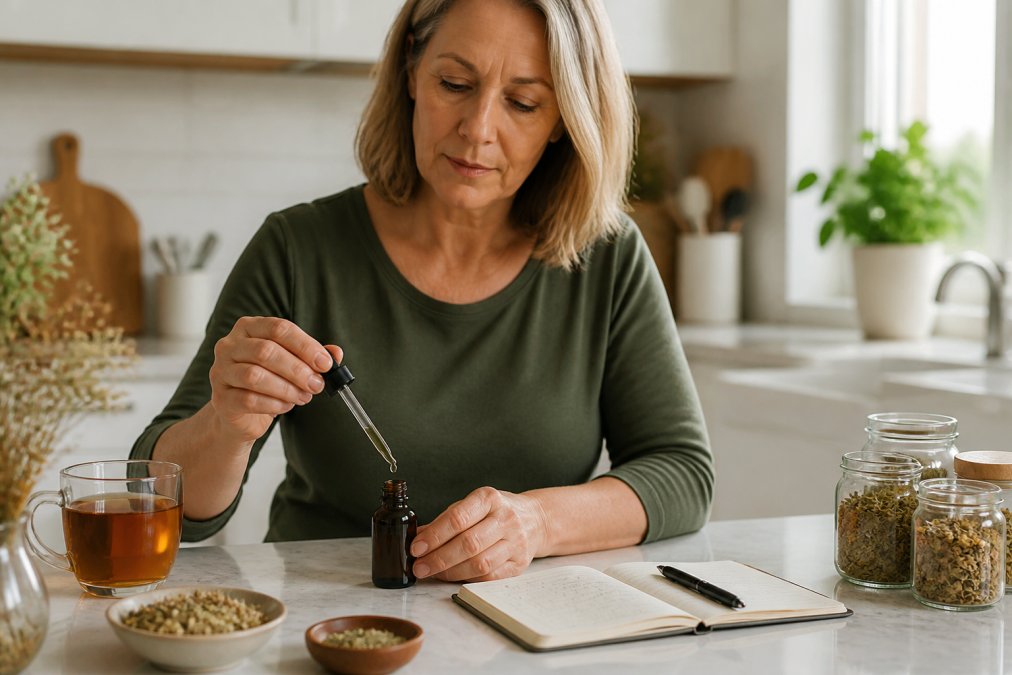
Most people notice gradual changes over four to twelve weeks. Adaptogens like ashwagandha may affect cortisol regulation within a few weeks, while herbs that influence menstrual cycle regularity often need two to three full cycles to show consistent results. Track your symptoms in a journal so you can spot patterns. If nothing changes after three months of consistent use, talk to a healthcare provider about other causes.
Are herbal supplements for hormone balance regulated by the FDA?
The FDA regulates herbal supplements as dietary supplements under the Dietary Supplement Health and Education Act, not as drugs. That means they are not pre-approved for safety or effectiveness before sale. The FDA can act against unsafe products after they reach the market. Look for third-party testing seals and buy from sources that disclose ingredient amounts. An RN-led or clinically trained herbalist can help you evaluate quality and check for contraindications.
What are the safety considerations when using herbs for hormonal health?
Drug-herb interactions matter most. St. John's wort reduces the effectiveness of birth control pills and some antidepressants. Black cohosh has rare reports of liver issues, so avoid it if you have liver disease. Chaste tree berry may interfere with fertility drugs and hormone therapy. Always tell your prescriber about every herb you take, start one at a time, and stop if you notice unusual bleeding, mood changes, or digestive upset.


Leave a comment