
How to Prepare Herbal Remedies Without Alcohol: 2026 Guide
Table of Contents
- Why Prepare Herbal Remedies Without Alcohol?
- Herbal Glycerite Recipes: A Gentle, Sweet Alternative
- Apple Cider Vinegar Herbal Infusions for Daily Wellness
- Oil Infusions and Topical Applications Without Alcohol
- Water-Based Extractions: Teas, Decoctions, and Syrups
- Shelf Life of Alcohol-Free Herbal Remedies
- Botanical Kitchen Safety Standards and Dosage Basics
- Conclusion: Building Your Alcohol-Free Herbal Practice
- Frequently Asked Questions
Last Updated: October 2, 2026
Why Prepare Herbal Remedies Without Alcohol?
Many people want the benefits of herbal remedies but prefer to skip alcohol. If you want to learn how to prepare herbal remedies without alcohol, you have more options than most guides admit. This guide from HighFiveHive Nature's Remedies-Kitchen Herbalism walks you through every method, from sweet glycerites to simple teas. (Source: consumer interest in natural health products)
Alcohol has long been the default solvent in herbalism, pulling out plant compounds well and keeping them stable for years. But it is not your only choice.
The best solvent depends on the plant and the person.
Below, we cover five alcohol-free methods, plus shelf life, safety, and dosage basics, so you know which method fits your kitchen and health needs.
Herbal Glycerite Recipes: A Gentle, Sweet Alternative
A glycerite is an herbal extract made with vegetable glycerin instead of alcohol. It tastes sweet, needs no refrigeration, and suits children and adults who avoid alcohol, the workhorse of alcohol-free herbalism.
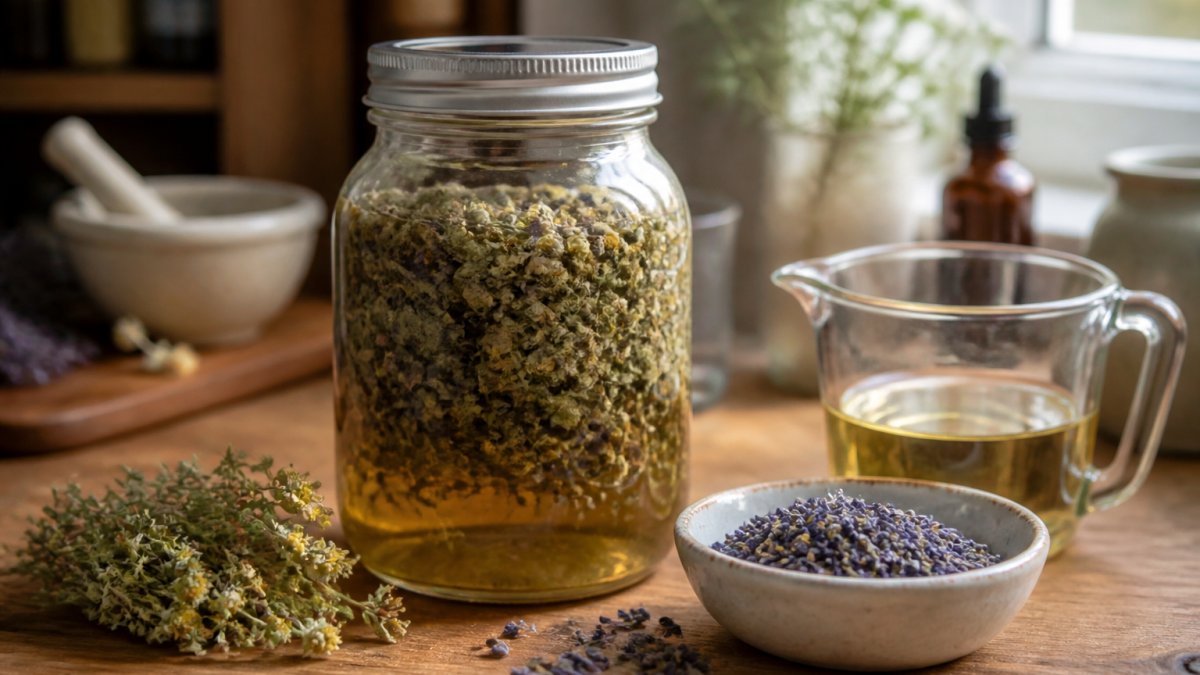
Glycerin is a sugar alcohol, a clear, viscous liquid miscible with water and partially miscible with alcohol. It pulls out mucilage, tannins, glycosides, and some alkaloids well, but not resins, fixed oils, or most volatile oils.
Understanding Glycerin Extraction Chemistry
Glycerin's extraction power depends on the glycerin-to-water ratio and the extraction temperature.
- Water content: Glycerin alone is a poor solvent for dried botanicals because dried plant cells are collapsed and hydrophobic. Water rehydrates the cell walls so glycerin can penetrate. Most practitioners use a 3:1 ratio of glycerin to water for dried herbs, roughly 75% glycerin, 25% water. For fresh plant material, pure glycerin is appropriate.
- Temperature: Cold extraction (room temperature, 4 to 6 weeks) preserves delicate constituents like mucilage and volatile oils. Warm extraction (roughly 100 to 140°F for 2 to 4 hours) speeds the process and improves yield for tougher roots and barks, but can degrade heat-sensitive compounds.
- Menstruum ratio: A common starting point is 5 parts menstruum to 1 part dried herb by weight (5:1). For potent herbs like elderberry, 4:1 is common; for mild herbs like chamomile, 6:1 or higher prevents an overly strong extract.
Basic Glycerite Formula and Step-by-Step Method
Use a 3:1 ratio of glycerin to water for dried herbs; pure glycerin for fresh plant material.
- Weigh your dried herbs. A kitchen scale accurate to 1 gram is ideal.
- Fill a clean glass jar one-third full with dried herbs.
- Pour glycerin and water over the herbs until fully covered, using a 5:1 menstruum-to-herb ratio by weight as a starting point.
- Stir to release trapped air bubbles. Cap the jar and shake.
- Seal with a tight-fitting lid.
- Shake daily for 4 to 6 weeks. Keep the jar in a cool, dark cabinet.
- Strain through cheesecloth, squeezing the marc (spent herb) to recover as much liquid as possible.
- Bottle in dark glass with a dropper top.
A common mistake is skipping the water. Pure glycerin alone extracts less from dried botanicals. The water opens the plant cells first.
Glycerite Dosage and Conversion from Alcohol Tinctures
Converting an alcohol tincture dose to a glycerite dose is a common question. Glycerin is a weaker solvent than alcohol for many constituents, so glycerites are taken in larger volumes.
A general rule of thumb: a glycerite dose is roughly 1.5 to 2 times the volume of an equivalent alcohol tincture dose.
For children, glycerites are often preferred because of the sweet taste and lack of alcohol.
Shelf Life and Storage of Glycerites
Glycerites are the longest-lasting alcohol-free preparation. Because glycerin resists microbial growth and does not evaporate, a well-made glycerite stored in dark glass at room temperature can last 1 to 3 years. Signs of spoilage, a sour or fermented smell, cloudiness that does not settle, or visible mold, mean discard the batch.
For maximum shelf life, keep the jar sealed away from heat and direct sunlight, and use a clean dropper each time.
Apple Cider Vinegar Herbal Infusions for Daily Wellness
Vinegar infusions, sometimes called oxymels, use apple cider vinegar as the solvent. Vinegar pulls out alkaloids and some minerals well and acts as a natural preservative.
These infusions taste sharp and tangy. Many people take them by the spoonful or mix them into salad dressing.
Vinegar works best with mineral-rich herbs and aromatic roots. It does not extract mucilage or most volatile oils.
How to Make a Vinegar Infusion
- Chop fresh or dried herbs into small pieces.
- Fill a glass jar two-thirds full with the herbs.
- Cover completely with apple cider vinegar.
- Seal the jar and shake well.
- Store in a cool, dark spot for 3 to 4 weeks.
- Shake every few days.
- Strain and bottle in glass.
Use raw, unpasteurized vinegar with at least 5% acidity. That acidity level is what keeps the infusion from spoiling.
For a gentler taste, warm the finished infusion slightly and stir in honey. The result is a traditional oxymel.
Oil Infusions and Topical Applications Without Alcohol
Oil infusions suit herbs used on the skin. Olive, jojoba, and sweet almond oil all work well as solvents.
Oil pulls out fat-soluble constituents, including many volatile oils and plant waxes, but not most alkaloids or tannins.
Common herbs for oil infusion include calendula, chamomile, and lavender, popular for salves, balms, and massage oils.
The basic method is simple:
- Dry your herbs completely. Any moisture causes mold.
- Cover the herbs with oil in a glass jar.
- Set the jar in a warm spot for 2 to 4 weeks.
- Shake daily.
- Strain and store in a cool, dark place.
A faster option is a warm water bath.
Mullein & Mint A Traditional Herbal Tea →
Water-Based Extractions: Teas, Decoctions, and Syrups
Water is the oldest solvent in the kitchen, extracting mucilage, sugars, and many water-soluble phytochemicals.
There are three main water methods:
- Infusion: Pour hot water over delicate leaves and flowers. Steep 5 to 10 minutes.
- Decoction: Simmer tough roots, bark, and seeds for 20 to 45 minutes.
- Syrup: Combine a strong tea or decoction with honey or sugar to preserve it.
Honey-based syrups are a favorite for immune building blends; honey adds soothing properties and extends shelf life. A standard ratio is two parts honey to one part strong tea.
For a ready-made option, HighFiveHive Nature's Remedies-Kitchen Herbalism offers the Mullein & Mint loose-leaf tea. It blends mullein leaf with peppermint for a mild, earthy cup that supports easy breathing.

Water extractions have the shortest shelf life. Refrigerate syrups and use them within a few weeks.
Shelf Life of Alcohol-Free Herbal Remedies
Shelf life varies a lot by method. Here is how the main types compare:
| Method | Typical Shelf Life | Storage |
|---|---|---|
| Glycerite | 1 to 3 years | Cool, dark shelf |
| Vinegar infusion | 6 to 12 months | Cool, dark shelf |
| Oil infusion | 6 to 12 months | Cool, dark shelf |
| Honey syrup | 1 to 3 months | Refrigerator |
| Tea or decoction | 2 to 3 days | Refrigerator |
Glycerites last longest because glycerin resists spoilage. Vinegar infusions come next. Water-based remedies spoil fastest and need cold storage.
Storage Tips to Extend Potency
- Use dark glass bottles to block light.
- Keep lids tight so air cannot get in.
- Store away from heat and direct sun.
- Label everything with the herb and date.
- Check for off smells, cloudiness, or mold before each use.
A common mistake is storing oils near a stove. Heat speeds up rancidity and shortens shelf life fast.
Botanical Kitchen Safety Standards and Dosage Basics
Safety starts before you pick a single herb. Some botanicals interact with prescription drugs, including blood thinners, diabetes medications, blood pressure drugs, and antidepressants. Always check with your healthcare provider first.
A few ground rules for the botanical kitchen:
- Use food-grade glycerin, vinegar, and oils only. Cosmetic-grade glycerin may contain impurities not safe for internal use.
- Sterilize jars and lids before each batch. Boil glass jars for 10 minutes or run them through a dishwasher sanitize cycle.
- Keep raw and finished products separate. Do not use the same utensils for raw herbs and finished extracts without washing.
- Never guess at plant identification when foraging. Misidentification can be fatal. Use a reputable field guide and, when possible, confirm with a local herbalist or extension service.
- Start with small doses and note how you feel. Keep a simple log of herb, dose, and any effects.
Dosage Conversion Guide: Alcohol Tinctures to Alcohol-Free Alternatives
If you are switching from an alcohol tincture to a glycerite, vinegar infusion, or honey syrup, you need a starting point. The table below offers general conversion guidance, practical starting points for adults, not medical recommendations.
| Preparation | Typical Adult Dose | Frequency | Notes |
|---|---|---|---|
| Alcohol tincture (reference) | 1 dropper (about 1 mL) | 1 to 3 times daily | Standard baseline |
| Glycerite | 1.5 to 2 droppers (1.5 to 2 mL) | 1 to 3 times daily | Weaker solvent; larger volume needed |
| Vinegar infusion (oxymel) | 1 teaspoon to 1 tablespoon | 1 to 3 times daily | Dilute in water or tea |
| Honey syrup | 1 teaspoon to 1 tablespoon | 1 to 3 times daily | Refrigerate; use within 1 to 3 months |
| Tea or decoction | 1 cup | 1 to 3 times daily | Strongest water extraction |
For children, doses are typically scaled down. A common approach is Clark's Rule: child's dose = (child's weight in pounds / 150) × adult dose.
Herb-Drug Interaction Quick Reference
Some herbs are more likely than others to interact with medications. This is not a complete list, but covers common concerns:
- St. John's Wort: Interacts with antidepressants, birth control, blood thinners, and immunosuppressants. Avoid combining without professional guidance.
- Ginkgo: May increase bleeding risk when combined with blood thinners or antiplatelet drugs.
- Licorice root: Can raise blood pressure and deplete potassium; caution with hypertension medications and diuretics.
- Elderberry: Generally safe, but raw elderberries contain cyanogenic glycosides and must be cooked or dried before use.
- Chamomile: Cross-reactivity possible in people with ragweed allergies.
When to Avoid Alcohol-Free Remedies Altogether
Alcohol-free does not mean risk-free. Skip herbal remedies, or consult a provider first, if you:
- Are pregnant or breastfeeding
- Have kidney or liver disease
- Take prescription medication with a narrow therapeutic window (e.g., warfarin, digoxin, thyroid hormones)
- Have a known allergy to the herb or its plant family
- Are scheduled for surgery within two weeks (some herbs affect bleeding and anesthesia)
Dosage basics: A typical glycerite dose is 1 to 2 droppers, one to three times daily. Vinegar infusions are often taken by the spoonful. These are general starting points, not personal advice.
This is where an RN-led approach helps. At HighFiveHive Nature's Remedies-Kitchen Herbalism, our 40 years of nursing experience shape every recipe and safety note we share.
Conclusion: Building Your Alcohol-Free Herbal Practice
Building a full herbal practice takes time, patience, and a few good habits. Start with one method, master it, then add another. Your kitchen counter can become a real apothecary.
HighFiveHive Nature's Remedies-Kitchen Herbalism makes that easier with RN-led guidance and small-batch herbal teas. Our Mullein & Mint tea supports easy breathing, while our Serene Moments blend brings chamomile, lemon balm, and lavender together for calm evenings. Every blend is crafted with the safety standards of a registered nurse behind it.

Get started with HighFiveHive Nature's Remedies-Kitchen Herbalism and build an alcohol-free herbal routine you can trust.
Frequently Asked Questions
What can I use instead of alcohol to make tinctures?
Vegetable glycerin and apple cider vinegar are the two most common alcohol substitutes for tinctures. Glycerin extracts well and tastes sweet, making it ideal for children or those avoiding alcohol. Apple cider vinegar pulls out alkaloids and minerals effectively but has a strong taste. For oily herbs, use food-grade oils. Each solvent works best for different plant constituents, so choose based on the herb and your intended use.
How long do alcohol-free herbal preparations last?
Shelf life varies by solvent. Glycerites typically last 1-3 years if stored properly. Vinegar infusions last 6-12 months. Oil infusions are the most perishable, lasting 3-6 months in a cool, dark place. Water-based preparations like teas and decoctions should be used within 3-5 days refrigerated. Always label with the date and check for off smells or mold before use.
Are vinegar infusions as effective as alcohol tinctures?
Vinegar extracts many plant constituents well, including alkaloids and minerals, but it does not extract resins or volatile oils as efficiently as alcohol. For herbs like nettle, raspberry leaf, or dandelion root, vinegar is an excellent choice. For resinous herbs like pine or volatile oil-rich herbs like peppermint, glycerin or oil may work better. Effectiveness depends on matching the solvent to the herb's chemistry.
How do I make a glycerite for herbal remedies?
Combine dried herbs with vegetable glycerin in a clean glass jar, using a 1:4 ratio by weight (1 part herbs to 4 parts glycerin). For fresh herbs, use a 1:2 ratio. Seal with a tight-fitting lid and let it macerate for 4-6 weeks, shaking daily. Strain through cheesecloth, squeeze out all liquid, and bottle in amber glass. Store in a cool, dark place. Glycerites are sweet and gentle, ideal for children and sensitive individuals.


Leave a comment