
Is Herbal Medicine Completely Safe? What You Need to Know
Table of Contents
- Herbal Medicine Isn't Automatically Safe: What the Evidence Shows
- Herbal Supplement Drug Interactions: What You Need to Know
- How to Use Herbal Supplements Safely
- Herbal Supplements and Kidney Health: The Risks You Should Know
- Questions to Ask Your Doctor About Herbal Supplements
- Higher-Risk Groups and Life Stages: Who Should Be Especially Cautious
- How to Recognize and Respond to an Adverse Reaction
- Conclusion: Making Informed Choices About Herbal Medicine
- Frequently Asked Questions
Last Updated: October 4, 2026
Herbal Medicine Isn't Automatically Safe: What the Evidence Shows
The short answer is no. Herbal medicine is not completely safe just because it comes from a plant.
At HighFiveHive Nature's Remedies-Kitchen Herbalism, we've spent four decades in nursing, and we've seen the same pattern repeat: people assume "natural" means "harmless." It doesn't.
That's not a reason to avoid them. It's a reason to use them with the same care you'd give any medicine.
Here's the part most guides skip: the biggest risks rarely come from the herb itself.
Herbal Supplement Drug Interactions: What You Need to Know
Herbal supplements can interact with prescription and over-the-counter medicines, sometimes seriously. The interaction can make your medicine weaker, stronger, or more toxic.
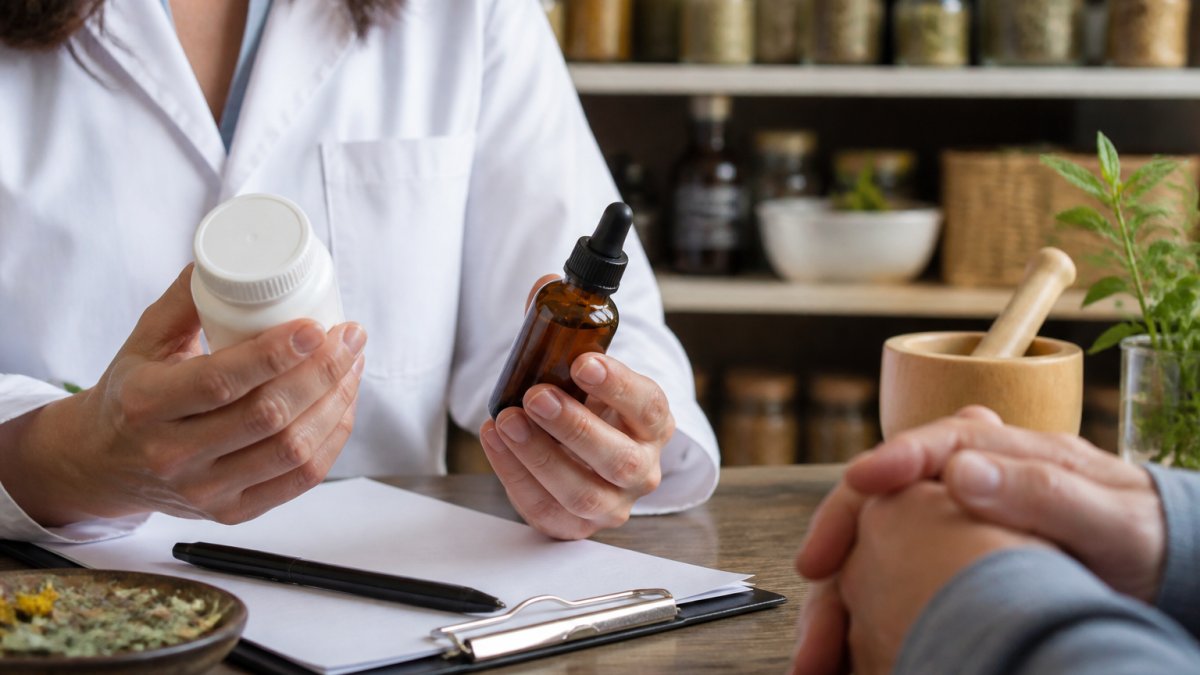
St. John's Wort is the clearest example. It speeds up how your liver breaks down many drugs by inducing cytochrome P450 enzymes, particularly CYP3A4.

Other common concerns include:
- Blood thinners like warfarin, which can interact with ginkgo, garlic, ginger, and dong quai. These herbs may increase bleeding risk by affecting platelet function or clotting factors.
- Blood pressure medicines, which some herbs can push too low or too high. Licorice root, for example, can raise blood pressure and cause potassium loss, working against your medication.
- Diabetes drugs, where herbs that lower blood sugar, like bitter melon, fenugreek, and cinnamon, can stack with your medication and cause hypoglycemia.
- Antidepressants, which can interact with St. John's Wort and others. Combining St. John's Wort with SSRIs can lead to serotonin syndrome, a potentially life-threatening condition.
- Heart medications, including digoxin. Herbs like hawthorn and lily of the valley can amplify or interfere with digoxin's effects.
The FDA guidance on mixing drugs and herbal products recommends telling your doctor about every supplement you take.
How to Check for Interactions: A Practical Process
You don't need to memorize every herb-drug pair. Instead, follow this process every time you start something new:
- List everything you take, prescriptions, over-the-counter drugs, vitamins, and all herbal products. Include dose and frequency.
- Bring the actual bottles to your pharmacist. They can run a interaction check using professional databases that flag known risks.
- Ask specifically about your herbs by name. Pharmacists know St. John's Wort, ginkgo, and garlic well, but less common herbs may require a specialist or a poison control center consult.
- Check reliable databases yourself if you want a second opinion. The National Institutes of Health's Office of Dietary Supplements and the National Center for Complementary and Integrative Health offer free, evidence-based fact sheets.
- Recheck when anything changes, new prescription, new dose, new herb, or new health condition.
A common pattern is that people mention their prescriptions but forget the herbal tea they drink daily or the topical cream they use. Anything that enters your body can interact.
If you take multiple medications or have a chronic condition, make a medication review with your pharmacist a routine habit, at least once a year or whenever your regimen changes.
How to Use Herbal Supplements Safely
Safe use comes down to two habits: following the product directions and telling your care team what you take. Get those right and you avoid most problems. But there's a third layer most guides skip: verifying that the product is what it claims to be. Herbal supplements are regulated differently than conventional drugs, and quality can vary widely.
Follow Product Directions and Recommended Doses
More is not better with herbs. Many plants become harmful only at high doses, a pattern called dose-related harm. For example, comfrey contains pyrrolizidine alkaloids that can damage the liver, and the risk rises with dose and duration of use.
Take our Golden Comfort St. John's Wort Tincture, for example. Its label carries a clear warning: do not use it internally without first checking with your doctor or pharmacist. That warning exists because the herb interacts with many medicines.
A few rules that keep you safe:
- Start at the lowest suggested dose
- Never double up because you missed a dose
- Check whether the product is for internal or topical use only
- Stop and ask if you feel off after starting something new
- Pay attention to duration, some herbs are only safe for short-term use
Check Product Quality and Labeling
In the United States, herbal supplements are regulated as dietary supplements under the Dietary Supplement Health and Education Act of 1994. That means they do not need FDA approval before being sold.
This regulatory gap creates real risks:
- Contamination with heavy metals (lead, mercury, arsenic), pesticides, or undeclared prescription drugs. Some imported products have been found to contain steroids, diuretics, or anti-inflammatory drugs.
- Misidentification of plant species. A product labeled as one herb may contain a different, potentially toxic plant.
- Variable potency. The amount of active compound can differ from what the label states, sometimes by large margins.
- Fillers and allergens. Products may contain wheat, soy, or other allergens not listed on the label.
To reduce these risks, look for products that:
- Carry a USP Verified Mark, NSF International certification, or ConsumerLab.com approval. These independent programs test for purity, potency, and contaminants.
- List the scientific name of the herb (genus and species) alongside the common name.
- Provide a batch or lot number and a manufacturer contact for questions.
- Come from a reputable company with transparent sourcing and manufacturing practices.
Be cautious of products marketed with miracle claims, those sold only online without any third-party testing, or those in languages you can't read. If a deal seems too good to be true, it often is.
Tell Your Doctor or Pharmacist About Every Herbal Product
Your pharmacist is the fastest safety check you have. They can spot interactions your doctor might miss, because they see your full medication list. Bring the actual bottle. The ingredient list and dose matter more than the product name.
A Practical Safety Checklist
Before you buy or take any herbal product, run through these steps:
Ashwagandha Root Traditional Ayurvedic Tincture →
- Identify the herb by its scientific name and research its known risks and interactions.
- Check the dose against reputable sources like the NIH Office of Dietary Supplements.
- Verify quality by looking for third-party testing seals.
- Review your medication list with a pharmacist.
- Consider your health status, pregnancy, breastfeeding, liver or kidney disease, and other conditions change the risk profile.
- Start low and go slow, and stop if you notice any adverse effects.
- Tell your care team before starting, especially before surgery.
This checklist turns general warnings into concrete actions. It's the difference between hoping a product is safe and knowing you've done your due diligence.
Herbal Supplements and Kidney Health: The Risks You Should Know
Herbal supplements and kidney health are linked more often than most people realize. Your kidneys filter everything you swallow, so they get a concentrated dose of whatever you take.
Some risks to know:
- High doses of certain herbs can stress the kidneys over time
- Contamination with heavy metals or undeclared drugs can cause organ damage
- Dehydration makes kidney strain worse, especially with diuretic herbs
- Existing kidney disease raises your risk from almost any supplement
If you already have reduced kidney function, talk to your doctor before starting any herbal product. The National Kidney Foundation's guidance on supplements notes that people with kidney disease should be especially careful with herbs and should check with their care team first.
Questions to Ask Your Doctor About Herbal Supplements
Bring a short list to your next visit. Clear questions get clear answers, and they protect you.
Ask these:
- Will this herb interact with any medicine I take?
- Is this dose safe for my kidney and liver function?
- Should I stop this before any surgery?
- Could this affect my blood sugar or blood pressure?
- What warning signs mean I should stop and call you?
That last one matters most. Knowing what to watch for turns a vague worry into a clear plan.
Higher-Risk Groups and Life Stages: Who Should Be Especially Cautious
Some people carry more risk from herbal products than others. The same herb that's fine for one person can be risky for another.
Groups who should be extra careful:
- Pregnant or breastfeeding women, since many herbs affect hormones or pass to the baby
- Children, who need smaller, weight-based doses and often shouldn't take adult herbs at all
- Older adults, who often take several medicines at once
- People with liver or kidney disease, whose bodies clear herbs more slowly
- Anyone on blood thinners or with a bleeding disorder
- People with diabetes, since some herbs lower blood sugar and can stack with medication
If you're in one of these groups, treat any herbal product as a medicine that needs a green light first. Our Five Botanicals A Woman's Traditional Tincture blends herbs traditionally used by women, and we still tell every customer the same thing: check with your provider before you start.

How to Recognize and Respond to an Adverse Reaction
An adverse reaction can show up within minutes or build over days. Knowing the signs helps you act fast.
Watch for:
- Allergic reactions: rash, hives, swelling, trouble breathing
- Stomach upset: nausea, cramps, diarrhea that starts after a new product
- Unusual bleeding or bruising
- Yellowing of the skin or eyes, a sign of liver trouble
- Dizziness, confusion, or a racing heart
If you have trouble breathing, swelling of the face or throat, or severe bleeding, get emergency help right away.
For milder reactions, stop the product and call your doctor or pharmacist. Tell them what you took, how much, and when symptoms started.
Conclusion: Making Informed Choices About Herbal Medicine
Herbal medicine isn't a free pass. It's a tool that works best when you respect its power, follow the directions, and keep your care team in the loop.
That's the approach we take at HighFiveHive Nature's Remedies-Kitchen Herbalism. Our RN-led kitchen herbalism brings 40 years of nursing experience to every remedy, with targeted support for immune health, natural diabetes management, and women's wellness. Our tinctures, like our Botanical Quartet Traditional Herbal Extract and Ashwagandha Root Traditional Ayurvedic Tincture, are crafted with clear directions and honest warnings.

Get started with HighFiveHive Nature's Remedies-Kitchen Herbalism and use herbs with the safety and guidance they deserve.
Frequently Asked Questions
Is herbal medicine FDA approved?
No. The FDA does not approve herbal products for safety or effectiveness before they are sold. Herbal supplements are regulated as dietary supplements under the Dietary Supplement Health and Education Act (DSHEA) of 1994. That means the FDA can take action after a product is on the market if it proves unsafe, but there is no pre-market approval. This is why product quality and ingredient labeling can vary widely, and why you should check third-party testing seals when possible.
Can herbal supplements interact with prescription medications?
Yes, and the interactions can be serious. St. John's Wort, for example, speeds up the breakdown of many drugs, including antidepressants, birth control pills, blood thinners like warfarin, and transplant medications. This can make those prescriptions less effective. Other herbs may increase bleeding risk or raise blood pressure. Always tell your doctor and pharmacist about every herbal product you take, including tinctures and teas, so they can check for medication complications.
Can herbal medicine affect the kidneys?
Some herbs can harm the kidneys, especially at high doses or with long-term use. Certain Chinese herbal preparations have been linked to kidney damage, and aristolochic acid, found in some plants, is a known kidney toxin. People with existing kidney disease, diabetes, or high blood pressure are at higher risk. If you have any kidney concerns, talk to your doctor before starting an herbal supplement, and ask whether your kidney function should be monitored.
What should I do if I have a bad reaction to an herbal supplement?
Stop taking the product immediately and seek medical attention if symptoms are severe, such as difficulty breathing, swelling, chest pain, or yellowing of the eyes or skin. For milder reactions like rash, upset stomach, or headache, stop the product and call your doctor. Report the adverse effect to the FDA's MedWatch program. Bring the product label or bottle with you to your appointment so your doctor can see the exact ingredients and dosage.


Leave a comment