
Natural Skin Health Remedies 2026: DIY Kitchen Guide
Table of Contents
- Why 2026 Is the Year of Kitchen Herbalism for Skin
- The DIY Herbal Skincare Recipes That Actually Work
- Natural Skin Barrier Repair: What Your Lipid Layer Needs
- Botanical Kitchen Alternative for Herbal Support: Why RN-Led Matters
- How to Personalize Natural Skin Remedies for Your Environment
- What to Ignore: Common Bad Advice About Natural Skin Care
- Building Your 2026 Natural Skin Health Routine
- Frequently Asked Questions
Last Updated: September 15, 2026
Why 2026 Is the Year of Kitchen Herbalism for Skin
Natural skin health remedies 2026 are shifting from niche hobby to mainstream practice: people want ingredients they can recognize and trust. That shift is why HighFiveHive Nature's Remedies-Kitchen Herbalism built its approach around the kitchen counter rather than a lab bench.
Kitchen herbalism is the practice of preparing topical skin preparations from food-grade botanicals, oils, and pantry staples under professional guidance. It draws on traditional preparations like infusions, salves, and masks, but applies modern standards for hygiene, dilution, and skin tolerance.
The American Academy of Dermatology's skin care guidance consistently emphasizes gentle cleansing and barrier support over aggressive treatment, which aligns closely with what kitchen herbalism does well. What most guides miss is that "natural" and "safe" are not the same word. Poison ivy is natural. So is a hot pepper.
That distinction matters more than ever in 2026, because the market is crowded with advice that skips the safety step entirely.
The DIY Herbal Skincare Recipes That Actually Work
Two preparations cover most everyday skin needs: a calendula and lavender infusion for reactive skin, and an oat and honey mask for barrier support. Both use ingredients you likely already own. What separates a preparation that works from one that just smells nice is understanding each ingredient's mechanism, and knowing where a kitchen preparation stops and a formulated product takes over.

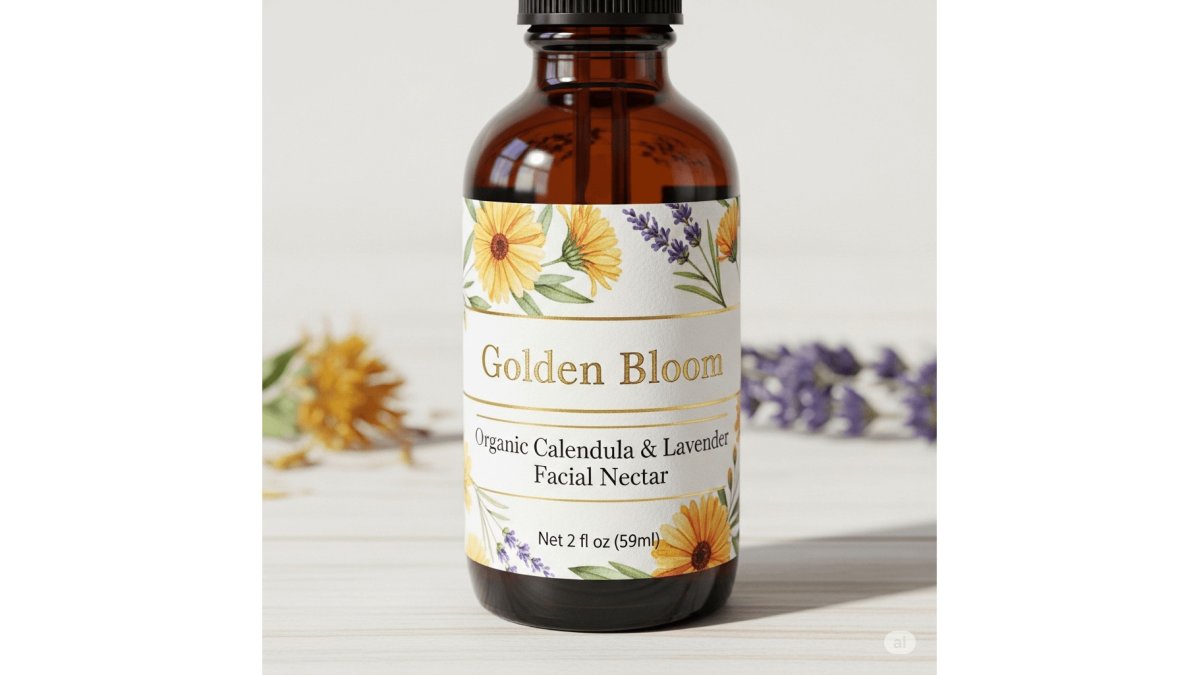
Calendula and Lavender Infusion for Sensitive Skin
Calendula and lavender infusion is a gentle botanical oil prepared by steeping dried flowers in a carrier oil, then straining the plant material out. It is used as a light facial oil or added to a balm base.
- Combine 1 part dried calendula petals with 1 part dried lavender in a clean glass jar
- Cover with a carrier oil such as jojoba or sweet almond, leaving 1 inch of headspace
- Seal and set in a warm, dark spot for 2 to 4 weeks, shaking every few days
- Strain through fine cheesecloth into a sterilized bottle
- Patch test on the inner forearm for 24 hours before facial use
A common mistake is using fresh flowers instead of dried. Fresh plant material carries water, and water in an oil infusion invites mold.
Why it works, mechanistically. Calendula's triterpenoid saponins and flavonoids are associated with soothing visible redness, while lavender's linalool and linalyl acetate give a light aromatic profile most people tolerate well at low dilution. Neither substitutes for a barrier lipid, they are supportive botanicals, not structural ones. That matters when you compare them to the biomimetic ingredients in 2026 formulations, which mimic the skin's own ceramide and cholesterol ratios rather than simply calm the surface.
Where DIY stops and formulation begins. A homemade infusion cannot deliver stable peptides, encapsulated retinoids, or pH-buffered actives. For lipid-level barrier repair, it is a comfort layer, not a corrective one. A reasonable hybrid: use the infusion as your emollient step and reserve formulated products for the active step.
Oat and Honey Mask for Barrier Support
An oat and honey mask combines colloidal oatmeal with raw honey to calm tight, flaky, or irritated skin. Colloidal oatmeal is finely milled oat that disperses in water, and the FDA's skin protectant monograph recognizes it as a skin protectant ingredient.
- Mix 2 tablespoons of colloidal oatmeal with 1 tablespoon of raw honey
- Add warm water a teaspoon at a time until you get a spreadable paste
- Apply a thin layer, avoiding the eyes, and leave for 10 minutes
- Rinse with lukewarm water and pat dry
- Use once or twice weekly, not daily
Honey is not appropriate for everyone. Anyone with a pollen allergy should patch test first.
The mechanism behind the mask. Colloidal oatmeal's avenanthramides are the compounds most studied for soothing reactive skin, and its beta-glucan helps hold water at the surface. Raw honey is hygroscopic, it pulls water from the air and skin's surface, and its low water activity makes it hostile to microbial growth in the jar. Together they form a temporary occlusive film that reduces water loss while the mask is on. That effect is real but short-lived, not the same as restoring ceramides in the lipid matrix.
A note on the natural-versus-synthetic question. "Natural" describes origin, not safety or efficacy. Some of the most irritating ingredients in skin care are botanicals (essential oils, citrus extracts, fragrance components), and some of the best-tolerated are lab-made (petrolatum, dimethicone, niacinamide). The useful question is whether the ingredient has a mechanism your skin can use and a dose it can tolerate. A kitchen preparation wins on transparency and cost; a formulated product wins on stability, dose control, and delivery. The strongest 2026 routines use both deliberately.
Natural Skin Barrier Repair: What Your Lipid Layer Needs
Natural skin barrier repair starts with understanding that your skin barrier is a lipid matrix, not a wall, a layered arrangement of ceramides, cholesterol, and fatty acids that holds water in and keeps irritants out.
When that lipid barrier breaks down, you get the familiar trio: tightness, stinging, and flaking. Skin barrier function depends on three things you can influence directly.
- Moisture retention: occlusive and emollient oils slow water loss through the skin
- Inflammation reduction: botanicals with antioxidant-rich profiles can help calm visible redness
- Skin microbiome balance: over-cleansing strips the surface and disrupts the bacterial community living there
This is where a lot of DIY advice goes wrong. People layer five actives on a compromised barrier and wonder why their skin gets worse.
Botanical Kitchen Alternative for Herbal Support: Why RN-Led Matters
A botanical kitchen alternative for herbal support replaces store-bought herbal products with preparations you make at home. The appeal is cost, control, and freshness. The risk is that nobody is checking your work.
That is the gap an RN-led approach closes. HighFiveHive Nature's Remedies-Kitchen Herbalism brings 40 years of nursing experience to kitchen herbalism, which means the guidance starts with contraindications and interactions rather than a pretty recipe card. Prioritizing clinical safety ensures that even complex skin concerns are addressed with precision, such as when applying targeted remedies for acne.
What most guides miss is the medication question. If you take prescription medication, including blood sugar or blood pressure medication, some botanicals can interact with it. A nurse-led framework asks about your medications before suggesting an herb, not after.
The other difference is documentation. Nursing practice runs on clear instructions, measured doses, and defined stop points.
How to Personalize Natural Skin Remedies for Your Environment
| Environmental Factor | What It Does to Skin | Adjustment to Make |
|---|---|---|
| Low humidity (below 30%) | Increases transepidermal water loss, causes tightness | Heavier balm, apply on damp skin |
| High humidity (above 60%) | Traps oil, increases congestion | Lighter nectar or serum |
| High UV index (6+) | Accelerates cellular repair demand and oxidative stress | Broad-spectrum sun protection factor, no exceptions |
| Airborne particulate matter | Deposits on skin, associated with visible dullness and uneven tone | Double cleanse in the evening, antioxidant-rich botanicals |
| Cold wind and indoor heating | Strips lipids, dries the air all day | Occlusive layer before going outside, humidifier indoors |
What to Ignore: Common Bad Advice About Natural Skin Care
Building Your 2026 Natural Skin Health Routine
Frequently Asked Questions
What are the trending skincare ingredients for 2026?
In 2026, the focus has shifted toward ingredients that support skin barrier function and the skin microbiome. Peptides, ectoin, and prebiotic skincare are gaining attention for their ability to help with moisture retention and inflammation reduction. Biomimetic ingredients, which mimic the skin's natural lipid barrier, are also popular. For DIY enthusiasts, botanical infusions like calendula and lavender remain staples because they are gentle and antioxidant-rich, supporting cellular repair without harsh additives.
How can I improve my skin health using kitchen herbalism?
Start with simple, safe botanicals. A calendula and lavender infusion can be used as a base for DIY masks or added to a carrier oil for topical application. Focus on hydration levels by drinking enough water and using humectants like honey. For natural skin barrier repair, incorporate oils rich in fatty acids, such as olive or jojoba. Always patch-test new ingredients and consult a healthcare professional if you have a skin condition or take medications.
Are there FDA regulations I should be aware of when making DIY skincare?
The FDA regulates labeling and safety for cosmetics. For personal use, focus on hygiene, use preservatives if the product contains water, and store items properly to avoid bacterial growth.
What natural ingredients are recommended for long-term skin resilience?
For long-term resilience, look for ingredients that support collagen synthesis and protect against environmental stressors. Antioxidant-rich botanicals like green tea and rosehip can help. Peptides and biostimulators are emerging in clinical settings, but at home, consistent use of moisturizing balms and sun protection factor (SPF) is key. A product like a botanical skin balm can seal in moisture and support the lipid barrier, while a facial nectar with calendula can soothe and refresh.


Leave a comment