
Nurse-Led Herbalism vs DIY: Safety, Credentials, Risks
Table of Contents
- Nurse-Led Herbalism vs DIY: Key Differences
- How to Verify Herbalist Credentials
- Herbal Safety and Drug Interactions
- Risks of DIY Herbal Medicine
- Scope of Practice and Legal Considerations
- Clinical Nursing Expertise in Herbalism
- Choosing Between Professional and DIY Approaches
Last Updated: August 17, 2026
Nurse-Led Herbalism vs DIY: Key Differences
When considering herbal remedies for diabetes, hormonal concerns, or chronic joint discomfort, the choice between nurse-led herbalism and DIY approaches carries real consequences. This guide from HighFiveHive Nature's Remedies-Kitchen Herbalism breaks down what separates professional guidance from self-directed herbal practice.
The fundamental difference isn't just credentialing, it's accountability. A nurse-led herbalism practice applies clinical training to botanical medicine within nursing scope. DIY approaches rely on recipes and online guides without professional oversight. Both have legitimate uses, but they operate in entirely different risk categories.
DIY herbalism fosters engagement with plant medicine, but nurse-led herbalism ensures your herbal choices account for your complete health picture, medications, medical history, and individual physiology. The cost of getting this wrong with DIY approaches can range from ineffective treatment to dangerous drug-herb interactions.
| Aspect | Nurse-Led Herbalism | DIY Herbalism |
|---|---|---|
| Professional Oversight | Licensed RN applies clinical knowledge | Self-directed learning and experimentation |
| Drug-Herb Interaction Review | Comprehensive assessment of your medications | Your responsibility to research |
| Personalization | Tailored to your health history and conditions | Generic recipes for broad conditions |
| Accountability | Professional liability and standard of care | No formal accountability |
| Cost | Consultation fees + products | Minimal upfront, variable quality |
| Learning Curve | Guided education | Self-taught, time-intensive |
| Safety Verification | Evidence-based selection and dosing | Depends on source reliability |
How to Verify Herbalist Credentials
Verifying credentials is your first line of defense when choosing a professional herbalist. The challenge: herbalism certification varies dramatically in rigor and recognition.
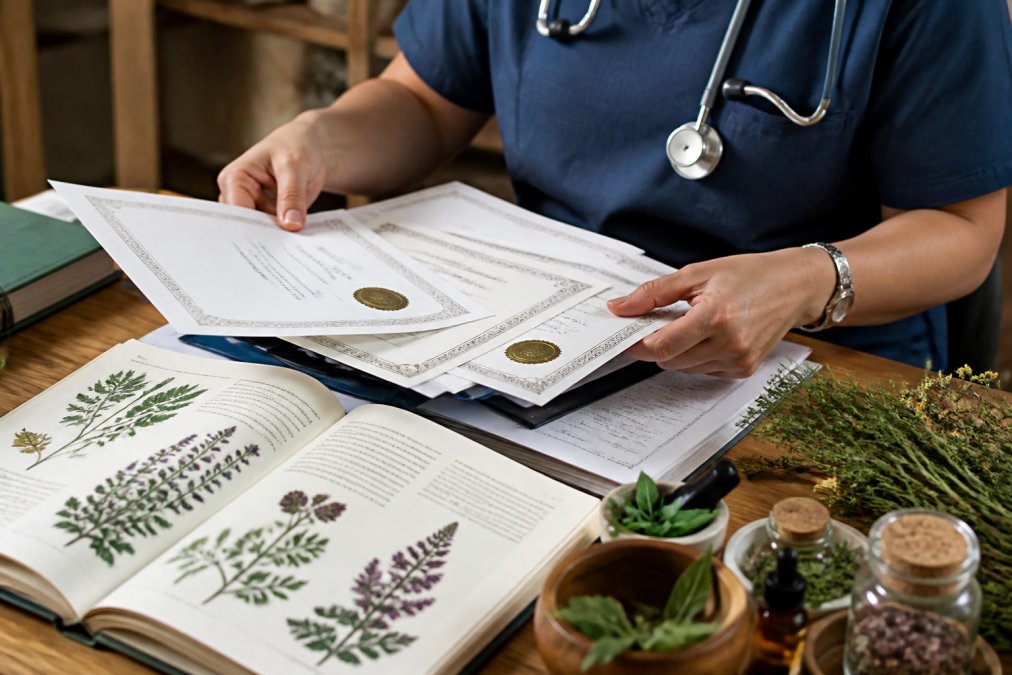
Start by confirming nursing licensure. Any practitioner claiming to be a "nurse herbalist" or "RN herbalist" should hold a current, active Registered Nurse (RN) license in your state. Verify this through your state's nursing board public licensure database. Search by name and confirm the license is active, not expired or suspended. Nursing licensure means the practitioner has completed a rigorous educational program and passed national board exams.
Herbalism certification is a second layer. Look for credentials from established programs like the American Herbalists Guild (AHG), which requires documented clinical hours, case studies, and demonstrated knowledge. The Herbal Academy and Chestnut School of Herbal Medicine offer recognized training. However, herbalism certification alone, without nursing credentials, does not provide the clinical framework that nursing brings.
Ask directly about their training. A legitimate nurse herbalist can describe their nursing education, herbal training program, and how they integrate the two practices. They should explain their approach to drug-herb interactions, a nursing responsibility. Vagueness about credentials is a warning sign.
Request proof of credentials before booking a consultation. Legitimate practitioners display credentials openly or provide verification documents. HighFiveHive Nature's Remedies-Kitchen Herbalism operates from 40 years of nursing experience, which you can verify directly.
Check for professional liability insurance. Nurse herbalists working clinically should carry malpractice insurance, signaling they operate within a professional framework vetted by an underwriter.
Herbal Safety and Drug Interactions
Drug-herb interactions are a clinical pharmacology issue, not a recipe issue. Nurses have formal training in pharmacology, drug metabolism, and how substances interact in the body. DIY herbalists typically do not.
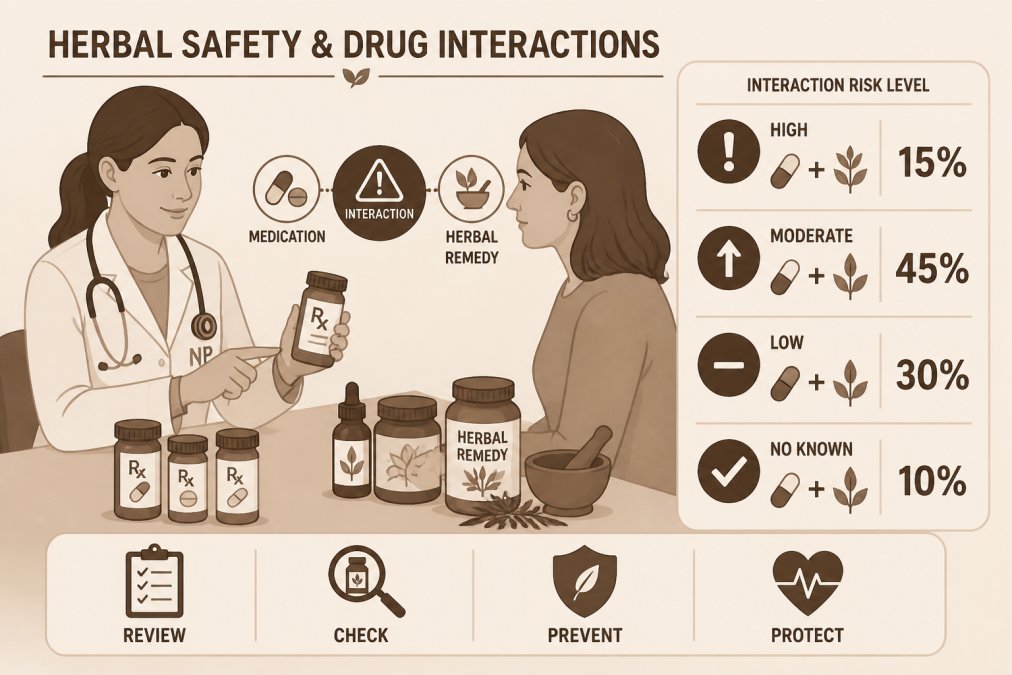
Common drug-herb interactions are serious. St. John's Wort reduces the effectiveness of birth control pills and certain antidepressants. Ginkgo biloba increases bleeding risk with blood thinners. Ginger and turmeric can potentiate anticoagulants. These affect thousands of people managing chronic conditions.
A nurse herbalist systematically reviews your medication list before recommending any herbal remedy. They assess absorption pathways, liver metabolism, kidney clearance, and potential enzyme competition. A DIY approach leaves this entirely to you, relying on internet searches and hoping you find accurate information.
The gap widens with multiple conditions. Someone taking metformin for diabetes, a statin for cholesterol, and an SSRI for anxiety needs a professional who understands how an herbal intervention affects all three simultaneously. A generic online recipe doesn't account for your full medication profile.
Dosing is another critical difference. DIY recipes often specify standardized amounts, but therapeutic dosing depends on herb potency, body weight, kidney and liver function, and condition severity. A nurse herbalist adjusts dosing based on clinical assessment. DIY approaches use standardized recipes that may be ineffective or unsafe.
Quality control matters too. When sourcing herbs online for DIY use, you're trusting supplier claims. Contamination, mislabeling, and potency variation are real risks. Professional herbalists work with vetted suppliers and verify ingredient integrity. Your DIY supplier may not have those standards.
Risks of DIY Herbal Medicine
DIY herbalism carries real risks that extend beyond drug interactions.
The first risk is misdiagnosis. You might assume joint pain is inflammation and reach for turmeric, but the underlying cause could be autoimmune disease, infection, or structural damage requiring different treatment. A nurse can help differentiate between conditions that look similar but need different approaches. DIY approaches treat symptoms without confirming their cause.
Contamination and adulteration present another risk. Herbal products sold online without professional oversight may contain pesticides, heavy metals, or undisclosed ingredients. Some products are mislabeled entirely. Professional herbalists source from trusted suppliers and verify purity. DIY sourcing puts you at the mercy of whatever vendor you find.
Dosing errors are common in DIY practice. Tinctures, dried herbs, fresh herbs, and standardized extracts have vastly different concentrations. Using the wrong form or dose can render a remedy ineffective or cause adverse effects. A nurse herbalist knows these distinctions and adjusts accordingly.
The delayed-harm risk is significant when managing chronic conditions. An ineffective herbal remedy for diabetes might delay proper medical treatment while blood sugar remains uncontrolled. An herb that subtly interacts with medications might not show obvious effects until significant damage occurs. Professional oversight catches these problems early.
If an herb you source causes harm, you have no recourse and no professional accountability. If a professional herbalist recommends something harmful, they carry malpractice liability, creating incentive to be careful.
Scope of Practice and Legal Considerations
Scope of practice defines what a practitioner can legally do. This determines what services you can legally receive and what credentials actually authorize.
Registered Nurses operate under state nursing boards with a defined scope of practice. An RN can assess health status, identify problems, plan interventions, and evaluate outcomes. When an RN practices herbalism, they apply this nursing framework to botanical medicine. They can take a health history, assess contraindications, recommend herbs, and monitor your response. This is within nursing scope as an extension of nursing assessment and care planning.
A non-nurse herbalist, even a certified herbalist, operates differently. In most states, herbalists cannot diagnose conditions, prescribe treatments, or claim to cure disease. They can educate about herbs and suggest general wellness approaches, but cannot perform the clinical assessment that a nurse can. This distinction matters legally and practically.
The regulatory landscape varies by state. Some states have specific herbalist regulations; others don't. Some prohibit non-licensed practitioners from making health claims or recommending herbs for specific conditions. A nurse herbalist operates within nursing regulation, providing legal clarity. A DIY practitioner operates in a grayer zone where liability is less clear.
For diagnosed conditions like diabetes or hormonal imbalance, a nurse herbalist can legally assess your situation and recommend herbs as part of your care plan. They can coordinate with your doctor and adjust recommendations if your medical treatment changes. A non-nurse herbalist can provide general education but cannot legally take responsibility for your health outcomes in the same way.
If something goes wrong, a nurse herbalist relationship has clear professional liability. Following DIY recipes leaves you with no professional recourse.
Clinical Nursing Expertise in Herbalism
What does nursing expertise add to herbalism? It's a clinical framework that changes how recommendations are made.
Nurses are trained in assessment. A nurse herbalist assesses your complete health picture, taking detailed history including medical conditions, medications, surgeries, family history, lifestyle, and symptoms. They ask targeted questions to understand what's happening. This assessment informs every recommendation. DIY approaches skip this step, relying on self-diagnosis.
Nursing training includes pharmacology and pathophysiology. Nurses understand how the body works, how diseases develop, how medications work, and how substances interact. This knowledge directly applies to herbalism. A nurse can explain why a particular herb might help your condition, the mechanism, and what signs indicate it's working. DIY guides typically lack this depth.
Nurses are trained in patient safety and adverse event recognition. They know what complications to watch for, what symptoms warrant stopping an herb or seeking medical care, and how to recognize when something isn't working. They give clear guidance on when to escalate to medical care. DIY practice leaves you guessing.
Nursing practice includes documentation and follow-up. A nurse herbalist tracks your response to recommendations, adjusts as needed, and maintains records. This continuity of care is valuable for chronic conditions. DIY practice is typically one-time, with no systematic follow-up or adjustment.
HighFiveHive Nature's Remedies-Kitchen Herbalism applies this nursing framework to kitchen herbalism, creating remedies from whole herbs in your own kitchen. This combines the accessibility and empowerment of DIY with the safety and expertise of nursing.
Choosing Between Professional and DIY Approaches
The decision depends on your health situation, goals, and risk tolerance.
Choose nurse-led herbalism if you're managing a diagnosed medical condition, taking medications, or have complex health concerns. If you have diabetes, hormonal imbalance, chronic joint pain, or multiple health issues, professional guidance is worth the investment.
Choose nurse-led herbalism if you're new to herbal medicine and want to learn safely. A professional can teach you how to assess safety, recognize quality herbs, understand dosing, and build an evidence-grounded practice. This education accelerates your learning and prevents common mistakes.
Choose nurse-led herbalism if you want accountability. If something goes wrong, you have recourse. The practitioner carries liability, creating incentive for careful practice.
DIY herbalism makes sense if you're generally healthy, not on medications, and interested in wellness-level support. Making tea from chamomile for relaxation, ginger for digestion, or turmeric for general wellness is low-risk. If you're learning herbalism as a hobby or for personal wellness, DIY approaches are appropriate.
DIY herbalism works if you're willing to invest significant time in learning through formal herbal education programs like the Herbal Academy's Herbal Starter Kit or Chestnut School's Online Herbal Immersion Program. This requires sustained study, not just following recipes.
The hybrid approach is increasingly popular: start with professional guidance to understand your specific health situation and learn which herbs are safe for you, then gradually build DIY practice under that framework. HighFiveHive Nature's Remedies-Kitchen Herbalism supports this by combining RN expertise with kitchen herbalism education.
Featured Snippet Comparison Box
:::verdict Best for Complex Health Conditions: Nurse-led herbalism. Professional assessment, drug-interaction review, and clinical oversight are essential when managing diabetes, hormonal concerns, medications, or multiple health issues.
Best for Wellness and Learning: DIY herbalism with formal education. If you're generally healthy and want to build herbal knowledge, structured programs like the Herbal Academy or Chestnut School provide rigorous training without ongoing consultation costs.
Best for Safety + Empowerment: Hybrid approach. Start with a nurse herbalist consultation to assess your safety profile and learn which herbs work for you, then build DIY practice with that professional foundation. :::
Key Takeaways
The choice between nurse-led herbalism and DIY practice is fundamentally about risk management and health complexity. A nurse herbalist brings clinical assessment, pharmacology knowledge, drug-interaction review, and professional accountability. These matter most when managing diagnosed conditions, taking medications, or dealing with complex health concerns.
DIY herbalism offers empowerment, learning, and accessibility. It's appropriate for wellness-level support and for people willing to invest in formal herbal education. But it carries real risks when applied to serious health conditions without professional oversight.
The regulatory and legal landscape favors professional guidance for diagnosed conditions. A nurse herbalist operates within a clear legal framework with defined scope and liability. A non-nurse herbalist or DIY practitioner operates in a grayer zone where accountability is unclear.
For most people managing chronic conditions, particularly diabetes, hormonal concerns, or joint discomfort, professional guidance is the safer, more effective path. For wellness and learning, DIY approaches are valuable. The hybrid approach, starting with professional assessment and then building personal practice, offers both safety and empowerment.
Ready to explore professional herbal support tailored to your health? HighFiveHive Nature's Remedies-Kitchen Herbalism combines 40 years of nursing expertise with personalized herbal guidance for immune health, natural diabetes management, women's wellness, and joint support. Get started with professional RN-led herbal guidance that prioritizes your safety while helping you to take an active role in your health. Shop Now to discover how professional herbalism can support your wellness goals.
Frequently Asked Questions
What are the benefits of nurse-led herbalism over DIY methods?
Nurse-led herbalism combines professional healthcare training with botanical knowledge. A registered nurse brings clinical assessment skills, understanding of how herbs interact with medications, and knowledge of patient safety standards. They can evaluate your full health picture, including existing conditions and prescriptions, before recommending herbal remedies. DIY approaches lack this professional oversight, increasing the risk of harmful interactions or inappropriate use. Nurse-led practitioners also stay current with evidence-based herbalism research and can adjust recommendations based on your individual response to treatment.
How do I verify the credentials of an herbalist?
For nurse-led herbalists, verify active nursing licensure through your state's nursing board website. Ask whether they hold additional certifications from recognized herbal organizations. Request documentation of their herbal training and how many hours they've completed in botanical medicine education. Be cautious of titles like 'herbalist' without nursing credentials, as herbalism itself is not a regulated profession in most states. Ask specific questions about their training, experience with your health concern, and whether they work with a supervising physician or collaborate with conventional healthcare providers.
What are the main safety risks of DIY herbal medicine?
DIY herbalism carries several risks: incorrect plant identification (some plants are toxic), improper dosing, unknown contamination or pesticides, and dangerous interactions with medications or health conditions. Without clinical training, you may miss warning signs that an herb is unsuitable for your situation. Pregnant women, people on blood thinners, those with liver disease, and individuals on multiple medications face heightened risks. Quality and potency of self-made or purchased herbs vary widely. Professional oversight catches these issues before they cause harm and ensures you're using evidence-based preparations.
Can a registered nurse legally provide herbal consultations?
Yes, registered nurses can legally provide herbal consultations and recommendations in all states, provided they stay within the nursing scope of practice and do not diagnose or prescribe. Nurses cannot claim to treat or cure disease, but they can educate patients about herbs, discuss how herbs support wellness, and address potential interactions with medications. Many nurse herbalists work collaboratively with patients' physicians or function within integrative health settings. Always confirm that any nurse-led practice operates transparently and maintains proper liability insurance and professional oversight.
How does clinical nursing experience improve herbal remedy safety?
Clinical nursing experience teaches pharmacology, pathophysiology, and patient assessment skills that directly apply to herbalism. Nurses understand drug-herb interactions because they've studied how medications work in the body and can predict where herbs might interfere. They recognize contraindications, know which populations (pregnant women, elderly, children) need modified approaches, and can monitor for adverse reactions. This training also ensures nurses follow evidence-based practice standards and document care appropriately. A nurse's background in patient safety culture means they prioritize your wellbeing over selling products, reducing the commercial bias present in many DIY herbalism communities.
This article was written using GrandRanker


Leave a comment