
Questions to Ask Before Starting Herbal Wellness Support
Table of Contents
- Why Asking the Right Questions Matters Before Starting Herbal Wellness Support
- How to Verify Herbalist Credentials and Qualifications
- Essential Herbalist Consultation Questions to Ask
- Building Your Herbal Consultation Checklist
- Screening for Herb and Medication Interactions
- Understanding Scope of Practice and When to Seek Medical Care
- Costs, Follow-Up Frequency, and Realistic Expectations
- Taking Your First Steps Toward Supported Herbal Wellness
- Frequently Asked Questions
Last Updated: October 18, 2026
Why Asking the Right Questions Matters Before Starting Herbal Wellness Support
When you're considering herbal wellness support, asking the right questions before you start isn't just helpful, it's essential.
Before you begin any herbal wellness support, you need to know three things: whether the practitioner is qualified to guide you, whether the herbs will actually work with your body and medications, and what realistic results look like for your specific situation.
This guide covers how to verify a practitioner's credentials, what to ask during your consultation, how to screen for dangerous interactions, and how to set realistic expectations. By the end, you'll have a clear checklist for your first appointment.
How to Verify Herbalist Credentials and Qualifications
Not all people calling themselves herbalists have the same training or authority to guide your health decisions. This is where your first critical questions begin.
What Training and Licensing Should You Look For
The herbalism field has varying levels of credibility depending on how someone trained. Some practitioners have deep clinical experience and formal education. Others have read a few books and started selling herbs online.
When evaluating a practitioner, look for these markers of legitimate training:
- Nursing background: A registered nurse (RN) brings clinical training and accountability. RNs understand drug interactions, contraindications, and when to refer you back to your doctor.
- Formal herbalism programs: Accredited herbalism schools teach plant identification, safety protocols, and client assessment. Look for practitioners who completed 500+ hours of structured study.
- Continuing education: Legitimate practitioners stay current. Ask whether they attend workshops, read peer-reviewed research, or participate in professional herbalism organizations.
Ask directly: "What formal training did you complete, and from which programs?" A confident practitioner will give specific school names, program lengths, and graduation dates, and explain how that training prepared them for your concerns.
Red Flags in Practitioner Background
Watch for these red flags:
- No verifiable training: They can't name specific programs or certifications. They say things like "I learned from my grandmother" or "I've been doing this for years" without any formal credentials to back it up.
- Overpromising results: If they guarantee you'll feel better in two weeks or promise to cure your condition, that's a sign they don't understand the limits of herbal support.
- Dismissing your doctor: A legitimate herbalist respects your medical care. They won't tell you to stop medications or ignore your doctor's advice.
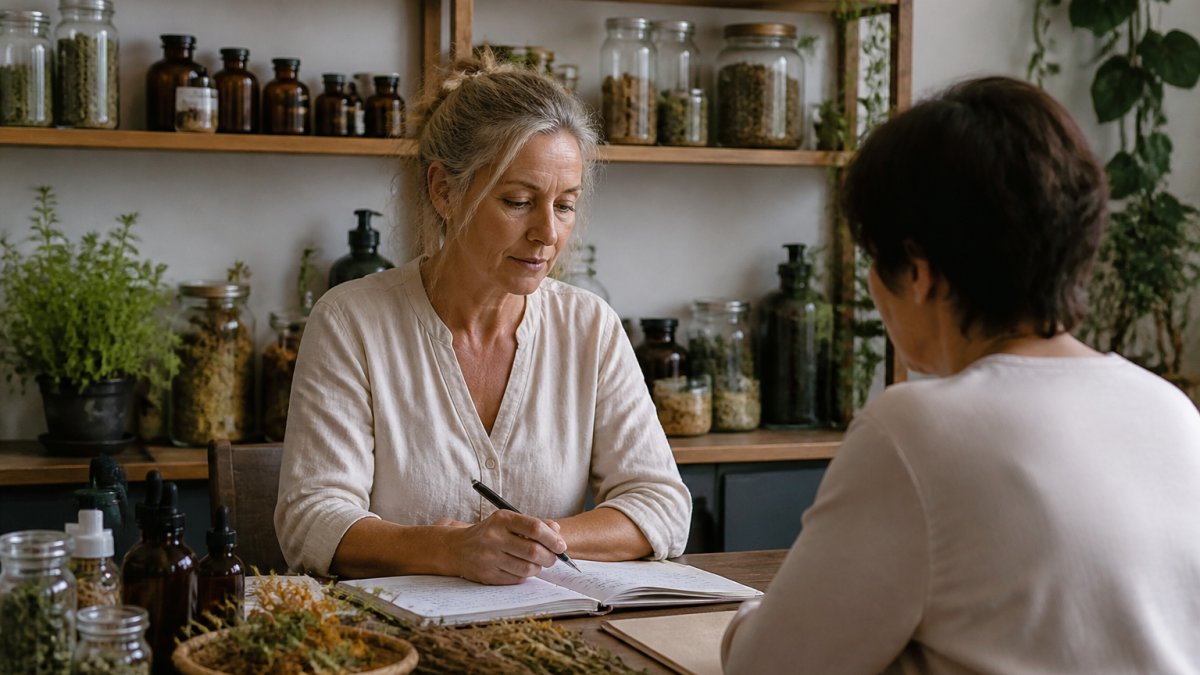
Essential Herbalist Consultation Questions to Ask
Before your first appointment, prepare questions specific to your situation. They help you judge whether this practitioner is the right fit and what to expect.
Questions About Your Health History and Concerns
Your practitioner needs your complete health picture before recommending anything. Ask these questions early in the consultation:
- "What information do you need about my health history to make safe recommendations?" This tells you whether they take a thorough approach.
- "How do you assess which herbs might work for my specific concerns?" You want to hear that they evaluate your individual situation, not just recommend a standard formula.
- "What questions will you ask me about my lifestyle, diet, and stress levels?" Herbal wellness isn't just about the herbs, it's about the whole picture.
- "How will you know if the herbs are actually working for me?" They should explain how you'll track progress and what signs to look for.
A practitioner who takes time to understand your full health story is more likely to recommend herbs that fit your needs. One who rushes to recommendations is cutting corners.
Questions About the Herbal Protocol and Timeline
Herbal support takes time, so you need realistic expectations about the process. Ask these questions:
- "How long should I expect to take these herbs before I notice changes?" Herbal support often works gradually. Your practitioner should give you a realistic timeframe based on your specific concerns.
- "How often will we check in, and what happens if something isn't working?" Good practitioners schedule follow-ups to assess progress and adjust the protocol if needed.
- "What does the herbal protocol look like, tinctures, teas, capsules, or a combination?" Different preparations have different absorption rates and convenience levels.
- "Will you recommend lifestyle changes alongside the herbs?" Herbal support works best when combined with diet, stress management, and sleep. A practitioner who addresses only the herbs is missing half the picture.
Building Your Herbal Consultation Checklist
Having a written checklist before your appointment keeps you focused and ensures you don't forget important questions in the moment.
Before Your First Appointment
Prepare yourself by gathering key information and setting clear intentions.
Do these things before you call or schedule:
- Write down your main health concerns and why you're seeking herbal support
- List all medications, supplements, and over-the-counter drugs you take (include dosages and frequency)
- Note any allergies, food sensitivities, or past reactions to herbs or supplements
- Write down questions about the practitioner's credentials and training
Having this ready shows you're serious and helps the practitioner work more efficiently.
During the Consultation
The consultation is your chance to assess fit and gather critical safety information. Pay attention to these things:
- How thorough is the intake process? They should ask detailed questions and take notes. If they seem rushed or distracted, that's a concern.
- Do they ask about your medications and supplements? This is non-negotiable. If they skip this, they're not screening for interactions.
- How do they explain their recommendations? Can they tell you why they chose specific herbs for your situation? Do they explain how the herbs work?
- Do they discuss potential side effects? A responsible practitioner mentions what you might experience and what to watch for.
Take notes so you remember the recommendations, reasoning, and any cautions.
Screening for Herb and Medication Interactions
This is where many DIY herbalists get into trouble. Herbs interact with medications, supplements, and even foods in ways that aren't always obvious.
Ashwagandha Root Traditional Ayurvedic Tincture →
What Information to Share About Your Current Medications
Your practitioner needs a complete picture of everything you take, including prescriptions, over-the-counter drugs, supplements, vitamins, and regular herbal teas. Share this information:
- Every prescription medication: Name, dosage, and how long you've been taking it. Include medications for diabetes, blood pressure, anxiety, hormones, or any chronic condition.
- Over-the-counter drugs: Pain relievers, cold medications, sleep aids, antacids, all of it matters.
- All supplements and vitamins: Fish oil, vitamin D, magnesium, probiotics, or anything else you take regularly.
- Herbal products you're already using: Teas, tinctures, capsules, or remedies you've been taking on your own.
Don't leave anything out. A supplement you think is harmless may still matter for assessing interaction risk accurately.
How Practitioners Assess Interaction Risk
A qualified practitioner screens for interactions systematically. Here's how responsible practitioners approach it:
- They reference interaction databases: Professional herbalists use resources that document known interactions between herbs and medications. They don't rely on memory alone.
- They understand mechanism: They know WHY certain combinations are risky. For example, some herbs thin the blood, so they're cautious if you're already on blood thinners.
- They ask follow-up questions: If you mention diabetes medications, they ask which ones specifically, because different medications interact differently with herbs.
- They're honest about uncertainty: If they're not sure about an interaction, they'll say so and research it rather than guessing.
If a practitioner doesn't have a clear process for screening interactions, that's a major red flag. This is too important to leave to chance.
Understanding Scope of Practice and When to Seek Medical Care
Herbal wellness support works best within clear boundaries.
Ask your practitioner directly: "What situations would require me to see my doctor instead of continuing with herbs?" A clear answer tells you they understand their limits.
Red flags include a practitioner who tells you to stop your medications, dismisses your doctor's concerns, or claims herbs can replace medical treatment for serious conditions.
Costs, Follow-Up Frequency, and Realistic Expectations
Understanding the financial and time commitment upfront prevents surprises later. Ask about costs clearly:
- Consultation fees: What does the first appointment cost? What about follow-ups?
- Product costs: Will you buy herbs directly from the practitioner, or can you source them yourself? What's the typical monthly cost?
- Follow-up frequency: How often will you need appointments? Some people need monthly check-ins. Others do well with quarterly visits.
- Total timeline: How long should you expect to be in the herbal protocol? Three months? Six months? A year?
Herbal support typically works gradually. You're not looking for overnight transformation but steady improvement over weeks and months.
If a practitioner promises dramatic results in days or weeks, that's unrealistic. If they can't give you any timeline at all, that's also a problem. You deserve clear expectations.
Taking Your First Steps Toward Supported Herbal Wellness
Starting herbal wellness support with a qualified practitioner is a smart choice when you approach it thoughtfully.
The questions in this guide give you a framework for evaluating practitioners and protecting your health. Use them, take notes, and don't rush.
When you're ready to explore herbal wellness support, HighFiveHive Nature's Remedies-Kitchen Herbalism offers RN-led guidance that combines 40 years of nursing experience with kitchen herbalism expertise.
If you're looking for quality herbal products to support your wellness journey, explore our selection of tinctures. Our Ashwagandha Root Traditional Ayurvedic Tincture ($15.95) offers a time-honored botanical preparation, while our Grand's Heritage Blend A Five Herb Tincture ($18.50) combines five distinctive botanicals in one convenient extract. For those seeking calming support, the Botanical Quartet Traditional Herbal Extract ($20.00) brings together passionflower, lemon balm, lavender, and chamomile, while the Tranquil Zest Five Herb Botanical Extract ($22.95) adds citrus and spice to support relaxation.


Frequently Asked Questions
What should I ask an herbalist to verify their credentials before starting herbal wellness support?
Ask whether the herbalist holds a nursing license (RN) or formal herbalism certification from an accredited program. Request information about their training hours, continuing education, and professional memberships. A qualified practitioner should be transparent about their background and willing to provide documentation. Ask how long they've been practicing and whether they have experience with your specific health concerns. An RN-led approach brings the rigor of nursing training alongside herbal knowledge, ensuring safety-first protocols.
How do I know if an herbalist is qualified to address my specific health concerns?
During your herbal consultation, describe your health history and current conditions in detail. Ask the practitioner whether they have direct experience supporting people with your concerns and how they approach individualized care. A qualified herbalist will ask thorough questions about your medications, supplements, and lifestyle before suggesting any herbal protocol. They should explain their reasoning for specific herb selections and be honest about the limits of what herbal support can address versus when medical referral is needed.
What herb and medication interactions should I be most concerned about?
Common interactions occur between herbs and blood thinners, diabetes medications, blood pressure drugs, and certain psychiatric medications. Before starting herbal wellness support, provide your practitioner with a complete list of all prescription medications, over-the-counter drugs, and supplements you take. Ask the practitioner specifically how they screen for interactions and whether they consult interaction databases or work with your prescribing doctor. A thorough intake process protects your safety and ensures herbs complement rather than interfere with your current treatment plan.
How long does it typically take to notice results from herbal wellness support?
Realistic timelines vary by individual, health concern, and herbal protocol. During your consultation, ask what results are reasonable to expect and over what timeframe. Some people notice changes in weeks; others need months of consistent use. Your practitioner should explain that herbal wellness works alongside lifestyle factors like diet, stress, and sleep, and that follow-up appointments help evaluate progress and adjust the protocol as needed. Avoid practitioners who promise quick fixes or guarantee specific outcomes.
Starting herbal wellness support is a meaningful step toward taking control of your health. The questions you ask upfront determine whether that journey is safe, effective, and worth your time and investment. Work with a qualified practitioner who respects your medical care, screens for interactions, and sets realistic expectations. That foundation makes all the difference in achieving the wellness outcomes you're seeking.


Leave a comment