
RN-Led Kitchen Herbalism Guide for Health
Table of Contents
- What Kitchen Herbalism Actually Is
- Common Kitchen Herbs for Health and How to Use Them
- How to Start a Home Apothecary: Step-by-Step
- Herbal Safety and Drug Interactions: What You Must Know
- Integrating Kitchen Herbalism Into Your Daily Routine
- Why RN-Led Kitchen Herbalism Differs From DIY Online Guides
- Conclusion
Last Updated: August 15, 2026
What Kitchen Herbalism Actually Is
Kitchen herbalism is the practice of using culinary and medicinal plants grown in or sourced for your home to support everyday wellness, prevent illness, and complement your existing healthcare routine. Unlike supplement-focused approaches, it emphasizes whole plant preparation, food-as-medicine principles, and integration with daily cooking and self-care rituals.
At HighFiveHive Nature's Remedies-Kitchen Herbalism, we define this approach through a nursing lens: it's evidence-informed, safety-conscious, and designed to work alongside, not replace, your doctor's recommendations. A DIY online guide might tell you to steep ginger root for inflammation without mentioning how it interacts with blood thinners. An RN-led approach flags that interaction first, then shows you how to use the herb safely if appropriate for your situation.
Kitchen herbalism draws on traditional knowledge while respecting modern pharmacology. Herbs contain bioactive phytochemicals that produce measurable effects. Ginger reduces inflammatory markers. Turmeric's curcumin has documented effects on joint mobility. Chamomile genuinely calms the nervous system through specific compounds. These are reproducible, observable changes, not placebo effects.
This guide walks you through kitchen herbalism the way a healthcare professional would teach it: starting with foundational herbs, moving through safe preparation methods, addressing drug interactions explicitly, and showing you how to integrate these practices into a realistic daily routine.
Common Kitchen Herbs for Health and How to Use Them
The most effective kitchen herbalism starts with herbs you already recognize from cooking. These are accessible, affordable, and some of the most researched medicinal plants available.
Herbs for Blood Sugar and Metabolic Support
Cinnamon, fenugreek, and bitter melon have demonstrated effects on glucose metabolism. Cinnamon appears to slow gastric emptying, which moderates blood sugar spikes after meals. Many people with blood sugar concerns find that adding cinnamon to morning coffee or oatmeal produces noticeable changes in afternoon energy levels and cravings.
Fenugreek seeds contain compounds that improve insulin sensitivity. Simmer one teaspoon of seeds in water for 10 minutes to make a simple infusion, or soak them overnight and drink the liquid first thing in the morning.
Critical note: If you take diabetes medications, these herbs require careful coordination with your doctor. Combining them with insulin or metformin without medical oversight can lower blood sugar too much. This is where RN-led guidance differs from DIY herbalism, a qualified healthcare professional reviews your medications first, then shows you how to use these herbs safely or recommends you avoid them based on your specific situation.
Immune System and Inflammatory Support
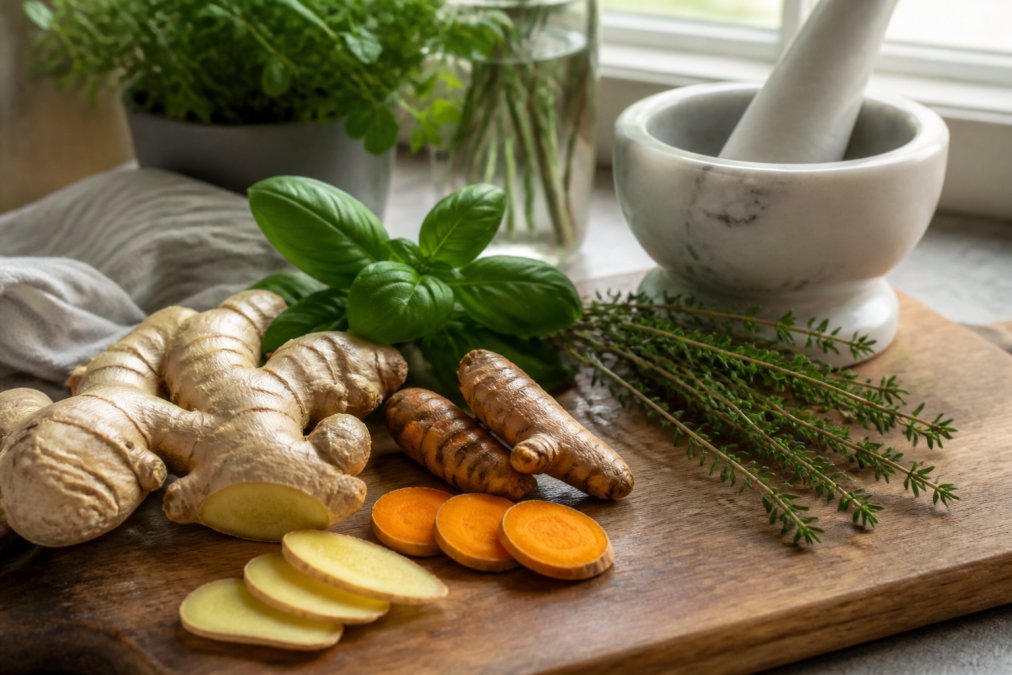
Ginger, turmeric, and elderberry form the foundation of immune-supporting kitchen herbalism. Ginger's gingerol compounds reduce inflammatory markers throughout the body. Slice a two-inch piece of fresh ginger root, add hot water, steep for 10 minutes, and drink it plain or with honey.
Turmeric's curcumin is poorly absorbed on its own, which is why traditional preparations combine it with black pepper (which contains piperine) and fat. A simple turmeric milk, turmeric powder simmered in milk with black pepper, cinnamon, and honey, is both traditional and effective.
Elderberry syrup has a strong traditional reputation for immune support. Simmer dried elderberries with water, strain, and mix with honey. Many people take a tablespoon daily during cold and flu season, or more frequently at the first sign of illness. These herbs reduce inflammation but aren't cures, they support your immune system's own work and work best as regular practice before you get sick.
Women's Wellness and Hormonal Balance
Red raspberry leaf, vitex, and sage address different aspects of women's health. Red raspberry leaf is nutrient-dense and supports the uterine lining. Steep one ounce of dried leaves in a quart of hot water for 4-8 hours to make a nourishing infusion.
Vitex (chasteberry) works on the pituitary gland to support progesterone production. It takes 2-3 months of consistent use to show effects and isn't appropriate for everyone. People on hormonal birth control, those with estrogen-sensitive conditions, or anyone pregnant should avoid it.
Sage leaf tea helps manage night sweats and hot flashes. Steep one teaspoon of dried sage in hot water for 10 minutes. Many people find that three cups daily during uncomfortable periods makes a measurable difference. Women's wellness herbalism requires careful attention to interactions and individual suitability, hormones are complex, and herbal effects are real.
How to Start a Home Apothecary: Step-by-Step
A functional home apothecary doesn't require expensive equipment or rare ingredients. It requires organization, quality sourcing, and clear understanding of what you're preparing.
Step 1: Select Your Foundational Herbs
Start with five to seven herbs that address your specific health concerns. If blood sugar management is your focus, start with cinnamon, fenugreek, and ginger. If immune support matters most, begin with ginger, turmeric, and elderberry. If you're managing hormonal concerns, start with red raspberry leaf and sage. Write down why you chose each herb and what specific outcome you're hoping for.
Step 2: Source Quality Dried Herbs
Dried herbs lose potency over time. Source from reputable suppliers who test for contaminants and provide information about where herbs come from and when they were harvested. Avoid bulk bins in grocery stores where herbs may have been sitting for months exposed to light and air.
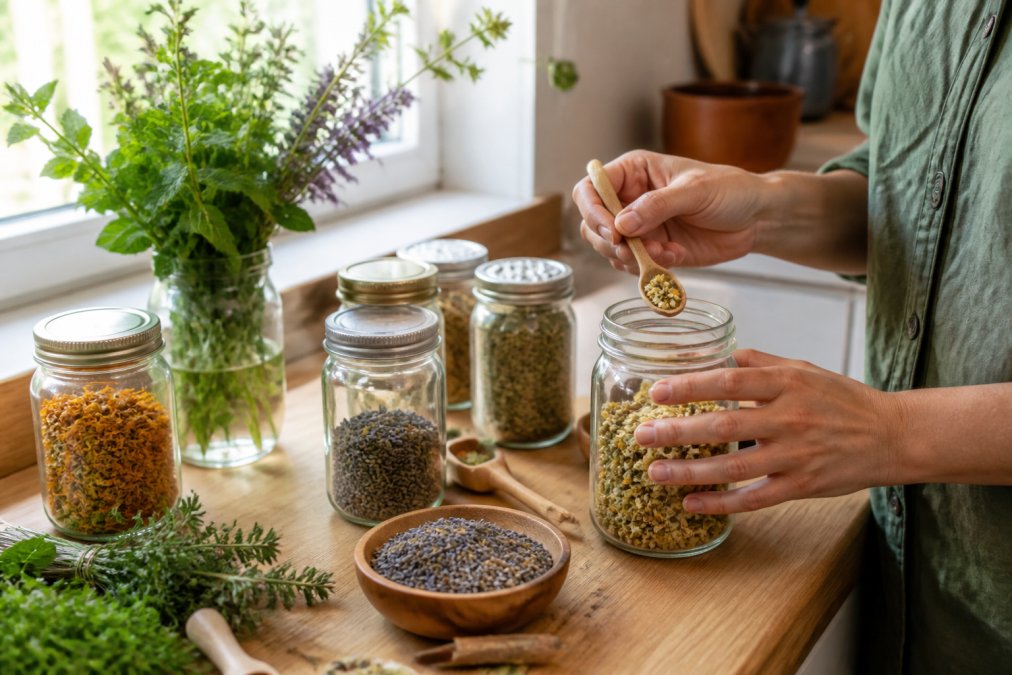
Store dried herbs in glass jars with tight-fitting lids, away from direct sunlight and heat. Most dried herbs remain potent for 6-12 months if stored properly.
Step 3: Master Three Essential Preparation Methods
Most kitchen herbalism relies on three basic methods: infusions, decoctions, and tinctures.
Infusions are made by steeping dried herbs in hot water. Use one teaspoon of dried herb per cup of hot water, steep for 5-10 minutes, strain, and drink. Ginger, turmeric, sage, and chamomile all work well as infusions.
Decoctions involve simmering tougher plant material, roots, bark, seeds, in water for 15-30 minutes. Bring water to a boil, add herb, reduce heat, and simmer for the recommended time. Strain and drink warm or store in the refrigerator for up to three days.
Tinctures are alcohol-based extracts that concentrate herbal compounds and are more shelf-stable than water-based preparations. Fill a glass jar halfway with dried herb, cover completely with 80-proof vodka, seal tightly, and let sit for 2-4 weeks in a cool, dark place. Shake daily. Strain through cheesecloth, bottle, and label with the herb name and date. A typical dose is 20-30 drops in water, once or twice daily. A properly made tincture lasts for years.
Herbal Safety and Drug Interactions: What You Must Know
This section separates RN-led kitchen herbalism from DIY online guides. Safety is foundational.
Identifying Contraindications and Medication Conflicts
A contraindication is a reason not to use an herb. Some are absolute; others are relative and require medical supervision.
Common medication conflicts occur with blood thinners, blood pressure medications, diabetes medications, and psychiatric medications. Ginger, turmeric, and ginkgo thin blood slightly. If you take warfarin or other anticoagulants, combining these herbs without medical oversight increases bleeding risk. This is a documented interaction that shows up in emergency rooms.
Herbal safety requires knowing your full medication list and checking for interactions before you start an herb. Many interactions are manageable with dose timing or medical supervision. A qualified healthcare provider, particularly one trained in herbal pharmacology, can review your specific situation and give you clear guidance.
Dosage Safety and Quality Standards
Dosage matters. The difference between a therapeutic dose and a toxic dose varies by herb and individual. Age, weight, kidney function, liver function, and pregnancy status all affect appropriate dosing.
Most culinary herbs used as infusions are quite safe at reasonable doses. But concentrated preparations like tinctures require more precision. Quality standards protect you from contamination, herbs can absorb heavy metals from soil, grow mold, or be adulterated with fillers. Reputable suppliers test for these issues.
Keep records of what you're using, in what dose, and how you respond. This documentation becomes invaluable if you need to discuss your herbal use with a healthcare provider.
Integrating Kitchen Herbalism Into Your Daily Routine
The most effective herbal practice becomes routine. If you drink coffee every morning, add a pinch of turmeric and cinnamon to your cup. If you drink tea in the evening, switch to herbal infusions that support sleep or digestion. These small additions accumulate into meaningful exposure without requiring new habits.
For women managing hormonal concerns, a daily cup of red raspberry leaf infusion becomes part of morning routine. For people supporting immune resilience, a daily ginger-turmeric preparation during cold season becomes automatic. Kitchen herbalism works best when integrated into cooking and daily beverages, not when it requires remembering to take separate supplements.
Track what you're doing and how you feel. Many people notice changes within two to four weeks of consistent herbal use, better sleep, more stable energy, less joint discomfort, or gradually improving digestion.
Why RN-Led Kitchen Herbalism Differs From DIY Online Guides
The fundamental difference is accountability paired with clinical training. An RN-led approach means someone with nursing licensure, continuing education in herbalism, and professional liability insurance is behind the guidance. That person's reputation and credentials depend on safety and accuracy.
An RN-led approach addresses drug interactions explicitly because nurses are trained to think about medication safety. We understand how drugs work in your body and where herbs might interfere.
HighFiveHive Nature's Remedies-Kitchen Herbalism brings 40 years of nursing experience to herbal guidance. Forty years means we've seen outcomes, what works, what doesn't, and what creates problems. We can tell you honestly which herbs will likely help, which probably won't make much difference, and which are worth trying but need medical monitoring. We don't claim herbs cure diseases. We explain how they support your body's own healing capacity.
Most importantly, RN-led herbalism is personalized. Your medications, health history, and situation are different from someone else's. A qualified healthcare professional can account for that; a generic online guide cannot.
Conclusion
Kitchen herbalism is accessible, affordable, and genuinely effective when practiced safely. The herbs in your kitchen contain compounds that produce measurable effects on your body. The question isn't whether they work, it's whether you're using them appropriately for your specific situation.
HighFiveHive Nature's Remedies-Kitchen Herbalism combines evidence-based herbal knowledge with professional nursing oversight. We help you identify which herbs match your health goals, teach you preparation methods that maximize effectiveness, and flag drug interactions and contraindications before they become problems. With 40 years of nursing experience and a commitment to safety-first herbalism, we help you use kitchen herbs confidently alongside your existing healthcare. Start with our foundational herbs and preparation methods, then work with a qualified healthcare provider as you expand your practice.
Frequently Asked Questions
Is kitchen herbalism safe to practice at home?
Kitchen herbalism is safe when you follow proper preparation methods, source quality dried herbs, and understand contraindications with any medications you take. The key is learning correct dosage and recognizing which herbs interact with pharmaceuticals. An RN-led approach ensures you're working with evidence-based guidance rather than untested online recipes. Always consult your healthcare provider before starting herbal remedies, especially if you have chronic conditions or take prescription medications.
How do herbal remedies interact with my diabetes medications?
Some herbs affect blood sugar levels or interact with diabetes medications. For example, certain herbs may enhance insulin sensitivity or affect how your body processes medications. This is why professional guidance matters, an RN can review your specific medications and recommend herbs that support your health without creating conflicts. Never start herbal remedies for diabetes management without discussing them with your healthcare provider first.
What are the most common herbs for a beginner home apothecary?
A solid starter kit includes ginger (anti-inflammatory), turmeric (supports joint and metabolic health), chamomile (calming and digestive support), thyme (respiratory and immune support), and peppermint (digestive and cooling). These are versatile, available year-round, and work well in teas, infusions, and culinary applications. They're also relatively forgiving for beginners and have established safety profiles when used properly.
How long before I notice results from herbal remedies?
Results vary depending on the herb and your health goal. Some effects, like improved digestion or better sleep from chamomile, may appear within days. Others, like sustained blood sugar support or joint flexibility improvement, typically take 2-4 weeks of consistent use. Herbal remedies work best as part of a broader wellness routine, not as quick fixes. Keep a simple log of how you feel to track patterns.
Can I afford to practice kitchen herbalism long-term?
Kitchen herbalism is one of the most budget-friendly wellness approaches. Dried herbs in bulk cost significantly less than supplements or processed remedies, and a small amount goes a long way in teas and infusions. Growing your own herbs from seeds cuts costs further. Starting with a basic home apothecary requires minimal investment, and most people recoup costs within weeks compared to commercial herbal products or supplements.
How do I know if dried herbs are safe and high-quality?
Quality dried herbs should be vibrant in color, fragrant, and free of mold or debris. Source from reputable suppliers who test for contaminants and can provide batch information. Avoid herbs that look dull, smell musty, or come in unclear packaging. Proper storage in airtight containers away from light and heat preserves potency and safety. When in doubt, ask your supplier about their sourcing and testing standards.
What makes an RN-led approach different from generic herbalism websites?
An RN brings clinical training in pharmacology, drug interactions, dosage safety, and patient assessment, knowledge that DIY websites often lack. RN-led guidance considers your full health picture, including medications and conditions, and prioritizes evidence-based practice over marketing claims. You're not just following recipes; you're learning from someone with healthcare credentials and accountability.
This article was written using GrandRanker


Leave a comment