
Safety Considerations for Starting Herbal Supplements
Table of Contents
- Assess Your Health Status and Medications Before Starting
- Herbal Supplements and Medication Interactions: What You Need to Know
- Herbal Supplement Side Effects and Adverse Reactions
- How to Choose Herbal Supplements: Quality and Purity Checks
- Questions to Ask Before Taking Herbal Supplements
- Safe Dosing: Starting Low and Monitoring Your Response
- Special Populations: Extra Caution for Pregnancy, Breastfeeding, and Age
- Your Pre-Start Safety Checklist
- Frequently Asked Questions
Last Updated: October 16, 2026
Assess Your Health Status and Medications Before Starting
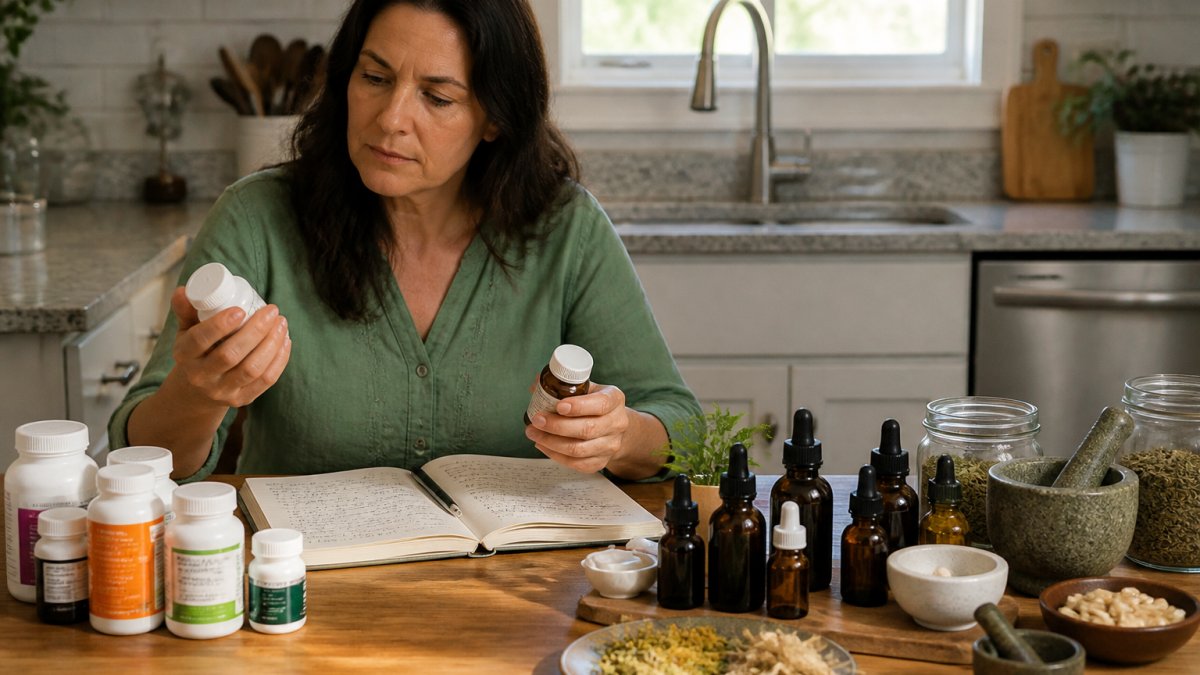
Before adding any herbal supplement, understanding safety considerations for starting herbal supplements means getting a clear picture of your health: your medications, conditions, and allergies. At HighFiveHive Nature's Remedies-Kitchen Herbalism, we emphasize this step because it's where most safety issues get caught early.
List every prescription, over-the-counter medication, and supplement you use, with dosages and frequency. Don't assume your doctor knows everything you take, be the expert on your own health history.
Note any chronic conditions: diabetes, heart disease, high blood pressure, thyroid disorders, liver or kidney disease, bleeding disorders, and hormonal conditions.
Write down any allergies too, food, environmental, and medication.
Herbal Supplements and Medication Interactions: What You Need to Know
Herbal supplements and medication interactions happen because both contain active compounds processed through the same body systems. When two substances share pathways, one can make the other stronger, weaker, or cause unexpected effects.
Common Drug Interactions to Watch For
Blood thinners like warfarin interact with garlic, ginger, and ginkgo, raising bleeding risk.
St. John's Wort is particularly problematic: it reduces birth control effectiveness and interferes with blood thinners, heart medications, cancer drugs, HIV medications, and antidepressants.

Medications for high blood pressure interact with herbs that lower blood pressure.
The safest approach: assume any active herbal supplement might interact with your medications until proven otherwise.
How to Disclose Your Supplement Plans to Your Doctor
Tell your doctor before you start, not after.
Be specific, name the herb ("I'm considering ashwagandha") rather than saying "an herbal remedy," and bring your medication list.
If your doctor says no, listen, they're protecting you from real harm, not opposing natural remedies.
If your doctor seems dismissive, ask to speak with a pharmacist instead, they specialize in drug interactions.
Document the conversation, what your doctor said and when, to protect yourself if problems arise later.
Herbal Supplement Side Effects and Adverse Reactions
Herbal supplements cause side effects, active compounds create effects in your body, some desired and some unwanted.
Common side effects include digestive upset, headaches, dizziness, and sleep disturbances; some people develop allergic reactions, rashes, or swelling, ranging from minor irritation to serious problems.
Side effects often appear within the first few days but can develop after weeks of use, and some people tolerate a dose fine but experience problems at a higher one.
Recognizing Signs of Intolerance and Allergic Reactions
Intolerance symptoms, nausea, stomach cramping, diarrhea, constipation, headaches, or dizziness, typically appear within hours, are uncomfortable but not usually dangerous, and often resolve when you stop the supplement.
Allergic reactions involve your immune system: itching, rash, swelling of lips or throat, difficulty breathing, or hives. They can appear quickly or over time, and some are serious enough to require immediate medical attention.
Watch for these specific signs:
- Rash or hives anywhere on your body
- Swelling of lips, tongue, or throat
- Difficulty breathing or shortness of breath
- Severe itching
- Stomach pain with vomiting
- Dizziness or fainting
- Rapid or irregular heartbeat
If you experience any of these, stop the supplement immediately and seek medical help.
What to Do If You Experience an Adverse Reaction
Stop taking the supplement right away, don't wait to see if symptoms improve or reduce the dose hoping it helps.
Document what happened: when you started, how much you took, when symptoms appeared, and how long they lasted.
Report the reaction to the FDA. You can file a report through their MedWatch program. This helps track safety issues and protects other people.
Never ignore symptoms when starting an herbal supplement. Your body is telling you something. Listen to it.
How to Choose Herbal Supplements: Quality and Purity Checks
Not all herbal supplements are created equal. Quality varies dramatically between brands, some contain exactly what the label says, others different plants, lower amounts, or harmful contaminants.
Reading and Verifying the Ingredient Label
Read the ingredient label carefully. It should list:
- The plant name (common and scientific)
- The plant part used (root, leaf, flower, fruit)
- The amount per serving
- The form (tincture, capsule, powder, tea)
Look for third-party testing: independent labs verify the product contains what the label claims and check for contaminants.
Check the expiration date. Herbal supplements degrade over time. Old supplements may lose potency or develop mold.
Check the ingredient list for additives, fillers, binders, or flow agents you don't need.
Compare similar products by serving size, amount of active herb, and price, a cheaper supplement may contain less herb or reflect corner-cutting on quality.
Identifying Contamination Risks
Herbal supplements can contain contaminants: heavy metals like lead and cadmium, pesticide residues, and microbial contamination like mold or bacteria.
Contamination happens during growing, harvesting, processing, or storage, sometimes accidentally, sometimes because manufacturers cut corners.
Pesticide residues appear on non-organic plants, and microbial contamination develops with improper storage or unsanitary manufacturing.
To reduce contamination risk:
- Choose brands that test for heavy metals and pesticides
- Look for organic certification when available
- Buy from established, reputable companies
- Store supplements in cool, dry places
- Don't buy supplements that smell moldy or look discolored
HighFiveHive Nature's Remedies-Kitchen Herbalism tinctures like our Ashwagandha Root Traditional Ayurvedic Tincture are carefully prepared from quality botanical sources.
Ashwagandha Root Traditional Ayurvedic Tincture →

Questions to Ask Before Taking Herbal Supplements
Before starting any new supplement, ask yourself:
Do I have a specific reason to take this? "I want to support my immune health" beats "everyone's taking it."
Does my doctor know about this? Have you told your healthcare provider?
How will I know if it's working? What specific change are you hoping for?
What side effects are possible? Know what to watch for before starting.
How much will this cost? Can you afford it long-term? Are there cheaper alternatives?
Is this product quality? Has it been third-party tested?
Safe Dosing: Starting Low and Monitoring Your Response
Determining Your Starting Dose
Start with the lowest recommended dose on the label, not half of it, the lowest listed.
Age, weight, liver and kidney function, and genetics all affect how you process supplements.
If a label says "take 1-3 capsules daily," start with 1 capsule, not 2, not 3.
If you tolerate the low dose well, increase gradually to the next level, giving your body time to adjust.
The One-at-a-Time Rule
Never start multiple new supplements at the same time.
If you start three supplements the same day and develop a side effect, you won't know which caused it and will have to stop all three and start over, wasting time and money.
Start one supplement and use it for at least a week, watching for problems and benefits. Only when you're confident it's safe and working should you add another.
Duration and When to Reassess
Don't expect overnight results, some herbs work within days, others take weeks or months.
After 4 weeks, assess honestly: Are the changes positive and worth continuing?
If it's working, continue.
Reassess every 4-8 weeks: Is it still helping? Are side effects developing? Has my health changed?
Some supplements are for long-term use, others for short-term support, know which yours is.
Special Populations: Extra Caution for Pregnancy, Breastfeeding, and Age
Certain groups need extra care with herbal supplements.
Pregnancy: Many herbal supplements aren't safe during pregnancy, some increase miscarriage risk, others affect fetal development.
Breastfeeding: Some herbal compounds pass into breast milk.
Children: Children's bodies are smaller and more sensitive, so adult supplements are often too strong.
Older adults: Aging slows liver and kidney function and often means multiple medications, raising interaction risk.
People with liver or kidney disease: Impaired liver or kidney function lets herbal compounds build up to dangerous levels.
Your Pre-Start Safety Checklist
Use this checklist to address safety considerations for starting herbal supplements before you begin:
- I have a clear reason for taking this supplement
- I've researched this herb and understand how it works
- I've told my doctor about my plan and received approval
- I've checked for interactions with my current medications
- I've read the ingredient label carefully
- I've verified third-party testing or quality certification
- I understand possible side effects and what to watch for
- I know my starting dose and understand to start low
- I have a plan to track how I feel (journal or notes)
- I understand I'll only add one supplement at a time
- I know realistic timelines for seeing effects
- I have a plan to reassess after 4 weeks
- I know what to do if I experience an adverse reaction
Print this checklist. Fill it out for each supplement you consider. Keep it with your medication list.
Starting herbal supplements safely requires planning and honesty: know your health, medications, and body's responses, choose quality products, dose carefully, and involve your healthcare provider.
HighFiveHive Nature's Remedies-Kitchen Herbalism is built on 40 years of nursing experience, and our RN-led approach means professional guidance is built into every recommendation. John's Wort Tincture, Black Elderberry Pure Black Elderberry Tincture, or Simply Yarrow Traditional Herbal Tincture, you're getting supplements backed by healthcare expertise.

| Step | What to Do | Timeline |
|---|---|---|
| Health Assessment | List medications, conditions, allergies | Before starting |
| Doctor Consultation | Disclose supplement plans, check for interactions | Before starting |
| Quality Check | Verify third-party testing and ingredient label | Before starting |
| Starting Dose | Begin with lowest recommended dose | Day 1 |
| Monitoring | Track symptoms and effects in a journal | Daily |
| Reassessment | Evaluate effectiveness and side effects | Week 4 |
| Adjustment | Increase dose or stop based on response | Week 4+ |
FDA MedWatch Program for reporting adverse events
NSF International supplement certification standards
NIH National Center for Complementary and Integrative Health herbal supplement information
Frequently Asked Questions
What are the potential risks of taking herbal supplements?
Herbal supplements carry several risks, including allergic reactions, side effects like rash or swelling, contamination with heavy metals or pesticides, and interactions with prescription or over-the-counter medications. Some herbs can worsen underlying health conditions or cause adverse reactions when combined with other substances. Quality varies widely between products, and misidentification of plant material is possible. Starting cautiously with low doses and consulting a healthcare provider helps minimize these risks.
Can herbal supplements interact with prescription medications?
Yes. Many herbal supplements interact significantly with prescription medications, including blood thinners, diabetes medications, sedatives, antidepressants, and birth control pills. For example, St. John's Wort can reduce the effectiveness of birth control and interact with blood thinners. Always disclose all herbal supplements to your doctor or pharmacist before starting, especially if you take multiple medications. They can check for dangerous interactions and advise whether a particular herb is safe for your situation.
What should I check on an herbal supplement label before taking it?
Review the ingredient label for the herb's scientific name, the plant part used (root, leaf, flower), the extraction method, and any additional ingredients or fillers. Check for third-party testing certifications and batch numbers, which indicate quality control. Look for the suggested dosage and any warnings about contraindications or drug interactions. Verify the manufacturer's contact information and storage instructions. Avoid products with vague labeling, missing ingredient lists, or unsubstantiated claims about treating disease.
Should I talk to a healthcare professional before starting an herbal supplement?
Yes, absolutely. Consult a healthcare provider, especially if you have underlying health conditions, take prescription or over-the-counter medications, are pregnant or breastfeeding, or are over 50. A professional can assess your individual situation, identify potential interactions, recommend safe starting doses, and monitor your response. An RN-led approach, like that offered by HighFiveHive Nature's Remedies, combines herbal expertise with nursing knowledge to guide you safely through the process.


Leave a comment