
Soothing Foot Bath Salts for Senior Relaxation
Last Updated: October 23, 2026
Quick Summary
Soothing foot bath salts for senior relaxation combine Epsom salt, warm water at 92°F, and calming herbs like lavender or chamomile to ease tension, improve circulation, and support better sleep. A 15-20 minute soak using 1/2 cup of salt per basin delivers temporary comfort for joint discomfort and stress while keeping feet safe from burns and over-drying.
- Soak feet for 15-20 minutes at 92°F using 1/2 cup Epsom salt per basin for optimal relaxation.
- Seniors with diabetes should limit soaks to 10 minutes and verify water temperature with a thermometer to prevent burns.
- Lavender, chamomile, and rosemary are gentle herbs that support relaxation without irritating sensitive senior skin.
- Always sit in a sturdy chair with armrests on a nonslip mat, and dry feet completely between toes to prevent infection.
- Soak 3-4 times per week rather than daily to avoid over-drying fragile skin.
Table of Contents
- Why Soothing Foot Bath Salts Matter for Senior Wellness
- Understanding Epsom Salt and Magnesium Sulfate
- Best Foot Soak for Arthritis and Joint Discomfort
- How Long to Soak Feet in Epsom Salt for Maximum Benefit
- Unscented Bath Salts for Sensitive Skin
- Diabetes Foot Care and Soaking: What Seniors Should Know
- Creating Your At-Home Foot Soak Ritual
- Frequently Asked Questions
Why Soothing Foot Bath Salts Matter for Senior Wellness
Warm footbaths before bedtime may enhance perceived sleep quality in older adults, according to [a systematic review and meta-analysis from the National Center for Biotechnology Information](https://pmc.ncbi.nlm.nih.gov/articles/PMC12449616/).
It's not just about soaking your feet. It's about creating a moment where natural ingredients work with your body to ease tension, improve circulation, and prepare you for better rest.
This guide covers everything you need to know about choosing and using soothing foot bath salts for senior relaxation, from understanding what makes Epsom salt effective to navigating safety concerns like diabetes-related foot care.
Understanding Epsom Salt and Magnesium Sulfate
Epsom salt is magnesium sulfate, a mineral compound that dissolves in warm water to create a soothing soak. The recommended water temperature for foot soaks to ease soreness is 92°F, according to Ironwood Cancer Research Centers guidelines.
The standard usage for Epsom salt in a foot soak is 1/2 cup per basin, based on Medical News Today's preparation guidelines. This ratio balances mineral concentration with comfort.
Here's why magnesium matters for your body:
- Magnesium supports muscle relaxation and reduces cramping
- The mineral may be absorbed through skin, potentially targeting sore muscles
- Warm water increases blood flow to tired feet
- The combination eases tension built up from standing, walking, or arthritis
Epsom salt works best when you soak for 15-20 minutes. Shorter soaks won't give the minerals time to work. Longer soaks can leave skin overly dry, so stick to the middle ground.
Best Foot Soak for Arthritis and Joint Discomfort
Arthritis causes stiffness, aching, and reduced range of motion in the feet and ankles, and a warm soak is one of the few at-home rituals that addresses both the physical discomfort and the stress that comes with chronic joint pain.
What the evidence actually supports. Warm water increases local blood flow and relaxes surrounding muscles, which most practitioners find temporarily eases stiffness and improves how easily the foot moves afterward.
Herbs that earn their place in an arthritis soak:
- Lavender, calming scent; supports relaxation and wind-down before bed
- Chamomile, gentle, mild botanical often used for sensitive skin
- Peppermint, cooling sensation that can distract from achy feet; use sparingly if skin is fragile
- Eucalyptus, refreshing aroma; supports the feeling of clearer breathing during a warm soak
- Rosemary, traditional herbal addition; mild and pleasant in dried form
Senior-specific adjustments for arthritis soaks:
- Keep the water at 92°F or below. Arthritis pain can tempt you toward hotter water, but fragile skin and reduced sensation raise burn risk. Verify with a thermometer, not your hand.
- Soak 10-15 minutes, not 20. Shorter soaks reduce skin breakdown risk while still delivering warmth and relaxation.
- Sit, don't stand. Place the basin on a nonslip mat in front of a sturdy chair with armrests. Never soak standing at a sink or on a stool without support.
- Keep a towel and phone within reach. A damp floor is a fall hazard; dry the floor immediately after lifting feet out.
- Skip the soak during a flare with red, hot, swollen joints. Heat can worsen acute inflammation; ask a clinician whether cool compresses are more appropriate during flares.
If you want a ready-made blend, Soothing Herbal Foot Bath Salts combines Epsom and sea salts with dried chamomile and rosemary for a mild, senior-friendly soak.

How Long to Soak Feet in Epsom Salt for Maximum Benefit
The ideal soak time is 15-20 minutes. This duration allows magnesium to absorb through your skin while keeping your feet comfortable and preventing over-drying.
Here's what happens during your soak:
- Minutes 1-5: Water temperature warms your feet, increasing blood flow
- Minutes 5-15: Magnesium begins absorbing, muscles start to relax
- Minutes 15-20: Tension eases significantly
- After 20 minutes: Extended soaking can dry out skin, especially for seniors with sensitive or fragile skin
Soaking longer than 20 minutes doesn't increase benefits. In fact, it can leave your feet feeling pruned and dry. Stick to the 15-20 minute window for consistent results.
Never soak for more than 30 minutes. Prolonged soaking softens skin excessively and can cause maceration (waterlogging), which increases infection risk for seniors with compromised circulation or diabetes.
Frequency matters too. Soaking 3-4 times per week allows for a consistent routine. If you soak daily, you risk drying out your feet.
Soothing Herbal Foot Bath Salts →
The ideal soak time depends on what happens during each phase of soaking.
| Phase | Duration | What Happens |
|---|---|---|
| Initial warming | Minutes 1-5 | Water temperature warms feet, increases blood flow |
| Mineral absorption | Minutes 5-15 | Magnesium begins absorbing, muscles start to relax |
| Peak relaxation | Minutes 15-20 | Tension eases significantly |
| Extended soaking | After 20 minutes | Feet feel pruned and dry, no added benefits |
Unscented Bath Salts for Sensitive Skin
Not every senior can tolerate essential oils. If you have sensitive skin, reactive skin conditions, or allergies, unscented bath salts are a better choice.
Sensitive skin benefits from:
- Pure Epsom salt without essential oil additives
- Sea salt for mineral content without fragrance
- Baking soda to gently cleanse and soften skin
- No dyes or artificial colors
When choosing unscented salts, check the ingredient list. Avoid products that say "fragrance" or "natural fragrance", these can trigger reactions even if they're plant-based.
If you want some gentle aroma without strong essential oils, dried chamomile or rosemary flowers add subtle scent without the potency of essential oils. These dried botanicals are milder and less likely to irritate sensitive skin.
Diabetes Foot Care and Soaking: What Seniors Should Know
Individuals with diabetes should exercise caution with foot soaks, as nerve damage (neuropathy) can make it difficult to sense water temperature, increasing the risk of burns. This is critical. If you have diabetes, check water temperature with a thermometer or have someone else test it first.
Diabetes foot care rules for soaking:
- Test water temperature first. Use a thermometer or ask a caregiver to test. Never rely on your hands or feet to judge temperature.
- Keep water at 92°F or below. Hotter water risks burns you won't feel.
- Limit soak time to 10 minutes. Shorter soaks reduce the risk of skin breakdown.
- Dry feet completely afterward. Moisture trapped between toes can cause infection.
- Inspect your feet after soaking. Look for redness, blisters, or cuts you might not have felt.
- Avoid soaking if you have open sores or infections. Water can worsen these conditions.
If you experience any numbness, tingling, or reduced sensation in your feet, talk to your doctor before starting any foot soak routine. Explore natural remedies for diabetic nerve pain relief to complement your diabetes care plan. Diabetes-related neuropathy changes how your body responds to temperature and pressure.
Creating Your At-Home Foot Soak Ritual
A safe foot soak is mostly setup. For seniors, the risks aren't in the salts, they're in the slippery floor, the unstable chair, the too-hot water, and the damp skin between toes.
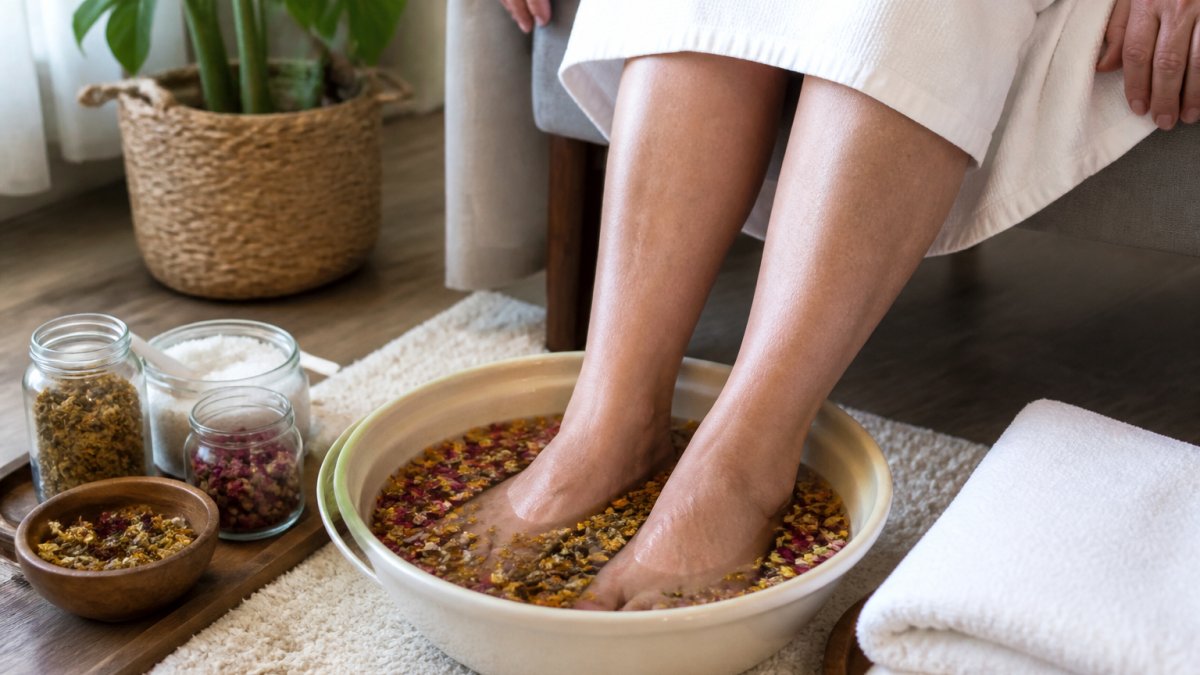
What you'll need:
- A wide, low-sided basin or foot spa (easier to step into than a deep bucket)
- A sturdy chair with armrests, placed on a nonslip mat
- A waterproof thermometer (digital kitchen thermometers work well)
- 1/4 to 1/2 cup Epsom salt or foot bath salts
- Two soft towels, one for feet, one for the floor
- A pitcher of clean warm water for rinsing (optional)
- Lotion or foot cream for aftercare
Step-by-step setup and soak:
- Stage the area first. Place the nonslip mat on the floor, set the chair on or beside it, and lay a towel under the basin. Keep a phone within reach.
- Fill the basin to ankle height with warm water. Target 92°F and verify with the thermometer, never with your hand or foot, especially if you have neuropathy or reduced sensation.
- Add 1/4 to 1/2 cup of salts and stir for about 30 seconds until crystals are fully dissolved. Undissolved crystals can irritate fragile skin.
- Sit down before lifting feet into the basin. Use the armrests for support; do not stand on one leg to step in.
- Soak for 10-20 minutes. Seniors with fragile skin, diabetes, or circulation concerns should stay at the shorter end.
- Lift feet out slowly and pat dry, don't rub. Dry carefully between every toe; trapped moisture is a common cause of skin problems.
- Rinse the basin and dry the floor immediately to remove slippery residue.
- Apply lotion or foot cream while skin is still slightly damp to lock in moisture, then put on clean socks to stay warm.
Fall prevention is non-negotiable. Never soak standing up, never carry a full basin across a wet floor, and never soak alone if you have balance issues or a history of falls. Ask a caregiver to set up and empty the basin if lifting is difficult.
Aftercare and hydration. Warm soaks pull heat to the feet and can leave you feeling chilled afterward.
Timing. Evening, about 30 minutes before bed, is the most common window, it pairs the muscle relaxation with a wind-down routine.
For a complete blend, Soothing Herbal Foot Bath Salts from HighFiveHive Nature's Remedies-Kitchen Herbalism combine Epsom salt, sea salt, baking soda, and lavender and peppermint essential oils with dried chamomile and rosemary.
Frequently Asked Questions
What does soaking feet in Epsom salt do for the body?
Epsom salt, composed of magnesium sulfate, dissolves in warm water to create a mineral-rich soak that may help ease muscle tension and soothe tired, achy feet. The magnesium is traditionally used in soaks, though research continues on absorption rates. Warm footbaths before bedtime have shown promise in enhancing perceived sleep quality in older adults according to recent clinical reviews. Many seniors find the combination of warmth and mineral salts provides noticeable relaxation and comfort.
How long should an older adult soak their feet in a foot bath?
The recommended soaking time is 15 to 20 minutes in comfortably warm water (around 92°F). This duration allows the salts to dissolve fully and the warmth to penetrate tired muscles without causing skin irritation. Seniors should test water temperature carefully before immersing feet, especially those with reduced sensation or diabetes. Start with shorter soaks if new to foot baths, and gradually extend to the full 15-20 minutes as comfort increases.
Should people with diabetes soak their feet in Epsom salt?
People with diabetes should exercise caution with foot soaks, particularly those with diabetic neuropathy (nerve damage). Nerve damage can make it difficult to sense water temperature accurately, increasing the risk of burns. If you have diabetes, consult your healthcare provider before beginning any foot-soaking routine. If cleared to soak, use a reliable thermometer to verify water temperature stays at or below 92°F, keep soaks brief (5-10 minutes initially), and inspect feet carefully afterward for any signs of irritation or injury.
Are scented foot bath salts safe for seniors with sensitive skin?
Scented foot bath salts with essential oils like lavender, peppermint, and chamomile are generally safe for most seniors, but those with sensitive skin or fragrance sensitivities should start cautiously. Test a small amount in warm water first to check for any redness or irritation. Unscented bath salts with just Epsom salt and sea salt offer a gentler alternative for highly reactive skin. If you experience any burning, itching, or rash during or after soaking, discontinue use and rinse feet thoroughly with cool water.


Leave a comment