
Best Professional Herbalism Coaching 2026
Table of Contents
- What to Look for in Professional Herbalism Coaching
- RN-Led Herbal Medicine Coaching: Why Clinical Credentials Matter
- Clinical Herbalism Certification Requirements and Accreditation Standards
- Online vs. In-Person Herbalism Education: What Fits Your Goals
- Herbalism Business Mentorship and Career Development Pathways
- Cost-Benefit Analysis: ROI of Professional Herbalism Training
- Getting Started With Professional Herbalism Coaching
- Frequently Asked Questions
Last Updated: September 2, 2026
What to Look for in Professional Herbalism Coaching
Finding the right professional herbalism coaching requires understanding what separates legitimate clinical training from generic wellness content. Real clinical herbalism coaching teaches you to think like a practitioner: to gather client history, identify contraindications, formulate safely, and document outcomes. It's the difference between knowing that ginger supports digestion and understanding when ginger is contraindicated in someone taking blood thinners.
Look for programs affiliated with recognized herbalism bodies that maintain standards for curriculum, supervised clinical hours, and continuing education requirements (americanherbalistsguild.com). An RN-led approach brings something most herbalism programs lack: direct experience with pharmaceutical interactions, patient assessment in clinical settings, and the ability to position herbal support within a broader healthcare context. At HighFiveHive Nature's Remedies-Kitchen Herbalism, our RN-led approach combines 40 years of nursing experience with clinical herbalism training, ensuring students learn both botanical knowledge and the clinical judgment needed to apply it safely.
Finally, evaluate whether the program addresses the business side. Professional herbalism coaching that ignores how to build a sustainable practice, price your services, or navigate the regulatory landscape leaves graduates unprepared for the real world.
| Evaluation Criteria | What to Look For | Why It Matters |
|---|---|---|
| Accreditation | Recognition by established herbalism organizations | Ensures curriculum meets professional standards |
| Clinical Hours | Minimum 500+ supervised hours with real clients | Builds competency in assessment and formulation |
| Instructor Credentials | RN, ND, or equivalent healthcare background | Brings clinical rigor and drug interaction knowledge |
| Curriculum Depth | Covers materia medica, pharmacology, contraindications | Prepares you for real-world client safety decisions |
| Business Training | Pricing, marketing, regulatory compliance | Enables you to actually earn a living as a practitioner |
RN-Led Herbal Medicine Coaching: Why Clinical Credentials Matter
An RN-led approach to professional herbalism coaching fundamentally changes how you learn to practice. Registered nurses bring clinical assessment skills, pharmaceutical knowledge, and an understanding of when herbs complement medical care versus when they don't belong in a protocol.
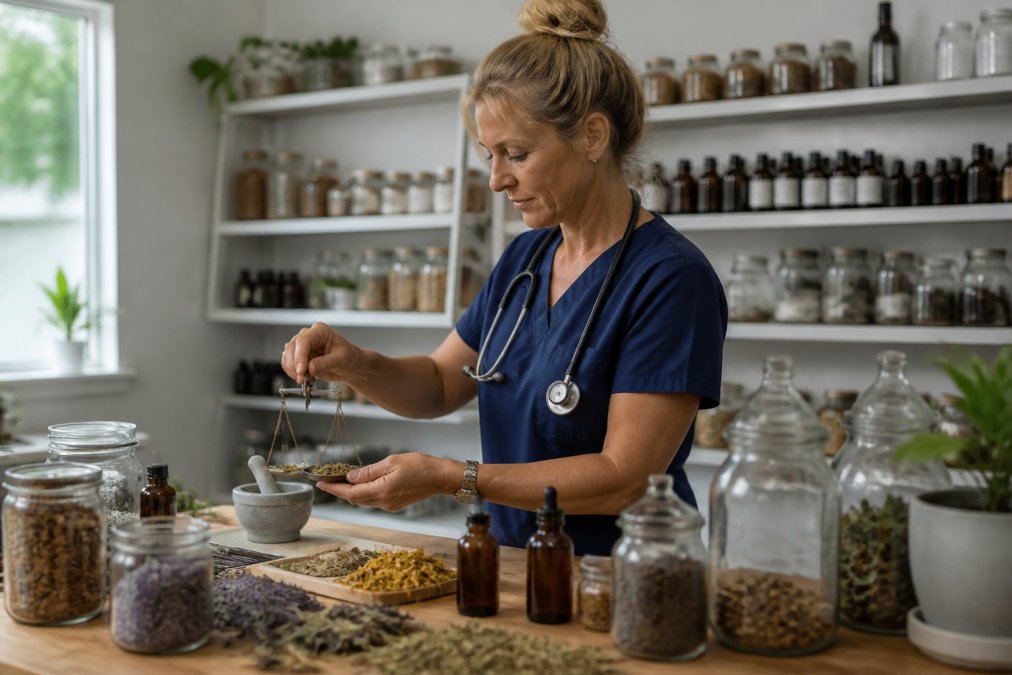
Most herbalism programs teach botanical knowledge in isolation. An RN-led program contextualizes that knowledge within real patient scenarios. You learn to recognize when someone's fatigue is iron deficiency, how to adjust herbal protocols when a client starts a new medication, and how to communicate with their medical team. The clinical credentials matter because they signal you've met rigorous standards for clinical knowledge and patient safety, positioning you as a professional herbalist rather than a wellness enthusiast.
HighFiveHive Nature's Remedies-Kitchen Herbalism's RN-led coaching teaches you how to assess clients like a healthcare provider would, gathering history, identifying contraindications, and building protocols that work alongside conventional care. The RN-led model also teaches you to stay within your scope, clarifying the boundary between herbalism and medicine while recognizing where they intersect.
Clinical Herbalism Certification Requirements and Accreditation Standards
Professional herbalism coaching that leads to recognized certification requires meeting specific educational standards. Look for programs offering accredited diplomas or certificates recognized by organizations like the American Herbalists Guild that maintain practitioner directories and continuing education requirements. These programs typically require:
- 500+ supervised clinical hours working with real clients under practitioner supervision (americanherbalistsguild.com)
- Comprehensive materia medica training covering 100+ medicinal plants with depth on actions, indications, contraindications, and dosage (peer-reviewed research)
- Pharmacology and drug interaction training so you understand how herbs interact with medications
- Case study analysis and documentation to build your clinical reasoning skills
- Continuing education requirements to maintain certification and stay current with evidence
The accreditation piece matters because it creates accountability. When evaluating programs, ask directly: Are they accredited? What's the total hour requirement? How many of those hours are supervised clinical practice versus lectures? Do graduates appear in a practitioner directory?
If you're serious about professional herbalism coaching, a clinical diploma with strong clinical hours is the investment worth making. It positions you to work with clients managing serious health conditions because you've been trained to recognize when herbal support is appropriate and when it isn't.
Online vs. In-Person Herbalism Education: What Fits Your Goals
The format of your professional herbalism coaching matters significantly. Online programs offer flexibility and accessibility. In-person training offers hands-on experience with plants and direct feedback from instructors that's harder to replicate digitally.
Online professional herbalism coaching works well if you're balancing training with existing commitments. The downside: plant identification, hands-on formulation practice, and mentorship are harder to achieve online. In-person programs immerse you in the sensory experience of herbalism, you learn to recognize plants by sight, smell, and touch, and build relationships with instructors and peers that become a professional network.
The hybrid model, online coursework with required in-person intensives, often strikes the best balance. Consider also whether the program offers post-graduation mentorship or continuing education. The best professional herbalism coaching doesn't end at graduation.
Herbalism Business Mentorship and Career Development Pathways
Professional herbalism coaching that ignores the business side leaves you unprepared to earn a living. The most valuable programs combine botanical and clinical training with guidance on building a sustainable practice.
Look for coaching that covers service models and pricing, client intake and documentation, regulatory landscape, marketing and client acquisition, and building a product line if relevant. Many herbalism graduates struggle not because they lack botanical knowledge but because they don't know how to turn that knowledge into income.
Career pathways vary. Some practitioners work one-on-one with clients, others teach, some develop product lines, and many combine multiple income streams. The best coaching helps you identify which model fits your goals. HighFiveHive Nature's Remedies-Kitchen Herbalism's approach emphasizes kitchen herbalism, teaching clients to make their own remedies safely, which opens different business opportunities than selling finished products.
Post-graduation mentorship and continuing education help you continue growing as a practitioner, moving from "I completed a certification" to "I'm building a real practice."
Cost-Benefit Analysis: ROI of Professional Herbalism Training
The investment in professional herbalism coaching ranges widely depending on program depth and format. A foundational online certificate might cost $2,000-$5,000. A comprehensive in-person clinical diploma can run $15,000-$30,000 or more.
If you're pursuing professional herbalism coaching to build a full-time practice, a comprehensive program costing $20,000 that enables you to charge $75-$150 per consultation pays for itself in 150-300 client sessions. Most established practitioners see that volume within 2-3 years.
If you're training for personal use or part-time practice, you're investing in knowledge that makes you a safer, more effective practitioner. Consider also the durability of your credential. A program that requires continuing education and maintains practitioner standards holds its value longer than a one-time certificate.
When evaluating cost, factor in what's included: textbooks, plant specimens, access to herbal materia medica databases, post-graduation mentorship, or lifetime access to course materials. Some practitioners also find that professional herbalism coaching opens secondary income opportunities, teaching workshops, writing, consulting for product companies, that multiply the ROI.
Getting Started With Professional Herbalism Coaching
Starting professional herbalism coaching begins with clarity on your goals. Are you training for personal knowledge, part-time practice, or a full-time career? Do you want to work with specific populations? Do you prefer one-on-one work, teaching, or product development?
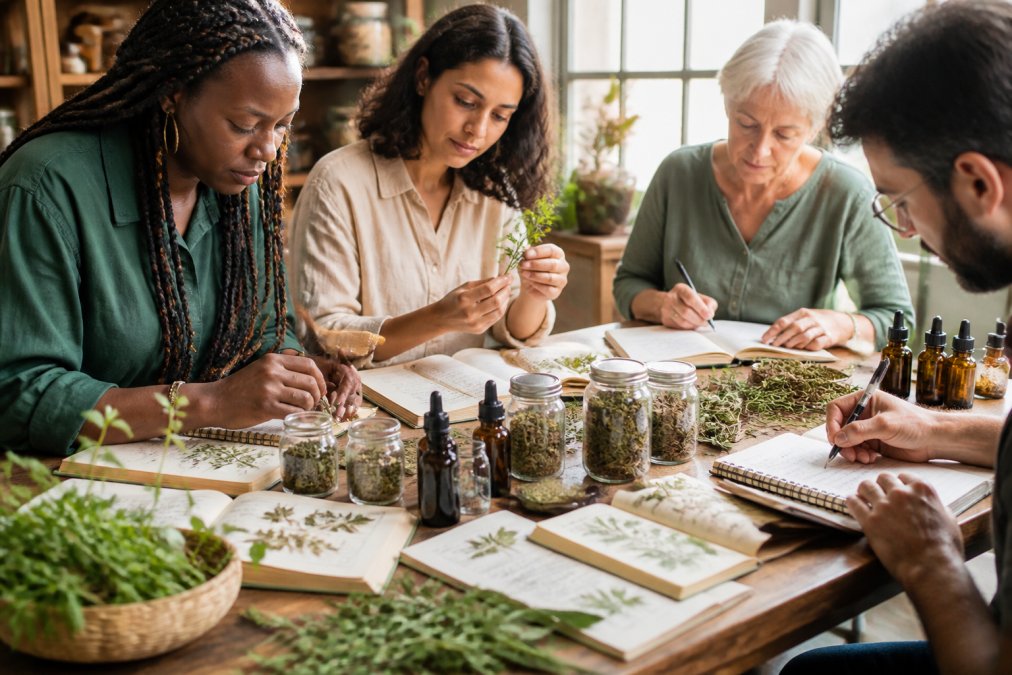
Start by researching accredited programs aligned with your goals. Look at curriculum depth, instructor credentials, accreditation status, and post-graduation support. Request syllabi or speak with graduates. Ask hard questions about clinical hours, supervision quality, and business support.
Many programs offer introductory courses or webinars before you commit to a full diploma. Taking an intro course is a smart first step. Consider whether you want to start with a foundational certificate to test the waters before investing in a comprehensive diploma.
As you explore options, look for programs that emphasize evidence-based herbalism, using the best available research to inform practice alongside traditional herbal knowledge. The most credible professional herbalism coaching integrates both.
HighFiveHive Nature's Remedies-Kitchen Herbalism offers professional RN-led support that emphasizes safe, evidence-informed herbal practice. Our approach combines 40 years of nursing experience with clinical herbalism training, helping you develop the knowledge and confidence to use herbs safely for immune health, natural diabetes support, women's wellness, and other health goals. Explore our herbal collections to see how professional herbalism translates into real remedies, or shop our complete range to start your herbalism journey with RN-backed formulations.


The best professional herbalism coaching positions you as a knowledgeable, safe, and credible practitioner, whether you're building a full-time business or deepening your personal wellness knowledge. Look for accredited programs with RN or equivalent clinical credentials, strong supervised clinical hours, and genuine business mentorship. Your investment in quality training pays dividends in client trust, competence, and the ability to navigate the complex intersection of herbalism and healthcare. Start with clarity on your goals, research programs thoroughly, and choose one that aligns with both your learning style and your vision for how you want to practice herbalism.
Frequently Asked Questions
Q: What should I look for in a professional herbalism coaching program?
A: Prioritize programs with accredited credentials, RN or clinical herbalist instructors, supervised clinical hours, and evidence-based curriculum. Verify the program covers plant materia medica, therapeutic protocols, dosage safety, contraindications, and case study analysis. Look for post-graduation mentorship, continuing education units (CEUs), and access to a practitioner directory or professional network. Confirm the program addresses your specific interest, whether clinical herbalism, apothecary management, or integrative health practice.
Q: How does RN-led herbal medicine coaching differ from standard herbal studies?
A: RN-led coaching integrates nursing expertise with botanical medicine, emphasizing clinical assessment, patient safety, and medication interaction awareness. Nurses bring 40 years of healthcare experience, ensuring herbalism advice accounts for existing medications, chronic conditions, and contraindications. This approach bridges traditional herbal knowledge with evidence-based practice, making it especially valuable for managing diabetes, hormonal health, and immune support alongside conventional medical care.
Q: What are the typical career prospects for professional herbalists in 2026?
A: Professional herbalists work as clinical practitioners, apothecary owners, educators, or wellness consultants. Demand is growing in integrative health, functional medicine clinics, and private practice. Income varies by credentials, location, and specialization, herbalists with RN backgrounds or advanced certifications typically command higher fees. Many combine herbal practice with nutrition, bodywork, or health coaching to diversify income and expand client reach.
Q: Do I need formal certification to practice professional herbalism?
A: Certification is not legally required to practice herbalism in most states, but it is strongly recommended for credibility and client trust. Accredited programs through organizations emphasizing clinical herbalism standards provide recognized credentials. Professional herbalists should understand state regulations on making health claims, selling herbal products, and scope of practice. Certification demonstrates mastery of plant identification, therapeutic applications, dosage, and safety, essential for building a sustainable practice.
This article was written using GrandRanker


Leave a comment