
Herbalism vs Conventional Medicine: Key Differences
Table of Contents
- Herbalism vs Conventional Medicine: Core Definitions
- Historical Context and Traditional Knowledge
- Holistic vs Reductionist Treatment Approaches
- Herbal Medicine Safety and Efficacy: What the Evidence Shows
- FDA Regulation of Dietary Supplements and Herbal Products
- Integrative Medicine Benefits: Combining Both Approaches
- Practical Safety Checklist for Using Herbalism Alongside Medications
- Frequently Asked Questions
Last Updated: September 1, 2026
Herbalism vs Conventional Medicine: Core Definitions
Herbalism vs conventional medical treatments represents two fundamentally different approaches to health and healing. At HighFiveHive Nature's Remedies-Kitchen Herbalism, we work with both frameworks to help our clients make informed decisions about their wellness journey.
Herbalism, also called phytomedicine, uses whole plant extracts and botanical products to support health. Conventional medicine relies on synthetic drugs developed through laboratory processes and clinical trials to target specific disease mechanisms. Herbalism draws on traditional knowledge accumulated over centuries across cultures worldwide, while conventional medicine prioritizes the reductionist model: isolating active compounds, understanding their molecular activity, and creating standardized dosages that produce predictable outcomes.
Neither approach is inherently superior. The real question is which tool fits the problem you're trying to solve, and whether they can work together safely.
Historical Context and Traditional Knowledge
For thousands of years, humans relied exclusively on botanical remedies. Traditional Chinese herbalism, Ayurvedic medicine, and Indigenous healing practices developed sophisticated understanding of how specific plants affect the body. The modern pharmaceutical industry emerged in the 19th and 20th centuries when chemists began isolating active compounds from plants. Aspirin came from willow bark, digoxin from foxglove, morphine from poppies (peer-reviewed research).
The reductionist model worked: by extracting the "active ingredient," scientists could create consistent dosages and understand exactly how compounds moved through the body. What got lost was the whole plant extract. Traditional herbalism recognized that plants contain hundreds of compounds working together in synergistic effects. Modern pharmacology focused on the single most potent molecule.
Today, integrative medicine bridges these approaches. It acknowledges that traditional knowledge holds value worth investigating through clinical trials, while recognizing that conventional medicine's standardization and safety protocols matter for chronic disease management and acute conditions where precision is essential.

Holistic vs Reductionist Treatment Approaches
These two models represent opposing philosophies about how the body works and how to treat it.
The holistic approach, central to herbalism, views the body as an integrated system. A symptom like chronic joint inflammation isn't treated in isolation; a practitioner considers digestion, stress, sleep, and immune function. The goal is to restore balance across all systems, addressing root causes rather than just suppressing symptoms. Whole plant extracts contain multiple compounds that may work together to support this rebalancing.
The reductionist model, foundational to conventional medicine, does the opposite. It identifies the specific mechanism causing disease and targets it with precision. Inflammation in joints? A drug blocks the inflammatory pathway. High blood pressure? A medication affects vascular tone. This approach excels at acute problems and measurable outcomes.
In practice, most people need both. A patient with diabetes benefits from conventional pharmacotherapy to manage blood sugar precisely. That same patient might use herbal support for immune health or joint comfort, where the holistic approach shines and whole plant extracts offer complementary benefit without competing with pharmaceutical precision.
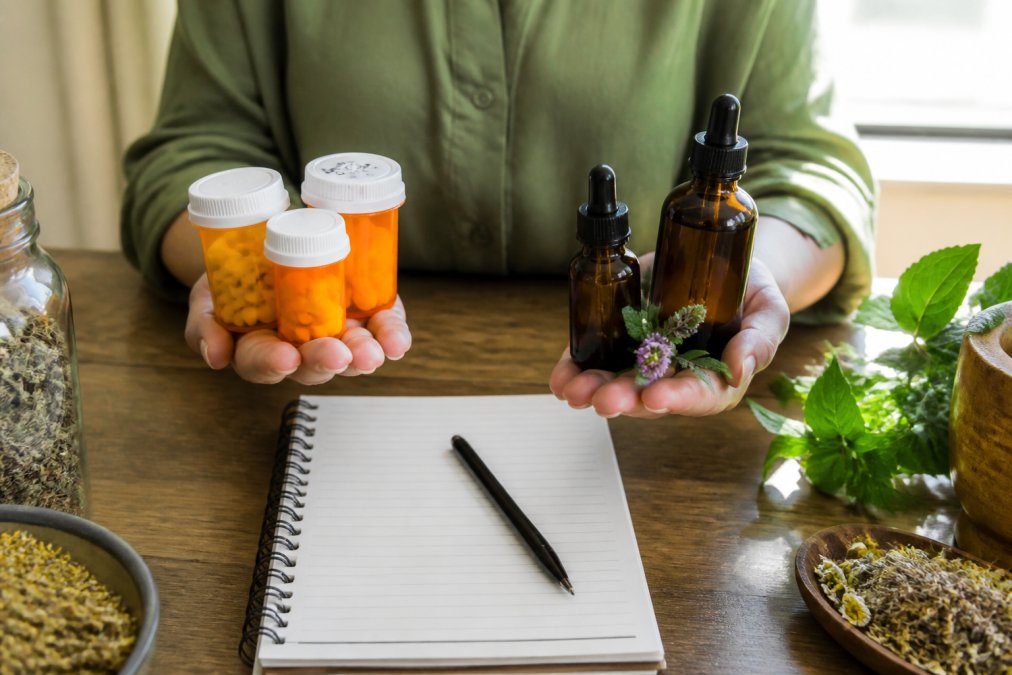
Herbal Medicine Safety and Efficacy: What the Evidence Shows
Conventional medications go through rigorous clinical trials before FDA approval. A new blood pressure medication must prove it lowers blood pressure in a defined way, with acceptable side effects, across thousands of patients.
Herbal medicine operates differently. Many botanicals have centuries of traditional use, but it's not the same as a randomized controlled trial. Some herbal remedies have been studied in clinical trials and show genuine therapeutic efficacy. Others have promising preliminary research. Many have never been formally studied because the financial incentive doesn't exist; you can't patent a plant.
Some herbal preparations have strong evidence supporting their use: ginger for nausea, turmeric for inflammatory support, valerian for sleep quality. Others have solid traditional use but limited formal study. This is where professional guidance matters. A registered nurse and clinical herbalist can distinguish between what evidence actually supports versus what's being sold as a miracle cure. They understand bioavailability, dosage consistency, and that "natural" doesn't automatically mean safe or effective.
FDA Regulation of Dietary Supplements and Herbal Products
Prescription and over-the-counter drugs are regulated by the FDA under the Federal Food, Drug, and Cosmetic Act. Before marketing, manufacturers must prove safety and efficacy through clinical trials.
Herbal products are regulated as dietary supplements under the Dietary Supplement Health and Education Act (DSHEA) (the FDA). This framework assumes safety unless proven otherwise. Manufacturers don't need FDA approval before selling or need to prove efficacy. They can make structure-function claims ("supports joint comfort") but not disease claims ("treats arthritis"). If a supplement causes harm, the FDA must prove it's unsafe to remove it, rather than the manufacturer proving it's safe first.
This means regulatory oversight of herbal products is lighter than for pharmaceuticals. Quality control varies. Standardization of active compounds isn't required. Two bottles of the same herb from different manufacturers might contain vastly different amounts of active compounds.
HighFiveHive Nature's Remedies-Kitchen Herbalism operates within this regulatory framework as a dietary supplement provider. We follow DSHEA regulations and maintain quality standards, but we're not making pharmaceutical-level claims. We offer professional-grade herbal support guided by 40 years of nursing experience for people seeking to integrate herbalism into their broader health approach.
Integrative Medicine Benefits: Combining Both Approaches
The strongest health outcomes often come from integration, using conventional medicine where its precision matters most and herbalism where its holistic approach adds value.
A patient managing diabetes needs pharmaceutical precision. Blood sugar control can't be approximate. Conventional pharmacotherapy provides that. But that same patient might benefit from herbal support for immune resilience or joint comfort, areas where conventional medicine offers less targeted support and where botanical products have legitimate traditional use and emerging evidence.
This is the integrative medicine framework: not replacing conventional medicine with herbalism, but using both thoughtfully. A person with chronic joint discomfort might combine conventional anti-inflammatory approaches with herbal preparations known for supporting joint health and mobility. The conventional approach addresses acute inflammation; the herbal approach supports longer-term comfort.
Women's wellness represents another area where integration shines. Conventional medicine offers hormone therapy, which works for some and carries specific considerations for others. Herbalism offers traditional botanicals used for centuries to support women's health through different life stages. The Peri Harmony Woman's Collection from HighFiveHive Nature's Remedies-Kitchen Herbalism exemplifies this approach, combining teas and tinctures with traditional botanicals alongside conventional medical care.

Practical Safety Checklist for Using Herbalism Alongside Medications
If you're considering herbalism while taking medications, this checklist protects you.
Before Starting Any Herbal Preparation:
- List every medication you take, including over-the-counter drugs and supplements
- Identify the active compounds in the herbal product you're considering
- Research known drug-herb interactions for your specific medications
- Consult your prescribing doctor or pharmacist about the specific herb and your medications
- Ask about timing: can you take them simultaneously or must they be spaced apart?
- Start with the lowest suggested dose and monitor how you feel for 2-3 weeks
- Keep a simple log: date, herb used, dose, time of day, any changes you notice
Red Flag Interactions to Research:
- Blood thinners (warfarin, aspirin) + herbs like ginger, turmeric, or St. John's Wort
- Birth control + St. John's Wort (reduces efficacy significantly)
- Blood pressure medications + herbs that affect vascular tone
- Diabetes medications + herbs that affect blood sugar
- Sedatives + herbs known for calming properties
- Thyroid medications + herbs containing iodine or affecting thyroid function
- Immunosuppressants + immune-stimulating herbs
When to Stop and Seek Professional Help:
- You notice unexpected changes in how your medications work
- You experience new symptoms after starting an herb
- Your blood sugar, blood pressure, or other monitored values shift unexpectedly
- You feel unusual fatigue, dizziness, or mood changes
- You're scheduled for surgery (some herbs affect bleeding or anesthesia)
When you work with an RN-led herbalism practice like HighFiveHive Nature's Remedies-Kitchen Herbalism, you're getting someone trained to recognize these interactions and guide you safely. A registered nurse understands pharmacology, medication interactions, and when herbalism complements conventional care versus when it creates risk.
| Consideration | Herbalism Alone | Conventional Medicine Alone | Integrative Approach |
|---|---|---|---|
| Regulatory Oversight | Lighter (DSHEA) | Rigorous (FDA) | Coordinated between both |
| Evidence Base | Traditional + emerging research | Clinical trials required | Both valued appropriately |
| Dosage Consistency | Variable by manufacturer | Standardized precisely | Professional sourcing essential |
| Safety Profile | Generally mild, but interactions possible | Well-documented, monitored | Requires professional coordination |
| Best For | Chronic wellness support, prevention | Acute conditions, precision needs | Most comprehensive health management |
The choice between herbalism and conventional medical treatments isn't binary. For most people seeking optimal health, the real question is how to use both wisely. Conventional medicine excels at precision, acute care, and measurable outcomes. Herbalism offers holistic support, traditional wisdom, and complementary benefit for chronic wellness concerns.
What separates a safe, effective approach from a risky one is professional guidance. HighFiveHive Nature's Remedies-Kitchen Herbalism brings 40 years of nursing experience to kitchen herbalism, helping you integrate both approaches safely. Whether you're managing diabetes, supporting women's wellness, addressing joint comfort, or building immune resilience, professional herbalism guidance changes the outcome. Shop Now and start your integrative wellness journey with confidence.
Frequently Asked Questions
What is the difference between herbal medicine and conventional medicine?
Herbalism uses whole plant extracts or isolated active compounds from botanicals to support health, while conventional medicine relies on synthesized pharmaceuticals developed through controlled clinical trials. Herbal products often take a holistic approach addressing multiple body systems, whereas conventional medicine typically targets specific symptoms or conditions. Both have distinct regulatory pathways: conventional drugs undergo FDA approval for safety and efficacy, while dietary supplements (including herbals) are regulated differently under the Dietary Supplement Health and Education Act (DSHEA). The evidence base differs too, conventional treatments have extensive clinical trial data, while herbal remedies draw on traditional knowledge and an expanding but sometimes limited research base.
Can herbalism be used alongside conventional medical treatments?
Yes, integrative medicine benefits from combining both approaches, but it requires professional guidance. Many herbal products can interact with prescription medications, for example, St. John's Wort reduces the effectiveness of birth control pills and blood thinners. Before adding any herbal remedy to your regimen, consult your doctor or pharmacist to check for drug-herb interactions. An RN-led approach, like HighFiveHive Nature's Remedies, ensures safety screening for your specific medications and health conditions. Some herbal remedies work synergistically with conventional treatments to enhance outcomes, while others must be used separately. Never stop prescription medications to use herbs alone without medical supervision, especially for chronic conditions like diabetes.
How does the FDA regulate herbal supplements compared to prescription drugs?
FDA regulation of dietary supplements differs significantly from prescription drugs. Prescription medications must prove safety and efficacy before market approval, and manufacturers bear the burden of proof. Dietary supplements, including herbal products, are regulated under DSHEA and do not require pre-market FDA approval. Instead, manufacturers are responsible for ensuring safety and accuracy of label claims. The FDA can take action only after a product is on the market if it's found to be unsafe or if claims are false. This means herbal products have less rigorous pre-market testing, making quality control and third-party verification important factors when choosing supplements. Look for products from reputable sources with transparent sourcing and testing practices.
What are the safety considerations when choosing herbal remedies?
Key safety considerations include: verifying the product's source and quality standards; checking for drug-herb interactions with your current medications; understanding dosage consistency (many herbal products have variable potency); recognizing that whole plant extracts may have different effects than isolated active compounds; and consulting a healthcare professional, especially if you have liver disease, kidney issues, autoimmune conditions, or are pregnant or nursing. Some herbs like St. John's Wort cause photosensitivity or interact with numerous medications. Working with an RN-led herbalism provider ensures professional screening of your health history before recommending specific botanicals. Always disclose herbal use to your doctor to avoid contraindications.
Do herbal remedies actually work, or is it just tradition?
Herbal medicine safety and efficacy is supported by both traditional knowledge spanning centuries and growing clinical research. Many modern pharmaceuticals were originally derived from plants, aspirin from willow bark, digoxin from foxglove. However, the evidence base varies widely. Some herbs like ashwagandha and ginger have solid clinical trial support for specific uses, while others rely primarily on traditional practice. The challenge is bioavailability and standardization: the active compounds in a plant extract must be absorbed effectively and present in consistent doses. Whole plant extracts often contain synergistic compounds that work together, which reductionist pharmaceutical models may miss. Quality matters significantly, a standardized extract from a reputable source will perform differently than a generic dried herb. Results also depend on the specific condition, individual metabolism, and whether the herb is appropriately dosed and used.
This article was written using GrandRanker


Leave a comment