
Nurse Herbalist vs. Specialist: Legal Alternatives
Table of Contents
- What Is a Nurse Herbalist and How Does It Differ From Traditional Nurse Specialists
- How to Verify Herbalist Credentials and Nursing Qualifications
- Holistic Nurse Certification Requirements and Training Pathways
- Nursing Board Regulations on Complementary Medicine and Herbalism
- Scope of Practice: Clinical Herbalism vs. General Herbalism
- Malpractice Insurance and Legal Protection for Nurse Herbalists
- Why RN-Led Kitchen Herbalism Offers Safety and Accountability
- Conclusion
Last Updated: August 28, 2026
What Is a Nurse Herbalist and How Does It Differ From Traditional Nurse Specialists
A nurse herbalist is a registered nurse with additional training in clinical herbalism who integrates botanical medicine into patient care within the scope of nursing practice. Unlike traditional nurse specialists who focus on disease management through conventional pharmacology, nurse herbalists combine evidence-based herbal knowledge with nursing assessment to address root causes and support preventative care.
The distinction matters because nursing board regulations govern what nurses can do. A nurse herbalist practices as a nurse who has expanded their clinical toolkit to include botanical medicine, fundamentally different from a general herbalist without nursing credentials, who operates under different legal frameworks. A nurse herbalist carries nursing liability, operates within nursing law, and has documented clinical training that can be verified.
At HighFiveHive Nature's Remedies-Kitchen Herbalism, we've spent 40 years observing this distinction in clinical practice. Traditional nurse specialists follow established credentialing pathways governed by state nursing boards with clear scope-of-practice definitions. A nurse herbalist occupies a more nuanced space: they're a nurse first, herbalist second, which means their herbal practice must align with state nursing regulations on complementary and alternative medicine.

The practical implication is this: if you're seeking herbal support from someone calling themselves a "nurse herbalist," verify both credentials. The nursing license is non-negotiable. The herbal certification matters too, but it's secondary to the RN credential.
How to Verify Herbalist Credentials and Nursing Qualifications
Before working with anyone claiming to be a nurse herbalist, verify two separate credentials: active RN licensure and formal herbal training.
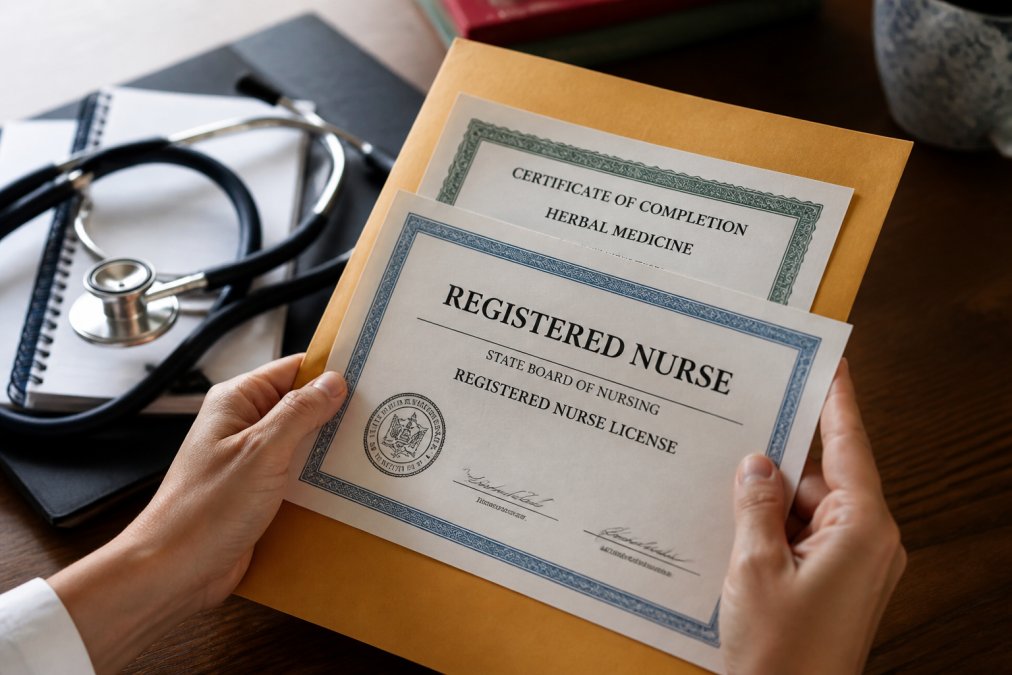
Start with the nursing license. Every state maintains a public database of licensed nurses. Visit your state nursing board's website directly and search for the person's name. Confirm three things: active status (not expired or revoked), the RN credential specifically, and any disciplinary history. If you can't find an active RN license, that's your answer.
Herbal certification is more complex because herbalism lacks the unified credentialing system that nursing has. Look for recognized certifications from established programs. The American Herbalists Guild offers peer-reviewed membership. The American Association of Naturopathic Physicians certifies practitioners in some states. Clinical herbalism programs at accredited institutions carry weight. Ask directly: Where did you train? For how long? What's your credential, and who issued it?
Be skeptical of vague claims. A weekend workshop isn't the same as a 500-hour clinical herbalism program. Ask for specifics: the program name, the number of hours, whether it included pharmacology and drug interactions, and whether it's recognized by any professional organization. A legitimate nurse herbalist will have documentation and won't be defensive about sharing it.
Herbalism isn't a licensed profession in most states, but a nurse herbalist holds an RN license, which means their herbal practice is subject to nursing board oversight. Check whether the person maintains active membership in professional herbal organizations like the American Herbalists Guild or the National Ayurvedic Medical Association. It signals commitment to professional development beyond initial training.
Holistic Nurse Certification Requirements and Training Pathways
Holistic nursing is a distinct specialty within nursing that integrates complementary and alternative medicine with conventional care. It's not the same as being a nurse herbalist, but the credentialing pathways overlap.
A holistic nurse has completed additional training in integrative health beyond the RN curriculum. The American Holistic Nurses Association offers certification through the American Nurses Credentialing Center. To qualify, you need an active RN license, 2 years of full-time clinical experience, and completion of specific continuing education in holistic nursing (ahncc.org). The certification exam tests knowledge of evidence-based complementary therapies, health promotion, and patient-centered care.
This differs from clinical herbalism certification. A holistic nurse credential signals training across multiple modalities, herbal medicine, acupuncture, energy work, mind-body therapies. A clinical herbalism credential is deeper and narrower: it focuses specifically on medicinal plants, pharmacology, and drug interactions.
Many nurse herbalists pursue holistic nursing certification as a complementary credential. The training pathway typically looks like this: RN license first, then accumulate clinical hours, then pursue either holistic nursing certification, clinical herbalism certification, or both. Look for programs that include pharmacology and drug-herb interactions, this is non-negotiable if you're working with patients taking medications.
Accreditation matters. Programs affiliated with universities or recognized herbal schools carry more weight than standalone online courses. Legitimate clinical herbalism programs require 500-1,000 hours of study (americanherbalistsguild.com). If someone claims to be a nurse herbalist after a 50-hour weekend workshop, that's a red flag.
Nursing Board Regulations on Complementary Medicine and Herbalism
State nursing boards govern what nurses can do with complementary medicine and herbalism. These regulations are not uniform across states, which creates complexity for nurses practicing across state lines.
Most states' nursing practice acts define the scope of nursing as assessment, diagnosis, planning, implementation, and evaluation of patient care (ncsbn.org). Complementary medicine fits within this definition only if it's evidence-based and doesn't exceed the nurse's training. The critical phrase in most state regulations is "within the scope of the nurse's education and competence."
Some states explicitly address herbal medicine in their nursing regulations. Others are silent on herbalism, which creates a gray area. The absence of a rule doesn't mean it's permitted; it means the nursing board hasn't addressed it yet. A smaller number of states have integrated complementary and alternative medicine more formally into nursing regulations with specific language about what nurses can recommend and what requires physician collaboration.
The safest position for a nurse herbalist is to practice within clear professional guidelines: documentation of training, staying within the scope of practice defined by your state's nursing board, not diagnosing disease, and referring to physicians when appropriate. It also means carrying malpractice insurance that covers herbal recommendations.
If a nurse herbalist is practicing in your state, ask them directly what their state's nursing board says about their practice. If they're vague or dismissive of regulatory questions, that's a warning sign.
Scope of Practice: Clinical Herbalism vs. General Herbalism
The scope of practice distinction is where nurse herbalists differ most from general herbalists.
A general herbalist can recommend herbs for wellness, general health support, and prevention. In most states, this is not regulated; anyone can call themselves an herbalist. A general herbalist is not diagnosing disease or treating medical conditions; they're providing information for general wellness.
Clinical herbalism is different. A clinical herbalist assesses patients, considers their health history and medications, and recommends herbs specifically for their situation. This is closer to medical practice because it involves assessment and individualized recommendations based on health status.
A nurse herbalist operates under nursing scope of practice, which is broader and more regulated than general herbalism but constrained by nursing law. A nurse herbalist can assess patients and recommend herbs based on that assessment, but cannot diagnose disease or treat medical conditions beyond the nursing scope. They also cannot prescribe medications unless they're an advanced practice nurse with prescriptive authority.
The practical difference: a nurse herbalist can say, "Based on your assessment, I recommend this herbal blend for immune support" with clinical accountability. A nurse herbalist knows to screen for drug-herb interactions because they have pharmacology training. A nurse herbalist documents their recommendations and reasoning.
The scope of practice also determines what a nurse herbalist can bill for. If they're practicing as a nurse, they might bill through insurance for nursing services that include herbal recommendations. If they're practicing as a "herbalist," insurance typically won't cover it.
Malpractice Insurance and Legal Protection for Nurse Herbalists
A nurse herbalist needs malpractice insurance that specifically covers herbal recommendations and complementary medicine. Standard nursing malpractice policies may not cover herbalism, which creates a liability gap.
Many nurse herbalists face this reality: their nursing malpractice insurance covers standard nursing practice but may not cover herbal recommendations, especially if they're recommending herbs outside the standard scope of nursing practice in their state. Some insurers explicitly exclude complementary medicine. Others require additional riders or separate coverage.
Before working with a nurse herbalist, ask directly: What malpractice insurance do you carry, and does it cover your herbal practice? A specific answer, "I carry professional liability insurance through [carrier] that covers evidence-based herbal recommendations within nursing scope of practice", is what you want to hear.
Some nurse herbalists carry insurance through professional organizations like the American Holistic Nurses Association, which offers group coverage designed for integrative practice. Others work through employers who provide coverage or purchase separate professional liability policies from carriers that specialize in complementary medicine practitioners.
The insurance question matters because it affects your recourse if something goes wrong. Without insurance, you're pursuing a claim against an individual with potentially limited assets. With insurance, there's a carrier backing the claim.
A nurse herbalist should maintain records of your health history, medications, herbal recommendations, and your informed consent. This documentation protects both patient and practitioner. If a dispute arises, the records show what was discussed and what you agreed to.
Why RN-Led Kitchen Herbalism Offers Safety and Accountability
Kitchen herbalism, using common culinary and medicinal plants from your own kitchen or a trusted source, is accessible and practical. When it's led by an RN, it adds a layer of safety and accountability that DIY approaches lack.
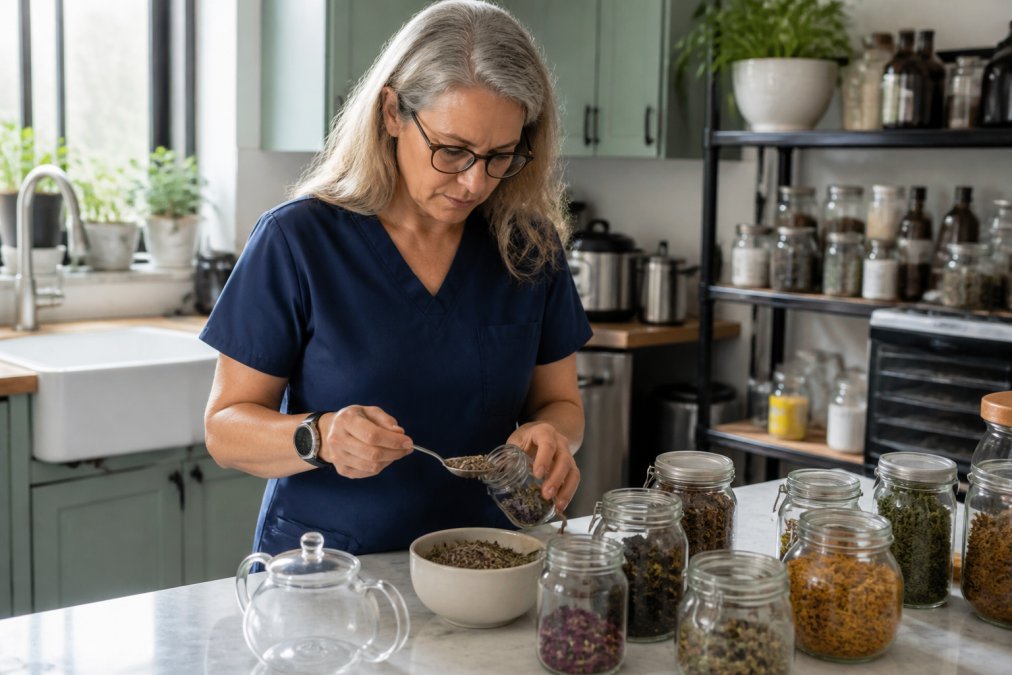
The appeal of kitchen herbalism is obvious: herbs like ginger, cinnamon, turmeric, and chamomile are affordable and accessible. But accessibility creates a risk: without guidance, people can use herbs incorrectly, miss important drug interactions, or expect outcomes herbs can't deliver.
An RN-led approach changes this. A registered nurse brings clinical assessment to the process. They ask about your medications, health conditions, allergies, and goals. They explain what an herb can and can't do. They identify contraindications and adjust recommendations based on your individual situation.
Consider a common scenario: a patient with diabetes interested in using cinnamon for blood sugar support. An RN-led herbalist would screen for medications like blood thinners and conditions like liver disease, noting that cinnamon has mild anticoagulant properties, and either adjust the recommendation or refer back to the physician. That assessment prevents harm.
Documentation is another safety factor. An RN maintains records of what was recommended, why, and the patient's response. This creates accountability and continuity. If a problem arises, there's documentation of the decision-making process.
HighFiveHive Nature's Remedies-Kitchen Herbalism's approach is built on this foundation. Formulations are created by an RN with 40 years of nursing experience and clinical herbalism training. Each product includes guidance on use, contraindications, and who should consult a provider before use. The SlimRoots Kitchen Herbalism Weight Tea Blend includes specific cautions about blood sugar medications and diuretics because the formulation addresses these concerns. That level of specificity comes from clinical knowledge.
Kitchen herbalism led by an RN also provides accountability for quality and safety. The herbs are sourced, stored, and prepared with clinical standards in mind. The formulations are consistent. The guidance is evidence-based and transparent.
| Aspect | General Herbalism | RN-Led Kitchen Herbalism |
|---|---|---|
| Assessment | Limited or none | Clinical nursing assessment |
| Drug interaction screening | Varies widely | Systematic screening |
| Documentation | Typically absent | Medical record maintained |
| Accountability | Limited | Professional liability |
| Scope of recommendations | Wellness only | Wellness + health support |
| Insurance coverage | Usually not | May be covered as nursing service |
| Contraindication awareness | Depends on training | Standardized protocol |
Conclusion
A nurse herbalist offers something distinct: the accountability and clinical expertise of a registered nurse combined with herbal knowledge. But not all nurse herbalists are equal, and the regulatory landscape varies by state.
If you're considering working with a nurse herbalist, verify the RN license first through your state nursing board. Confirm herbal training through recognized programs or professional organizations. Ask about malpractice insurance and scope of practice. These steps protect you and ensure you're working with someone operating responsibly.
HighFiveHive Nature's Remedies-Kitchen Herbalism demonstrates this approach in practice. Our formulations like the SlimRoots Kitchen Herbalism Weight Tea Blend and the Peri Harmony Woman's Collection are created by an RN with 40 years of clinical experience and certified clinical herbalism training. Each product includes transparent guidance on use, contraindications, and when to consult your healthcare provider. The Five Botanicals: A Woman's Traditional Tincture and our complete collections provide RN-led support for women's wellness, immune health, and natural blood sugar management.


The difference between DIY kitchen herbalism and RN-led herbalism is accountability. Get started with HighFiveHive Nature's Remedies-Kitchen Herbalism and experience herbal support guided by nursing expertise and clinical care.
Frequently Asked Questions
Q: What is the difference between a nurse herbalist and a clinical herbalist?
A: A nurse herbalist holds a current nursing license and integrates herbal knowledge into clinical practice, bringing accountability through nursing board oversight and patient safety protocols. A clinical herbalist has herbalism training but may lack nursing credentials. The nurse herbalist alternative ensures you're working with someone bound by nursing ethics, legal liability standards, and continuing education requirements. This dual qualification means your herbal support comes with the professional responsibility of a registered nurse.
Q: How do I verify the credentials of a professional herbalist or nurse herbalist?
A: Start by confirming their active nursing license through your state nursing board's online registry, this is public and free. Then ask for herbalism certifications: look for credentials from organizations like the American Herbalists Guild or accredited clinical herbalism programs. Request proof of malpractice insurance specific to herbal practice. A legitimate nurse herbalist will provide documentation without hesitation and welcome your verification questions. Cross-check their credentials against the certifying body's official roster before booking a consultation.
Q: Can registered nurses legally incorporate herbal remedies into their practice?
A: Yes, but within limits set by your state nursing board. Most states allow RNs to educate patients about herbal options and support self-directed herbal use, but restrictions vary on whether they can prescribe, formulate, or recommend specific herbal protocols as clinical treatment. Some states require additional herbalism certification or collaboration with a licensed provider. Your state nursing board's regulations define the exact scope. Many nurse herbalists operate within these bounds by offering education, kitchen herbalism guidance, and support rather than clinical prescriptions.
Q: What should I expect in terms of results and timeline when working with a nurse herbalist?
A: Results depend on your specific concern, baseline health, and consistency with herbal support. Many people notice shifts in energy, digestion, or mood within 2-4 weeks of regular use, though hormonal or chronic conditions often require 8-12 weeks to show meaningful change. A professional nurse herbalist will set realistic expectations upfront, explain how herbal support works alongside conventional care, and monitor your progress. Avoid anyone promising quick fixes or claiming herbs replace medical treatment. Kitchen herbalism works best as part of a whole-lifestyle approach, not as a standalone solution.
This article was written using GrandRanker


Leave a comment