
Natural Supplements for Metabolic Health: 5 Best Picks
Last Updated: October 22, 2026
Quick Summary
Natural supplements for metabolic health are plant- and spice-derived products used to support blood sugar balance, energy use, and related markers, but they can support and never replace movement, sleep, protein intake, and medical care. Our top pick is SlimRoots Kitchen Herbalism Weight Tea Blend at $22.99, built around blood sugar balance and cravings.
- We scored each product on ingredient transparency, evidence for key herbs, safety profile, and ease of consistent use.
- Cinnamon trials use roughly 1 to 3 g per day of powder, with amounts varying by study.
- Most human trials showing biomarker effects run 8 to 12 weeks, not days.
- If you take blood sugar or blood pressure medication, talk to your prescriber before starting any herbal product.
- Warm Spice Aromatic Herbal Extract is the only tincture here, at $22.94, with 20 to 30 drops per dose.
Table of Contents
- Why Natural Supplements for Metabolic Health Deserve a Closer Look
- How We Evaluated These Natural Supplements
- 1. SlimRoots Kitchen Herbalism Weight Tea Blend
- 2. Synergy Spice: Bay, Cinnamon & Oregano Herbal Tea
- 3. Golden Spice Herbal Brew Tea Blend
- 4. Warm Spice Aromatic Herbal Extract
- 5. Ruby Glow Nettle Hibiscus & Spice Herbal Tea
- Supplements for Blood Sugar Support: What the Evidence Says
- Frequently Asked Questions
Why Natural Supplements for Metabolic Health Deserve a Closer Look
Natural supplements for metabolic health are plant- and spice-derived products used to support blood sugar balance, energy use, and related markers. At HighFiveHive Nature's Remedies-Kitchen Herbalism, we've watched this category grow, and fill up with inflated promises.

The interest is real. According to Fact.MR's natural health supplement market analysis, herbal supplements are expected to account for 27.8% of the natural health supplement product segment in 2026. Meanwhile, a 2024 review in PubMed Central on natural products for metabolic syndrome reports that plant-derived products may affect blood glucose, lipid profiles, and obesity in people with metabolic syndrome.
That word "may" is doing heavy lifting, and most guides skip it. Metabolic health is broader than weight: it includes blood pressure, blood lipids, insulin sensitivity, and daily glucose management.
Below, we break down five herbal options we actually carry, explain how we evaluated them, and grade the evidence by ingredient rather than by marketing claim.
How We Evaluated These Natural Supplements
We scored each product on four things: ingredient transparency, traditional and clinical backing for the key botanicals, safety and interaction profile, and ease of consistent use.
We did not rank by "metabolism boost" claims. A physician quoted by UnityPoint Health on speeding up metabolism states plainly that no supplements actually boost metabolism, despite products claiming to. We take that seriously.
Here is the framework we used, and how to apply it yourself:
| Criterion | What We Looked For | Why It Matters |
|---|---|---|
| Ingredient transparency | Full botanical list, no proprietary blends | You can check interactions |
| Evidence for key herbs | Human studies or long traditional use | Separates hype from support |
| Safety profile | Stated cautions and contraindications | Diabetes and blood pressure meds interact |
| Ease of use | Clear brewing or dosing instructions | Consistency drives results |
Read the label like an editor
Check for standardization. Standardized extracts state a marker compound and percentage, such as a curcumin extract standardized to a stated curcuminoid content.
Look for third-party testing. Programs such as USP, NSF, or ConsumerLab verify identity, potency, and contaminants, a meaningful signal, especially for imported botanicals with higher heavy-metal and adulteration risk.
Match the form to the evidence. A tea is not a standardized extract.
Studied dose ranges versus label doses
We do not publish a single "correct" dose, because dose depends on the ingredient, form, person, and goal. Studied ranges in human trials are often higher than what a tea bag or a few drops of tincture delivers: cinnamon and fenugreek trials use gram-level daily amounts. A label dose far below the studied range makes the product a pleasant habit, not a tested intervention; far above it, ask why.
What we will not do
We will not imply one dose suits everyone, present a product as a substitute for medication, lab work, or a clinician's advice, or rank by "metabolism boost" claims the evidence does not support. We will tell you what is in the product, what the evidence supports, who should be cautious, and how to use it consistently.
If you take blood sugar or blood pressure medication, do not start any herbal product without talking to your prescriber first. Several botanicals below can potentiate those drugs, and the consequence is a hypoglycemic or hypotensive episode. The same caution applies if you are pregnant, breastfeeding, or scheduled for surgery.
1. SlimRoots Kitchen Herbalism Weight Tea Blend
Our top pick is SlimRoots, the only blend here built around blood sugar balance and cravings rather than flavor alone.
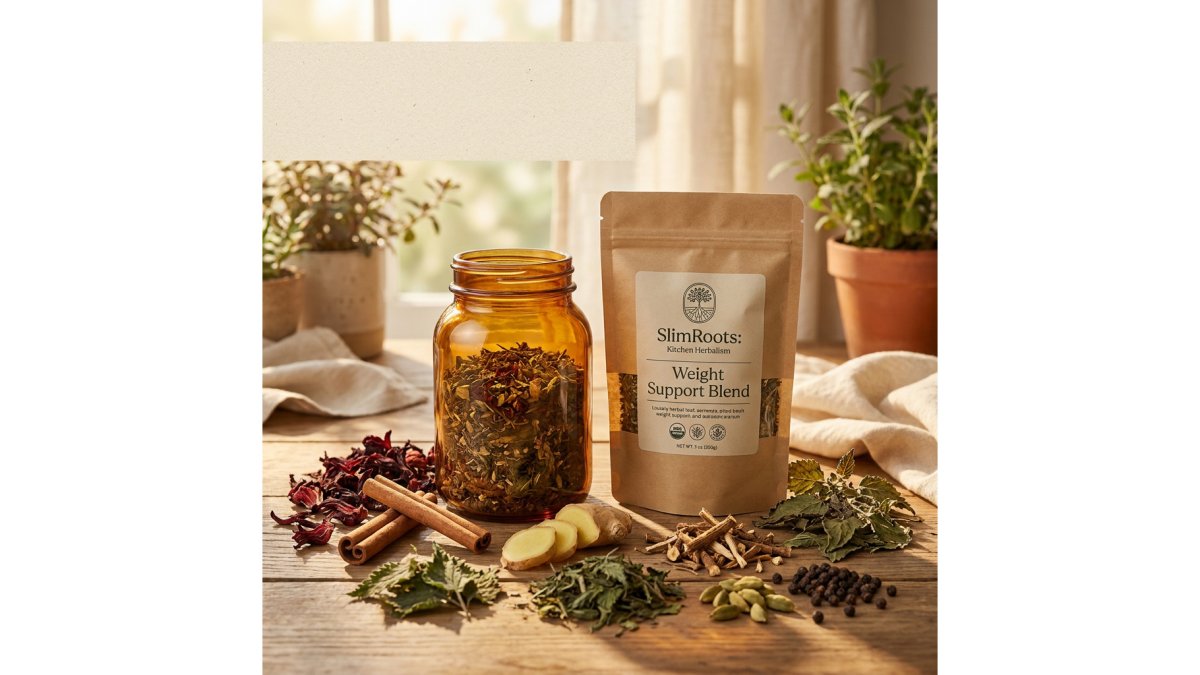
Cinnamon is one of the most clinically researched kitchen herbs for blood sugar support; gymnema leaf is traditionally used in Ayurveda for sugar cravings.
The cautions are real and printed on the label. Gymnema may potentiate blood sugar-lowering medication. Hibiscus may mildly lower blood pressure.
2. Synergy Spice: Bay, Cinnamon & Oregano Herbal Tea
Synergy Spice is the simplest formula here: bay leaves, cinnamon, and oregano, at $30.99. We recommend it for people who want a savory, food-like tea they will actually drink daily. Cinnamon carries the blood sugar interest; bay and oregano are culinary herbs with long traditional use.
Use 1 to 1.5 teaspoons per 8 ounces of water heated to roughly 200 to 212°F, and steep 5 to 7 minutes. Longer steeping pulls bitterness from the oregano.
Cover your mug while steeping. The volatile aromatic oils in bay and cinnamon escape with the steam, and covering preserves the compounds you are brewing for.
Where it falls short: the evidence base for oregano and bay on glucose markers is thin compared with cinnamon. Buy it for enjoyment and consistency.
3. Golden Spice Herbal Brew Tea Blend
Golden Spice takes a different angle: rosemary, cinnamon, turmeric, and black pepper, at $30.99.
SlimRoots Kitchen Herbalism Weight Tea Blend →

Brew 1 to 2 teaspoons in 8 ounces of boiling water for 7 to 10 minutes. A squeeze of lemon brightens it; a teaspoon of coconut oil adds richness.
Our honest take: If you want a warming daily ritual that fits an anti-inflammatory eating pattern, this works.
4. Warm Spice Aromatic Herbal Extract
Warm Spice is the only tincture here, at $22.94, made from fenugreek seeds, cayenne pepper, and cinnamon in an organic alcohol base, a portable option for people who dislike tea or travel often.

Suggested use is 20 to 30 drops, or 1 to 2 mL, in water or juice, one to three times daily. Start at the low end to assess tolerance.
5. Ruby Glow Nettle Hibiscus & Spice Herbal Tea
Ruby Glow is the women's wellness pick, at $30.99, blending stinging nettle, hibiscus flowers, fenugreek seeds, and cinnamon, a gentler-flavored way to get hibiscus and nettle in one cup.
Steep 1 to 2 teaspoons in water just off the boil, around 200°F, for 5 to 10 minutes. It works hot or over ice.
Hibiscus may mildly lower blood pressure. If you take antihypertensive medication, monitor your readings and speak with your provider before making this a daily habit.
Supplements for Blood Sugar Support: What the Evidence Says
Supplements for blood sugar support contain botanicals or nutrients traditionally used to influence glucose response, and the evidence varies enormously by ingredient and outcome. Most guides collapse that into a single star rating; we separate it, because nudging a fasting glucose number is not the same as changing a clinical outcome.
A 2017 review in PubMed Central on natural approaches to metabolic syndrome examined nutraceuticals including polyphenols, omega-3 fatty acids, macroelements, and vitamins, without quantified findings in the available summary. A 2025 review in Nutrients on dietary modulation of metabolic health concluded that dietary strategies rich in fiber, unsaturated fats, and phytochemicals can improve metabolic-health outcomes. Note the word dietary. Food first, supplements second.
How to read an evidence grade
We grade each ingredient on three questions: (1) Is there human trial evidence at all, or only lab and animal data? (2) Does it point to a change in a biomarker such as fasting glucose, HbA1c, LDL cholesterol, or blood pressure? (3) Does any evidence show a change in a clinical outcome such as weight, diabetes diagnosis, or cardiovascular events? Most botanicals clear one, some clear two, and very few clear three.
| Ingredient | Human Evidence | Best-Supported Biomarker Outcome | Clinical-Outcome Evidence | Typical Studied Range |
|---|---|---|---|---|
| Cinnamon | Moderate | Fasting glucose; modest LDL effects in some trials | Weak or absent | Roughly 1-3 g/day of powder in trials; amounts vary by study |
| Hibiscus | Moderate | Blood pressure; some lipid effects | Weak | Commonly brewed as tea; trial preparations vary widely |
| Fenugreek | Moderate | Post-meal glucose response; some lipid effects | Weak | Seed powder or extract in gram-level daily amounts in trials |
| Gymnema | Emerging | Glucose and cravings in small trials | Absent | Extract doses vary by product; standardization is inconsistent |
| Turmeric (curcumin) | Mixed | Inflammation markers; glucose effects inconsistent | Absent | Absorption-enhanced formulations differ from culinary powder |
| Nettle | Traditional | Mineral intake; general wellness | Absent | Culinary and tea use; clinical trials limited |
What the numbers actually mean
A common pattern in the cinnamon literature is a modest drop in fasting glucose in people with elevated baseline numbers, with smaller or absent effects in people already in range, the same pattern shows up with hibiscus and blood pressure.
Effect size matters too. A few milligrams per deciliter in fasting glucose is not the same as preventing a diagnosis, and no tea blend here has been shown in a randomized trial to prevent diabetes or replace metformin.
Time frame and realistic expectations
Most human trials showing biomarker effects run 8 to 12 weeks, not days. To evaluate a supplement, pick a consistent daily dose, keep the rest of your routine stable, and recheck the relevant lab at roughly three months with your clinician.
Ingredient-specific safety and interactions
This is the part most roundups skip, and it is the part that matters most if you take medication.
- Cinnamon: Culinary amounts are generally well tolerated. Cassia cinnamon contains coumarin, and high daily intake over long periods is a liver concern for some people; Ceylon cinnamon has much lower coumarin. If you take blood thinners or have liver disease, talk to your prescriber before using large daily amounts.
- Hibiscus: May lower blood pressure. If you take antihypertensive medication, monitor readings and speak with your provider before making it a daily habit. It may also interact with some diuretics.
- Fenugreek: May lower blood sugar and can potentiate diabetes medication. It has also been associated with gastrointestinal effects and, in some people, allergic reactions, especially those with legume allergies. Avoid around planned surgery because of effects on blood sugar.
If you take blood sugar or blood pressure medication, do not start any herbal product without talking to your prescriber first. Several botanicals above can potentiate those drugs, and the consequence is a hypoglycemic or hypotensive episode. The same caution applies if you are pregnant, breastfeeding, or scheduled for surgery.
Who should skip supplements entirely
For some people, the honest answer is none of the above. If your glucose, lipids, and blood pressure are documented normal, you eat a varied diet, and you are not deficient in any nutrient, a botanical tea is a pleasant ritual rather than a metabolic intervention.
On safety more broadly: some nutrients are better obtained from food. Levels on supplements for metabolic health notes that calcium, fiber, green tea extract, melatonin, and probiotics are better sourced from food than from supplements.
Frequently Asked Questions
Do any weight loss supplements actually work?
The evidence is mixed and modest. A 2024 review in PubMed Central found that plant-derived products may affect blood glucose, lipid profiles, and obesity in people with metabolic syndrome, but the search result did not provide a sample size or quantified effect. Supplements should not be assumed to speed up metabolism; a physician quoted by UnityPoint Health states that no supplements actually boost metabolism. Treat herbal products as complements to diet, movement, and medical care, not replacements.
Can supplements improve blood sugar or insulin sensitivity?
Some ingredients have research behind them, but results vary by ingredient and dose. A 2017 PubMed Central review examined nutraceuticals including polyphenols, omega-3 fatty acids, macroelements, and vitamins for effects on metabolic syndrome, though the search result did not provide quantified findings. Cinnamon is among the most studied kitchen herbs for blood sugar support. If you take diabetes medication, monitor glucose closely and consult your provider before adding any herbal product.
Are metabolism-boosting supplements safe to take?
Safety depends on the ingredient, dose, and your health history. Some herbs interact with prescription drugs: gymnema may potentiate blood sugar-lowering medications, hibiscus may have mild blood pressure-lowering effects, holy basil may interact with blood thinners, and nettle may affect diuretics. Always check with your healthcare provider before starting a new supplement, especially if you have a chronic condition, take prescription medication, or are pregnant or breastfeeding.
What nutrients support a healthy metabolism?
A 2025 review in Nutrients concluded that dietary strategies rich in fiber, unsaturated fats, and phytochemicals can improve metabolic-health outcomes. Minerals such as magnesium and iodine support thyroid and metabolic function, and B vitamins and vitamin D are associated with cellular energy and glucose health. Levels notes that calcium, fiber, green tea extract, melatonin, and probiotics are better sourced from food than from supplements. Food first, supplements as targeted additions.
How do you improve metabolic health naturally?
Focus on the fundamentals: fiber-rich foods, unsaturated fats, regular physical activity including resistance training, adequate protein, hydration, sleep, and stress management. A 2025 Nutrients review supports dietary patterns rich in fiber, unsaturated fats, and phytochemicals for metabolic-health outcomes. Herbal teas and tinctures can fit into that routine as enjoyable additions, but they work best alongside lifestyle habits, not instead of them.


Leave a comment