
Why Professional Herbal Safety Matters for Your Health
Table of Contents
- What Makes Herbal Safety a Professional Concern
- How to Verify Herbalist Credentials Before You Trust Advice
- Herb-Drug Interaction Screening: Why It Can't Be Skipped
- FDA Regulation of Dietary Supplements: What It Does and Doesn't Cover
- Adverse Reactions, Contaminants, and Quality Control
- Personalized Risk Assessment: One Size Never Fits All
- Frequently Asked Questions
Last Updated: September 13, 2026
What Makes Herbal Safety a Professional Concern
Herbal safety means evaluating whether a botanical is appropriate, correctly dosed, and free of avoidable risk for a specific person. It matters because most herbal products sold in the U.S. reach the shelf without the pre-market testing prescription drugs require (the FDA).
That gap is why professional oversight exists. A nurse-led practice such as HighFiveHive Nature's Remedies-Kitchen Herbalism approaches every botanical like a clinician approaches a medication: check the interaction profile, confirm the dose, verify the source, monitor the outcome. Casual kitchen herbalism skips all four.
The difference shows up in the details. Someone following an online recipe rarely asks whether a bitter herb will thin the blood of a person on warfarin, or whether a "detox" blend will push blood sugar too low in someone managing diabetes with insulin. A professional asks first.
How to Verify Herbalist Credentials Before You Trust Advice
Verifying an herbalist's credentials means confirming three things: their formal training, whether they hold a current license in a regulated health field, and whether they can show documentation on request. Anyone can call themselves an herbalist in most states, so the burden of proof sits with you.
Start with these steps:
- Ask for the specific credential, not a job title. "Certified herbalist" can mean a weekend course or a multi-year clinical program.
- Check whether the credential comes from an accredited institution or a professional body with a public directory.
- If the practitioner claims a nursing or medical license, verify it through the state board that issues it.
- Request a written scope-of-practice statement describing what they will and will not treat.
- Ask how they document adverse reactions and whether they report them.
What Credentials Actually Mean (and What They Don't)
A credential confirms completed training and, in licensed fields, a minimum standard of competence and accountability. It does not guarantee clinical judgment or replace your physician's knowledge of your full medication list.
The strongest signal is a practitioner who volunteers their limits. An RN-led practice brings nursing assessment skills: taking a medication history, recognizing contraindications, and knowing when to refer you back to your doctor. That combination separates professional guidance from a recipe blog.
Questions to Ask Any Herbal Practitioner
- Which medications and conditions are absolute contraindications for what you're recommending?
- How do you screen for herb-drug interactions before suggesting anything?
- What is the evidence base for this herb, and how strong is it?
- What side effects should I watch for, and when should I stop and call you?
- Are you willing to coordinate with my physician or pharmacist?
If a practitioner cannot answer these plainly, that is your answer.
Herb-Drug Interaction Screening: Why It Can't Be Skipped
Herb-drug interaction screening is the systematic check for botanicals that change how a medication is absorbed, metabolized, or cleared. It cannot be skipped because the same compounds that produce a therapeutic effect can also amplify or cancel a prescription drug.
Many interactions run through the liver's cytochrome P450 enzyme system. A botanical that speeds up these enzymes can drop a drug's blood level below the therapeutic range; one that slows them can push it into toxicity. Others act directly on platelets, blood pressure, or glucose regulation. Navigating these complex physiological risks requires clear communication, which is why strict adherence to therapeutic goods regulations remains essential for maintaining public safety.
Common Interactions That Catch People Off Guard
- St. John's wort is well documented as an inducer of drug-metabolizing enzymes and can reduce the effectiveness of several prescription medications.
- Ginkgo and high-dose garlic are both associated with increased bleeding risk, which matters before surgery or alongside anticoagulants.
- Licorice root can raise blood pressure and deplete potassium, a real concern for anyone on diuretics or blood pressure medication.
- Grapefruit and some citrus extracts alter drug metabolism in ways many people never connect to their morning juice.
- Stimulant herbs can compound the effects of caffeine or decongestants, raising heart rate and blood pressure.
For anyone managing diabetes, the interaction question cuts both ways: some botanicals lower blood glucose on their own, which can stack with insulin or sulfonylureas and cause hypoglycemia. Dosage accuracy and monitoring are not optional there.
FDA consumer guidance on mixing drugs and herbal products
FDA Regulation of Dietary Supplements: What It Does and Doesn't Cover
FDA regulation of dietary supplements treats them as a food category, not a drug category. Under the Dietary Supplement Health and Education Act of 1994 (DSHEA), manufacturers are responsible for ensuring products are safe and accurately labeled before market. The FDA does not approve supplements for safety or effectiveness the way it approves prescription drugs.
What that means in practice:
- No pre-market review of efficacy for most products
- No requirement to prove the product works for the claim on the label
- Post-market enforcement only, meaning problems are often caught after consumers report them
- Structure-function claims allowed, but disease claims are not
- Current Good Manufacturing Practice (cGMP) rules under 21 CFR Part 111 do apply to how products are made, packaged, and held
What the FDA Can Actually Do After a Product Is on the Shelf
Because there is no pre-market gate, the agency's leverage comes from post-market tools. The FDA can:
- Issue a warning letter to a manufacturer for unlawful disease claims or cGMP violations
- Order a recall (voluntary in most cases, mandatory under the FDA Food Safety Modernization Act authority in specific scenarios)
- Seize adulterated product or seek an injunction against a repeat offender
- Add a tainted product or ingredient to its public list of recalled or adulterated supplements
- Take action against products spiked with pharmaceutical ingredients, a recurring problem in weight-loss, sexual-enhancement, and bodybuilding categories
Problems are often detected only after enough consumers report symptoms, which is why the reporting step below is not a formality, it triggers the entire enforcement chain.
How to Report a Problem Yourself
The FDA maintains two consumer-facing reporting channels, and using the right one matters:
- MedWatch, for adverse events, product quality problems, and therapeutic failures tied to a supplement, drug, or medical device. Reports can be filed online, by mail, or by phone.
- The Safety Reporting Portal, a joint FDA/National Institutes of Health intake system for reporting problems with foods, dietary supplements, and other regulated products.
When you file, include the product name, lot number, expiration date, where and when you bought it, the dose, how long you took it, your symptoms, and any medications you were on. That detail lets reviewers spot a pattern across unrelated reports.
FDA MedWatch reporting portal for consumers
Where the Framework Falls Short
The honest limitation is that DSHEA places the burden of proof on the FDA to show a product is unsafe, rather than on the manufacturer to show it is safe before sale. That inversion is why professional oversight, an interaction check, a dose review, a source verification, fills a gap the regulation does not close.
Adverse Reactions, Contaminants, and Quality Control
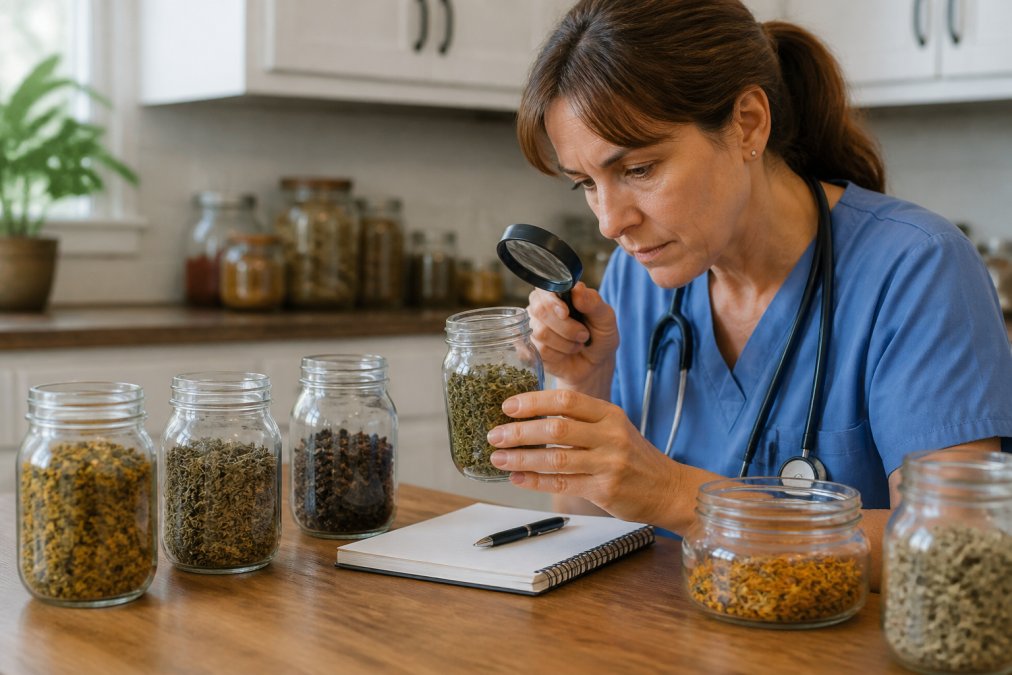
Adverse reactions to herbal products fall into three buckets: expected side effects from the herb itself, interactions with drugs or other supplements, and contamination from something that should not be in the bottle. Buyers control the third least, which is why quality control and traceability carry so much weight.
Why Heavy Metal Testing and Traceability Matter
Heavy metal testing checks a finished botanical product for lead, arsenic, cadmium, and mercury. Plants take up metals from soil and water, so a product grown in contaminated ground can carry a measurable burden even when the herb is the right species. Root and leaf botanicals grown near industrial or mining-affected soil are highest-risk.
Traceability is the paper trail behind that testing: which farm grew the plant, when it was harvested, how it was dried and stored, and which lot number the finished product belongs to. Without it, a recall cannot be executed cleanly because no one can identify the affected batch.
Botanical identity testing answers a related question: is the plant in the bottle actually the plant on the label? Adulteration, substituting a cheaper or toxic species, is documented in the supplement supply chain. Standardization sets a target level of a marker compound and helps consistency, but does not confirm identity.
Digital Literacy as a Safety Skill
Most people now buy botanicals from an online seller, a marketplace listing, or a social media ad, and the marketing language on those channels is where the risk often hides. A few red flags are worth memorizing:
- Disease claims. A supplement that says it "treats," "cures," "prevents," or "reverses" a named condition is making an illegal drug claim under DSHEA. Legitimate sellers use structure-function language ("supports," "helps maintain") and carry the required disclaimer.
- Miracle or cure-all framing. No single botanical addresses diabetes, thyroid function, weight loss, and immune health at once. Breadth of claims is inversely related to evidence.
- No lot number, no expiration date, no manufacturer address. These are cGMP labeling requirements. Their absence is a signal.
- Pressure tactics. Countdown timers, "only 3 left," and DM-only ordering make returns and recalls nearly impossible.
- Unverifiable testing claims. "Lab tested" means nothing without a named lab, a method, and a certificate of analysis you can request.
- Before-and-after photos with no sourcing. Testimonials are not evidence, and screenshots are trivially fabricated.
A practical habit: cross-check any herb against a pharmacist-reviewed interaction database before you buy, and treat social media as a discovery channel, not a verification channel.
Sustainability as a Safety Metric
Over-harvesting is usually framed as environmental, but it is also a safety issue. When a wild botanical becomes scarce or expensive, supply pressure creates two predictable outcomes: substitution with a cheaper look-alike species, and harvesting at the wrong life stage or region, which changes the plant's chemistry.
Many documented substitution risks involve look-alike species that are hard to distinguish once dried and powdered. A product that cannot name its species, origin, and harvest method cannot rule out substitution. Choosing cultivated or certified-sustainable sources is not just ethical, it removes a documented pathway to adulteration.
For consumers, favor products that name their supplier, publish testing practices, carry a traceable lot number, and avoid disease claims. Those four checks cover most of the risk you can control at the point of purchase.
Personalized Risk Assessment: One Size Never Fits All
Personalized risk assessment means matching a botanical to the individual rather than to an average user. Age, kidney and liver function, pregnancy status, medication list, and existing diagnoses all shift the risk calculus for the same herb.
This is the angle most online herbal content misses. A recommendation reasonable for a healthy 30-year-old can be inappropriate for someone over 60 on multiple prescriptions, or for anyone pregnant or breastfeeding. Pediatric use is another area where the margin for error is narrow and the evidence base thin.
A structured assessment covers:
- Full medication and supplement list, including over-the-counter products
- Relevant lab values and diagnosed conditions
- Allergies and prior reactions to botanicals
- Pregnancy, breastfeeding, or plans to conceive
- Goals and a realistic timeline for expected effects
This is also where digital literacy becomes a safety skill. Telling a peer-reviewed source from a marketing page, and knowing how to look up an interaction in a pharmacist-reviewed database, protects you more than any single product choice.
Sustainability belongs in the same conversation. A botanical harvested unsustainably or misidentified at the source is a safety problem as much as an ecological one, because supply pressure drives substitution and adulteration.
At HighFiveHive Nature's Remedies-Kitchen Herbalism, this assessment step draws on 40 years of nursing experience, which means the questions come from clinical practice rather than a product label.
Knowing which herbs are safe for your body, your medications, and your health history is a decision that deserves clinical judgment, not guesswork. HighFiveHive Nature's Remedies-Kitchen Herbalism pairs RN-led herbal guidance with a kitchen herbalism approach, so you get natural diabetes support, immune system support, and women's health support built on a nursing assessment rather than a generic recipe. Get started with HighFiveHive Nature's Remedies-Kitchen Herbalism and build a routine that accounts for how your body actually works.
Frequently Asked Questions
What are the primary risks of using herbal supplements without professional guidance?
The main risks include herb-drug interactions that can reduce or amplify prescription medication effects, contamination with heavy metals or undeclared pharmaceuticals, and taking the wrong dosage for your specific health conditions. Herbal products can also cause adverse drug reactions, especially when combined with blood thinners, diabetes medications, or blood pressure drugs. A professional herbal safety assessment accounts for your full medication list, health history, and individual risk factors before recommending anything.
How do professional herbalists screen for herb-drug interactions?
Professional practitioners review your complete medication list, including prescriptions, over-the-counter drugs, and other supplements. They check each herb against known pharmacokinetic and pharmacodynamic interactions using clinical databases and toxicology references. They also consider how your body absorbs and processes both the herb and your medications. This herb-drug interaction screening process is why an RN-led approach adds a layer of clinical judgment that recipe-following cannot replicate.
What should I look for when verifying an herbalist's credentials?
Check for a current license or certification from a recognized body, clinical training hours, and whether the practitioner has healthcare experience such as nursing or pharmacy. Ask directly about their education in pharmacovigilance and safety monitoring. A legitimate practitioner will explain their training without hesitation and can describe how they handle adverse reactions or refer you to your doctor when needed.
Is herbal medicine considered safe for everyone?
No. Herbal medicine affects people differently based on age, pregnancy status, existing conditions, and medications. Some herbs have a narrow therapeutic index, meaning the gap between a helpful dose and a harmful one is small. Others interact with common prescriptions. FDA regulation of dietary supplements does not guarantee a product is appropriate for your situation. A personalized safety assessment with a qualified professional is the only way to know what is safe for you specifically.


Leave a comment