
Which Herbal Extract Is Right for Nervous System Support?
Last Updated: October 26, 2026
Quick Summary
The right herbal extract for nervous system support depends on your symptom pattern: nervines for occasional situational stress, adaptogens for persistent low-grade stress, sedative nervines for sleep difficulty, and adaptogens plus circulatory herbs for cognitive fog. Match the pattern first, then pick the plant, then pick the form.
- Nervines are typically taken 30 to 60 minutes before a stressful event.
- Trial adaptogens daily for 4 to 8 weeks before judging their effect.
- A 1:5 extract uses one part herb to five parts liquid by weight.
- If a label skips the Latin name and plant part, put it back.
- Choose a tincture when you need calm within the hour.
Table of Contents
- Start With Your Symptom Pattern, Not the Herb List
- Herbs for Stress and Anxiety: Matching the Plant to the Problem
- Herbal Supplements for Sleep and Stress: Where Tinctures Fit
- How to Read Herbal Supplement Labels Before You Buy
- Best Teas for the Nervous System and When a Tincture Wins
- Safety, Interactions, and What the Evidence Actually Shows
- Shop RN-Led Herbal Extracts for Nervous System Support
- Frequently Asked Questions
Start With Your Symptom Pattern, Not the Herb List
Most people begin with a list of herbs. That's backwards. The right herbal extract for nervous system support depends on when your tension shows up and what you want it to do.
Wired all day and crashing at night? Anxiety spiking before a meeting? The answer changes which plant you reach for, and how you take it.
Nervous system support uses calming herbs, adaptogens, and nervines to help your body regulate its stress response. It works best when matched to your symptoms, timing, and goal.
Most guides get this wrong: they list every calming herb as if all work the same way.
A Decision Guide: Four Patterns, Four Goals
Use this framework to place yourself before you shop. Most people fit one primary pattern and one secondary pattern.
| Pattern | What it feels like | Primary goal | Best-fit category | Typical timing |
|---|---|---|---|---|
| Occasional, situational stress | Spikes before meetings, travel, or difficult conversations; settles afterward | Calm in the moment | Nervines | 30-60 minutes before the event |
| Persistent, low-grade stress | Tension that builds over weeks; feeling wired but tired; poor recovery | Build resilience over time | Adaptogens | Daily, for 4-8 weeks before judging |
| Sleep difficulty with a busy mind | Trouble falling asleep; waking at 2-3 a.m.; bedtime tension | Wind down and stay asleep | Sedative nervines and sleep blends | 30-60 minutes before bed |
| Cognitive fog under stress | Poor focus, forgetfulness, mental fatigue when stressed | Support focus and clarity | Adaptogens plus circulatory herbs | Morning, with a trial of several weeks |
Match the pattern first. Then pick the plant. Then pick the form.
Occasional Stress vs. Persistent Anxiety: Why the Distinction Matters
Occasional stress is situational: it shows up before a specific event and fades afterward.
Persistent anxiety is present most days for weeks and interferes with sleep, work, or relationships.
Sleep Difficulty: A Pattern of Its Own
If sleep is your main concern, our guide to the best herbs for sleep support goes deeper.
Cognitive Fog Under Stress
Some people don't feel anxious so much as foggy: focus drops, memory slips, and mental fatigue set in when stress is high. This pattern responds less to calming nervines and more to adaptogens paired with circulatory herbs like ginkgo biloba, support over weeks, not a same-day effect.
How Long to Trial an Extract
How long to give an extract before deciding depends on the category:
Keep a simple log: date, dose, timing, and how you felt. Patterns show up in a log that you'd miss from memory alone.
When to Combine Categories
Many people need both: a daily adaptogen for background resilience plus an as-needed nervine for situational spikes. Start one at a time so you can tell what's doing what. Our guide to how to safely combine herbs covers the practical side.
Herbs for Stress and Anxiety: Matching the Plant to the Problem
Our deeper guide to herbal remedies for anxiety and stress relief covers seven specific options if you want the full herb-by-herb list.
Adaptogens for Ongoing Stress Resilience
Ashwagandha is one example.
A review in the journal Nutrients summarized a 2019 clinical trial where the ashwagandha group showed a 33.77% to 38.34% reduction on the Perceived Stress Scale (ashwagandha stress trial review). That's a meaningful signal, though one trial is not the whole story.
If you're new to this group, our beginner's guide to adaptogens for beginners walks through a gentle starting routine.
Nervines for Acute Nervous Tension
This group includes passionflower, lemon balm, chamomile, and skullcap.
A review in the journal Medicines reported that clinical trials have consistently shown lemon balm, passionflower, and valerian to relieve mild forms of neurological symptoms (review of medicinal plants for stress).
Natures Twilight Herbal Tincture →
Herbal Supplements for Sleep and Stress: Where Tinctures Fit
Tinctures are liquid herbal extracts.
Our Twilight Herbal Tincture blends valerian root and lemon balm in an alcohol and water base.
How to Read Herbal Supplement Labels Before You Buy
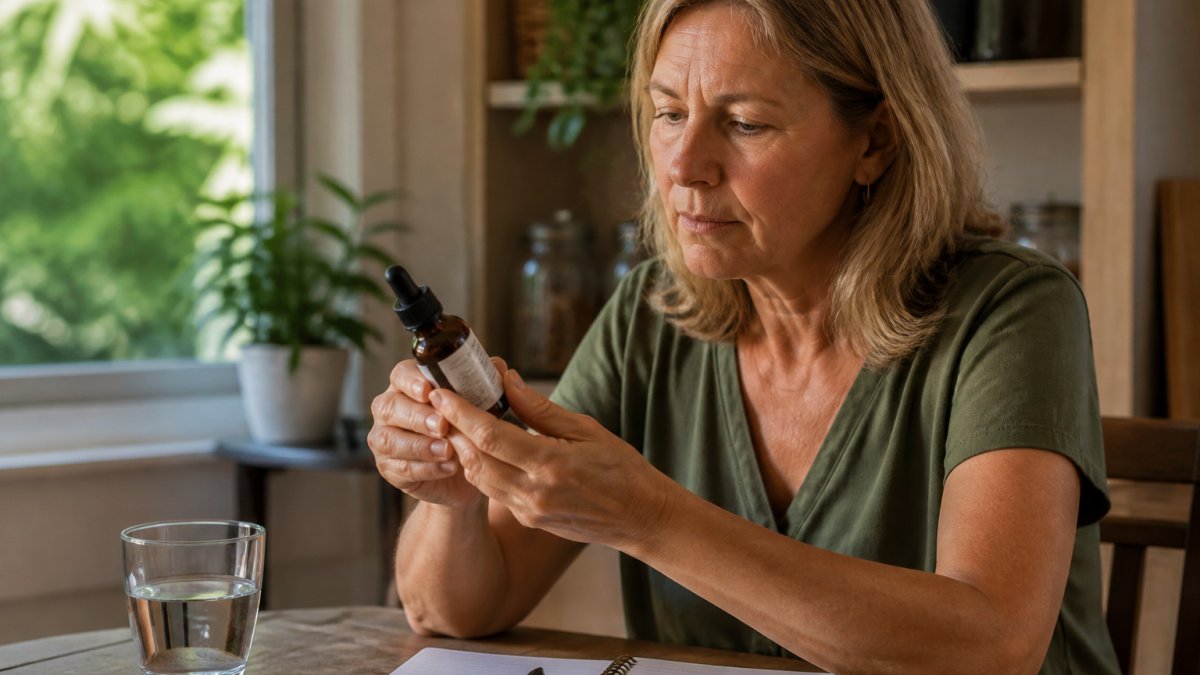
Herbal supplement labels are not held to the same standards as drug labels. The Cleveland Clinic notes that herbal supplements are not regulated by the U.S. Food and Drug Administration to the same standards as pharmaceutical drugs (Cleveland Clinic on herbal supplement safety). That makes label reading your job, and the label is your only window into what's actually in the bottle.
Extract Ratio: What 1:5 Actually Tells You
An extract ratio like 1:5 tells you how much raw herb went into the liquid. A 1:5 extract uses one part herb to five parts liquid by weight. A 1:2 extract is more concentrated, one part herb to two parts liquid. A 1:1 extract is a thick, nearly solid concentrate.
Standardization: Marker Compounds vs. Full-Spectrum Extracts
Neither approach is automatically better. Standardization gives you a predictable dose of one compound, useful for research and consistency. Full-spectrum extracts preserve compounds that may work together, but the dose of any single compound varies batch to batch. The practical rule: if a label claims standardization, look for the percentage and the named compound. If it claims "full-spectrum" or "whole herb," look for the extract ratio and plant part instead.
Solvent: Alcohol, Glycerin, and Water
For nervous-system herbs, alcohol tinctures are the most common traditional form. If you avoid alcohol, a glycerite is a reasonable substitute, but expect a gentler effect and a shorter shelf life.
The Quality Signals Most Labels Skip
-
Is the plant's Latin name listed?
-
Is the plant part named (root, leaf, flower)?
-
Is the solvent listed?
What This Means for Nervous-System Herbs
If a label skips the Latin name and the plant part, put it back. If it also skips the solvent and batch number, don't buy it at any price.
Best Teas for the Nervous System and When a Tincture Wins
| Situation | Best Choice | Why |
|---|---|---|
| Evening wind-down ritual | Tea | Slow, gentle, ritual-friendly |
| Need calm within the hour | Tincture | Faster absorption, measured dose |
| Traveling or at work | Tincture | Portable, no steeping needed |
| Combining four herbs | Tincture | One dropper, no mixing |
| Daily habit on a budget | Tea | Low cost per serving |
Our Herbal Harmony Blend combines lemon balm, passionflower, chamomile, and valerian in an alcohol and water-based extract.
Safety, Interactions, and What the Evidence Actually Shows
Herbal does not mean risk-free. Some herbs interact with medications, and the evidence behind each plant varies widely.
A source on herbal remedies for mental health notes that some herbs may interact with medications (MentalHealth.com on herbal remedy risks). That matters most if you take prescriptions daily.
Shop RN-Led Herbal Extracts for Nervous System Support
Our approach to kitchen herbalism draws on 40 years of nursing experience.
You can also explore our Ashwagandha Root Traditional Ayurvedic Tincture at $15.95, or our Herbal Harmony Blend Quiet Moments at $24.95.


Frequently Asked Questions
Are herbal extracts or teas better for nervous system support?
It depends on what you need. Teas are easy to build into a daily ritual. A herbal extract such as a tincture is a liquid preparation.
What should I check on an herbal supplement label?
Look for the plant's scientific name, the part used, and the solvent. The product listings for HighFiveHive's tinctures identify ingredients and an alcohol and water base. Cleveland Clinic notes that herbal supplements are not regulated by the FDA to the same standards as pharmaceutical drugs.
Can herbal supplements interact with medications?
The product listing for Golden Comfort St. John's Wort Tincture warns that St. John's Wort can interact with medications and says to consult a doctor or pharmacist before internal use. Ask a qualified health professional about potential interactions before using an herbal product.
How long before I notice a difference from a calming herb?
The product listings describe traditional evening routines for some tinctures, but they do not establish how long it takes to notice a difference. Ask a qualified health professional about whether an herbal product is appropriate for you.
The hardest part isn't finding a calming herb. It's knowing which one fits your body and your medications. That's the gap we close. HighFiveHive Nature's Remedies-Kitchen Herbalism pairs RN-led guidance with clearly labeled tinctures, from single-herb extracts to evening blends. Get started with HighFiveHive Nature's Remedies-Kitchen Herbalism and choose an extract that matches your pattern, not a list.


Leave a comment