
Is Herbal Tea Safe With Your Medications?
Last Updated: November 19, 2026
Quick Summary
Herbal tea safety means knowing which plants can interfere with your medications before you drink them, because a strong infusion delivers real plant compounds that can thin your blood, drop your blood sugar, or speed up how fast your liver clears a drug. The herbs most likely to cause trouble include St. John's wort, ginkgo, licorice root, ginseng, kava, and grapefruit-containing blends.
- Nearly 25% of U.S. adults take a prescription medication and a dietary supplement at the same time.
- St. John's wort speeds up liver enzymes and can weaken many prescriptions.
- Ginkgo, garlic, ginger, turmeric, dong quai, and chamomile have each been associated with bleeding concerns.
- If you take warfarin, tell the clinician managing it about any new daily tea before you start.
- Start with one herb at a time and keep a simple log of what you drink and how you feel.
Table of Contents
- Why Herbal Tea Safety and Drug Interactions Matter
- Herbs That Interact With Medications: What to Watch For
- Herbal Tea and Blood Thinners: A High-Risk Combination
- Herbal Tea and Diabetes Medication: What to Know
- Questions to Ask a Pharmacist About Herbal Tea
- How to Read Herbal Tea Labels for Safety
- When to Consult a Healthcare Professional
- Choosing a Safer Cup: What to Look for in Herbal Blends
- Frequently Asked Questions
Why Herbal Tea Safety and Drug Interactions Matter
Nearly 25% of U.S. adults take a prescription medication and a dietary supplement at the same time, according to research published in American Family Physician. A cup of ginger, licorice root, or ginkgo can change how your body handles a prescription, and most people never think to mention it to their doctor. (Source: National Center for Complementary and Integrative Health)
This guide breaks down herbal tea safety in plain terms.
Here's the core problem: herbal tea feels harmless. It's sold in grocery aisles, not behind a pharmacy counter.
Herbal tea safety means knowing which plants can interfere with your medications before you drink them.
Keep reading, because the risks are specific and manageable once you know what to look for.
Herbs That Interact With Medications: What to Watch For
The herbs that cause the most trouble fall into a few clear groups. Most interactions happen through the same pathways, so once you learn the categories, you can spot risk in almost any blend.
The biggest offenders affect how your liver breaks down drugs or how your blood clots. Others change blood sugar, blood pressure, or how well your body absorbs a pill.
Common Culprits in Herbal Blends
- St. John's wort: speeds up liver enzymes and can weaken many prescriptions
- Ginkgo: can raise bleeding risk, especially with blood thinners
- Licorice root: can raise blood pressure and lower potassium
A 2024 study in the Open Public Health Journal on herbal-drug interaction awareness found that many people simply don't know these risks exist.
If you combine several herbs in one cup, the risk can stack. Our guide on how to safely combine herbs walks through that in more detail.
These are the herbs the article flags most often, and the main concern tied to each.
| Herb | Main concern |
|---|---|
| St. John's wort | Speeds up liver enzymes; can weaken prescriptions |
| Ginkgo | Can raise bleeding risk, especially with blood thinners |
| Licorice root | Can raise blood pressure and lower potassium |
| Ginseng | May affect blood sugar and clotting |
| Kava | Adds to sedation and can stress the liver |
| Grapefruit-containing blends | Can change how drugs are absorbed |
Herbal Tea and Blood Thinners: A High-Risk Combination
Blood thinners are where herbal tea gets genuinely dangerous, and the reason is mechanical. Warfarin, apixaban, rivaroxaban, dabigatran, and edoxaban all work inside a narrow safety window: too little effect and a clot forms, too much and you bleed. A herb does not have to be a "blood thinner" itself to push you out of that window.
The three mechanisms that matter
- Liver enzyme changes. Warfarin is metabolized mainly by CYP2C9. Herbs that induce or inhibit that enzyme change how much drug stays in your blood. St. John's wort is the best-known inducer and can lower warfarin levels enough to reduce protection.
- Platelet and clotting effects. Ginkgo, garlic, ginger, turmeric, dong quai, and chamomile have each been associated with bleeding concerns through effects on platelets or clotting factors. These add to the drug's own effect rather than replacing it.
- Absorption and binding. Some plant compounds bind in the gut or alter stomach emptying, which can shift how much of a dose reaches the bloodstream. This is less predictable than enzyme effects and harder to monitor.
Herbs to treat with caution
- Ginkgo may increase bleeding risk, particularly with anticoagulants and antiplatelets.
- Garlic in large or concentrated amounts can add to blood-thinning effects.
- Ginger at high doses may add to anticoagulant effects; culinary amounts in a cup are a different exposure than a concentrated supplement.
What monitoring actually looks like
If you take warfarin, the practical safeguard is the INR blood test. Tell the clinician managing your warfarin about any new daily tea before you start, and expect that a new habit may prompt an extra INR check.
Watch out: the danger pattern is a daily "circulation" or "heart" blend added quietly to a stable regimen.
Timing and dose questions worth asking
Ask your pharmacist whether the herb should be separated from your dose by a few hours, whether a culinary amount in one cup differs from a concentrated daily infusion, and what symptoms should trigger a call. For a side-by-side look at how herbs stack up against prescriptions, see our comparison of herbal remedies vs prescription medication.
Herbal Tea and Diabetes Medication: What to Know
Diabetes medication and blood sugar-lowering herbs can push glucose too low. That's the main risk, and it's easy to miss because the symptoms feel like a normal off day.
Blood Sugar-Lowering Herbs and Hypoglycemia Risk
Some herbs genuinely lower blood sugar. That's helpful on its own. Combined with insulin or a sulfonylurea, though, the effect can add up and cause hypoglycemia.
Herbs to watch include:
- Fenugreek
- Cinnamon in concentrated amounts
- Bitter melon
If you take diabetes medication, treat any new tea like a change to your regimen. If you want to understand which glucose-supporting herbs actually have research behind them, our guide on glucose supporting herbs covers that before you start.
Our nurse-written guide to safe herbal remedies for diabetes goes deeper on matching herbs to your treatment plan.
Questions to Ask a Pharmacist About Herbal Tea
A pharmacist is the fastest, cheapest safety check you have. They know your full medication list and how those drugs behave. Bring your tea label and ask direct questions.

Ask these:
- Does this herb interact with any drug on my list?
- Can it change my blood pressure, blood sugar, or clotting?
- How much is too much per day?
Write the answers down. Bring them to your next doctor visit.
How to Read Herbal Tea Labels for Safety
Most tea labels tell you very little. A good one gives you enough to make a safe call before you brew. The problem is that "herbal tea" is regulated as a conventional food in the United States, not as a drug, so the label is not required to warn you about interactions or prove that the plant inside the box is what the box says.
Use this repeatable checklist every time you pick up a new blend. Work top to bottom and stop if any item is missing.
1. Botanical name, not just the common name
Common names are unreliable. "Ginseng" can mean Asian ginseng (Panax ginseng) or American ginseng (Panax quinquefolius), and "chamomile" can mean German chamomile (Matricaria chamomilla) or Roman chamomile (Chamaemelum nobile). Different species carry different compounds and different interaction profiles. A label that lists the Latin binomial alongside the common name is showing you it knows what it put in the bag.
2. Plant part
Root, leaf, flower, bark, and seed do not contain the same constituents. Licorice root is the part tied to blood pressure and potassium effects; licorice leaf is not used the same way. Ginger rhizome and ginger leaf are different products. If the label says only "licorice" or "ginger," you cannot tell which part you are getting.
3. Amount per serving
This is the number that lets you compare one cup to another and to any research you read. Look for a milligram or gram amount per tea bag or per teaspoon, not just "a blend of." If the label gives only a proprietary blend total, you cannot tell how much of the interacting herb is actually in the cup.
4. Extraction or brew ratio and solvent
For tea, the relevant detail is how much plant went into the bag relative to the water you add, plus whether the product is a true infusion or a tincture-style extract sold as a tea. Because a ratio cannot establish how reliably a remedy works, Rawleigh's Cambridge offers a useful next point of comparison when weighing traditional herbal claims against the evidence.
5. Batch or lot number
A batch number is what lets a maker trace a specific run back to its supplier and testing records. Without one, a recall or a contamination report cannot be tied to your box. If a brand cannot tell you which lot you have, it cannot tell you what was tested.
6. Third-party testing and certificate of analysis
A certificate of analysis (COA) is the document a lab produces after testing a batch. A useful COA covers identity (is this actually the plant named), potency or marker compounds, microbes, pesticides, heavy metals such as lead and arsenic, and residual solvents if an extract was used. Ask the maker for the COA that matches your lot number, not a generic sample from a different run.
7. Contaminant and allergen notes
Herbal teas can carry heavy metals from soil, pesticide residues, and, in some cases, naturally occurring compounds of concern. Look for a stated contaminant testing policy and any allergen or cross-contact note, especially if the blend is packed in a facility that also handles common allergens.
8. Brewing instructions
Strength changes with water temperature, steep time, and leaf-to-water ratio.
A 2026 review in ScienceDirect on herbal and fruit tea safety noted that rigorous toxicological testing is still missing for many herbal and fruit teas. That is exactly why label transparency matters.
Watch out: a pretty front label with a long list of herbs and no plant parts, no amounts, and no lot number is the most common pattern behind a blend you cannot evaluate.
When to Consult a Healthcare Professional
Talk to a doctor or pharmacist before you start any herbal tea if you:
- Take a blood thinner, diabetes drug, blood pressure drug, or immunosuppressant
- Are pregnant, nursing, or trying to conceive
- Have liver or kidney disease
Stop drinking the tea and call your provider right away if you notice unusual bruising, dizziness, a racing heart, or a blood sugar reading that won't stay in range.
This article is general information, not medical advice. Your care team knows your history, and that context decides what's safe for you.
Choosing a Safer Cup: What to Look for in Herbal Blends
The safest blend is one with simple, named ingredients and a maker who stands behind testing. Fewer herbs means fewer chances for a hidden interaction.
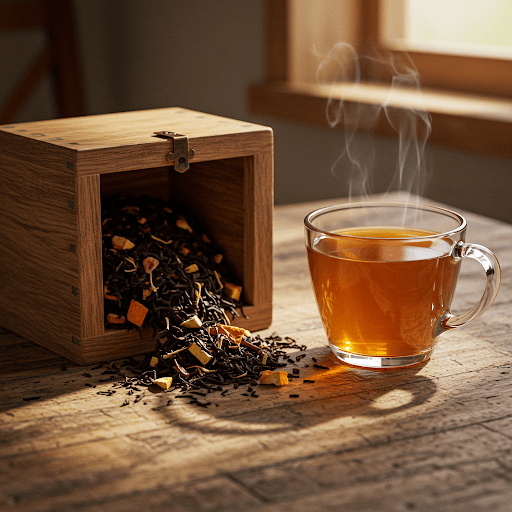
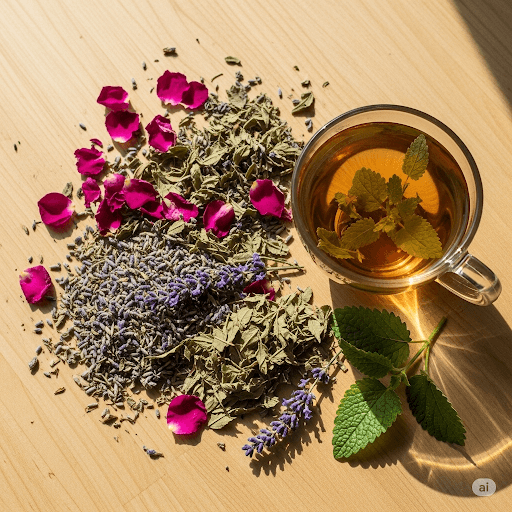
The Golden Spice Herbal Brew Tea Blend lists its ingredients as rosemary, cinnamon, turmeric, and black pepper. The Sanctuary Garden blend combines rose, tulsi, lavender, and lemon balm.
The hardest part of herbal tea safety isn't finding good tea. It's knowing which cup fits your medication list. That's where RN-led guidance changes the outcome.
Frequently Asked Questions
Can herbal tea interact with prescription medications?
Yes. Herbal tea contains active plant compounds that can change how your body processes certain drugs. Many U.S. adults take a prescription medication and a dietary supplement at the same time. Some herbs affect liver enzymes, clotting, blood sugar, or blood pressure. The interaction risk depends on the specific herb, the dose, and your medication. Always check with your pharmacist before adding a new herbal tea to your routine, especially if you take blood thinners, diabetes drugs, or blood pressure medication.
Which herbal teas can affect blood thinners?
Herbs with potential antiplatelet or anticoagulant effects deserve caution if you take warfarin, apixaban, rivaroxaban, or similar drugs. Examples include ginkgo, garlic, ginger, turmeric, and dong quai. These can increase bleeding risk when combined with blood thinners. The research does not confirm that every cup causes harm, but the interaction is plausible and worth discussing with your doctor. If you take a blood thinner, ask your pharmacist before drinking teas that contain these herbs, and mention any new tea at your next appointment.
Can I drink herbal tea while taking diabetes medication?
Some herbal teas may affect blood sugar, so combining them with diabetes medication requires care. Cinnamon, fenugreek, and bitter melon are examples of herbs that may lower glucose. If you take insulin or sulfonylureas, adding a blood sugar-lowering herb could increase the risk of hypoglycemia. Monitor your levels closely and tell your healthcare provider about any herbal tea you drink. Awareness of herbal-drug interactions is an area that needs improvement. Do not stop or change your diabetes medication without medical advice.
How can I check whether an herbal tea is safe with my medication?
Start by reading the ingredient list on the tea package. Then ask your pharmacist to review those herbs against your medication list. Bring the actual tea container or a photo of the label. Your pharmacist can flag known interactions and suggest safer alternatives. Professional guidance is essential, since real-world data on herb-drug interactions is still limited. Never rely on internet forums alone for safety decisions.


Leave a comment