
How to Evaluate Herbal Remedies for Bone Density Support
Quick Summary
Herbal remedies can support bone health as part of a larger plan, but they do not replace proven osteoporosis care. Some herbs show modest changes in bone measurements in small studies, while many others have no meaningful research. Evaluate the study type, outcome measured, and interaction risks before starting any product.
- Check whether the study was a randomized controlled trial, an animal study, or lab work only.
- Bone density changes measured by DXA do not prove fewer fractures.
- Ask your clinician about interactions before combining any herb with prescription medicines.
- Calcium, vitamin D and magnesium have stronger bone evidence than most herbs.
- Bring a complete list of herbs, brands and doses to every medical appointment.
Table of Contents
- How to Evaluate Herbal Remedies for Bone Density Support
- What Herbal Remedies for Bone Density Support Can and Cannot Do
- Step 1: Check the Evidence Grade Before You Choose an Herb
- Step 2: Review the Herbs With Bone Research Behind Them
- Chinese Herbs for Bone Healing: What the Studies Show
- Natural Treatments for Osteoporosis and Where They Fit
- Supplements for Bone Health: Calcium, Vitamin D and Magnesium
- Step 3: Screen for Drug Interactions and Who Should Avoid Herbs
- Booking a Consultation Before You Start Any Herbal Plan
- Frequently Asked Questions
How to Evaluate Herbal Remedies for Bone Density Support
Last Updated: November 2, 2026
Herbal remedies for bone density support are a popular topic, but the evidence behind them varies widely. Some herbs have small clinical studies showing modest improvements in bone measurements. Many others have no meaningful research at all. This guide is designed to help you sort the promising from the unproven.
A 2013 systematic review published through the PubMed Central review of herbal medicine for osteoporosis found that Chinese herbal medicine significantly increased lumbar spine bone mineral density compared to placebo or standard drugs. That is a real signal. It is also a limited one, because most included trials were small and of uneven quality.
The short answer: herbal remedies can support bone health as part of a larger plan, but they do not replace proven osteoporosis care.
What Herbal Remedies for Bone Density Support Can and Cannot Do
Herbs are not a cure for osteoporosis. Bone density loss is driven by age, hormones, nutrition, activity level and genetics. Herbal products may influence some of these factors, though the effects reported in research are generally modest.
What herbs can do:
- Support bone formation markers in some studies
- Complement diet and exercise
- Offer a traditional option for people who want a gentle starting point
What herbs cannot do:
- Reverse advanced osteoporosis on their own
- Replace prescribed bone medications when those are needed
- Guarantee fewer fractures
Step 1: Check the Evidence Grade Before You Choose an Herb
Not all evidence is equal, and the single most useful skill you can build is separating what a study actually measured from what a marketer claims it proved. Most ranking articles list remedies; fewer show you how to read the evidence yourself. This step does.
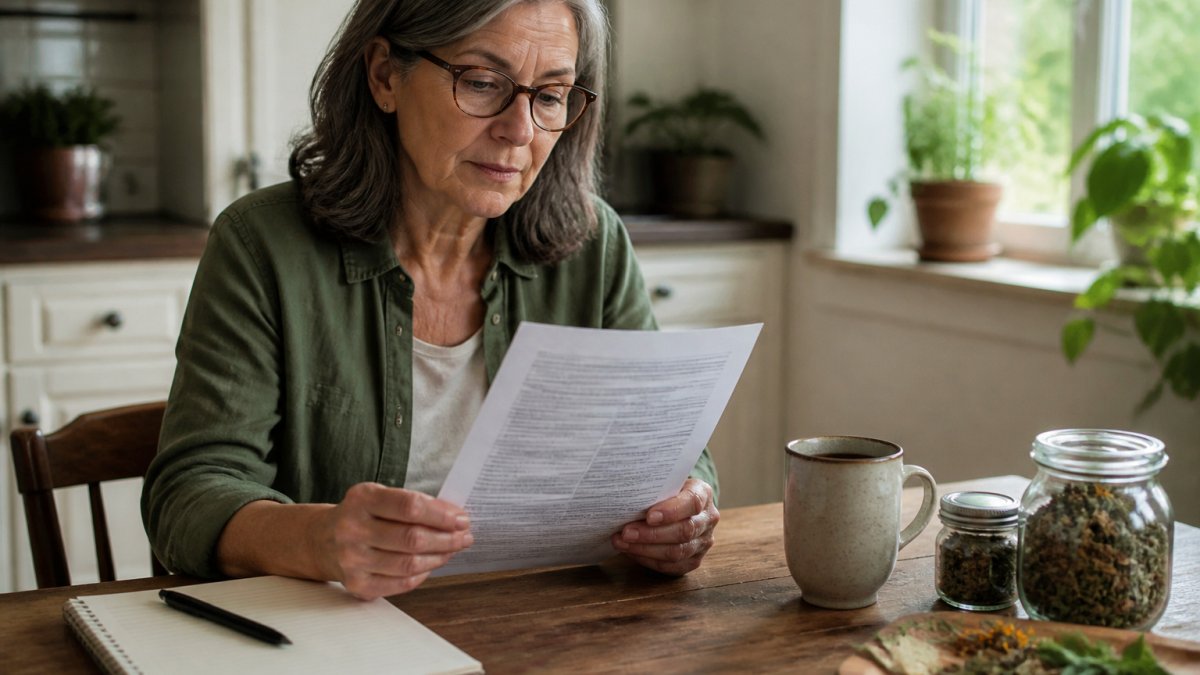
Start by identifying the study type, because each one answers a different question:
- Laboratory (in vitro) studies show whether a plant extract affects bone cells in a dish. They tell you a mechanism is plausible, not that a person will benefit.
- Animal studies show effects in a living system, but doses, metabolism, and bone biology differ from humans.
- Human observational studies link a food or herb to outcomes but cannot prove cause and effect.
- Randomized controlled trials (RCTs) are the strongest single-study design for cause and effect, and their value depends on size, duration, blinding, and whether the product was chemically characterized.
- Systematic reviews and meta-analyses pool trials and can reveal consistency, but they inherit the weaknesses of the studies they include.
Next, separate the outcome. Bone health research uses several endpoints that are not interchangeable:
- Bone mineral density (BMD) measured by DXA is a surrogate marker. A change in BMD is not the same as a proven reduction in fractures.
- Bone turnover markers such as serum osteocalcin (formation) and C-terminal telopeptide of type I collagen (resorption) show biological activity but do not by themselves predict fewer broken bones.
- Fracture incidence is the outcome patients care about most, and it is the least commonly studied for herbs because it requires large, long trials.
A practical grading habit looks like this:
- Strong: Multiple well-designed RCTs with consistent BMD or fracture outcomes, ideally summarized in a systematic review.
- Moderate: One good RCT, or several smaller trials with consistent results, usually on BMD or turnover markers rather than fractures.
- Weak: Animal or laboratory work only, or small single-site trials without replication.
- None: Tradition or anecdote alone, with no controlled human data.
When you read an abstract, look for four things: the number of participants, the duration, the exact preparation and dose, and the outcome measured. A trial of 40 women for six months that reports a turnover-marker change is a different level of evidence than a multi-year trial reporting hip fractures. Most practitioners find that writing these four details on an index card keeps the comparison honest.
Watch out: a product page that cites a study but does not name the preparation, dose, or outcome is usually borrowing credibility from research that may not apply to the bottle in front of you.
Step 2: Review the Herbs With Bone Research Behind Them
A 2024 ScienceDirect review of plant-derived natural medicines for bone management reported that 3 grams of ginseng extract per day improved factors tied to bone formation, including serum osteocalcin levels. Osteocalcin is a protein made by bone-building cells, so this points to a biological effect. It does not prove fewer fractures.
Other herbs with some human or lab research include:
- Ginseng, for bone formation markers
- Red sage, thyme and turmeric, studied mainly in lab and small trials
- Medicinal plants generally, which a 2025 systematic review linked to reduced bone resorption markers
Use these as a starting list, not a shopping list.
Chinese Herbs for Bone Healing: What the Studies Show
Traditional Chinese medicine includes kidney-tonic herbs often used for bone complaints. The 2013 review mentioned above is the most cited example, and it found improvements in spine bone density.
Still, be careful:
- Many trials were short, often under two years
- Formulas were mixed, so it is hard to know which herb did the work
- Quality control of commercial products varies
If you consider a Chinese herbal formula, ask a qualified practitioner which specific herbs it contains.
Natural Treatments for Osteoporosis and Where They Fit
Natural approaches work best as a supporting layer. Some research has explored whether phytoestrogen-rich foods such as flaxseed, soy and certain legumes affect bone loss, with generally small effects. These foods belong in your diet, not in place of medical care.
Lifestyle habits matter as much as any herb:
- Weight-bearing exercise such as walking or resistance training
- Adequate protein and calcium intake
- Fall prevention at home
- Regular bone density screening when your doctor recommends it
Supplements for Bone Health: Calcium, Vitamin D and Magnesium
Calcium, vitamin D and magnesium have far stronger evidence for bone health than most herbs. Many adults do not get enough from food alone, so the right dose can be worth discussing with a clinician.
Some practical points:
- Ask your doctor or pharmacist before combining supplements with prescriptions
- Too much calcium or vitamin D can cause problems, so avoid guessing doses
- Product pricing varies by brand, quantity and retailer, so compare labels carefully
Step 3: Screen for Drug Interactions and Who Should Avoid Herbs
This step matters most, and it is where general articles stay vague. Herbs can be concentrated preparations with pharmacologically active compounds, so the same questions you would ask about a new prescription are worth asking. Safety considerations for starting herbal supplements gives a checklist to work through before you begin. The goal is not to frighten you away from herbs but to make the trial safe and measurable.
Medication classes that deserve a specific conversation before you add any herb include:
- Anticoagulants and antiplatelets such as warfarin, apixaban, rivaroxaban, dabigatran, clopidogrel, and aspirin. Some herbs used for bone or joint complaints have been associated with bleeding risk or altered anticoagulant effect, so check with your clinician before combining them (Herb-Drug Interactions).
- Antihypertensives and diuretics. Some herbs affect blood pressure or fluid balance, and diuretics change calcium handling.
- Diabetes medications. Herbs that influence glucose can compound hypoglycemia risk.
- Hormone therapies and endocrine drugs. Phytoestrogen-containing preparations may be relevant for people on tamoxifen, aromatase inhibitors, or hormone replacement.
- Immunosuppressants and narrow-therapeutic-index drugs. Any herb that alters liver enzymes can change drug levels.
- Calcium, vitamin D, and bisphosphonates. Timing and total intake matter, and more is not better.
Who should avoid or delay particular herbs until a clinician weighs in:
- People who are pregnant or breastfeeding.
- People with kidney or liver disease, because clearance and mineral handling change.
- People scheduled for surgery, who are commonly asked to stop certain herbs one to two weeks beforehand; confirm the specific window with the surgical team.
- People with hormone-sensitive conditions, who should be cautious with phytoestrogen-rich concentrated products.
- People taking multiple prescriptions, where cumulative interaction risk rises.
A workable screening routine:
- Bring a complete list, herb name, product brand, dose, and frequency, to every appointment, including your pharmacist's.
- Ask specifically whether the herb interacts with each prescription by name, not just in general.
- Start one new product at a time so any symptom can be attributed.
- Keep a simple log of symptoms, and stop and call your provider if you notice unusual bruising, bleeding, dizziness, or gastrointestinal upset.
Monitoring is part of safety. Clinicians assess bone health with DXA scans, fracture-risk tools such as FRAX, and sometimes bone turnover markers. Herbs should support that monitoring, not replace it, and they should never substitute for prescribed osteoporosis treatment when treatment is indicated.
Watch out: "natural" does not mean interaction-free, and stopping a prescribed drug in favor of an herb is a decision only your clinician should make with you.
Booking a Consultation Before You Start Any Herbal Plan
Before adding any herbal plan, book a consultation with a qualified professional. Check herbalist certification and credentials before you commit to a practitioner. Bring your medication list, your bone density results if you have them, and a list of herbs you are considering.
Good questions to ask include: Questions to Ask Before Starting Herbal Wellness Support lists the points worth raising before you begin.
- Does this herb have human bone research, or only lab work?
- How might it interact with my current medicines?
- What result should I track, and how often?
HighFiveHive Nature's Remedies-Kitchen Herbalism can help you think through these questions. Pricing depends on the service you choose, so visit our website for current prices or a quote.
Frequently Asked Questions
Can herbal remedies help support bone density?
Some herbs have been studied for effects on bone markers and bone mineral density, but the evidence is mixed and mostly limited to small trials and reviews. A systematic review in PMC found Chinese herbal medicine significantly increased lumbar spine bone mineral density compared with placebo or standard drugs in the studies it analyzed. Herbs should be treated as a possible complement to, not a replacement for, proven osteoporosis care. Talk with your doctor before starting any herb, especially if you take prescription medication.
What herbs are studied for osteoporosis?
Researchers have examined ginseng, red sage, thyme, turmeric, and phytoestrogen-rich foods such as soy and flaxseed. Some studies have looked at ginseng for markers of bone formation. Results differ by herb and by outcome, so review each study's design, sample size, and whether it measured bone density or only markers. Many of these studies are small or short.
Can herbal supplements interact with osteoporosis medications?
Yes, some herbs can interact with conventional medications. Because many osteoporosis drugs and other prescriptions can be affected, bring a complete list of everything you take, including supplements and teas, to your prescriber or pharmacist. A licensed clinician can review your medications and health history before you add any herbal product.
How should you evaluate claims about natural bone-healing remedies?
Start by asking whether the claim comes from human trials, animal studies, or lab work, and whether it measured bone mineral density or only a marker. Look for systematic reviews and check whether they report side effects. Be cautious of claims that promise a cure, guarantee results, or describe a remedy as risk-free. Keep a simple log of what you take and any changes you notice, and review progress with your healthcare provider.


Leave a comment