
Can Herbs Help Manage Hormonal Acne Breakouts?
Last Updated: November 1, 2026
Quick Summary
Chasteberry is the herb most often named for managing hormonal acne, though a 2025 review reports no pooled effect estimate for any botanical. Spearmint tea is popular but unproven, and green tea works best applied topically. Pick one herb, one route, and allow several weeks before judging results.
- Chasteberry is not appropriate during pregnancy or breastfeeding and can interact with birth control and hormone therapy.
- Brew spearmint tea with one heaped teaspoon of dried spearmint per cup, steeped covered five to seven minutes.
- Make a green tea compress by steeping two bags three minutes, cooling, then pressing on skin five to ten minutes.
- A 2025 review names tea tree oil, lavender, licorice, and turmeric as plants with potential acne-treatment properties.
- Build a PCOS routine in layers: gentle cleanser, one topical botanical compress, and a single oral herb if approved.
Table of Contents
- 1. Chasteberry (Vitex): The Most Studied Herb for Hormonal Balance
- 2. Spearmint Tea for Hormonal Acne: What the Research Shows
- 3. Saw Palmetto and Androgen-Related Acne
- 4. Green Tea for Acne: Topical and Oral Options
- 5. Turmeric, Licorice, and Other Medicinal Plants for Inflammation
- 6. Herbal Supplements for Acne: Safety, Interactions, and Who Should Avoid Them
- 7. PCOS Acne Natural Treatment: Building a Realistic Routine
- Choosing Your First Herbal Remedy with RN Guidance
- Frequently Asked Questions
1. Chasteberry (Vitex): The Most Studied Herb for Hormonal Balance
Chasteberry is the herb most often named when women ask about herbs for managing hormonal acne breakouts, and it is also the one with the longest traditional track record behind it. The berry of Vitex agnus-castus has been used in women's preparations for centuries, and it appears as Chaste Tree Berries in our Five Botanicals A Woman's Traditional Tincture, a $25 blend built around five historically recognized botanicals.

Here is the honest position: a 2025 review of medicinal plants for acne vulgaris lists several botanicals with potential acne-treatment properties, but the authors do not report a pooled effect estimate for any of them (Medicinal Plants for Acne Vulgaris: An Evidence-Based Review). That means tradition and plausibility, not proof.
How to Use Chasteberry Safely
- Start with one product only, so you can tell what is doing what
- Follow the label dose exactly; more is not better
- Give it a full cycle before judging results
- Stop and call your clinician if you notice any new symptom
- Skip it entirely if you are pregnant, nursing, or on hormone therapy without medical clearance
Watch out: chasteberry is not appropriate during pregnancy or breastfeeding, and it can interact with birth control and hormone therapy. Ask your clinician first.
2. Spearmint Tea for Hormonal Acne: What the Research Shows
Spearmint tea for hormonal acne is the most popular home remedy in this category, and the weakest-evidenced one that people still swear by. The idea is that spearmint may have mild anti-androgen activity, meaning it could soften the androgen-driven oil production behind many breakouts. That is a plausible mechanism, not a demonstrated outcome. No large trial in the research we reviewed establishes a clear benefit.
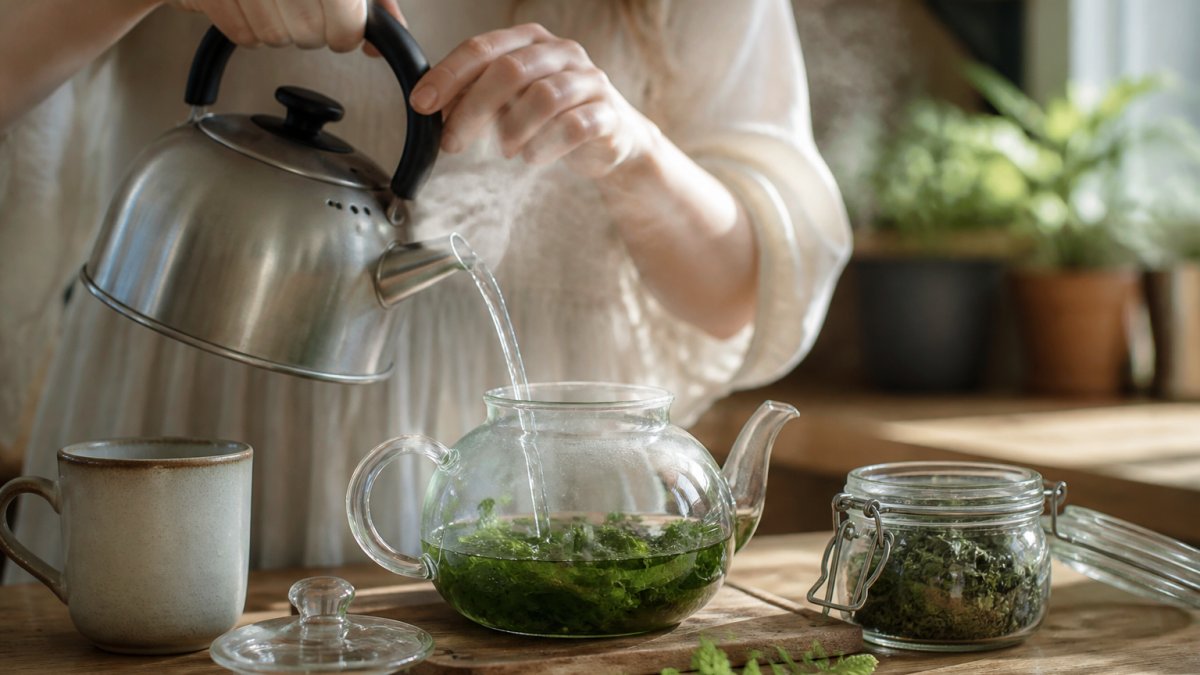
Brewing and Dosing Spearmint Tea
Use one heaped teaspoon of dried spearmint per cup, steep covered for five to seven minutes, and drink it once or twice daily. Keep the dose modest and consistent. If you want the full method, our guide on how to brew medicinal tea safely at home walks through herb selection, dosing, and the safety checks that matter. Pregnant women and anyone on androgen-blocking medication should ask a clinician before making it a daily habit.
3. Saw Palmetto and Androgen-Related Acne
Saw palmetto is the supplement people reach for when the word "androgen" appears in a skin concern. It comes from the berries of a small palm and has a long history in traditional preparations. The logic is straightforward: if androgens drive sebum production, a botanical traditionally used around androgen-related concerns might help. The evidence does not yet close that loop.
Verywell Health notes that chasteberry and tea tree oil may help hormonal acne while emphasizing that more research is needed (Supplements for Hormonal Acne). Treat saw palmetto the same way: a reasonable traditional option, not a replacement for a diagnosis.
4. Green Tea for Acne: Topical and Oral Options
Green tea for acne works best on the skin, not in the cup. Its polyphenols are antioxidant and antimicrobial in laboratory settings, which is why green tea extracts show up in so many topical formulas. Drunk as a beverage, it is a pleasant habit with far less direct evidence for breakouts.
Making a Green Tea Compress at Home
- Steep two green tea bags in one cup of hot water for three minutes
- Let the liquid cool completely to room temperature
- Soak a clean cotton cloth and wring it out
- Press gently over the breakout area for five to ten minutes
- Rinse with cool water and pat dry
Watch out: do a skin patch test on your inner forearm first, and never apply anything hot to inflamed skin.
5. Turmeric, Licorice, and Other Medicinal Plants for Inflammation
Turmeric and licorice are the two medicinal plants most frequently tied to inflammation in acne research, and both have real limitations. For a deeper look at anti-inflammatory herbal remedies, see our natural remedies for inflammation. A 2025 review names tea tree oil, lavender, licorice, and turmeric as plants with potential acne-treatment properties, while reporting no quantified outcomes (Medicinal Plants for Acne Vulgaris). The same review describes a clinical trial of an herbal cream combining aloe vera, pomegranate peel, licorice root, and zataria leaves, without reporting sample size or results.
Aloe vera is a plant traditionally used on the skin. Calendula and witch hazel are traditional topical preparations. Burdock and dandelion appear in internal herbal traditions. Lavender and tea tree oil are essential oils that need dilution and a patch test.
Five Botanicals A Woman's Traditional Tincture →
6. Herbal Supplements for Acne: Safety, Interactions, and Who Should Avoid Them
Herbal supplements for acne are still supplements, and that word carries real weight. Healthline advises discussing natural remedies with a health professional and describes research support for tea tree oil and topical green tea as limited and mixed (Treatments and Natural Remedies for Hormonal Acne). That is the right posture.
Herbs That Need Extra Caution
- Chasteberry: avoid during pregnancy and breastfeeding
- Licorice root: long-term internal use needs supervision
- Essential oils: never apply undiluted; patch test first
- Any herb alongside blood thinners, birth control, or hormone therapy: clinician review required
If you are weighing long-term internal use, our article on whether herbal supplements are risky for your kidneys covers the questions to bring to your doctor.
| Herb | Route | Evidence Strength | Main Caution |
|---|---|---|---|
| Chasteberry | Oral | Traditional, limited trials | Avoid in pregnancy |
| Spearmint | Oral tea | Plausible, unproven | Ask before daily use |
| Saw palmetto | Oral | Traditional, limited | Clinician review advised |
| Green tea | Topical | Limited, mixed | Patch test first |
| Turmeric | Topical/oral | Limited | Supervision for oral |
| Tea tree oil | Topical | Limited, mixed | Dilute, patch test |
| Aloe vera | Topical | Traditional soothing | Patch test first |
7. PCOS Acne Natural Treatment: Building a Realistic Routine
PCOS acne natural treatment is where expectations matter most. A routine for PCOS-related breakouts should support skin care and medical care rather than replace either. Build it in layers: a gentle cleanser, one topical botanical compress a few times a week, a single oral herb if your clinician approves it, and a consistent daily rhythm. Selecting the right natural ingredients for acne requires a careful balance between historical usage and current scientific understanding to ensure your regimen remains both effective and safe.
Our Peri Harmony Woman's Collection at $68 brings a calming tea, a traditional tincture, and a soothing body oil into one daily routine. If you are deciding between formats, our comparison of herbal tea vs supplements for women's wellness lays out the trade-offs.
Choosing Your First Herbal Remedy with RN Guidance
Choosing a first herbal remedy comes down to three questions: what route you can sustain, what your medications allow, and what you are actually trying to change. Pick one herb, one route, and one realistic window of several weeks before you judge anything. Measure outcomes honestly: fewer new breakouts, less visible redness, calmer skin, steadier oil control.
Our Aura Woman Complete Natural Balance Vitality Collection at $173 is the full toolkit if you want to build a broader routine around skin, stress, and hormonal balance together.
Frequently Asked Questions
What is the best herb for hormonal acne?
Chasteberry (Vitex agnus-castus) has a long history of traditional use. A 2025 evidence-based review also names tea tree oil, lavender, licorice, and turmeric as plants with potential acne-treatment properties. There is no single best herb: the right choice depends on whether your breakouts are tied to your cycle, PCOS, or general inflammation. Talk with a clinician or clinical herbalist before starting any herb, especially if you take hormonal birth control or acne medication.
How long does spearmint tea for hormonal acne take to work?
Most traditional and clinical use of spearmint tea involves drinking one to two cups daily for at least four to eight weeks before judging results. The research base is still limited and mixed, so treat any timeline as a trial period rather than a guarantee. Track your breakouts weekly with photos and a simple log. If you see no change after eight to twelve weeks, or if acne worsens, stop and see a dermatologist. Consistency matters more than quantity, and more tea is not better.
Can herbal supplements for acne interact with birth control or acne medication?
Yes, some can. Chasteberry may affect hormone levels, and the brand's Five Botanicals blend carries a specific warning about use with hormone therapy, birth control, and blood thinners, plus a note that Black Cohosh has been linked to rare liver problems. Always tell your prescriber and pharmacist about every herb and supplement you take. Bring the actual product label to your appointment so they can check ingredients. Never stop or change a prescribed acne or hormonal treatment on your own.
Is green tea for acne effective as a topical treatment?
Healthline notes that research support for topical green tea is limited and mixed. That said, cooled green tea compresses are low-risk for most people and can soothe irritated skin. Patch test on your inner arm first, especially if you use retinoids or acids. Green tea is not a replacement for proven acne treatments such as retinoids, benzoyl peroxide, or prescription options. Use it as a supportive step, not the whole plan.
When should I see a dermatologist about hormonal acne?
See a dermatologist if you have deep painful cysts, scarring, acne that flares mainly along the jaw and chin, or breakouts that have not improved after two to three months of consistent care. Also seek care if acne appears alongside irregular periods, excess hair growth, or sudden changes, since PCOS and other hormonal conditions may need testing. A dermatologist can confirm the cause and discuss prescription options. Herbs can complement care, but they cannot diagnose or treat a hormonal disorder.
Start with one herb, one honest conversation with your clinician, and one routine you can actually keep. HighFiveHive Nature's Remedies gives you RN-led guidance, traditional botanical blends, and a kitchen-herbalism approach built for real life. Get started with HighFiveHive Nature's Remedies and build a routine grounded in tradition and clinical care.


Leave a comment