
What Does RN LED Mean? Nurse-Led Care Explained
Table of Contents
- What Does RN LED Mean? The Core Definition
- Nurse-Led vs. Standard Wellness Consultation
- The Benefits of Nurse-Led Wellness for Chronic Conditions
- How to Verify Herbalist Credentials and Nursing Licenses
- What to Expect During an RN-Led Appointment
- Regulatory and Legal Frameworks for Nurse-Led Services
- Conclusion: Is RN-Led Care Right for You?
- Frequently Asked Questions
Last Updated: October 3, 2026
What Does RN LED Mean? The Core Definition
RN LED means a service or product created, reviewed, or delivered by a Registered Nurse. The "RN" stands for Registered Nurse, and "LED" means led, or guided, by that nurse. So when you see "RN LED" attached to a wellness program, a tea blend, or a consultation, it signals that a licensed nurse is behind the care. (Source: National Council of State Boards of Nursing)
That distinction matters more than most people realize. According to the National Council of State Boards of Nursing, every U.S. nurse must meet continuing education and licensing standards to keep that credential active.
At HighFiveHive Nature's Remedies-Kitchen Herbalism, our remedies are RN-led, drawing on 40 years of nursing experience.

The short version: "RN LED" is a trust signal. It tells you a licensed professional stands behind the guidance.
Nurse-Led vs. Standard Wellness Consultation
The core difference comes down to accountability. A standard wellness consultation often ends with general advice and a product suggestion. An RN-led session connects that advice to your medications, your conditions, and your safety.
Here is how the two compare:
| Feature | Standard Wellness Consult | RN-Led Consultation |
|---|---|---|
| Credential check | Often none required | State nursing license verified |
| Medication review | Rare | Standard practice |
| Scope of practice | Undefined | Governed by state board |
| Documentation | Minimal | Clinical notes kept |
| Follow-up | Optional | Built into the plan |
A common mistake is assuming all herbal guidance carries the same weight. It does not. Without clinical training, a seller cannot spot a drug-herb interaction or flag a symptom that needs a doctor.
The Benefits of Nurse-Led Wellness for Chronic Conditions
Nurse-led wellness shines brightest with long-term conditions. Diabetes, hormonal shifts, and joint pain all need steady management, not one-time fixes. A nurse brings the clinical decision-making that ongoing care demands, and the difference shows up in the mechanics of how care is delivered, not just in the credentials on the wall.
What a nurse actually does differently
A standard wellness consult is a snapshot. A nurse-led plan is a loop. The loop has four repeating steps:
- Baseline capture. The nurse records current medications, doses, recent labs (A1C, fasting glucose, lipid panel, TSH, vitamin D), blood pressure, and symptom patterns before recommending anything.
- Small, tracked changes. Instead of overhauling everything at once, the nurse changes one variable, one herb, one timing shift, one dietary swap, and holds the rest steady so the effect is readable.
- Scheduled check-ins. Follow-up is built in, typically every two to six weeks depending on the condition, so adjustments happen on data rather than on vibes.
- Referral triggers. The nurse defines in advance which readings or symptoms mean "call your doctor today" versus "note it for next visit." That line is what keeps a wellness plan safe.
Why this matters for specific conditions
Type 2 diabetes and prediabetes. Herbs traditionally used for blood sugar support, bitter melon, cinnamon, fenugreek, berberine-containing plants, can lower glucose. That is the point.
Thyroid conditions. Many people with hypothyroidism take levothyroxine, which has narrow absorption windows.
Hormonal shifts and menopause. Symptom tracking, sleep, hot flashes, mood, cycle timing, is the raw material for any useful plan.
Joint pain and inflammation. The nurse screens for red flags (redness, swelling, fever, sudden onset) that mean "see a physician now" before assuming an herbal approach is appropriate.
The benefits, restated with the mechanism attached
- Medication and herb interaction checks, because the nurse reviews your full list, not just the herb being sold.
- Blood sugar and symptom tracking guidance, because the plan depends on your own readings, and the nurse teaches you how to take them.
- Treatment plans adjusted over time, because the loop repeats, and one-size plans fail.
- Clear referral points to your doctor, because the nurse defines the threshold in advance, not after something goes wrong.
- Patient-centered care that fits your daily life, because the plan is built around your schedule, budget, and what you will actually do.
For chronic disease management, that structure is the product. A nurse helps you read your own patterns and adjust safely, which is also where patient empowerment takes root.
We build our blends around this idea. Our SlimRoots Kitchen Herbalism Weight Tea Blend ($22.99) pairs herbs traditionally used for blood sugar balance with digestive support. It is a tool inside a plan, not a replacement for one.
How to Verify Herbalist Credentials and Nursing Licenses
Verifying credentials takes about five minutes, and it protects you. The key is knowing where to look. Nursing licenses are public record, while herbalist credentials vary widely.
Follow these steps:
- Ask for the practitioner's full name and license number
- Look up the nurse on your state board of nursing website
- Confirm the license status is active, not lapsed
- Ask which herbalist certification they hold
- Request the training program's name and hours
- Check whether the certification body requires continuing education
The American Herbalists Guild offers a professional membership with defined standards, which gives you a benchmark for herbal training.
This is how to verify herbalist credentials without guesswork. A real professional will hand over the details without hesitation.
SlimRoots Kitchen Herbalism Weight Tea Blend →
What to Expect During an RN-Led Appointment
An RN-led appointment looks different from a quick sales call. Expect questions before recommendations. The nurse needs your full picture first.
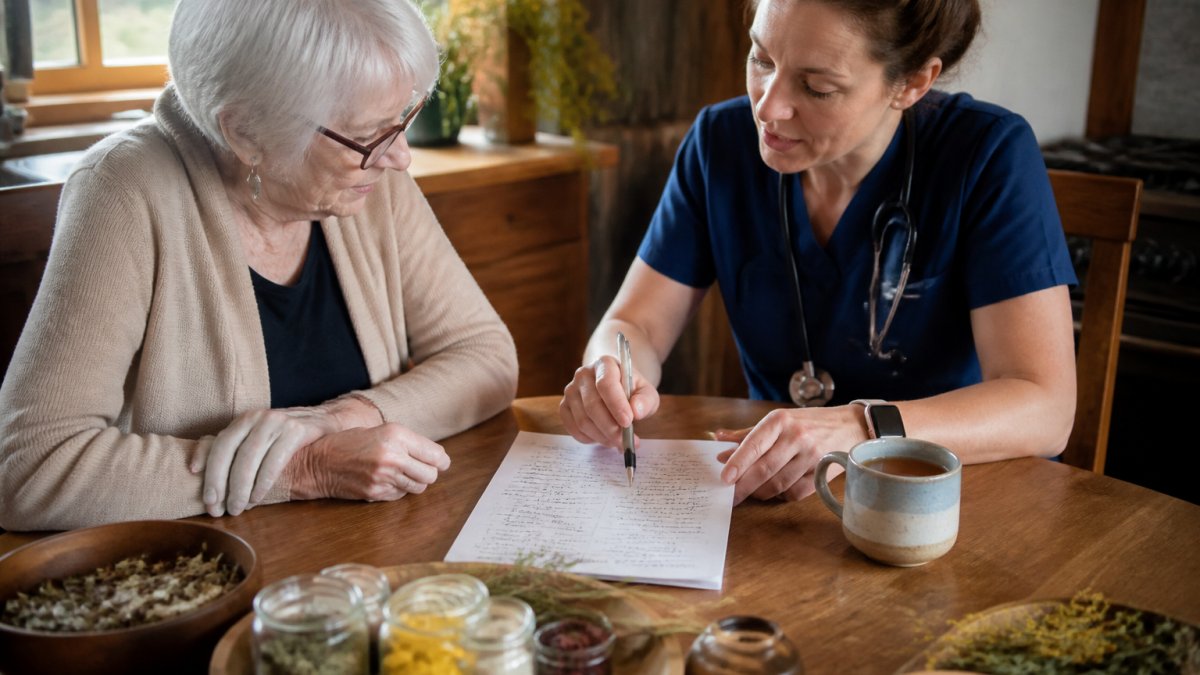
A typical session covers:
- Your current medications and doses
- Diagnosed conditions and recent lab work
- Symptoms you want to address
- Diet, sleep, and stress patterns
- Your goals and what you have already tried
From there, the nurse builds a treatment plan. That plan may include herbal remedies, timing guidance, and clear limits on what herbs can and cannot do.
Regulatory and Legal Frameworks for Nurse-Led Services
Nurse-led services sit inside a defined legal structure. This is a gap most wellness sites skip, and it is where your protection lives. The rules are not one national standard, they are a patchwork, and knowing which patch you are standing on tells you what a nurse-led service can and cannot legally do for you.
The two credentials that get confused
"RN" and "APRN" are not the same thing, and the difference changes everything about a nurse-led service.
- Registered Nurse (RN). Licensed by the state, holds a diploma, associate, or bachelor's degree, passes the NCLEX-RN, and practices under the state's Nurse Practice Act. An RN can assess, educate, monitor, coordinate care, and administer treatments ordered by a provider. An RN generally cannot diagnose or prescribe.
- Advanced Practice Registered Nurse (APRN). Includes Nurse Practitioners (NP), Certified Nurse-Midwives (CNM), Clinical Nurse Specialists (CNS), and Certified Registered Nurse Anesthetists (CRNA). APRNs hold graduate degrees and, depending on the state, may diagnose, order tests, and prescribe, including controlled substances, with a DEA number.
When a wellness brand says "RN-led," it usually means an RN reviewed or built the offering. When a clinic says "nurse-led," it often means an APRN is the primary provider. Those are very different levels of legal authority, and the label alone does not tell you which one you are getting.
Why the state matters more than the title
Every state writes its own Nurse Practice Act, and the scope of practice for APRNs falls into three broad buckets:
- Full practice authority. The APRN can evaluate, diagnose, order and interpret tests, and prescribe without physician oversight. This is the model in a minority of states.
- Reduced practice. The APRN needs a written collaborative agreement with a physician to practice or prescribe.
- Restricted practice. The APRN must work under physician supervision, delegation, or a formal team arrangement.
For an RN, not an APRN, the picture is narrower everywhere. RNs practice under delegation or standing orders in most settings and do not independently prescribe. That is why an "RN-led" herbal consultation is typically education and guidance, not a prescription.
What the FDA does and does not regulate
The U.S. Food and Drug Administration regulates dietary supplements as a category of food, not as drugs. That means:
- Supplements do not need FDA approval before they are sold.
- The manufacturer is responsible for safety and for the accuracy of label claims.
- Structure-function claims ("supports immune health") are allowed; disease claims ("treats diabetes") are not, unless the product is approved as a drug.
- The FDA can act after a product is on the market if it is adulterated, misbranded, or unsafe.
A nurse-led service that respects this line will describe what an herb is traditionally used for and what the evidence suggests, not promise a cure.
Your rights as a patient
Regardless of the state or the credential, you are entitled to:
- Clear identification. Who is treating you, and what is their license and license number.
- Honest limits. What the service can and cannot do, in plain language.
- Privacy. Health information you share is protected under HIPAA when the practitioner is a covered entity.
- Informed consent. You can ask questions, refuse a recommendation, and walk away.
- Records. You can request the clinical notes from your visit.
How to read a scope-of-practice claim
When a nurse-led service markets itself, listen for the verb. "Educates," "reviews," "monitors," and "coordinates" are RN-level verbs. "Diagnoses," "prescribes," and "orders labs" are APRN-level verbs, and only in states that permit them. If the marketing uses the APRN verbs but the credential is an RN, that is a mismatch worth questioning.
Conclusion: Is RN-Led Care Right for You?
Choosing RN-led care is really a question about trust. If you want herbal guidance that accounts for your medications, your conditions, and your safety, a nurse's training adds a layer that unlicensed sellers cannot match.
At HighFiveHive Nature's Remedies-Kitchen Herbalism, we pair 40 years of nursing experience with natural remedies for diabetes support, immune health, and women's wellness. Our approach keeps a licensed professional in the room, from your first question to your daily routine.
Frequently Asked Questions
What is a led nurse?
A led nurse is a registered nurse (RN) who directs a care service or consultation, rather than assisting a physician. In an RN-led practice, the nurse uses clinical training to assess your health history, screen for medication interactions, and build a plan within their scope of practice. This model is common in primary care, chronic disease management, and now in professional herbalism, where a nurse's clinical oversight separates safe guidance from generic online recipes.
What is the difference between an RN-led service and a standard wellness consultation?
A standard wellness consultation often focuses on lifestyle tips without clinical background. An RN-led service adds clinical decision-making: the nurse reviews your medications, checks for contraindications, and applies evidence-based practice to your treatment plan. If you have diabetes, joint pain, or hormonal concerns, that difference matters. An RN can spot red flags that a non-clinical coach might miss and refer you to a specialist when needed.
How do I verify the nursing credentials of a health practitioner?
Ask for their RN license number and check it through your state board of nursing's online verification tool. For herbalism, look for certification from a recognized clinical herbalist program. A legitimate practitioner will share this without hesitation. At HighFiveHive, our founder holds an active RN license and certified clinical herbalist credentials, backed by over 40 years of nursing experience. You can also ask whether they carry professional liability insurance.
Are there specific state regulations for nurse-led wellness services?
Yes. Each state's board of nursing sets the scope of practice for RNs, including whether they can offer independent wellness consultations or need physician collaboration. Some states allow full clinical autonomy; others require delegated care or a collaborative practice agreement. Because these rules vary, check your state board of nursing directly before booking a service. Any RN-led practice should be able to explain how it operates within its state's framework.


Leave a comment