
How to Improve Skin Resilience: 7 Steps
Table of Contents
- What Skin Resilience Is and Why It Matters
- Step 1: Strengthen Your Skin Barrier Naturally
- Step 2: Protect Your Skin from UV Radiation and Environmental Stress
- Step 3: Support Collagen Production Through Topical Ingredients
- Step 4: Eat Foods That Improve Skin Elasticity
- Step 5: Use Herbal Support for Hormonal Health
- Step 6: Prioritize Sleep, Stress Management, and Hydration
- Common Mistakes That Damage Skin Resilience
Last Updated: August 18, 2026
What Skin Resilience Is and Why It Matters
Skin resilience refers to your skin's ability to withstand environmental stressors, recover from damage, and maintain its structural integrity over time. At HighFiveHive Nature's Remedies-Kitchen Herbalism, we understand that resilient skin isn't just about appearance, it's about your skin's capacity to repair itself, retain moisture, and resist the cumulative effects of aging and external stress.
Your skin faces constant challenges from UV radiation, pollution, temperature fluctuations, and oxidative stress. When your skin barrier weakens, it loses moisture faster, becomes more prone to irritation, and ages more visibly. The good news: skin resilience isn't fixed, it responds to targeted support.
Resilient skin depends on three interconnected systems: your skin barrier (the epidermis and lipid barrier), your collagen and elastin structure (the dermis), and your skin's ability to produce new cells and repair damage. When these systems function well together, your skin stays firm, hydrated, and capable of bouncing back from stress. The smarter approach: strengthen resilience now, before problems become visible.
Step 1: Strengthen Your Skin Barrier Naturally
Your skin barrier consists of the outermost layer of skin cells held together by lipids, natural fats that cement cells in place. When this barrier breaks down, water escapes through transepidermal water loss, and irritants penetrate deeper into the skin.
A weakened skin barrier shows itself through tightness, sensitivity, flaking, and increased reactivity to products you normally tolerate. The fix is restoring the lipid barrier with the right ingredients.
Ceramides, cholesterol, and fatty acids are the three main lipids your barrier needs. Look for products containing ceramides (especially ceramide NP, AP, and EOP) and plant-based oils rich in linoleic acid. HighFiveHive Nature's Remedies-Kitchen Herbalism offers the Golden Bloom Organic Calendula & Lavender Facial Nectar, which combines infused botanical oils that support barrier repair through natural lipid replenishment. Applied to damp skin, it seals in hydration and provides the lipid support your barrier needs.

Avoid over-stripping your skin with harsh cleansers. Use a gentle, oil-based or cream cleanser that removes dirt without disrupting the lipid barrier. Wash with lukewarm water; hot water increases water loss.
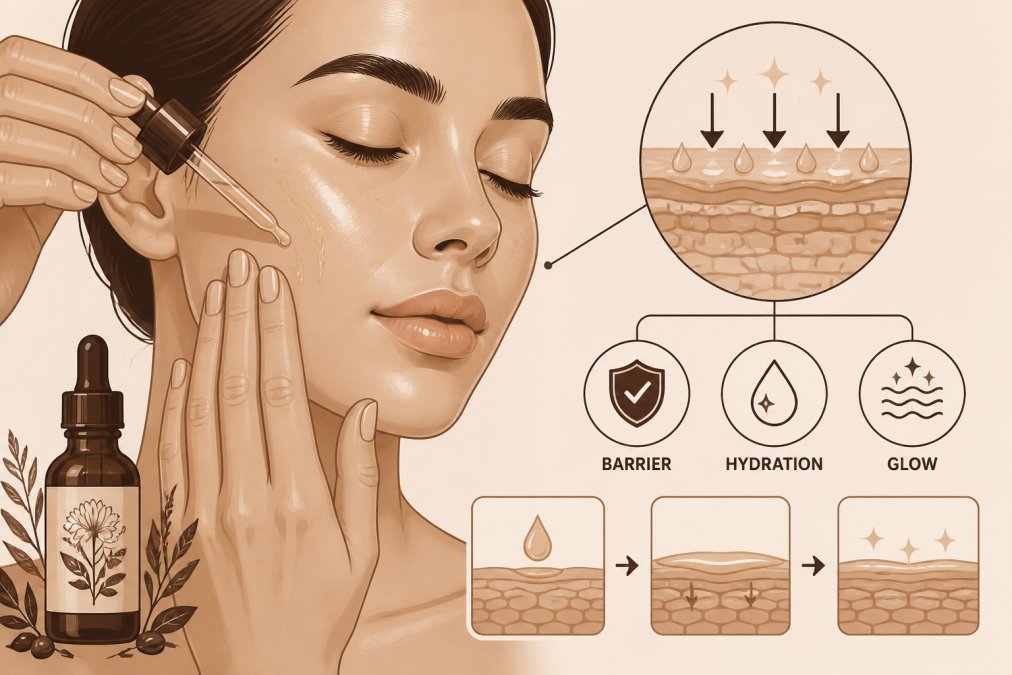
Barrier repair takes time. Most people see noticeable improvement in tightness and sensitivity within 2-3 weeks of consistent, gentle care.
Step 2: Protect Your Skin from UV Radiation and Environmental Stress
UV radiation is the primary driver of photoaging. UV rays penetrate the dermis and generate free radicals that damage collagen fibers, break down elastin, and trigger inflammation. This damage accumulates over years, eventually showing up as wrinkles, age spots, and leathery texture.
Daily broad-spectrum sunscreen (SPF 30 minimum) is non-negotiable for skin resilience. Environmental pollution also triggers oxidative stress, where free radicals overwhelm your skin's natural antioxidant defenses, leading to inflammation and collagen breakdown.
Topical antioxidants like vitamin C, vitamin E, and plant-derived polyphenols help neutralize free radicals before they damage collagen and elastin. Vitamin C is particularly effective because it neutralizes free radicals and supports collagen synthesis.
Apply sunscreen 15 minutes before sun exposure and reapply every 2 hours if you're outdoors. Many people apply too little; a quarter-teaspoon for your face is the standard recommendation.
Beyond UV protection, reduce your exposure to environmental pollutants when possible. If you live in an urban area with high air pollution, a gentle evening cleanse becomes even more important to remove accumulated particles that would otherwise trigger oxidative stress overnight.
Step 3: Support Collagen Production Through Topical Ingredients
Collagen and elastin are the structural proteins that give your skin firmness, elasticity, and resilience. Collagen makes up about 70% of your skin's dry weight. As you age, collagen production slows (declining roughly 1% per year after age 25), and existing collagen breaks down faster than your body can replace it.
You can't directly apply collagen to your skin and expect it to absorb, collagen molecules are too large to penetrate the epidermis. Instead, use ingredients that stimulate your skin's own collagen synthesis. Retinoids are the gold standard. They bind to retinoid receptors in your skin cells and trigger genes responsible for collagen production and cellular turnover. Prescription retinoids (tretinoin, adapalene) are strongest, but over-the-counter retinol and retinyl palmitate also work, though they're gentler and slower-acting.
Start with a low concentration (0.25-0.3% retinol) and use it 2-3 times per week initially. Increase frequency gradually as your skin adapts. Always use retinoids with a barrier-supporting moisturizer and sunscreen.
Vitamin C supports collagen synthesis by serving as a cofactor for the enzymes that cross-link and stabilize collagen fibers. Peptides are short chains of amino acids that signal your skin cells to increase collagen production and work well for sensitive skin. Niacinamide (vitamin B3) supports collagen indirectly by strengthening your skin barrier and reducing inflammation.
Nature's Medley Botanical Skin Balm from HighFiveHive Nature's Remedies-Kitchen Herbalism provides botanical support for skin integrity through herbal ingredients traditionally used to support skin health and resilience.

Consistency matters more than perfection. A simple routine with retinol or peptides used consistently will produce better results than a complicated routine used sporadically. Most people see noticeable improvements in skin texture and fine lines within 8-12 weeks of regular use.
Step 4: Eat Foods That Improve Skin Elasticity
What you eat directly affects your skin's structural integrity. Your body builds collagen and elastin from amino acids, and it repairs cellular damage using antioxidants and anti-inflammatory compounds from food.
Protein is foundational. Aim for 25-30 grams of protein per meal from fish, poultry, eggs, legumes, and dairy. Fish provides additional benefit through omega-3 fatty acids, which reduce inflammation and support skin barrier function.
Vitamin C from food sources (citrus, berries, bell peppers, leafy greens) is essential for collagen synthesis. Antioxidant-rich foods neutralize free radicals before they damage collagen and elastin. Berries are particularly potent because they're high in anthocyanins. Dark leafy greens provide lutein and zeaxanthin. Colorful vegetables provide carotenoids.
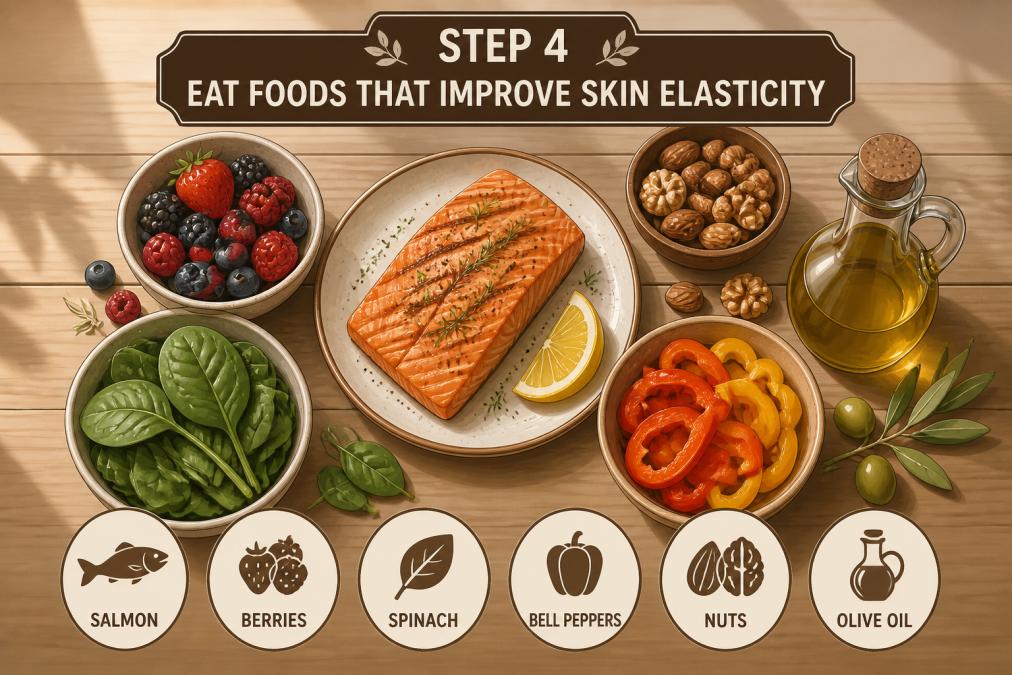
Healthy fats support skin barrier function and reduce inflammation. Olive oil, avocado, nuts, and seeds provide monounsaturated and polyunsaturated fats that your skin needs to maintain hydration and structural integrity.
Limit refined carbohydrates and excess sugar. High blood sugar triggers glycation, where sugar molecules bind to collagen fibers and cross-link them in ways that make them stiff and inflexible. This accelerates skin aging.
Hydration from food matters too. Water-rich foods (cucumber, watermelon, leafy greens) contribute to overall hydration, though plain water remains your primary hydration source. Aim for 8-10 glasses daily, adjusted for activity level and climate.
Step 5: Use Herbal Support for Hormonal Health
Hormonal fluctuations significantly affect skin resilience, particularly for women. Estrogen supports collagen production and skin hydration. When estrogen drops during menstruation, perimenopause, or menopause, skin becomes drier, collagen production slows, and skin may become more reactive or prone to breakouts.
Herbal remedies can help stabilize hormonal fluctuations and maintain more consistent skin health. Vitex (chasteberry) is one of the most researched herbs for hormonal support. It works on the pituitary gland to help regulate progesterone levels, which can reduce hormonal acne and skin sensitivity during the luteal phase. Many women report clearer, more resilient skin within 2-3 cycles of consistent vitex use.
Sage leaf has been traditionally used to support skin health during hormonal transitions. Red clover contains isoflavones that have mild phytoestrogen activity, making it popular for supporting skin health during perimenopause and menopause.
HighFiveHive Nature's Remedies-Kitchen Herbalism provides professional, RN-led guidance on herbal support for hormonal health and skin resilience. With 40 years of nursing experience, the team understands how to integrate herbal remedies safely with your overall health picture and medications.
Herbal support works best as part of a comprehensive approach. Combined with dietary, topical, and lifestyle strategies, hormonal support through herbs can help maintain more consistent, resilient skin throughout hormonal transitions.
Step 6: Prioritize Sleep, Stress Management, and Hydration
Sleep is when your body repairs and regenerates. During deep sleep, your body increases blood flow to the skin, rebuilds collagen, and reduces cortisol (the stress hormone that triggers inflammation and collagen breakdown). People who sleep poorly consistently show accelerated skin aging, increased sensitivity, and reduced skin resilience.
Aim for 7-9 hours of consistent sleep. More important than the number is consistency, going to bed and waking at the same time daily helps regulate your circadian rhythm, which controls when your body releases growth hormone and initiates repair processes.
Chronic stress directly damages skin resilience. Stress hormones trigger inflammation, increase sebum production, suppress immune function in the skin, and redirect blood flow away from the skin. Stress management practices that work include meditation, yoga, time in nature, creative hobbies, and social connection. Even 10-15 minutes of daily meditation has measurable effects on cortisol levels.
Hydration supports every skin function. Water is essential for cellular turnover, toxin removal, and nutrient transport to skin cells. Drink enough water that your urine is pale yellow. Topical hydration also matters, a hydrating serum or moisturizer applied to damp skin after cleansing helps your skin retain water. Hyaluronic acid is particularly effective because it can hold up to 1000 times its weight in water.
Common Mistakes That Damage Skin Resilience
Over-treating your skin is one of the fastest ways to destroy resilience. Many people use too many active ingredients simultaneously (retinoids, vitamin C, AHAs, BHAs, peptides all at once), which overwhelms the skin barrier and triggers sensitivity. Add one new active ingredient every 4-6 weeks, not all at once.
Inconsistency sabotages results. Someone using a retinoid 2-3 times per week consistently will see better results than someone using it daily for two weeks, then stopping for a month.
Skipping moisturizer because you have oily skin is a common mistake that actually worsens skin resilience. Oily skin often reflects a compromised barrier; a lightweight, barrier-supporting moisturizer actually reduces oil production long-term by restoring barrier function.
Ignoring internal health while focusing only on topical products creates a ceiling on results. You can't out-product poor sleep, chronic stress, or inadequate nutrition. The most resilient skin comes from combining topical care, dietary support, lifestyle habits, and hormonal balance.
Not protecting gains with sunscreen undermines everything else. Daily sunscreen is the single most effective anti-aging practice.
Skin resilience isn't complicated, but it does require consistency and patience. The steps above address the core mechanisms of aging and damage: barrier function, collagen production, oxidative stress, hydration, hormonal balance, and lifestyle factors.
HighFiveHive Nature's Remedies-Kitchen Herbalism supports this journey with professional, RN-led herbal remedies specifically formulated for skin resilience and renewal. Products like the Velvet Petal Whipped Rose & Calendula Body Butter and Herbal Comfort Botanical Skin Salve provide botanical support that complements your topical and dietary strategies. Start with the fundamentals, barrier care, sun protection, and consistent sleep, then layer in additional strategies that address your specific concerns.
| Strategy | Timeline | Frequency | Key Indicator |
|---|---|---|---|
| Barrier strengthening | 2-3 weeks | Daily | Reduced tightness, less sensitivity |
| Collagen support (retinoids) | 8-12 weeks | 2-5x weekly | Smoother texture, softer fine lines |
| Sun protection | Immediate | Daily | Prevention of new damage |
| Dietary support | 4-6 weeks | Daily | Improved hydration, glow |
| Sleep optimization | 1-2 weeks | Nightly | Reduced puffiness, clearer skin |
| Herbal hormonal support | 2-3 cycles | Daily | More stable skin throughout month |
Frequently Asked Questions
How long does it take to see improvements in skin resilience?
Most people notice visible improvements in skin texture and firmness within 4 to 8 weeks of consistent effort, though deeper changes in collagen production and skin barrier function take 8 to 12 weeks. Results depend on your starting point, age, and how consistently you follow all seven steps. Hormonal balance, sleep quality, and hydration typically show the fastest results, while topical ingredients work gradually over time. Be patient with the process, skin cells turn over approximately every 28 days, so meaningful renewal requires sustained commitment.
What role does hormonal health play in skin resilience?
Hormones directly influence collagen synthesis, skin barrier function, and elastin production. Estrogen supports skin hydration and firmness, while progesterone affects sebum production and inflammation. When hormonal balance is disrupted, especially during perimenopause or menopause, skin loses elasticity and becomes more prone to dryness and sensitivity. Herbal support for hormonal health through adaptogens and phytoestrogen-rich plants can help stabilize these fluctuations, improving skin texture and reducing fine lines. This is why women often see skin changes tied to their menstrual cycle or life stage.
Can you actually restore lost skin elasticity with natural methods?
Yes, but with realistic expectations. You cannot fully reverse severe elasticity loss from decades of sun exposure or aging, but you can significantly improve skin suppleness and firmness through a combination of approaches. Strengthening your skin barrier reduces transepidermal water loss, making skin appear plumper. Topical ingredients like retinoids and vitamin C stimulate collagen synthesis. Dietary antioxidants and hydration support cellular turnover. Most people see 30 to 50 percent improvement in visible elasticity within 3 months of consistent effort. The earlier you start, the better your results.
Why is an RN-led herbal approach different from DIY online recipes?
An RN-led approach brings professional medical training, safety screening, and accountability. A registered nurse understands drug-herb interactions, can assess whether herbal remedies are appropriate for your health history and medications, and knows proper dosing and preparation methods. DIY websites often lack this clinical oversight, which means you risk using unsafe combinations or incorrect amounts. With 40 years of nursing experience, HighFiveHive Nature's Remedies combines kitchen herbalism with professional judgment, you get the natural approach with the reassurance of qualified healthcare guidance, not just recipes.
This article was written using GrandRanker


Leave a comment