
Kitchen Herb Alternatives for Natural Support
Table of Contents
- Kitchen Herb Alternatives for Natural Support
- Why Choose RN-Led Herbalism Programs Over DIY Kitchen Recipes
- Herbal Support for Immune Health: Common Kitchen Alternatives
- Natural Diabetes Management Support Through Culinary Herbs
- Safe Herbal Remedy Preparation at Home: Methods and Dosage
- Medicinal Properties and Contraindications: What You Must Know
- Cost-Benefit Analysis: DIY Herbs vs. Professional Supplement Programs
- Integrating Herbal Alternatives with Conventional Medicine
- Frequently Asked Questions
Last Updated: September 3, 2026
Kitchen Herb Alternatives for Natural Support
When you're looking for herbal support alternatives that go beyond generic online recipes, the difference between DIY guesswork and professional guidance becomes immediately clear. At HighFiveHive Nature's Remedies-Kitchen Herbalism, we've spent 40 years helping people navigate the gap between culinary herbs and medicinal support.
This guide covers kitchen herb alternatives that actually work, how to prepare them safely at home, and when professional guidance matters. Many people discover that their kitchen already contains the botanicals they need for immune support, digestive health, and natural stress relief. The challenge isn't finding the herbs, it's understanding how to use them effectively and safely alongside any existing health conditions or medications.
What separates a thoughtful herbal approach from a risky one comes down to preparation method, dosage consistency, and knowing which herbs interact with medications.
Why Choose RN-Led Herbalism Programs Over DIY Kitchen Recipes
The biggest mistake people make with kitchen herbalism is treating every online recipe as equally valid. Some sources are careful about contraindications and drug interactions. Others aren't.
When you work with an RN-led herbalism program, you're getting clinical knowledge layered on top of botanical tradition. A registered nurse understands how herbs interact with medications, recognizes when someone shouldn't use certain botanicals, and knows the difference between "this herb is traditionally used for X" and "this herb is appropriate for YOUR specific situation."
DIY kitchen recipes often skip the hard parts. They don't ask about your blood pressure medications, your thyroid condition, or the supplements you're already taking. An RN-led approach does. HighFiveHive Nature's Remedies-Kitchen Herbalism brings 40 years of nursing experience to herbal preparation, helping you understand why certain preparation methods work better for your goals, how to adjust dosages based on your needs, and which combinations create synergy versus conflict.
A single mistake, using the wrong preparation method, combining incompatible herbs, or continuing an herb that interferes with a medication, can cost far more in health complications than a professional consultation ever would.
Herbal Support for Immune Health: Common Kitchen Alternatives
Your kitchen likely contains several botanicals with a long history in immune support traditions. The key is understanding which ones work best for your situation and how to prepare them for maximum benefit.
Oregano, Sage, and Olive Leaf: Traditional Immune Boosters
Oregano and sage are culinary staples that have been incorporated into herbal preparations for centuries. Both contain phytochemicals that herbalists value for immune support. Olive leaf, less common in cooking but increasingly available as a dried botanical, carries a long history in Mediterranean herbal traditions.
The simplest preparation is an herbal infusion: steep dried oregano, sage, or olive leaf in hot water for 10-15 minutes, strain, and drink. For more concentrated support, many herbalists prefer tincture extraction, which allows you to take a small dose (typically 30-60 drops) mixed into water or juice, making it easier to maintain consistency.
Grand's Heritage Blend A Five Herb Tincture combines oregano, sage, olive leaf, hibiscus, and barberry into a single preparation, offering the convenience of a professional formulation without the guesswork of combining your own.

Ginger and Turmeric: Anti-Inflammatory Kitchen Staples
Ginger and turmeric appear in cuisines worldwide and have been valued in traditional medicine systems for their anti-inflammatory properties. Fresh ginger root is easy to find year-round, while turmeric is available as a powder in most grocery stores.
The challenge with turmeric is bioavailability, your body's ability to absorb and use the active compounds. Pairing it with black pepper (which contains piperine) significantly increases absorption (peer-reviewed research). Many herbalists prepare ginger and turmeric as a decoction, simmering the herbs for 15-30 minutes rather than simply steeping them, which extracts more of the plant's woody compounds.
Natural Diabetes Management Support Through Culinary Herbs
Several kitchen herbs have been traditionally used to support blood sugar balance. Common herbs include fenugreek seeds, cinnamon, and bitter melon. Cinnamon is readily available and can be added to beverages or taken as a simple tea.
Herbal support for blood sugar is most effective as part of a broader approach that includes dietary changes, movement, and stress management. No herb replaces medication or clinical monitoring. If you're managing diabetes with medications, consult your healthcare provider before adding any herbal preparation, as some herbs can potentiate medication effects, potentially leading to dangerously low blood sugar if dosing isn't carefully managed.
Safe Herbal Remedy Preparation at Home: Methods and Dosage
The method you choose to prepare an herb dramatically affects its potency and which compounds you extract. Understanding these methods is essential for getting consistent results.
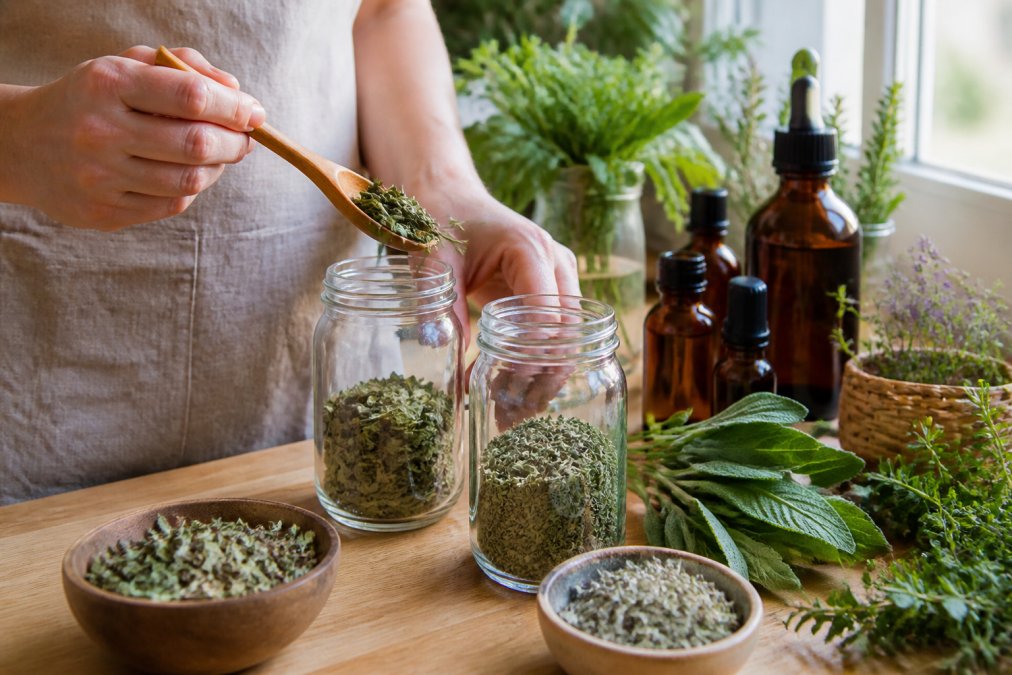
Tincture Extraction: Creating Potent Botanical Extracts
A tincture is an alcohol-based extract that pulls the plant's active compounds into a concentrated liquid. Tinctures are shelf-stable, require only small doses, and allow for precise dosing, typically 30-60 drops mixed into water or juice.
The basic process involves placing dried herbs in a jar, covering them with alcohol (typically 80-100 proof vodka), sealing the jar, and letting it sit for 4-6 weeks. A standard 1:5 tincture uses one part dried herb to five parts alcohol by weight. Temperature matters, keep your tincture in a cool, dark place to slow oxidation and preserve potency.
Many people find that purchasing prepared tinctures saves time and ensures consistent extraction. HighFiveHive Nature's Remedies-Kitchen Herbalism offers several tincture options, including Tranquil Zest Five Herb Botanical Extract ($22.95), which combines lavender, valerian, passionflower, orange peel, and ginger for evening relaxation and stress support.

Herbal Infusions and Decoctions: Brewing for Maximum Benefit
An infusion is the simplest preparation: steep dried herbs in hot water for 10-15 minutes, strain, and drink. This works well for leaves and flowers. A decoction is a longer, slower extraction used for roots, barks, and seeds, involving simmering for 15-30 minutes to extract compounds that need more heat to release.
Dosage for infusions and decoctions typically ranges from one cup once or twice daily up to three cups daily, depending on the herb and your specific situation.
Medicinal Properties and Contraindications: What You Must Know
Every herb has a contraindication list, situations where it shouldn't be used or where it requires careful monitoring. Valerian, traditionally used for evening relaxation, can affect liver function in people with pre-existing liver conditions (the FDA). Passionflower can interact with sedative medications. Sage shouldn't be used during pregnancy.
Nearly every herb has at least one situation where it requires caution. This is why an RN-led approach matters. A nurse understands not just what an herb does, but who shouldn't use it and why.
Some herbs interact with specific medication classes. Barberry can potentiate the effects of blood pressure medications (peer-reviewed research). Olive leaf can enhance the effects of diabetes medications. These aren't reasons to avoid the herbs, they're reasons to use them under professional guidance where dosing can be adjusted appropriately.
Cost-Benefit Analysis: DIY Herbs vs. Professional Supplement Programs
The financial case for DIY herbalism looks simple on the surface: dried herbs cost less per dose than prepared supplements. But this math ignores several real costs. Your time has value, and a single mistake can cost far more in health complications than professional guidance would have.
Professional programs like HighFiveHive Nature's Remedies-Kitchen Herbalism offer prepared tinctures and blends that eliminate guesswork. Grand's Heritage Blend A Five Herb Tincture costs $18.50 and provides weeks of consistent support. Ashwagandha Root Traditional Ayurvedic Tincture is $15.95. Five Botanicals A Woman's Traditional Tincture is $25.00.
There's also the question of consistency. DIY preparations vary batch to batch. Professional preparations use standardized extraction methods, ensuring that each dose delivers the same amount of active compounds. For people managing chronic conditions, consistency matters.
The Artisan Woman's Collection A Herbal & Botanical Set ($118.00) bundles seven professional preparations, offering a comprehensive approach to women's wellness, digestive health, and skin support.
Integrating Herbal Alternatives with Conventional Medicine
Herbs aren't replacements for medical treatment, they're complements that work alongside it. An herb that supports the same body system as your medication can amplify that medication's effect, which can create problems if not carefully managed.
This is why an RN-led approach is essential. A nurse understands both the herbal and pharmaceutical sides of this equation and can help you identify which herbs complement your existing treatment, which ones require dose adjustments to your medications, and which ones you should avoid entirely.
The most successful integrations happen when the patient, their doctor, and their herbalist communicate. You tell your doctor what herbs you're considering. Your doctor identifies potential interactions. Your herbalist adjusts recommendations accordingly.
The gap between kitchen herbalism and professional herbal support comes down to knowledge, consistency, and safety. Your kitchen contains powerful botanicals, oregano, ginger, turmeric, sage, that have supported human health for centuries. The question isn't whether these herbs work. The question is whether you're using them in a way that's actually safe and effective for your specific situation.
HighFiveHive Nature's Remedies-Kitchen Herbalism bridges that gap. With 40 years of nursing experience, we help you move beyond recipes and into a personalized approach to herbal support. Whether you're looking to boost immune resilience, support natural diabetes management, or explore women's wellness, we provide the professional guidance that makes herbal support actually work.
Frequently Asked Questions
What makes RN-led herbalism programs safer than following DIY kitchen herbalism recipes online?
An RN-led approach combines clinical training with herbal knowledge, ensuring proper dosage, drug interactions, and contraindications are considered for your specific health profile. Professional herbalism programs evaluate your medications and conditions before recommending herbs, whereas DIY websites cannot assess individual safety. An experienced registered nurse applies 40 years of healthcare expertise to personalize recommendations, reducing risk of adverse reactions or ineffective preparation methods that generic recipes might miss.
Can herbal support alternatives interact with my diabetes medications?
Yes, certain herbs can interact with diabetes medications. Herbs like barberry and olive leaf may affect blood sugar levels or interact with insulin or metformin. This is why consulting a healthcare professional before starting any herbal support is essential, especially with natural diabetes management support. An RN-led program reviews your complete medication list and adjusts herbal recommendations accordingly, preventing dangerous interactions while maintaining therapeutic benefit.
How long does it take to notice results from kitchen herb alternatives?
Results vary widely depending on the herb, preparation method, dosage, and individual health status. Some people notice effects within days (particularly with calming herbs), while others require 2-4 weeks of consistent use for immune or digestive support to become apparent. Herbal support typically works gradually and cumulatively rather than providing immediate relief like pharmaceutical options. Consistency matters more than speed; professional guidance helps set realistic expectations for your specific health goals.
What is the difference between a tincture, infusion, and decoction for herbal support?
A tincture is an alcohol-based extraction that concentrates plant compounds, typically taken in drops (1-2 dropperfuls in water). An infusion steeps delicate plant parts like flowers and leaves in hot water, similar to tea, for 5-15 minutes. A decoction boils harder plant materials like roots and bark for 10-20 minutes to extract deeper compounds. Each method affects bioavailability and potency differently. Tinctures absorb quickly and last longer, while infusions and decoctions offer gentler, food-like preparation suitable for daily consumption.
This article was written using GrandRanker


Leave a comment